The Delhi High Court clarified that service of summons solely through a process server at the registered office satisfies the procedural requirement of service by all modes, and it may set aside an ex-parte decree, granting the defendant a conditional opportunity to defend the suit.
Background & Facts
The Dispute
The appellant, Multitex Filtration Engineers Ltd, was sued by the respondent, Johnson Controls India Pvt Ltd, for recovery of Rs 58,35,390 plus interest. The dispute arose from a commercial transaction in which the plaintiff alleged non-payment for services rendered.
Key Facts
- 3 May 2024: Commercial Court issued summons directing service by process server, email, WhatsApp, registered AD-speed post and approved courier, with a deadline of 4 June 2024 for filing the plaintiff’s fees and the defendant’s written statement within 30 days of service.
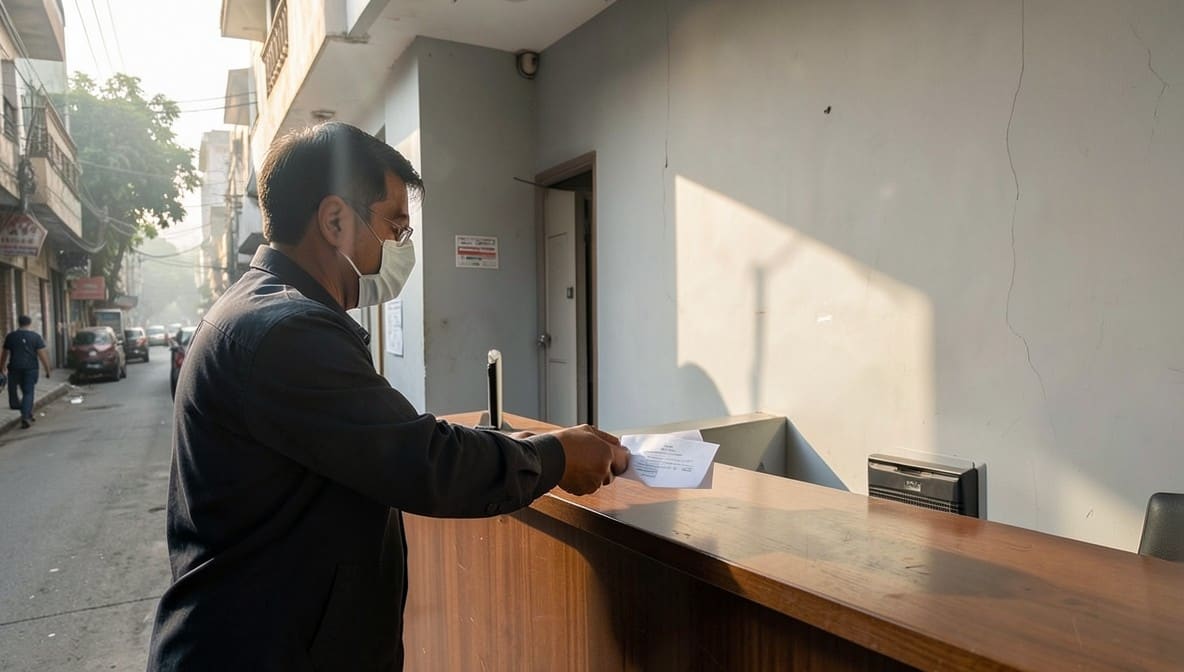
- 10 May 2024: Process server served the summons at 217 Hans Bhawan, Wing-1, Bahadur Shah Zafar Marg, New Delhi-2. The clerk at the reception signed and stamped the document; no other mode of service was effected.
- 25 July 2024: Commercial Court recorded the service as effected and, noting the defendant’s failure to file a written statement, proceeded ex-parte.
- 16 August 2024: Matter listed for ex-parte preliminary examination.
- 30 January 2025: Plaintiff’s witness (PW-1) gave evidence, producing purchase order, invoices and service orders.
- 8 August 2025: Trial Court decreed in favour of the plaintiff, ordering the defendant to pay Rs 58,35,390 with simple interest at 8 % per annum from the filing date, and awarded costs.
- Post-decree: Defendant filed an application under Order IX Rule 13 CPC claiming the service was improper because the registered office was only a nominal address and the corporate office had shifted to Noida in 2023. The defendant also invoked arbitration clauses in the purchase order.
- 3 July 2026: Trial Court dismissed the Order IX Rule 13 application and confirmed the ex-parte decree.
- 24 August 2026: Delhi High Court delivered the present judgment.
Procedural History
- 3 May 2024: Summons issued.
- 10 May 2024: Service by process server.
- 25 July 2024: Ex-parte proceedings commenced.
- 8 August 2025: Decree passed in favour of plaintiff.
- 3 July 2026: Application under Order IX Rule 13 dismissed; decree affirmed.
- 24 August 2026: Appeal filed under Order XLIII Rule 1(d) CPC; judgment delivered.
Parties' Positions
- Appellant: Contended that service was defective because it was limited to a process server and did not reach the corporate office in Noida; argued that the arbitration clause should have stayed the suit; claimed the application was filed within limitation.
- Respondent: Asserted that the process-server report proved proper service; the burden of proof under Order IX Rule 13 remained unmet; the application was time-barred; highlighted that the defendant had encashed bank guarantees worth Rs 18.86 lakhs after the decree, demonstrating mala-fides.
Relief Sought
- Appellant: Set aside the ex-parte decree, allow filing of a written statement within 30 days, and direct the defendant to deposit Rs 25,00,000 as a condition for defending the suit.
- Respondent: Maintain the decree and recover costs incurred due to the appeal.
The Legal Issue
What is the correct interpretation of Order IX Rule 13 of the CPC regarding the requirement of service by all prescribed modes, and may an ex-parte decree be set aside to permit the defendant to file a written statement when service is contested?
Arguments Presented
For the Appellant
The appellant relied on the literal wording of Order IX Rule 13, which mandates service of summons by all the modes listed in the summons. It argued that failure to serve by email, WhatsApp, registered post and courier rendered the service defective, invoking the principle that procedural defects cannot be cured by subsequent filing of a written statement. The appellant also cited M/s. Satyam Industries Ltd. v. M/s. Hindustan Steel Ltd. for the necessity of strict compliance with service provisions.
For the Respondent
The respondent contended that the process-server’s report, a statutory document, established valid service at the registered office, satisfying the statutory requirement of “service on the defendant”. It argued that the burden of proving non-service lies on the appellant, and that the appellant had not discharged this burden. The respondent further relied on State Bank of India v. M/s. R. K. Industries to emphasize that the court may not reopen a decree where service has been effected and the defendant remained silent.
The Court's Analysis
The Court first examined the purpose of the multiple-mode service requirement under Order IX Rule 13, noting that it is intended to ensure actual notice to the defendant. It held that the process-server’s report, corroborated by the clerk’s acknowledgment and the affixed stamp, demonstrated that the summons reached the defendant’s registered office, which is a legally recognised address for service.
"The Appellant/Defendant ought to have been diligent and filed the Written Statement, however, the Appellant/Defendant failed to do so."
The Court observed that the plaintiff had complied with the statutory mandate by serving the summons through at least one prescribed mode, and the defendant’s failure to appear or file a written statement amounted to a waiver of the right to contest service. However, the Court also recognised the equitable principle that a party should not be denied a chance to defend on merits where the service, though technically valid, was the sole mode employed.
Consequently, the Court distinguished M/s. Satyam Industries on the ground that the present case involved a commercial dispute where the defendant had participated in pre-litigation mediation, indicating an intention to resolve the matter. The Court therefore exercised its inherent power under Order XLIII Rule 1(d) CPC to set aside the ex-parte decree and grant a conditional order allowing the defendant to file a written statement within 30 days.
The Court also addressed the arbitration clause, noting that while the clause existed, the trial court had not been seized of it. The Court held that the clause could be invoked only after the defendant had an opportunity to present its defence, which the ex-parte decree had denied.
Finally, the Court imposed a conditional deposit of Rs 25,00,000 to be placed in a fixed deposit, to ensure the defendant’s seriousness in defending the suit, and awarded costs of Rs 1,00,000 to the plaintiff, payable within four weeks.
The Verdict
The appeal is allowed. The Delhi High Court sets aside the impugned order dated 3 July 2026 and the ex-parte decree dated 8 August 2025. The appellant is directed to deposit Rs 25,00,000 within four weeks, file its written statement within 30 days, and appear before the Commercial Court on 28 September 2026. The respondent is awarded costs of Rs 1,00,000, also payable within four weeks.
What This Means For Similar Cases
Service Must Reach a Legally Recognised Address
- Even if service is effected by a single mode, the court may deem it valid provided the summons reaches the defendant’s registered office or any address recognized under the CPC.
- Parties should ensure that the address used for service is up-to-date and that the process server obtains a written acknowledgment.
Ex-Parte Decrees Are Not Irrevocable Where Service Is Contested
- Courts retain discretion to set aside ex-parte decrees if the defendant can demonstrate that service, while technically valid, was ineffective in providing actual notice.
- A conditional deposit can be imposed to balance the plaintiff’s interest in finality with the defendant’s right to be heard.
Arbitration Clauses Must Be Invoked Promptly
- An arbitration clause in a purchase order cannot be ignored; however, the defendant must first obtain a chance to present its defence before the court can refer the matter to arbitration.
- Practitioners should file a timely application under Order IX Rule 13 if they believe service is defective, and simultaneously preserve the arbitration defence.
Practical Checklist for Counsel
- Verify the defendant’s current registered and corporate addresses before service.
- Obtain a signed service report from the process server.
- If service is limited to one mode, be prepared to argue either validity or defect based on the factual matrix.
- Consider filing a conditional deposit application when seeking relief from an ex-parte decree.
- Preserve any arbitration or alternative dispute resolution clauses early in the pleadings.