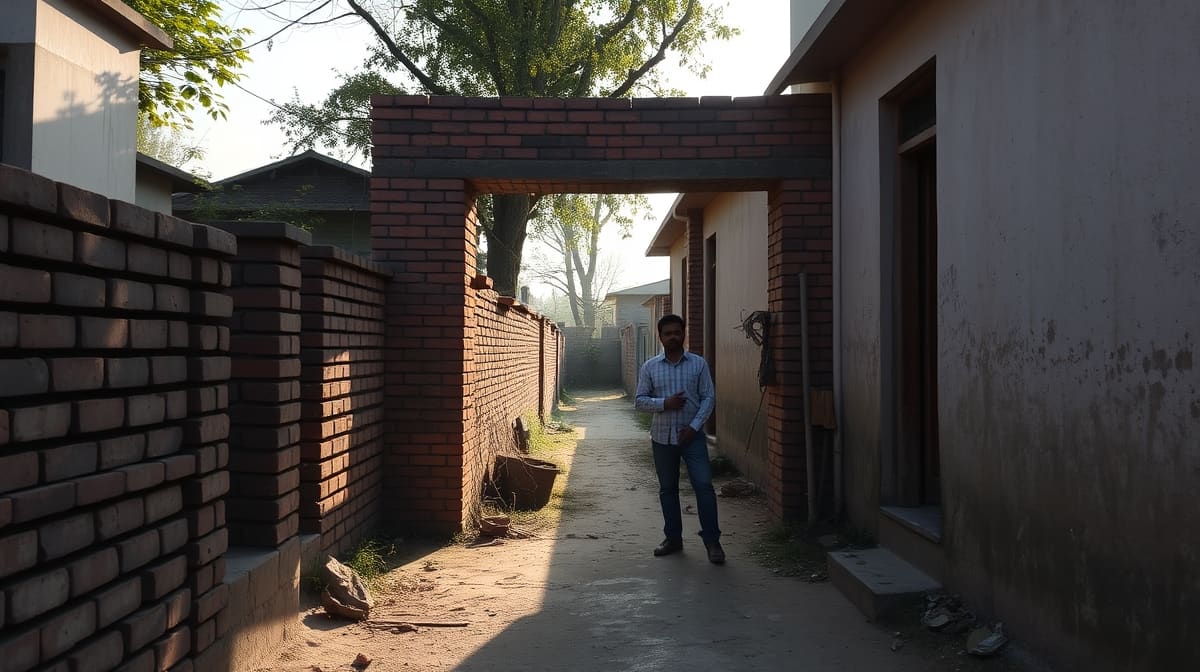
The Allahabad High Court has reaffirmed that judicial orders granting or vacating injunctions cannot be sustained when they ignore a court-commissioned Amin report, which forms a vital evidentiary pillar in disputes over access and easement. This ruling underscores the non-negotiable duty of trial and appellate courts to engage with such reports, ensuring that substantive rights are not adjudicated on incomplete records.
Background & Facts
The Dispute
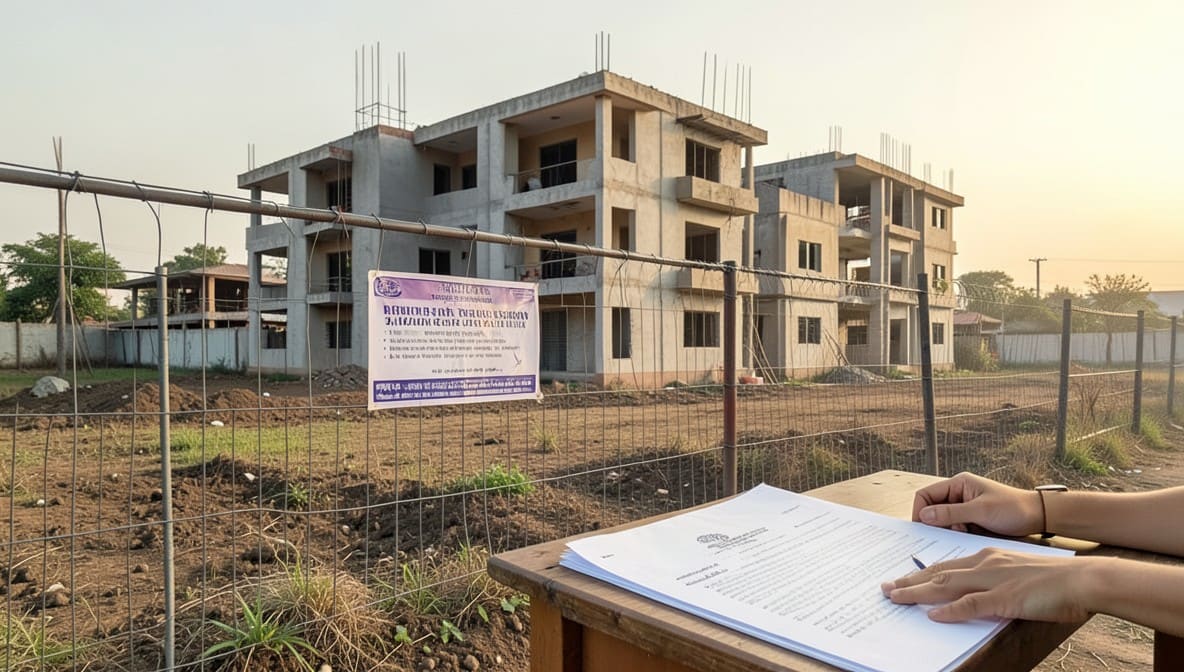
The plaintiff-petitioners, Ram Milan Singh Tomar and two others, purchased residential properties through registered sale deeds dated 22.12.2023. Their properties are bordered to the North by a 9.1-meter-wide road, which is the sole means of ingress and egress. A Sub-Station of the Uttar Pradesh Power Corporation Ltd. (Respondent No. 1) was located adjacent to this road. In early 2025, officials of the Power Corporation began constructing a wall that obstructed this 9.1-meter passage, effectively blocking the petitioners’ access to their homes.
Key Facts
- The petitioners’ properties have no alternative road or access point; the 9.1-meter road is the only private passage available.
- On 16.04.2025, the Civil Judge (Senior Division), Kannauj, granted an interim injunction restraining the respondents from obstructing the passage.
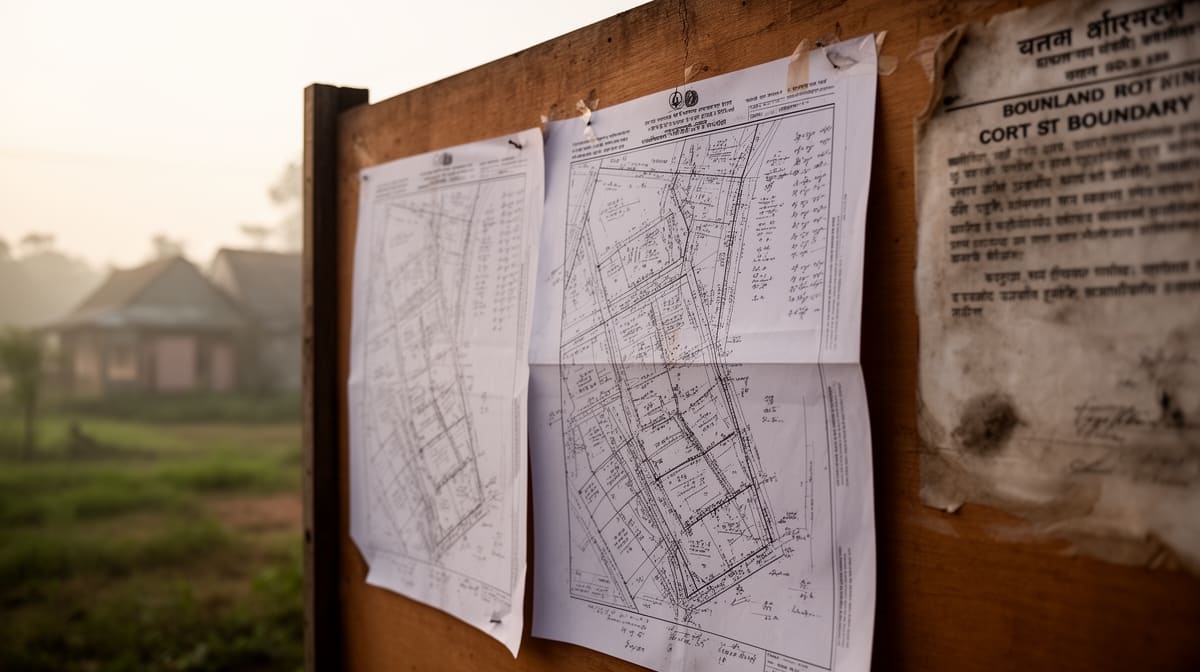
- On 28.04.2025, an Amin/Commissioner’s report was submitted to the trial court, documenting the physical obstruction and confirming the 9.1-meter road as the sole access.
- On 07.03.2026, the trial court vacated the interim injunction without addressing the Amin report.
- The petitioners filed Misc. Civil Appeal No. 18 of 2026 before the District Judge, Kannauj.
- On 03.04.2026, the District Judge dismissed the appeal without reference to the Amin report.
- The petitioners then filed the present writ petition under Article 227 of the Constitution on 20.04.2026.
Procedural History
- 22.12.2023: Petitioners purchased residential properties via registered sale deeds.
- Early 2025: Respondents began erecting a wall obstructing the 9.1-meter access road.
- 16.04.2025: Trial court granted interim injunction under Order 39 Rules 1 and 2 of CPC.
- 28.04.2025: Amin/Commissioner’s report submitted, confirming obstruction and sole access.
- 07.03.2026: Trial court vacated injunction without considering the Amin report.
- 03.04.2026: District Judge dismissed Misc. Civil Appeal No. 18 of 2026, ignoring the Amin report.
- 20.04.2026: Writ Petition No. 4874 of 2026 filed under Article 227 before the Allahabad High Court.
- 13.05.2026: Judgment delivered by the High Court.
The Parties' Positions
- Petitioners: Argued that the Amin report was a critical piece of evidence establishing the sole nature of the access road and the unlawful obstruction. They contended that the trial and appellate courts’ failure to consider it rendered their orders legally unsustainable.
- Respondents: Contended that the suit was not for easementary rights but merely for injunction, and that the Amin report was based on irrelevant facts. They claimed an alternative passage existed, though no evidence was adduced to substantiate this.
Relief Sought
The petitioners sought quashing of the orders dated 07.03.2026 and 03.04.2026, restoration of the interim injunction, and directions to maintain the status quo pending fresh adjudication.
The Legal Issue
The central question was whether a trial court and its appellate authority may lawfully vacate an interim injunction and dismiss an appeal without considering a court-commissioned Amin report that directly addresses the factual basis of the dispute over access rights.
Arguments Presented
For the Petitioner
Learned counsel for the petitioners submitted that the Amin report dated 28.04.2025 was not merely an auxiliary document but a judicially mandated assessment of the physical situation. The report confirmed the 9.1-meter road as the only viable access and the wall as an unlawful obstruction. Citing K. S. Puttaswamy v. Union of India and State of Haryana v. Bhajan Lal, counsel argued that judicial orders must be grounded in material on record, and ignoring a court-appointed commissioner’s report violates principles of natural justice and procedural fairness. The failure to engage with the report rendered the orders arbitrary and unsustainable.
For the Respondent
Counsel for the respondents conceded that the Amin report had not been considered by either court. However, he argued that the report was based on irrelevant facts and that an alternative passage existed. He did not dispute the report’s existence or its commissioning but challenged its reliability. He ultimately accepted the petitioners’ request to remand the matter for fresh adjudication, provided the respondents were given an opportunity to contest the report’s findings.
The Court's Analysis
The High Court observed that the Amin report was not a casual or optional document but a formal, court-ordered investigation into the very issue before the court: the existence and accessibility of the passage. The report was commissioned under Order 26 Rule 10 of the CPC and submitted to the trial court as part of the adjudicatory process. The court noted:
"The Amin Report was sought by the trial court itself and forms a vital piece of evidence on record. To overlook it, without any reasoning or justification, is to render the adjudication process a mere formality."
The Court emphasized that the trial court’s duty under Order 39 Rule 1 and 2 is to assess the balance of convenience and likelihood of irreparable harm. The Amin report directly addressed both factors. By ignoring it, the trial court failed to apply the required judicial scrutiny. The appellate court compounded this error by affirming the vacatur without any reference to the report.
The Court further held that the respondents’ claim of an alternative passage was unsubstantiated by any evidence on record. The burden to prove the existence of an alternative route lay with the respondents, and their failure to do so rendered their argument speculative. The Court concluded that the omission of the Amin report was not a mere procedural lapse but a fundamental defect going to the root of the adjudication.
The Verdict
The writ petition was allowed. The High Court set aside the order dated 07.03.2026 of the Civil Judge (Senior Division), Kannauj, and the order dated 03.04.2026 of the District Judge, Kannauj. The matter was remanded to the trial court for fresh adjudication of the injunction application under Order 39 Rules 1 and 2 of the CPC. The status quo as of 13.05.2026 shall be maintained until fresh orders are passed. The parties must file certified copies of this order by 21.05.2026. The trial court is directed to decide the application with expedition after affording both parties a full opportunity to present evidence and arguments, including objections to the Amin report.
What This Means For Similar Cases
Amin Reports Are Not Optional Evidence
- Practitioners must insist that courts explicitly record their reasons for accepting or rejecting court-commissioned Amin reports.
- Failure to consider such reports renders orders liable to be set aside under Article 227.
- Amin reports in property access disputes are presumptively reliable unless rebutted by credible evidence.
Procedural Lapses Cannot Be Ignored in Injunction Matters
- Courts must not treat interim injunction hearings as summary proceedings where evidentiary rigor is optional.
- The balance of convenience cannot be assessed without examining physical evidence, especially when access to property is at stake.
- Appellate courts cannot affirm trial court orders that ignore material on record.
Status Quo Must Be Preserved Pending Remand
- Where access to a residence is obstructed and a court-commissioned report confirms the illegality, the status quo must be maintained until fresh adjudication.
- Practitioners should seek explicit directions for preservation of status quo in writ petitions challenging vacated injunctions.