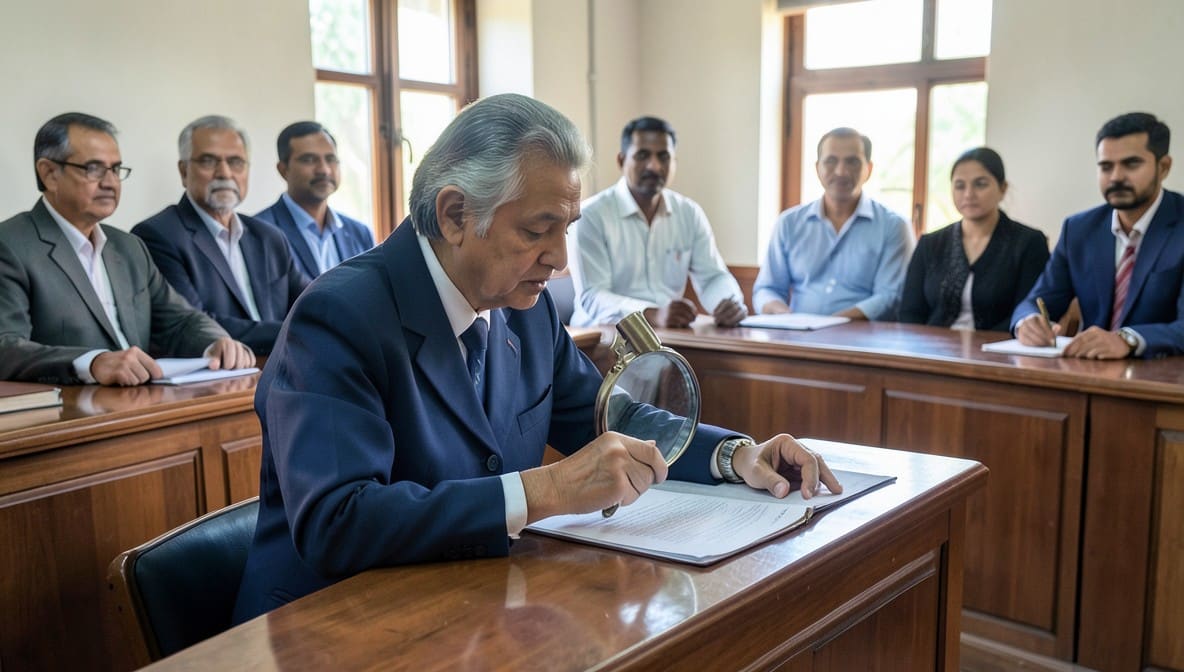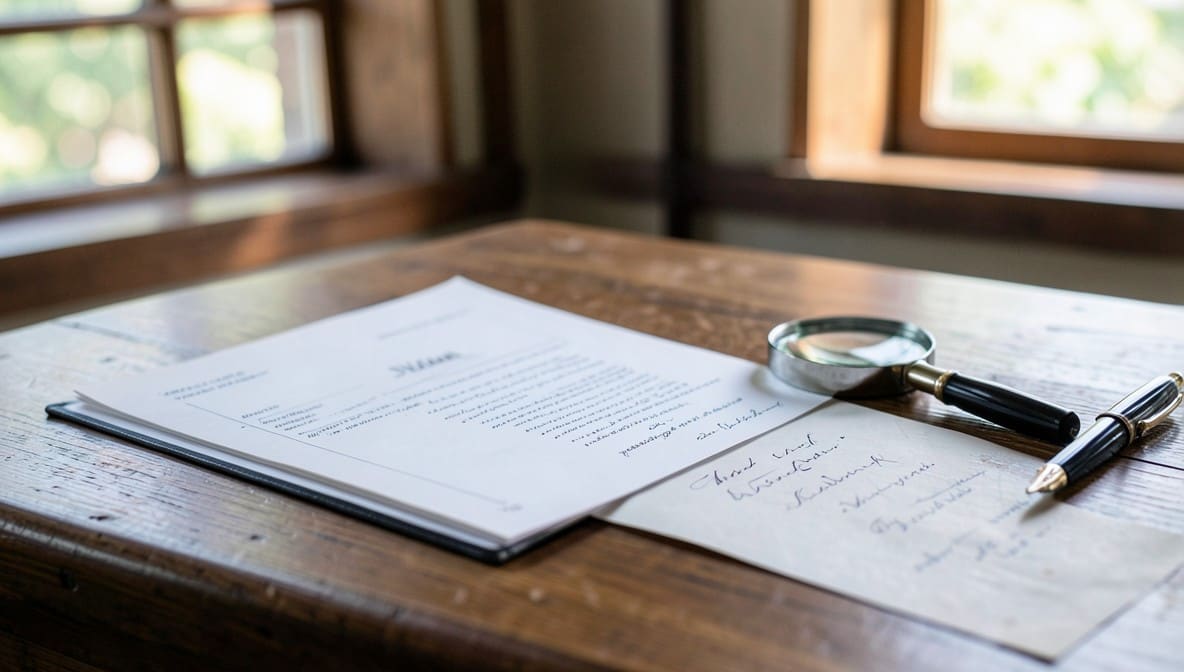
The Punjab and Haryana High Court has clarified a critical procedural principle in civil litigation: a plaintiff cannot invoke rebuttal evidence under Order 18 Rule 3 of the CPC to discharge the burden of proof that rests squarely on them. This judgment reinforces the structural integrity of evidence sequencing in civil trials and prevents strategic manipulation of procedural rights.
Background & Facts
The Dispute
The dispute arose from competing claims over the estate of the deceased Omesh Chand Mehta. The plaintiff, respondent No.1, filed two civil suits: CS-576-2019 seeking declaration and injunction based on a Will dated 08.10.2017, and CS-869-2019 seeking a declaration that another Will dated 16.11.2017 (favouring defendants) was forged. The defendants, petitioners herein, contested both suits, denying the authenticity of the 08.10.2017 Will.
Key Facts
- The plaintiff claimed ownership of the suit property based on the Will dated 08.10.2017, allegedly executed by Omesh Chand Mehta
- The defendants challenged the genuineness of the signature on the 08.10.2017 Will
- The plaintiff filed both suits on 20.08.2019
- Written statements were filed by defendants on 02.12.2019
- Issues were framed on 04.01.2022, including:
- Issue No.4 in CS-576-2019: "Whether the Will dated 08.10.2017 was executed by Sh. Omesh Chand Mehta in favour of the plaintiff?" (onus on plaintiff)
- Issue No.3 in CS-869-2019: Same issue, again placing burden on plaintiff
- Plaintiff closed his evidence on 10.08.2023 with the statement: "I close the evidence on behalf of the plaintiff."
- No reservation of right to lead rebuttal evidence was made at the time of closing evidence
- On 08.07.2025, plaintiff filed an application seeking permission to examine a handwriting expert
- On 04.11.2025, the trial court allowed the application, permitting the plaintiff to summon a handwriting expert "in the interest of justice"
Procedural History
- 20.08.2019: Civil Suit CS-576-2019 and CS-869-2019 filed by plaintiff
- 02.12.2019: Defendants filed written statements
- 04.01.2022: Issues framed by trial court
- 10.08.2023: Plaintiff closed evidence without reserving right to rebuttal
- 08.07.2025: Plaintiff applied for permission to examine handwriting expert
- 04.11.2025: Trial Court allowed application (impugned order)
- 19.03.2026: High Court heard revision petition and set aside impugned order
Relief Sought
The petitioners sought setting aside of the trial court’s order dated 04.11.2025 permitting the plaintiff to examine a handwriting expert in rebuttal, arguing it violated the procedural mandate of CPC Order 18 Rule 3.
The Legal Issue
Can a plaintiff, who bears the burden of proving the authenticity of a Will, examine a handwriting expert in rebuttal evidence under Order 18 Rule 3 of the CPC after closing his affirmative evidence without reserving the right to rebuttal?
Arguments Presented
For the Appellant/Petitioner
Learned counsel for the petitioners relied on multiple precedents including Avtar Singh v. Baldev Singh, Surjit Singh v. Jagtar Singh, and Rajesh Kumar v. Babita to argue that Order 18 Rule 3 CPC does not permit a party to lead evidence in rebuttal on issues where the burden of proof lies on them. The plaintiff had closed evidence unconditionally on 10.08.2023 and could not later seek to fill evidentiary gaps through rebuttal. The trial court’s order was a clear departure from settled law.
For the Respondent/State
Learned counsel for the respondent No.1 submitted that permitting the expert examination was necessary for proper adjudication and in the interest of justice. No specific statutory or precedential authority was cited to justify the use of rebuttal evidence to discharge the plaintiff’s primary burden.
The Court's Analysis
The Court undertook a detailed analysis of Order 18 Rule 3 CPC, emphasizing its textual clarity and procedural intent. The rule permits a party beginning the evidence to either lead it immediately or reserve it for rebuttal - but only in response to the opposing party’s evidence. Crucially, the rule does not permit a party to use rebuttal as a second chance to prove issues for which they bear the burden.
"A perusal of the above shows that the onus to prove Issue No. 1 is on the respondent-plaintiff. As has been very persuasively argued by learned counsel for the petitioners, the respondent/plaintiff cannot be permitted to produce the said witness by way of evidence in rebuttal as, plaintiffs cannot as of right lead evidence in rebuttal on issues, the onus of proof of which is on them."
The Court reaffirmed its earlier decision in Rajesh Kumar v. Babita and the Division Bench ruling in Avtar Singh v. Baldev Singh, holding that the option to reserve rebuttal must be exercised before the other party begins its evidence. The plaintiff’s failure to reserve this right at the time of closing evidence on 10.08.2023 rendered any subsequent attempt to introduce expert testimony in rebuttal legally impermissible.
The Court further noted that the trial court’s order, which allowed the expert examination "in the interest of justice," improperly substituted judicial discretion for statutory compliance. The phrase "interest of justice" cannot override the mandatory procedural framework of the CPC.
The Court also rejected the notion that rebuttal evidence could be used to cure a failure in affirmative proof. Such an interpretation would undermine the entire structure of civil trial procedure, where the burdened party must make out their case in chief.
The Verdict
The petition succeeded. The High Court set aside the trial court’s order dated 04.11.2025 permitting the plaintiff to examine a handwriting expert in rebuttal. The plaintiff is barred from leading such evidence in rebuttal. The matter stands remanded to the trial court for continuation of proceedings in accordance with law, with the plaintiff’s evidence deemed closed as of 10.08.2023.
What This Means For Similar Cases
Rebuttal Evidence Cannot Cure Failure in Affirmative Proof
- Practitioners must ensure that all evidence supporting the plaintiff’s case is led during affirmative stage
- No expert, document, or witness can be introduced later under the guise of rebuttal to prove issues burdened on the plaintiff
- Failure to lead critical evidence in chief cannot be remedied through procedural loopholes
Reservation of Rebuttal Must Be Explicit and Timely
- The right to reserve rebuttal must be asserted before the opposing party begins its evidence
- Vague statements like "I close evidence" without reservation are treated as unconditional closure
- Advocates must record explicit reservations in writing or on record at the time of closing evidence
Courts Must Not Override CPC Procedural Mandates with "Interest of Justice"
-
The phrase "interest of justice" cannot be invoked to bypass statutory provisions
-
Judicial discretion must operate within the boundaries of CPC
-
Trial courts must strictly adhere to the sequence of evidence under Order 18 Rule 3
-
A plaintiff who fails to prove a Will in chief cannot later use rebuttal to introduce handwriting experts
-
This ruling applies equally to all civil suits involving documents, contracts, or signatures where authenticity is contested
-
The burden of proof remains fixed at the stage of framing issues and cannot be shifted by procedural manipulation