The Kerala High Court has underscored the importance of expert opinion in verifying disputed documents under Section 73 of the Evidence Act, 1872, setting aside a trial court's order that rejected an application for expert verification in a partition suit. The judgment clarifies that courts cannot dismiss documents as irrelevant without proper examination, particularly when the document's authenticity is central to the dispute.
Background & Facts
The Dispute
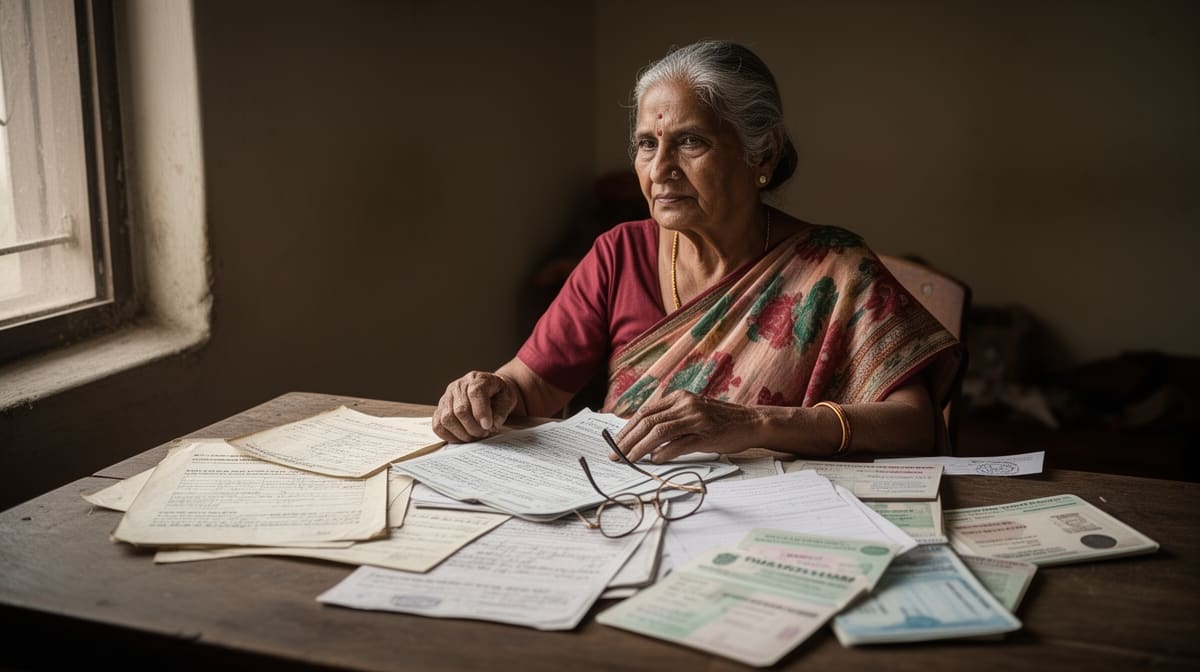
The petitioner, P.P. Zareena, filed a suit for partition of scheduled properties in 2017 before the Principal Munsiff Court-I, Kozhikode. The defendants, her siblings, contended in their written statement that the properties were the subject of an oral gift by their mother, Ayshabi. During the trial, the defendants produced three documents, including a Will dated 19.12.2012, allegedly executed by Ayshabi. The petitioner obtained a certified copy of the Will on 01.01.2021 and claimed it was a gift deed rather than a Will. She further alleged that the document did not bear her mother's signature.
Key Facts
- 19.12.2012: Alleged execution of the Will/gift deed by Ayshabi.
- 2017: Suit for partition (O.S. No. 59 of 2017) filed by the petitioner.
- October 2017: Defendants filed a joint written statement claiming the properties were subject to an oral gift by Ayshabi.
- 2020: Defendants produced three documents, including the disputed Will/gift deed.
- 01.01.2021: Petitioner obtained a certified copy of the Will.
- 01.12.2020: Petitioner filed I.A. No. 3 of 2020 (details not specified in judgment).
- I.A. No. 6 of 2021: Petitioner filed an application seeking verification of the Will by an Expert, alleging the document did not bear Ayshabi's signature.
Procedural History
- O.S. No. 59 of 2017: Suit for partition filed before the Principal Munsiff Court-I, Kozhikode.
- I.A. No. 6 of 2021: Application filed by the petitioner seeking expert opinion on the disputed Will.
- 25.09.2021: Trial court rejected I.A. No. 6 of 2021, holding:
- The document was irrelevant as the main issue was whether the property was subject to an oral gift.
- Sending the document for expert opinion at that stage would cause hardship to the parties as the trial had commenced.
- O.P.(C) No. 1810 of 2021: Petitioner filed an original petition before the Kerala High Court challenging the order dated 25.09.2021.
Relief Sought
The petitioner sought:
- Quashing of the order dated 25.09.2021 in I.A. No. 6 of 2021.
- Direction to the trial court to send the disputed Will for expert opinion.
- Proceeding with the suit after obtaining the expert opinion.
The Legal Issue
The central question was whether a trial court can reject an application for expert opinion under Section 73 of the Evidence Act on the grounds that:
- The disputed document is irrelevant to the main issue (oral gift vs. Will).
- The trial has commenced, and sending the document for expert opinion would cause hardship to the parties.
Arguments Presented
For the Petitioner
The petitioner relied on the following precedents to argue that the trial court erred in rejecting the application for expert opinion:
- State (Delhi Administration) v. Pali Ram [1979 KHC 525]: The Supreme Court held that courts can direct an accused to provide specimen handwriting for comparison under Section 73 of the Evidence Act, as it falls within the purview of "admitted writing."
- Kunhalima v. Mahammed [2024 KHC 267]: A learned Judge of the Kerala High Court held that comparison of signatures by the naked eye is dangerous and unsafe and should be left to experts.
- Vishnu Nampoothiri E. v. V. Balachandran [2020 (3) KHC 211]: The court held that Section 73 is a rule of caution and prudence, not a substitute for expert opinion under Section 45 of the Evidence Act. A court's own comparison of signatures may lead to infirmities.
The petitioner contended that the trial court's approach was legally flawed, as the disputed Will could not be dismissed as irrelevant without proper verification. The document's authenticity had a direct bearing on the defendants' claim of an oral gift.
For the Respondents
The respondents argued that:
- The main issue in the suit was whether the property was subject to an oral gift, not the validity of the Will.
- The trial had already commenced, and sending the document for expert opinion at that stage would cause undue delay and hardship.
- The petitioner's application was an attempt to prolong the proceedings unnecessarily.
The Court's Analysis
The High Court examined the legal principles governing Section 73 of the Evidence Act and the precedents cited by the petitioner. Key observations included:
-
Expert Opinion vs. Court's Comparison:
"In the light of the law laid down in the aforesaid decisions, there can be no doubt about the proposition that it is always better to call for an expert's opinion rather than the court by itself comparing signatures with the naked eye." The Court emphasized that Section 73 is a rule of caution, and courts should avoid comparing signatures without expert assistance, as it may lead to erroneous conclusions.
-
Relevance of the Disputed Document: The trial court had erred in holding that the disputed Will was irrelevant merely because the main issue was an oral gift. The Court noted:
"The contention based on the document will have a bearing, whether it is found in favour or not, on the contention regarding the oral gift. As such, the document cannot be said to be totally irrelevant." The authenticity of the Will could directly impact the defendants' claim of an oral gift, and dismissing it without verification was legally unjustified.
-
Precedents Applied:
- The Court distinguished Vipin Jaiswal v. State of A.P. [2013 KHC 4195], where the court had suggested that a husband acquainted with his wife's handwriting could assist in comparison. The present case involved a disputed Will, and the petitioner had no personal knowledge of Ayshabi's signature, making expert opinion indispensable.
- The Court relied on Kunhalima and Vishnu Nampoothiri to reiterate that expert opinion is preferable to a court's own comparison of signatures.
The Verdict
The Kerala High Court allowed the original petition. The key directions were:
- The order dated 25.09.2021 in I.A. No. 6 of 2021 was set aside.
- I.A. No. 6 of 2021 was allowed.
- The trial court was directed to send the disputed Will for expert opinion and proceed with the suit after obtaining the opinion.
What This Means For Similar Cases
Expert Opinion Is Mandatory for Disputed Documents
- Courts cannot dismiss a document as irrelevant without proper verification, especially when its authenticity is central to the dispute.
- Section 73 of the Evidence Act mandates caution, and Section 45 (expert opinion) should be invoked wherever signatures or handwriting are disputed.
- Practitioners should insist on expert verification in cases involving disputed Wills, gift deeds, or contracts, even if the main issue appears unrelated.
Trial Courts Cannot Prejudge Document Relevance
- Trial courts cannot dismiss documents as irrelevant merely because they do not align with the primary issue (e.g., oral gift vs. Will).
- The relevance of a document must be determined after its authenticity is verified, not before.
- This judgment reinforces that procedural fairness requires courts to consider all evidence before adjudicating on merits.
Hardship to Parties Cannot Justify Denial of Expert Opinion
- The trial court's reasoning that sending the document for expert opinion would cause hardship to the parties was rejected.
- Courts must balance procedural efficiency with substantive justice - denying expert opinion to avoid delay is not a valid ground when the document's authenticity is in question.
- Practitioners can cite this judgment to counter arguments that expert opinion applications are dilatory tactics in ongoing trials.