Telangana High Court judgments

180 Telangana High Court judgments explained in plain English: what was decided, the law applied and why it matters. Page 4 of 8.

Article 226 | Eviction Without Notice Violates Natural Justice Under Articles 14 & 21 : Telangana HC Restores Possession to Family with Minor Children
Case Law Analysis
|Telangana High Court

Article 226 | Eviction Without Notice Violates Natural Justice Under Articles 14 & 21 : Telangana HC Restores Possession to Family with Minor Children

Telangana High Court ruled that eviction from a residential home housing minor children without prior notice is arbitrary and unconstitutional, violating principles of natural justice. The Court restored possession to the petitioner, emphasizing that statutory authorities must adhere to due process regardless of the forum involved.


Customs Seizure | Provisional Release Mandated on Enhanced Duty + 10% Bank Guarantee to Protect Right to Business : Telangana HC
Case Law Analysis
|Telangana High Court

Customs Seizure | Provisional Release Mandated on Enhanced Duty + 10% Bank Guarantee to Protect Right to Business : Telangana HC

The Telangana High Court has ruled that customs authorities cannot indefinitely detain imported goods merely due to suspected valuation discrepancies; provisional release must be granted upon payment of enhanced duty and a 10% bank guarantee, as prolonged seizure violates the importer's fundamental right to carry on trade under Article 19(1)(g). This sets a critical precedent for businesses facing arbitrary customs holdups, ensuring procedural fairness without compromising revenue protection.

Possessory Rights Protected Pending Litigation | No Survey or Fencing Without Notice Under Article 226 : Telangana HC
Case Law Analysis
|Telangana High Court

Possessory Rights Protected Pending Litigation | No Survey or Fencing Without Notice Under Article 226 : Telangana HC

The Telangana High Court has ruled that administrative agencies cannot conduct land surveys or erect fences on disputed property without serving notice to the possessor, even in the absence of title. This upholds the principle that peaceful possession, not just legal ownership, is a protected interest under Article 226 and natural justice, affecting all landowners caught in pending litigation with government bodies.

Section 482 BNSS | Mere Kinship or Nominal Partnership Does Not Justify Pre-Arrest Bail Denial in Corporate Fraud: Telangana HC
Case Law Analysis
|Telangana High Court

Section 482 BNSS | Mere Kinship or Nominal Partnership Does Not Justify Pre-Arrest Bail Denial in Corporate Fraud: Telangana HC

Telangana High Court rules that family members or nominal partners in a corporate fraud case cannot be denied pre-arrest bail solely based on their relationship with the main accused. The court held that custodial interrogation is unnecessary where the investigation is advanced and the primary accused is already on bail, reinforcing that liability must be established through active involvement, not mere association.

Section 167(2) CrPC & BNSS | Mandatory Bail Granted for 90-Day Charge Sheet Delay in POCSO & BNS Case : Telangana HC
Case Law Analysis
|Telangana High Court

Section 167(2) CrPC & BNSS | Mandatory Bail Granted for 90-Day Charge Sheet Delay in POCSO & BNS Case : Telangana HC

Telangana High Court reinforces that statutory bail under Section 167(2) CrPC (BNSS equivalent) is an indefeasible right, even in serious offences like POCSO, if the prosecution fails to file a charge sheet within 90 days. The ruling underscores that procedural timelines override gravity of allegations, directly impacting pre-trial detention rights for accused persons.

Sections 406 & 420 IPC | Criminal Proceedings Abuse Quashed for Civil Breach Without Dishonest Intent at Inception : Telangana HC
Case Law Analysis
|Telangana High Court

Sections 406 & 420 IPC | Criminal Proceedings Abuse Quashed for Civil Breach Without Dishonest Intent at Inception : Telangana HC

Telangana High Court quashed an FIR under Sections 406 and 420 IPC, ruling that criminal law cannot be weaponized to enforce civil contracts absent dishonest intent at the time of agreement. The Court held that a mere breach of contract does not constitute criminal breach of trust or cheating unless fraudulent intent is established upfront, reinforcing BNSS Section 35(3) compliance.

Natural Justice in Eviction Proceedings | Telangana Land Encroachment Act Notices Must Provide 15-Day Reply Period : Telangana HC
Case Law Analysis
|Telangana High Court

Natural Justice in Eviction Proceedings | Telangana Land Encroachment Act Notices Must Provide 15-Day Reply Period : Telangana HC

Telangana High Court rules that eviction notices under the Land Encroachment Act must allow a minimum 15-day reply period to comply with principles of natural justice and Article 21. Failure to provide this window renders the notices illegal, arbitrary, and subject to quashing, reinforcing procedural fairness in government land eviction cases.

BNS Sections 318(4), 316(5) | Passive Benefit Without Active Participation Insufficient for Criminal Liability : Telangana HC Grants Pre-Arrest Bail
Case Law Analysis
|Telangana High Court

BNS Sections 318(4), 316(5) | Passive Benefit Without Active Participation Insufficient for Criminal Liability : Telangana HC Grants Pre-Arrest Bail

Telangana High Court rules that mere receipt of property via a disputed deed-without active involvement in the alleged offences-does not attract criminal liability under Bharatiya Nyaya Sanhita. The judgment clarifies that familial association or passive benefit alone cannot justify arrest, reinforcing the need for concrete evidence of participation in criminal acts.

BNSS Section 528 | Omnibus Dowry Allegations Against Family Violate Procedural Safeguards: Telangana HC Mandates Prima Facie Case Before Arrest
Case Law Analysis
|Telangana High Court

BNSS Section 528 | Omnibus Dowry Allegations Against Family Violate Procedural Safeguards: Telangana HC Mandates Prima Facie Case Before Arrest

Telangana High Court rules that naming family members in dowry complaints without specific allegations contravenes BNSS Section 528, requiring investigators to apply Arnesh Kumar guidelines and Section 35(3) BNSS before proceeding. The judgment reinforces that automatic arrests based on generic accusations are illegal, protecting non-primary accused from arbitrary detention.

Section 5 TGPDFEA | 'Investment' Under MOU Not a 'Deposit' for Non-Bailable Offence: Telangana HC Grants Bail in ₹8.5 Crore Fraud Case
Case Law Analysis
|Telangana High Court

Section 5 TGPDFEA | 'Investment' Under MOU Not a 'Deposit' for Non-Bailable Offence: Telangana HC Grants Bail in ₹8.5 Crore Fraud Case

Telangana High Court clarifies that funds documented as investments under MOUs-even with promised returns-do not qualify as 'deposits' under the Telangana Protection of Depositors in Financial Establishments Act (TGPDFEA). The ruling reinforces that contractual terms govern statutory classification, shielding accused from non-bailable provisions where no deposit receipt or unconditional repayment obligation exists.

Writ Rule 12(a) | 120-Day Counter Affidavit Deadline Mandatory; Non-Compliance Bars Defense : Telangana HC
Case Law Analysis
|Telangana High Court

Writ Rule 12(a) | 120-Day Counter Affidavit Deadline Mandatory; Non-Compliance Bars Defense : Telangana HC

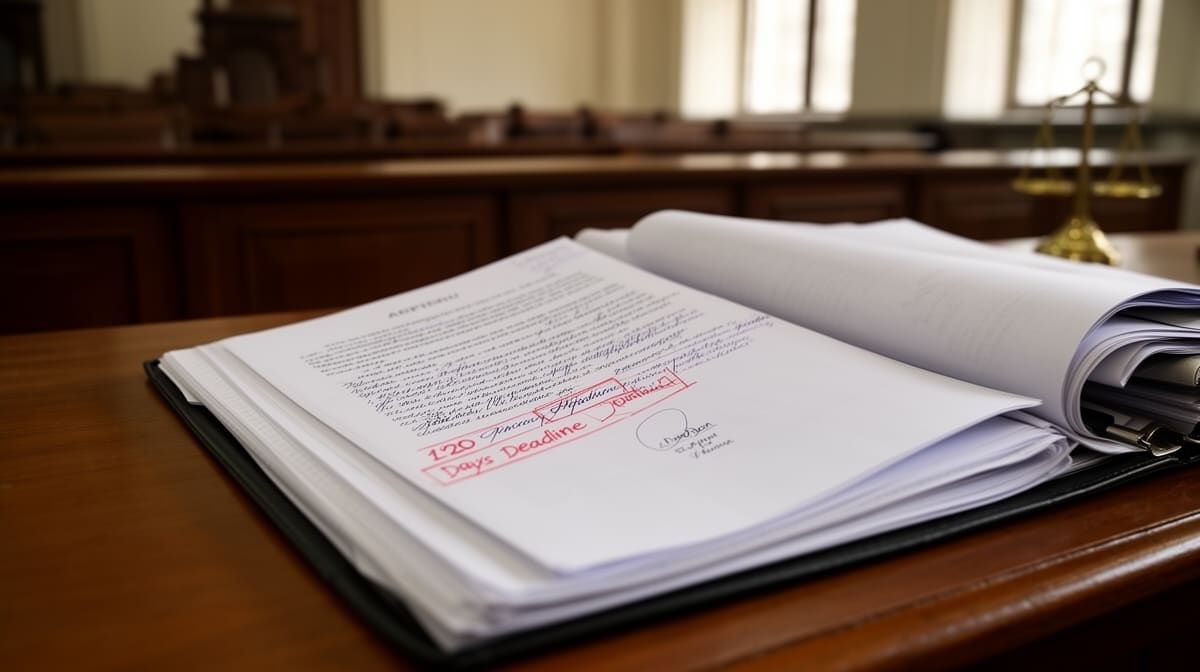
Telangana High Court reinforces strict adherence to Writ Rule 12(a), holding that failure to file a counter affidavit within 120 days irrevocably bars respondents from contesting a writ petition, even in property disputes. The ruling underscores procedural compliance as non-negotiable, leaving no room for exceptions based on natural justice claims.

Section 35 Registration Act, 1908 | Sub-Registrar Must Record DRT Sale Certificates in Book-I to Protect Auction Purchaser Rights : Telangana HC
Case Law Analysis
|Telangana High Court

Section 35 Registration Act, 1908 | Sub-Registrar Must Record DRT Sale Certificates in Book-I to Protect Auction Purchaser Rights : Telangana HC

Telangana High Court holds that Sub-Registrars are statutorily bound under Section 35 of the Registration Act, 1908, to record Debt Recovery Tribunal sale certificates in Book-I. Failure to do so violates auction purchasers' constitutional rights under Articles 14 and 21, as it deprives them of public notice and title protection. The ruling mandates compliance with registration formalities even for court-ordered auction sales to ensure transparency and legal certainty.

BNS Sections 316(5) & 318(4) | Mere Bail Assistance Without Corrupt Intent Cannot Attract Criminal Conspiracy Charges : Telangana HC Grants Interim Stay
Case Law Analysis
|Telangana High Court

BNS Sections 316(5) & 318(4) | Mere Bail Assistance Without Corrupt Intent Cannot Attract Criminal Conspiracy Charges : Telangana HC Grants Interim Stay

Telangana High Court rules that legal counsel cannot be prosecuted for routine bail assistance under BNS Sections 316(5) and 318(4) absent independent evidence of corrupt intent. The ruling reinforces professional immunity for advocates acting in their legitimate capacity, setting a precedent for protecting legal practitioners from frivolous criminal allegations.

BNS Section 308(6) | Delayed Complaint with Vague Allegations Raises Prima Facie Abuse of Process : Telangana HC Grants Interim Stay
Case Law Analysis
|Telangana High Court

BNS Section 308(6) | Delayed Complaint with Vague Allegations Raises Prima Facie Abuse of Process : Telangana HC Grants Interim Stay

Telangana High Court ruled that an 11-month delay in lodging a complaint, coupled with vague allegations, prima facie indicates abuse of criminal process under BNS Section 308(6). The court stayed proceedings, reinforcing that timely and specific complaints are essential to prevent misuse of legal mechanisms, particularly in cases involving media professionals.

Section 223(1) BNS | Mandatory Pre-Cognizance Hearing for Accused Before Summons Issuance : Telangana HC Quashes Mechanical Process
Case Law Analysis
|Telangana High Court

Section 223(1) BNS | Mandatory Pre-Cognizance Hearing for Accused Before Summons Issuance : Telangana HC Quashes Mechanical Process

Telangana High Court rules that magistrates must provide accused an opportunity of being heard before taking cognizance under Section 223(1) of Bharatiya Nyaya Sanhita, 2023. Non-compliance renders summons issuance void ab initio, reinforcing natural justice in criminal proceedings and setting a binding precedent for procedural fairness.

Section 120 Indian Evidence Act | Spouse Competent as Witness in Civil Suits Without Substitution of Evidence: Telangana High Court
Case Law Analysis
|Telangana High Court

Section 120 Indian Evidence Act | Spouse Competent as Witness in Civil Suits Without Substitution of Evidence: Telangana High Court

The Telangana High Court ruled that a spouse is a competent witness in civil suits under Section 120 of the Indian Evidence Act, emphasizing that their testimony supplements rather than substitutes evidence. This clarification ensures that spousal testimony can be relied upon in property and family disputes without procedural barriers, reinforcing evidentiary flexibility in civil litigation.

GHMC Act | Pending Regularization Does Not Justify Stoppage of Construction Under Articles 14 & 21 : High Court of Telangana
Case Law Analysis
|Telangana High Court

GHMC Act | Pending Regularization Does Not Justify Stoppage of Construction Under Articles 14 & 21 : High Court of Telangana

The High Court of Telangana ruled that municipal authorities cannot halt legally permitted construction merely because a regularization application is pending. The court emphasized that arbitrary enforcement violates principles of natural justice and constitutional rights under Articles 14 and 21, reinforcing that valid building permits must be honored until due process is completed.

Section 204 BNSS | Mechanical Summons Issuance Without Judicial Application of Mind Invalid: Telangana High Court Quashes Proceedings
Case Law Analysis
|Telangana High Court

Section 204 BNSS | Mechanical Summons Issuance Without Judicial Application of Mind Invalid: Telangana High Court Quashes Proceedings

The Telangana High Court ruled that a Magistrate must record reasons and apply judicial mind before issuing summons under Section 204 of the Bharatiya Nagarik Suraksha Sanhita (BNSS). Rubber-stamp issuance of summons without due application of mind renders the proceedings invalid, affecting criminal trial procedures and safeguarding accused rights against arbitrary prosecution.

Section 190 Cr.P.C. | Magistrate Must Record Reasons for Cognizance: Telangana High Court Quashes Mechanical Summons
Case Law Analysis
|Telangana High Court

Section 190 Cr.P.C. | Magistrate Must Record Reasons for Cognizance: Telangana High Court Quashes Mechanical Summons

The Telangana High Court ruled that a magistrate must apply judicial mind and record reasons before taking cognizance under Section 190 Cr.P.C., quashing summons issued without reasoned orders. This reinforces procedural safeguards against arbitrary criminal proceedings, impacting accused persons and judicial officers handling criminal complaints.

Telangana Land Encroachment Act Notices Must Specify Extent & Legal Basis | Article 14 & 21 Violations Trigger Interim Relief: Telangana High Court
Case Law Analysis
|Telangana High Court

Telangana Land Encroachment Act Notices Must Specify Extent & Legal Basis | Article 14 & 21 Violations Trigger Interim Relief: Telangana High Court

The Telangana High Court ruled that notices under the Land Encroachment Act, 1905, must clearly specify the extent of encroachment and the legal basis for government claims. Vague notices violate constitutional rights under Article 14 (equality) and Article 21 (fair procedure), entitling affected parties to interim relief. This judgment reinforces natural justice principles for landowners facing arbitrary administrative actions.

Article 226 Writ Jurisdiction | Police Must Register FIR and Issue Non-Traceable Certificate for Lost Registered Documents : Telangana High Court
Case Law Analysis
|Telangana High Court

Article 226 Writ Jurisdiction | Police Must Register FIR and Issue Non-Traceable Certificate for Lost Registered Documents : Telangana High Court

The Telangana High Court has held that police inaction in registering an FIR or issuing a Non-Traceable Certificate for lost registered documents violates constitutional duty and principles of natural justice. The ruling mandates police to act on complaints regarding missing legal documents, ensuring legal recourse for affected parties under Article 226.