The Telangana High Court has clarified that customs authorities cannot indefinitely detain imported goods pending adjudication, affirming the right of importers to seek provisional release upon compliance with structured financial safeguards. This ruling reinforces the balance between state revenue interests and fundamental commercial rights under Article 19(1)(g).
Background & Facts
The Dispute
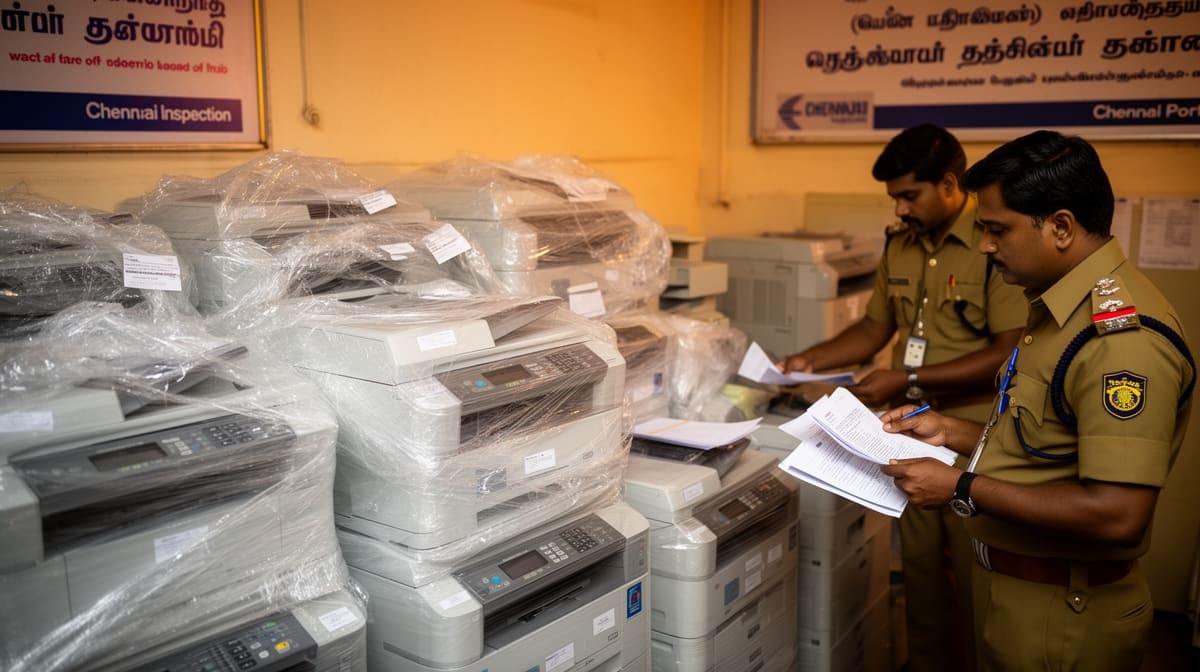
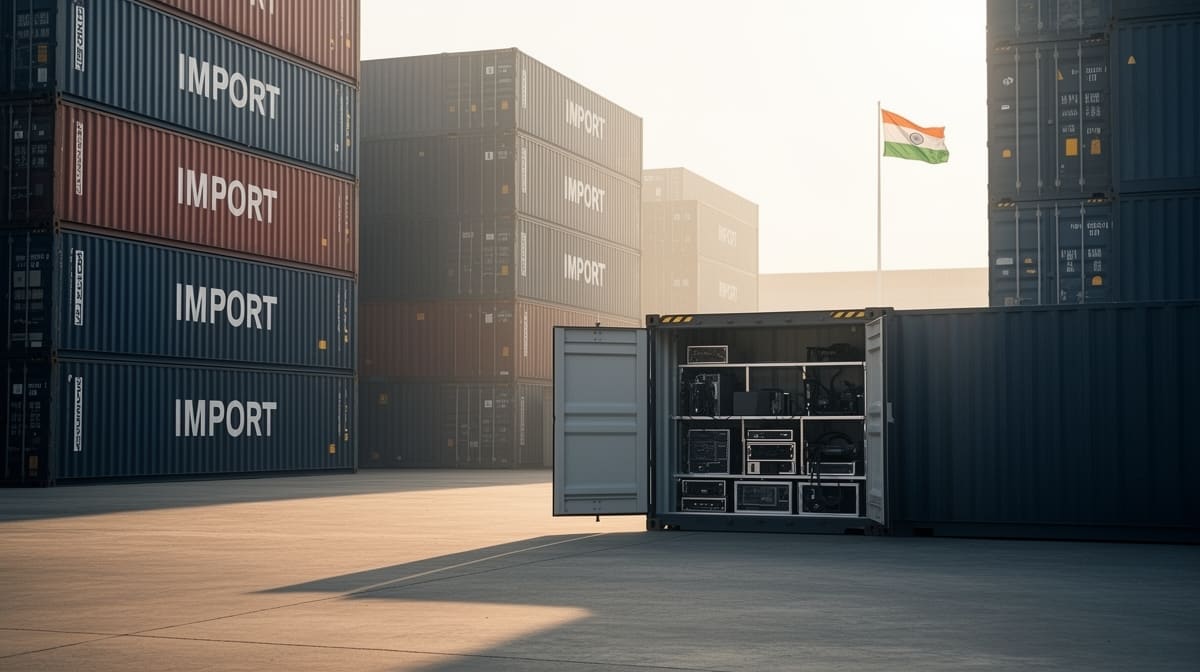
M/s. Digital Print Solutions imported 211 units of second-hand digital multifunction printing, copying, and scanning machines under Bill of Entry No. 7545796 dated 16.02.2026. The respondents, customs authorities, seized the goods on 05.03.2026, alleging discrepancies in valuation and classification under the Customs Act, 1962. The petitioner challenged the seizure as arbitrary and violative of its right to carry on trade under Article 19(1)(g) and Article 14 of the Constitution.
Procedural History
The petitioner filed two concurrent remedies:
- Writ Petition No. 7128 of 2026 under Article 226 seeking quashing of seizure and release of goods
- Miscellaneous Application No. 1 of 2026 under Section 151 CPC for interim relief
This Bench had previously adjudicated identical petitions involving seizure of similar goods. In W.P. No. 12489 of 2025, it had permitted provisional release subject to conditions including payment of enhanced duty, bank guarantee, and consideration of demurrage waiver.
Relief Sought
The petitioner sought:
- Immediate release of seized goods upon payment of applicable duties
- Waiver of demurrage charges accrued during detention
- Setting aside of seizure memo and panchanama as illegal and disproportionate
The Parties' Positions
For the Petitioner: Argued that prolonged detention without adjudication violates Article 19(1)(g) and Article 300A. Cited W.P. No. 12489 of 2025 as binding precedent. Emphasized that goods are perishable in commercial value and delay causes irreparable loss to business.
For the Respondents: Contended that seizure was lawful under Section 110 of the Customs Act, 1962 due to suspected undervaluation. Asserted that release before adjudication could prejudice revenue recovery and enable circumvention of tax liability.
The Legal Issue
The central question was whether customs authorities may detain imported goods indefinitely pending adjudication, or whether the importer is entitled to provisional release upon depositing enhanced duty, furnishing a bank guarantee, and agreeing to cooperate with ongoing proceedings.
Arguments Presented
For the Petitioner
The petitioner relied on W.P. No. 12489 of 2025, where this Court had already laid down a balanced framework for provisional release. It argued that Article 19(1)(g) protects the right to trade, and prolonged detention without trial amounts to an unreasonable restriction. It further cited State of Maharashtra v. M/s. R. K. Industries to emphasize that mere suspicion of valuation irregularity does not justify indefinite seizure. The petitioner also highlighted that the Supreme Court in SLP No. 42808/2024 had declined to interfere with the earlier order, thereby endorsing its legality.
For the Respondent
The respondents contended that Section 110 of the Customs Act grants broad powers to seize goods suspected of being imported in contravention of law. They argued that allowing release before adjudication could lead to disposal of goods and render any future penalty unenforceable. They also claimed that the petitioner had not provided sufficient evidence to prove the legitimacy of declared value, and that demurrage waiver was a discretionary administrative matter.
The Court's Analysis
The Court examined the constitutional balance between state revenue interests and fundamental commercial rights. It noted that while customs authorities have statutory power to seize under Section 110, such power must be exercised reasonably and proportionately. The Court observed that indefinite detention of goods pending adjudication - often stretching months or years - effectively nullifies the commercial utility of the imported items, thereby violating Article 19(1)(g).
"The right to carry on trade is not a mere privilege but a fundamental right under Article 19(1)(g). Detention of goods for prolonged periods without adjudication, even on suspicion, amounts to an unreasonable restriction on trade."
The Court reaffirmed its earlier precedent in W.P. No. 12489 of 2025, noting that the Supreme Court had declined to interfere with that order, thereby implicitly endorsing its legal soundness. The Court emphasized that the conditions imposed - enhanced duty deposit, bank guarantee, and cooperation in providing transaction details - are sufficient safeguards to protect revenue interests without infringing on the petitioner’s commercial rights.
The Court also clarified that the adjudicating authority remains free to proceed independently and is not bound by the interim order. The release is purely provisional and does not preclude the authorities from imposing penalties or demanding additional duties upon final adjudication.
The Verdict
The petitioner succeeded. The Telangana High Court held that provisional release of seized customs goods is permissible upon payment of enhanced duty, furnishing a 10% bank guarantee, and submission of customer transaction records, while preserving the right of customs authorities to complete adjudication. The Court directed immediate compliance with these conditions and ordered consideration of demurrage waiver upon application.
What This Means For Similar Cases
Provisional Release Is a Right, Not a Privilege
- Practitioners must now routinely seek provisional release under Article 226 when goods are detained beyond 30 days without adjudication
- Courts will treat prolonged detention as prima facie violation of Article 19(1)(g)
- Failure to grant release without compelling reasons may invite writ jurisdiction
Bank Guarantee Is Mandatory, Not Discretionary
- A 10% bank guarantee of the total value of goods is now a non-negotiable condition for release
- Guarantees must be issued by scheduled banks and submitted within 7 days of the order
- Failure to furnish guarantee within stipulated time renders release invalid
Demurrage Waiver Must Be Considered Objectively
-
Petitioners must file separate applications for demurrage waiver within 15 days of release
-
Customs authorities cannot reject such applications on generic grounds
-
Waiver decisions must be reasoned and documented, subject to judicial review
-
Importers must maintain and submit transaction records of sold goods to customs authorities upon request
-
Non-compliance may lead to revocation of provisional release or initiation of penalty proceedings
-
This creates a new compliance obligation for importers dealing in seized goods