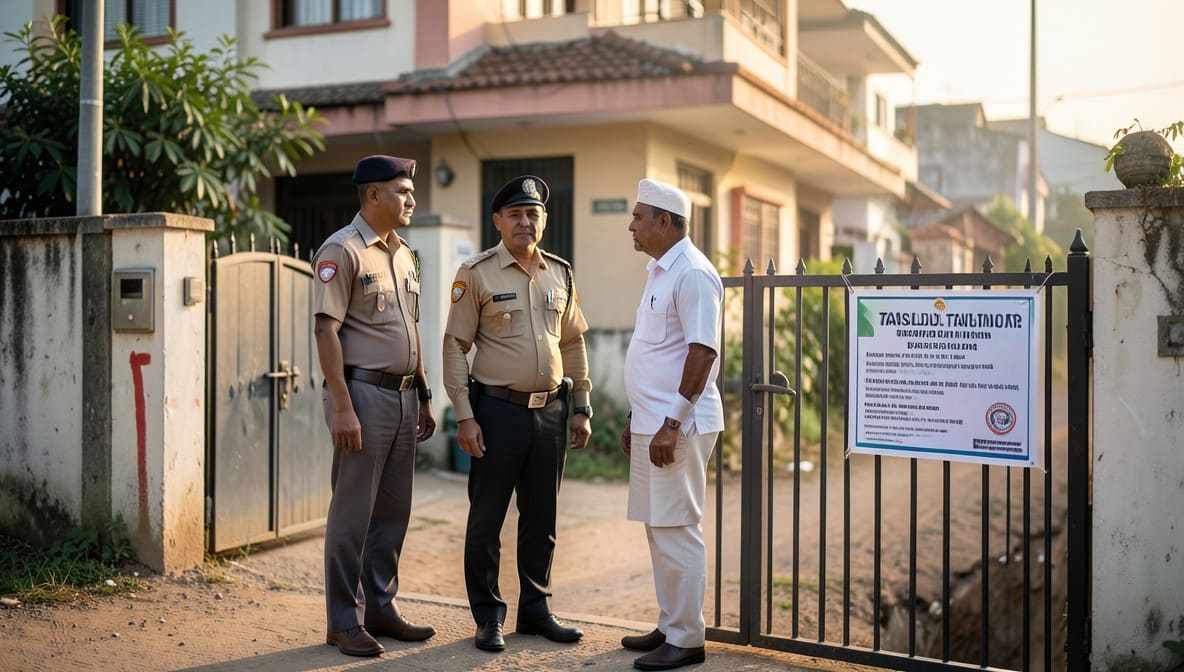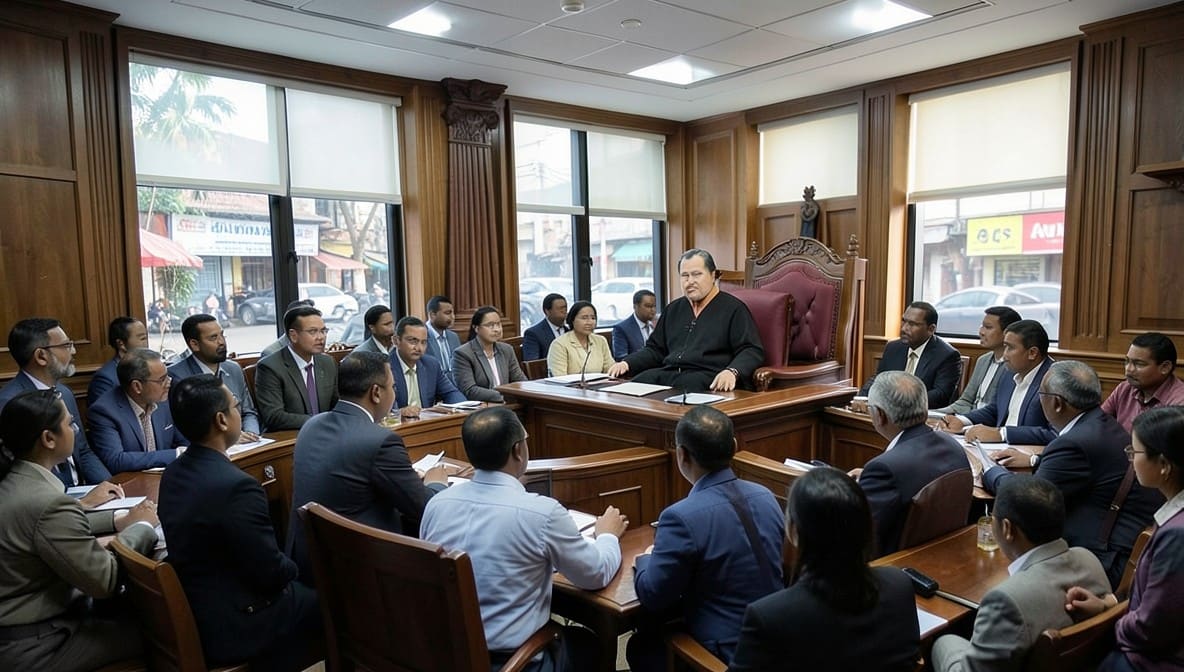
The Bombay High Court has reaffirmed that Magistrates under Section 14 of the Securitization and Reconstruction of Financial Assets and Enforcement of Security Interest Act, 2002, perform a strictly ministerial function, with no adjudicatory authority. This ruling resolves persistent procedural irregularities in Mumbai’s judicial machinery, reinforcing the statutory intent to expedite enforcement by secured creditors without unnecessary litigation.
Background & Facts
The Dispute
The petitioner, Bajaj Housing Finance Limited, a registered secured creditor under the Securitization and Reconstruction of Financial Assets and Enforcement of Security Interest Act, 2002 (SARFAESI Act), filed two applications under Section 14 before the Chief Judicial Magistrate, Mumbai, seeking assistance in taking possession of secured assets. These applications were filed on 12.12.2025 and 16.02.2026. Despite the statutory mandate for expeditious disposal, no orders have been passed as of the date of the petition.
Key Facts
- The petitioner is a financial institution duly registered under the RBI and authorized to enforce security interests under the SARFAESI Act
- Two Securitization Cases were filed: No. 1509 of 2025 and No. 199 of 2026
- The Chief Judicial Magistrate, Mumbai, has permitted borrowers to file affidavits and participate in the proceedings
- The Magistrate has not issued any order within the stipulated time, despite the statutory framework requiring disposal within 30 days
- The petitioner had previously complied with all procedural requirements under Sections 13(2), 13(4), and 14 of the SARFAESI Act
Procedural History
- 12.12.2025: First application under Section 14 filed before Chief Judicial Magistrate, Mumbai (Securitization Case No. 1509 of 2025)
- 16.02.2026: Second application under Section 14 filed (Securitization Case No. 199 of 2026)
- Between February and July 2026: No orders passed; borrowers permitted to file affidavits
- 09.07.2026: Writ Petition No. 8182 of 2026 filed before Bombay High Court
The Parties' Positions
Petitioner (Bajaj Housing Finance Limited): Argued that the Magistrate’s conduct violates the settled law that Section 14 proceedings are purely ministerial. The allowance of borrower affidavits introduces unnecessary delay and adjudicatory function, contrary to Supreme Court rulings.
Respondents (State of Maharashtra, Chief Judicial Magistrate, Mumbai): Did not contest the legal position but failed to comply with the binding guidelines issued by the Bombay High Court in L & T Finance Limited v. State of Maharashtra (2023 SCC OnLine Bom 931).
Relief Sought
The petitioner sought directions to the Chief Judicial Magistrate, Mumbai, to:
- Cease permitting borrower participation via affidavits
- Dispose of the two pending Section 14 applications within a stipulated time
- Comply with the 30-day disposal timeline and 4-week execution mandate laid down in L & T Finance
The Legal Issue
The central question was whether the Magistrate under Section 14 of the SARFAESI Act has the authority to permit borrowers to file affidavits and conduct an adjudicatory inquiry, or whether the Magistrate’s role is strictly ministerial as held by the Supreme Court.
Arguments Presented
For the Petitioner
The petitioner relied on Balkrishna Rama Tarle v. Phoenix ARC Private Limited (2023) 1 SCC 662 and NKGSB Co-operative Bank Limited v. Subir Chakravarty (2022) 10 SCC 286, where the Supreme Court held that the Magistrate under Section 14 performs only a ministerial function. The Magistrate’s duty is limited to verifying the compliance of the secured creditor with Sections 13(2) and 13(4), and ensuring the absence of any statutory bar. Any inquiry into the merits of the borrower’s defense, including receipt of affidavits, exceeds the statutory mandate and violates the legislative intent of expeditious enforcement.
For the Respondent
The State did not advance any substantive legal argument. The Registrar of the Chief Judicial Magistrate, Mumbai, was made a party but did not file any written submission justifying the delay or the procedural deviation.
The Court's Analysis
The Court examined the evolution of judicial interpretation under Section 14 of the SARFAESI Act. It noted that the Supreme Court in Balkrishna Rama Tarle had unequivocally held:
"The role of the Magistrate under Section 14 is only to satisfy himself that the conditions precedent under Section 13(2) and 13(4) have been complied with by the secured creditor. The Magistrate does not adjudicate the rights of the parties or determine the validity of the borrower’s objections."
The Court further cited NKGSB Co-operative Bank to emphasize that permitting borrowers to file affidavits transforms the proceeding into an adversarial trial, which is contrary to the legislative design of a summary enforcement mechanism. The Bombay High Court’s own guidelines in L & T Finance Limited had already mandated disposal within 30 days and execution within four weeks - directives that had been systematically ignored.
The Court observed that the delay of over six months in deciding two applications, coupled with the unauthorized admission of borrower affidavits, rendered the proceedings contrary to law. The Magistrate’s conduct not only violated Supreme Court precedent but also undermined the efficacy of the SARFAESI Act as a tool for timely recovery.
The Verdict
The writ petition is allowed. The Chief Judicial Magistrate, Mumbai, is directed to dispose of Securitization Case Nos. 1509 of 2025 and 199 of 2026 within four weeks from the date of this judgment. No borrower affidavits or written submissions shall be accepted in such proceedings. All pending applications in this petition are disposed of. The Magistrate shall strictly adhere to the 30-day disposal timeline and four-week execution mandate as laid down in L & T Finance Limited.
What This Means For Similar Cases
Magistrates Cannot Act as Adjudicators in Section 14 Proceedings
- Practitioners must immediately object to any attempt by borrowers to file affidavits or raise substantive defenses in Section 14 applications
- Any order passed after permitting such participation is liable to be set aside as ultra vires
- Secured creditors should file applications under Section 14 only after ensuring full compliance with Sections 13(2) and 13(4)
Timelines Are Mandatory, Not Directory
- The 30-day disposal period and 4-week execution window are binding directives, not suggestions
- Delays beyond these timelines constitute a violation of statutory mandate and may attract contempt proceedings
- Courts must treat non-compliance by Magistrates as systemic failure warranting supervisory intervention
Procedural Uniformity Across Jurisdictions
- This judgment reinforces that Section 14 proceedings must be uniform nationwide
- Any local practice permitting borrower participation must be discontinued immediately
- Legal teams should prepare Section 14 applications with minimal documentation focused solely on compliance with Sections 13(2) and 13(4)