High Courts judgments

10239 High Courts judgments explained in plain English: what was decided, the law applied and why it matters. Page 111 of 427.

Service of Summons Under Hindu Marriage Act Must Be Personal & Accurate; Ex-Parte Decree Void for Violating Natural Justice : Karnataka HC
Case Law Analysis
|Karnataka High Court

Service of Summons Under Hindu Marriage Act Must Be Personal & Accurate; Ex-Parte Decree Void for Violating Natural Justice : Karnataka HC

Karnataka High Court sets aside an ex-parte divorce decree after finding summons served on an incorrect name and address, violating principles of natural justice. The court emphasized that constructive service (e.g., pasting on electric poles) is insufficient when personal service is feasible, remanding the case for fresh hearing within six months.
DCR 33(5) | MCGM’s 100% Premium Levy for Staircase Relaxation Illegal; Refund Mandated with 6% Interest : Bombay HC
Case Law Analysis
|Bombay High Court

DCR 33(5) | MCGM’s 100% Premium Levy for Staircase Relaxation Illegal; Refund Mandated with 6% Interest : Bombay HC

Bombay High Court rules that the Municipal Corporation of Greater Mumbai (MCGM) lacks authority to impose a 100% premium for staircase relaxation under DCR 33(5), citing binding Supreme Court precedent. The Court directed a refund of Rs. 3.48 crore with 6% interest within 10 weeks, reinforcing limits on municipal discretion in development charges.

Order VIII Rule 1 CPC | 12-Year Delay in Filing Written Statement to Counter-Claim Uncondonable; Litigant Cannot Blame Advocate Negligence : Bombay HC
Case Law Analysis
|Bombay High Court

Order VIII Rule 1 CPC | 12-Year Delay in Filing Written Statement to Counter-Claim Uncondonable; Litigant Cannot Blame Advocate Negligence : Bombay HC

Bombay High Court holds that a 12-year delay in filing a written statement to a counter-claim is inexcusable under Order VIII Rule 1 CPC, emphasizing litigants' duty to remain vigilant in judicial proceedings. The ruling underscores that negligence of advocates cannot be a valid ground for condonation, reinforcing strict adherence to procedural timelines in civil disputes.

Commercial Courts Act Section 12-A | 120-Day Written Statement Deadline Mandatory, No Extension Even for Court Vacations: Karnataka HC
|Karnataka High Court

Commercial Courts Act Section 12-A | 120-Day Written Statement Deadline Mandatory, No Extension Even for Court Vacations: Karnataka HC

The Karnataka High Court ruled that the 120-day deadline for filing written statements under the Commercial Courts Act, 2015, is absolute. Defendants lose the right to file beyond this period, regardless of court vacations or delays, unless immediate action is taken. This reinforces strict statutory timelines in commercial litigation, impacting defendants' procedural rights.

Karnataka Police Act | Recreational Clubs Conducting Skill Games Exempt from Police Licensing Requirements : Karnataka HC
Case Law Analysis
|Karnataka High Court

Karnataka Police Act | Recreational Clubs Conducting Skill Games Exempt from Police Licensing Requirements : Karnataka HC

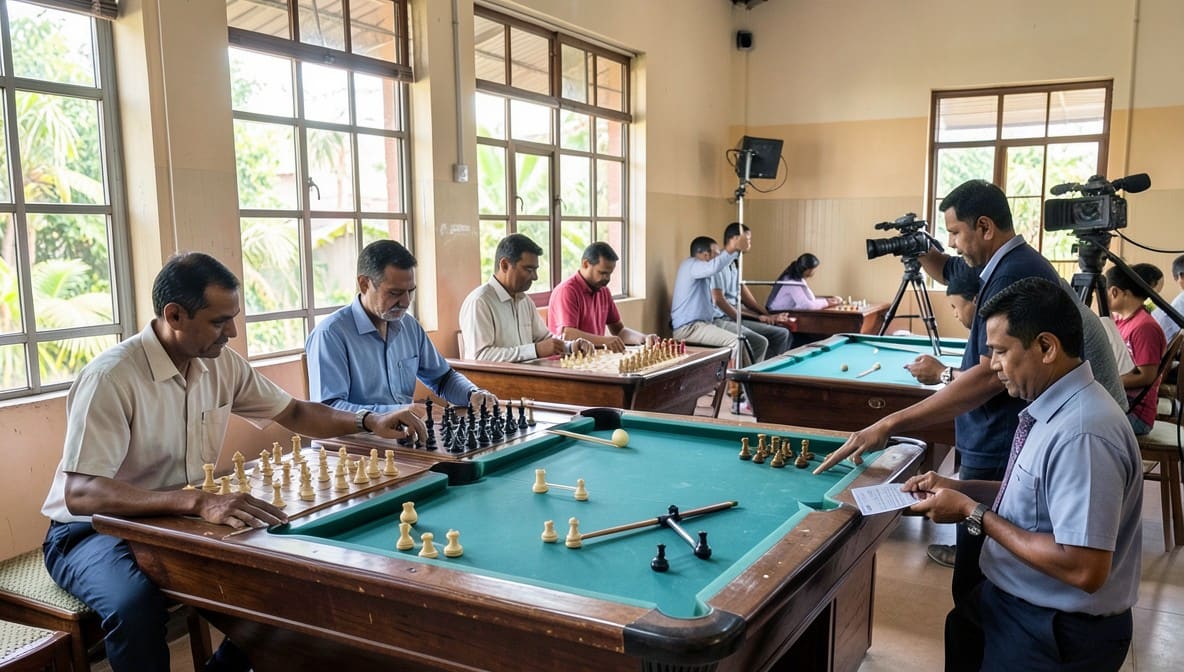
Karnataka High Court holds that registered recreational clubs offering skill-based games (e.g., carom, chess, rummy) are not 'places of public entertainment' under the Karnataka Police Act and cannot be compelled to obtain police licenses. The ruling clarifies that police powers do not extend to lawful recreational activities compliant with CCTV, identity verification, and no-stakes conditions.

Section 304-A IPC | Compensation Over Imprisonment for Decade-Old Accidents: Karnataka HC Upholds Restorative Justice in Fatal Road Mishaps
Case Law Analysis
|Karnataka High Court

Section 304-A IPC | Compensation Over Imprisonment for Decade-Old Accidents: Karnataka HC Upholds Restorative Justice in Fatal Road Mishaps

Karnataka High Court replaces a 12-year-old imprisonment sentence under Section 304-A IPC with Rs. 3,00,000 compensation, emphasizing victim relief over punitive measures in delayed accident cases. The ruling sets a precedent for judicial discretion favoring restorative justice where incarceration yields no rehabilitative benefit.

No Image
Case Law Analysis
|Karnataka High Court

BNS Section 108 | Mere Quarrels Without Direct Instigation Insufficient for Suicide Abetment; Bail Granted : Karnataka HC

Karnataka High Court rules that abetment of suicide under BNS Section 108 requires direct instigation, not just prior quarrels. The accused was granted bail as the prosecution failed to establish a clear link between the accused's conduct and the victim's suicide, setting a precedent for bail jurisprudence in suicide abetment cases.

Section 483 BNSS | Consensual Relationship with Near-Majority Victim Justifies Bail Under POCSO Act : Karnataka HC
Case Law Analysis
|Karnataka High Court

Section 483 BNSS | Consensual Relationship with Near-Majority Victim Justifies Bail Under POCSO Act : Karnataka HC

The Karnataka High Court granted bail to a 21-year-old accused under POCSO Act, emphasizing that consensual relationships with a 17-year-old victim-where no force was used and chargesheet is filed-warrant bail, especially when the accused has no criminal antecedents. This ruling clarifies that strict bail denial under POCSO may not apply where the victim is near the age of majority and consent is established.

Section 483 BNSS | Young Age, Clean Record, and Post-Examination Witnesses Justify Bail in POCSO Case : Karnataka HC
Case Law Analysis
|Karnataka High Court

Section 483 BNSS | Young Age, Clean Record, and Post-Examination Witnesses Justify Bail in POCSO Case : Karnataka HC

Karnataka High Court grants bail in a POCSO case, holding that the accused's young age (24), lack of criminal antecedents, and completion of key witness examinations negate risks of tampering or flight. The ruling underscores that prolonged pre-trial detention without imminent trial completion may violate personal liberty, even in serious offences.

Section 5 Limitation Act | Condonation of Delay Mandatory Before Appeal Admission; Non-Compliance Vitiates Order: Karnataka HC
Case Law Analysis
|Karnataka High Court

Section 5 Limitation Act | Condonation of Delay Mandatory Before Appeal Admission; Non-Compliance Vitiates Order: Karnataka HC

Karnataka High Court rules that appellate authorities must explicitly decide condonation of delay under Section 5 of the Limitation Act before admitting land records appeals. Failure to do so renders the appellate order procedurally invalid, violating principles of natural justice and requiring remand for fresh consideration.

Section 8 Arbitration Act | Fraud in Contract Formation Does Not Automatically Invalidate Arbitration Clause Unless Agreement Is Forged : Bombay HC
Case Law Analysis
|Bombay High Court

Section 8 Arbitration Act | Fraud in Contract Formation Does Not Automatically Invalidate Arbitration Clause Unless Agreement Is Forged : Bombay HC

The Bombay High Court clarifies that allegations of fraud in the making of a contract do not render an arbitration clause unenforceable unless the agreement itself is proven forged or non-existent. This reinforces the separability doctrine, ensuring parties cannot evade arbitration by merely pleading fraud - critical for commercial parties relying on arbitration agreements in high-stakes share transactions.

Mumbai Municipal Corporation Act Section 154 | Land Under Construction Must Be Assessed as Vacant Land, Not as Developed Property : Bombay HC
Case Law Analysis
|Bombay High Court

Mumbai Municipal Corporation Act Section 154 | Land Under Construction Must Be Assessed as Vacant Land, Not as Developed Property : Bombay HC

The Bombay High Court ruled that land under construction, even with partial development activity, must be classified as vacant land for rateable value purposes under the MMC Act, invalidating assessments based on construction progress. This clarifies that water charges and sewerage taxes are separate obligations requiring actual infrastructure, impacting developers and municipal revenue officers across Mumbai.

Bombay Public Trusts Act Section 24 | Lease Agreements Cannot Restrict Public Worship at Registered Dargahs : Bombay HC
Case Law Analysis
|Bombay High Court

Bombay Public Trusts Act Section 24 | Lease Agreements Cannot Restrict Public Worship at Registered Dargahs : Bombay HC

The Bombay High Court ruled that worshippers possess an independent civil right to access a registered public trust dargah, rendering any private lease terms that limit prayer hours or entry void. This affirms that statutory protections for public religious access under the Bombay Public Trusts Act supersede contractual arrangements, impacting all religious sites held in public trust across Maharashtra.

Article 14 | APRO Personnel Entitled to Equal Grade Pay as Other Assam Police Ranks; Arbitrary Exclusion Struck Down : GAHC
Case Law Analysis
|Gauhati High Court

Article 14 | APRO Personnel Entitled to Equal Grade Pay as Other Assam Police Ranks; Arbitrary Exclusion Struck Down : GAHC

The Gauhati High Court has ruled that excluding Assam Police Radio Organisation personnel from enhanced grade pay granted to equivalent ranks in other police units violates Article 14. The judgment mandates immediate payment of Rs. 7,400 and Rs. 6,800 grade pay w.e.f. April 1, 2016, setting a precedent for equitable pay structures within state police forces and closing a systemic gap in service benefits.

Section 9 Foreigners Act, 1946 | Non-contemporaneous and Unauthenticated Documents Fail to Discharge Burden of Proving Citizenship : Gauhati HC
Case Law Analysis
|Gauhati High Court

Section 9 Foreigners Act, 1946 | Non-contemporaneous and Unauthenticated Documents Fail to Discharge Burden of Proving Citizenship : Gauhati HC

The Gauhati High Court has ruled that citizenship claims under Section 9 of the Foreigners Act, 1946 cannot be sustained by vague written statements or documents lacking contemporaneity and proper authentication. This sets a strict evidentiary standard for individuals before Foreigners Tribunals, reinforcing that mere possession of old papers is insufficient without verifiable, time-bound proof of presence in India before 1971.

Authorized Signatory Entitled to Transit Compensation Under PAAA Despite Family Disputes & Alleged Document Fabrication : Bombay HC
|Bombay High Court

Authorized Signatory Entitled to Transit Compensation Under PAAA Despite Family Disputes & Alleged Document Fabrication : Bombay HC

The Bombay High Court affirmed that an authorized signatory acting on behalf of a company retains the legal right to receive transit accommodation compensation under the Permanent Alternate Accommodation Agreement, even amid familial conflicts and unchallenged allegations of document fabrication. This ruling reinforces corporate agency in property compensation matters and shields authorized representatives from personal disputes affecting statutory entitlements.

Section 304 Part II IPC | Sentence Reduced to Time Served Due to Two-Decade Trial Delay and Unblemished Conduct : Jharkhand HC
Case Law Analysis
|Jharkhand High Court

Section 304 Part II IPC | Sentence Reduced to Time Served Due to Two-Decade Trial Delay and Unblemished Conduct : Jharkhand HC

The Jharkhand High Court reduced a five-year sentence to time served after a 20-year trial delay, affirming that prolonged judicial inaction can justify proportionate sentencing even in serious culpable homicide cases. This sets a critical precedent for courts to weigh delay as a mitigating factor in sentencing, particularly for accused with clean records and no flight risk.

Estoppel Bars Licensee from Denying Locus of Partnership Firm as Lessor | Even When Title Is in Partner’s Name: Bombay HC
Case Law Analysis
|Bombay High Court

Estoppel Bars Licensee from Denying Locus of Partnership Firm as Lessor | Even When Title Is in Partner’s Name: Bombay HC

The Bombay High Court ruled that a licensee who previously acknowledged a partnership firm as the licensor cannot later deny its legal standing to file an eviction suit, even if the property title rests solely with an individual partner. This reinforces that admissions in lease dealings bind licensees under estoppel, protecting partnership entities from tactical legal reversals in eviction proceedings.

Section 109 IPC | Financial Support and Medical Advice Alone Do Not Constitute Abetment of Miscarriage Without Active Instigation : Jharkhand HC
|Jharkhand High Court

Section 109 IPC | Financial Support and Medical Advice Alone Do Not Constitute Abetment of Miscarriage Without Active Instigation : Jharkhand HC

The Jharkhand High Court holds that advising a victim to seek an abortion and covering its costs does not amount to criminal abetment under Section 109 IPC unless there is evidence of direct instigation or active participation in the act. This ruling protects individuals from being criminally liable for passive support in sensitive medical decisions, setting a critical boundary for abetment liability in reproductive rights cases.

Section 34 IPC | Liability for Attempted Murder Requires Active Participation, Not Mere Presence: Jharkhand HC
Case Law Analysis
|Jharkhand High Court

Section 34 IPC | Liability for Attempted Murder Requires Active Participation, Not Mere Presence: Jharkhand HC

The Jharkhand High Court acquits two accused under Section 307 IPC when medical evidence contradicted the victim’s claim of stone assault, holding that Section 34 cannot extend collective liability without proof of active, intentional involvement. This ruling sharpens the threshold for common intention in violent offenses, protecting bystanders from vicarious criminal liability.