Custom, Excise & Service Tax Tribunal judgments

454 Custom, Excise & Service Tax Tribunal judgments explained in plain English: what was decided, the law applied and why it matters. Page 10 of 19.

Section 108 Customs Act | Statements Require Section 138B Admissibility Procedure Before Reliance : CESTAT
Case Law Analysis
|Custom, Excise & Service Tax Tribunal

Section 108 Customs Act | Statements Require Section 138B Admissibility Procedure Before Reliance : CESTAT

CESTAT rules that statements recorded under Section 108 of the Customs Act cannot be used for customs valuation or penalty imposition unless they are formally admitted in evidence through witness examination under Section 138B. This holding reinforces procedural safeguards in customs investigations, impacting how digital and documentary evidence is treated in adjudication.


Service Tax Exemption for Whole-Time Directors' Remuneration | Salary Under Income Tax Act Excludes Service Tax Liability : CESTAT Ahmedabad
|Custom, Excise & Service Tax Tribunal

Service Tax Exemption for Whole-Time Directors' Remuneration | Salary Under Income Tax Act Excludes Service Tax Liability : CESTAT Ahmedabad

CESTAT Ahmedabad rules that remuneration paid to whole-time directors as commission or perquisites qualifies as salary under the Income Tax Act, placing it within the employer-employee relationship exemption from service tax. This clarifies a critical boundary for corporate compensation structures and relieves companies from reverse charge obligations on director payments previously treated as taxable services.

MLM Activities = Sale of Goods, Not Business Auxiliary Service; Demand Based Solely on Form 26AS Invalid : CESTAT Kolkata
Case Law Analysis
|Custom, Excise & Service Tax Tribunal

MLM Activities = Sale of Goods, Not Business Auxiliary Service; Demand Based Solely on Form 26AS Invalid : CESTAT Kolkata

CESTAT Kolkata rules that multi-level marketing operators are engaged in the sale of goods, not taxable services, rendering demands for service tax based solely on Form 26AS without corroborating evidence legally unsustainable. This sets a vital precedent for MLM distributors nationwide, shielding them from arbitrary tax assessments rooted in income tax data alone.

Cenvat Credit on Captive Power Plant | Credit Admissible When Electricity Fuels Dutiable Production, Even if Partially Sold: CESTAT Chandigarh
Case Law Analysis
|Custom, Excise & Service Tax Tribunal

Cenvat Credit on Captive Power Plant | Credit Admissible When Electricity Fuels Dutiable Production, Even if Partially Sold: CESTAT Chandigarh

CESTAT Chandigarh rules that Cenvat credit on capital goods for a captive power plant is valid if any portion of the generated electricity directly supports dutiable manufacturing, rejecting the Department’s argument that immovability or partial sale to third parties disqualifies the credit. This clarifies a critical ambiguity for industries relying on captive power, expanding eligibility beyond purely internal consumption.

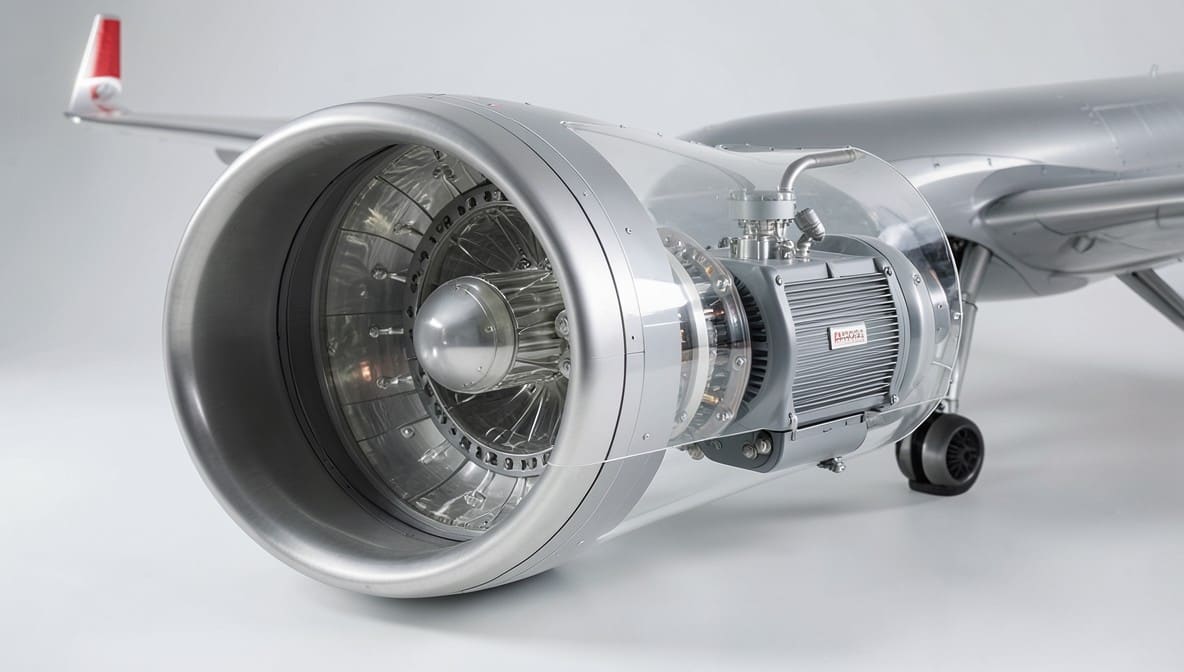
CESTAT Rules Generators for Gas Turbine Engines Must Be Classified Under CTH 8501, Not CTH 8511 | Aviation Sector Impacted
Case Law Analysis
|Custom, Excise & Service Tax Tribunal

CESTAT Rules Generators for Gas Turbine Engines Must Be Classified Under CTH 8501, Not CTH 8511 | Aviation Sector Impacted

CESTAT clarifies that integrated drive and starter generators for turboprop/turbofan engines fall under Customs Tariff Heading 8501, not 8511, as gas turbines differ from spark/compression ignition engines. This ruling affects aviation industry importers, customs duty calculations, and compliance under the Customs Tariff Act 1975.

Section 112(b) Customs Act | Customs Broker Penalized for Abetting Duty Evasion via Diversion of Duty-Free Cashew Imports : CESTAT Bangalore
Case Law Analysis
|Custom, Excise & Service Tax Tribunal

Section 112(b) Customs Act | Customs Broker Penalized for Abetting Duty Evasion via Diversion of Duty-Free Cashew Imports : CESTAT Bangalore

CESTAT Bangalore upheld a Rs. 2 lakh penalty on a customs broker for facilitating the diversion of duty-free cashew imports to the local market, violating advance authorization conditions. The ruling reinforces that brokers can be held liable for abetment under Section 112(b) even if not directly benefiting from the evasion, setting a precedent for stricter compliance enforcement in customs clearance.

Central Excise Valuation | Customer-Requested Type Test Charges Not Part of Transaction Value : CESTAT Mumbai
Case Law Analysis
|Custom, Excise & Service Tax Tribunal

Central Excise Valuation | Customer-Requested Type Test Charges Not Part of Transaction Value : CESTAT Mumbai

CESTAT Mumbai rules that type test charges paid by customers for transformer certification are distinct service fees, not part of the goods' transaction value for excise duty. This clarifies the boundary between taxable goods and separable services, impacting manufacturers who outsource compliance testing and rely on CENVAT credit claims.

Rule 7 Central Excise Valuation Rules | Transaction Value Must Reflect Actual Sale Price, Not Arbitrary 'Greatest Aggregate Value' : CESTAT Hyderabad
Case Law Analysis
|Custom, Excise & Service Tax Tribunal

Rule 7 Central Excise Valuation Rules | Transaction Value Must Reflect Actual Sale Price, Not Arbitrary 'Greatest Aggregate Value' : CESTAT Hyderabad

CESTAT Hyderabad ruled that excise duty valuation under Rule 7 must be based on the actual transaction value, rejecting the Department's demand predicated on the highest price of the week. The Tribunal emphasized the one-to-one correlation between factory clearance and depot sales, invalidating arbitrary valuation methods that disregard contractual agreements.

Section 28 Customs Act | Mandatory Show Cause Notice & 23-Year Delay Vitiate Refund Recovery Proceedings : CESTAT Mumbai
Case Law Analysis
|Custom, Excise & Service Tax Tribunal

Section 28 Customs Act | Mandatory Show Cause Notice & 23-Year Delay Vitiate Refund Recovery Proceedings : CESTAT Mumbai

CESTAT Mumbai rules that recovery proceedings under Section 28 of the Customs Act must strictly comply with the mandatory show cause notice requirement. A 23-year delay in adjudication violates principles of natural justice, rendering the demand for refund recovery null and void. This sets a critical precedent for procedural fairness in customs disputes.

CENVAT Credit Rules 2004 | Outward Freight Under FOR Sales Qualifies as Input Service if Buyer's Premises is Place of Removal : CESTAT Hyderabad
Case Law Analysis
|Custom, Excise & Service Tax Tribunal

CENVAT Credit Rules 2004 | Outward Freight Under FOR Sales Qualifies as Input Service if Buyer's Premises is Place of Removal : CESTAT Hyderabad

CESTAT Hyderabad ruled that where goods are sold on FOR basis with freight included in assessable value and risk retained till delivery, outward transportation up to the buyer's premises qualifies as 'input service' under Rule 2(l) of CENVAT Credit Rules 2004. This clarifies that the 'place of removal' can extend beyond the factory gate for FOR sales, allowing manufacturers to claim CENVAT credit on outward freight charges.

Service Tax Valuation | Reimbursable Expenses Excluded from Taxable Value Under Pure Agent Rule: CESTAT Chennai
Case Law Analysis
|Custom, Excise & Service Tax Tribunal

Service Tax Valuation | Reimbursable Expenses Excluded from Taxable Value Under Pure Agent Rule: CESTAT Chennai

CESTAT Chennai reaffirms that reimbursable expenses collected by service providers do not form part of taxable value under the Service Tax Valuation Rules, provided the 'Pure Agent' conditions are met. The ruling shields businesses from retrospective tax demands on expenses like freight, warehousing, and survey charges, reinforcing the Supreme Court's precedent invalidating Rule 5(1).

Central Excise Valuation | Consolidated Evidence Suffices for Trade Discount Abatement; One-to-One Correlation Not Required : CESTAT Chennai
Case Law Analysis
|Custom, Excise & Service Tax Tribunal

Central Excise Valuation | Consolidated Evidence Suffices for Trade Discount Abatement; One-to-One Correlation Not Required : CESTAT Chennai

CESTAT Chennai rules that abatement for trade discounts in jewellery trade can be granted based on consolidated sales data and Chartered Accountant certificates, without requiring transaction-wise correlation. This eases compliance burdens for manufacturers adopting provisional assessments under Rule 7 of Central Excise Rules, particularly in industries with fluctuating prices and indirect sales channels.

Service Tax Not Applicable on Placement Fees Collected from Students Under 'Manpower Recruitment' Definition : CESTAT Mumbai
|Custom, Excise & Service Tax Tribunal

Service Tax Not Applicable on Placement Fees Collected from Students Under 'Manpower Recruitment' Definition : CESTAT Mumbai

CESTAT Mumbai rules that placement fees charged by educational institutions to students-not employers-do not constitute 'manpower recruitment or supply agency service' under Section 65(105)(k) of the Finance Act, 1994. The decision clarifies that service tax liability arises only when institutions act as intermediaries for employers, shielding academic bodies from retrospective tax demands.

Service Tax Exemption for Visa Facilitation | Direct Traveler Assistance Not 'Business Auxiliary Service' Under Finance Act, 1994 : CESTAT Chennai
Case Law Analysis
|Custom, Excise & Service Tax Tribunal

Service Tax Exemption for Visa Facilitation | Direct Traveler Assistance Not 'Business Auxiliary Service' Under Finance Act, 1994 : CESTAT Chennai

CESTAT Chennai rules that visa facilitation services provided directly to travelers do not qualify as 'business auxiliary services' under Section 65(19) of the Finance Act, 1994, exempting travel agencies from service tax liability. The ruling clarifies the scope of taxable services, impacting travel agencies and tax practitioners dealing with similar disputes.

Customs Act Section 149 | Self-Assessment Errors Eligible for Rectification & Refund Claims : CESTAT Chennai
Case Law Analysis
|Custom, Excise & Service Tax Tribunal

Customs Act Section 149 | Self-Assessment Errors Eligible for Rectification & Refund Claims : CESTAT Chennai

CESTAT Chennai rules that importers can rectify inadvertent errors in self-assessed Bills of Entry under Section 149 of the Customs Act, enabling refund claims under Section 27. This decision clarifies that non-claim of exemption notifications at the time of assessment does not bar subsequent corrections, offering relief to businesses facing duty overpayment due to oversight.

Reverse Charge Mechanism Under Service Tax | Foreign Bank Charges on Export Proceeds Exempt from Tax Liability : CESTAT Chennai
Case Law Analysis
|Custom, Excise & Service Tax Tribunal

Reverse Charge Mechanism Under Service Tax | Foreign Bank Charges on Export Proceeds Exempt from Tax Liability : CESTAT Chennai

CESTAT Chennai rules that foreign bank charges deducted from export proceeds do not attract service tax under the reverse charge mechanism, as Indian exporters are not 'service recipients' of such charges. This decision clarifies the scope of taxable services for exporters and prevents double taxation on cross-border banking transactions.

Double Taxation Barred Under Service Tax | Franchisee Training Services Cannot Be Taxed Twice Under Same Agreement : CESTAT Chennai
Case Law Analysis
|Custom, Excise & Service Tax Tribunal

Double Taxation Barred Under Service Tax | Franchisee Training Services Cannot Be Taxed Twice Under Same Agreement : CESTAT Chennai

CESTAT Chennai quashed a service tax demand on training services, ruling that double taxation on the same transaction under a franchisee agreement violates legal principles. The tribunal held the show cause notice defective for failing to specify the statutory basis, setting a precedent for franchisee-based service providers against dual tax liabilities.

Section 9D Central Excise Act | Right to Cross-Examine Witnesses Is Mandatory in Quasi-Judicial Tax Proceedings : CESTAT Chandigarh
Case Law Analysis
|Custom, Excise & Service Tax Tribunal

Section 9D Central Excise Act | Right to Cross-Examine Witnesses Is Mandatory in Quasi-Judicial Tax Proceedings : CESTAT Chandigarh

CESTAT Chandigarh rules that denying an assessee the right to cross-examine witnesses whose statements form the basis of a tax demand violates natural justice and Section 9D of the Central Excise Act. The ruling reinforces procedural safeguards in quasi-judicial proceedings, impacting tax assessments and CENVAT credit disputes.

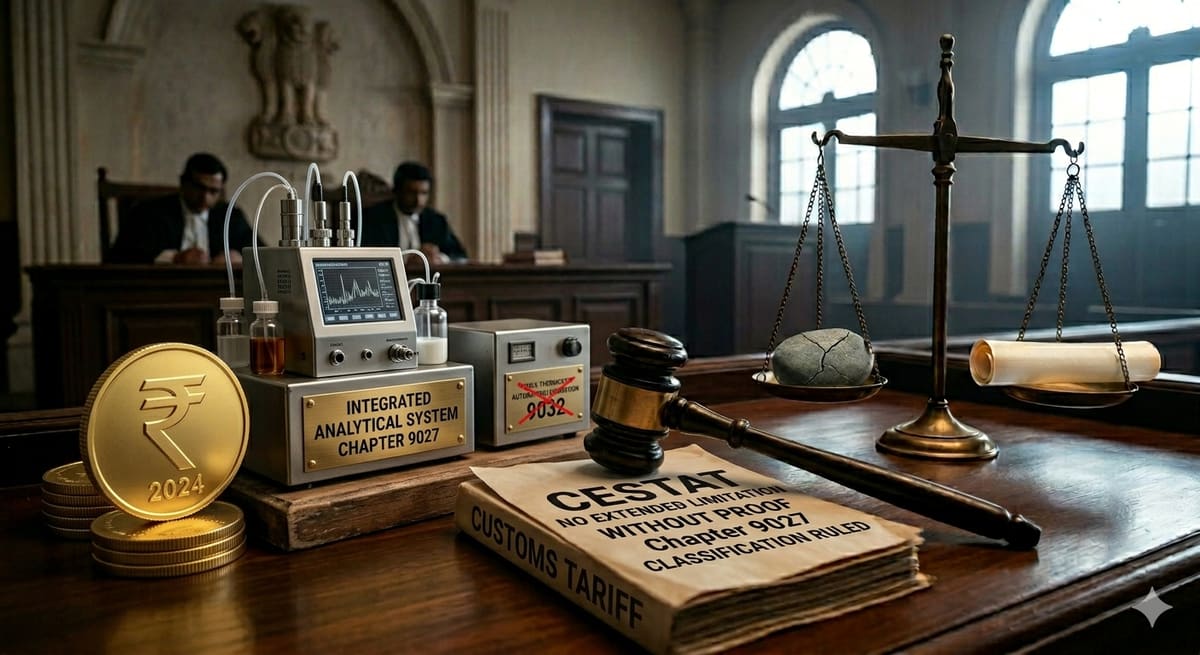
Customs Tariff Classification | Integrated Analytical Systems Must Fall Under Chapter 9027, Not 9032 : CESTAT Bangalore Rejects Extended Limitation Without Proof
Case Law Analysis
|Custom, Excise & Service Tax Tribunal

Customs Tariff Classification | Integrated Analytical Systems Must Fall Under Chapter 9027, Not 9032 : CESTAT Bangalore Rejects Extended Limitation Without Proof

CESTAT Bangalore ruled that an aerosol generator forming part of an integrated analytical system must be classified under Customs Tariff Heading 90278090, not 9032. The tribunal rejected the Department's reclassification and held that extended limitation cannot be invoked without concrete proof, setting a precedent for tariff disputes involving integrated systems.

Section 11A(4) Central Excise Act | Extended Limitation Inapplicable Where Department Had Full Knowledge of Transactions : CESTAT Principal Bench
Case Law Analysis
|Custom, Excise & Service Tax Tribunal

Section 11A(4) Central Excise Act | Extended Limitation Inapplicable Where Department Had Full Knowledge of Transactions : CESTAT Principal Bench

CESTAT quashes excise demand and penalties, ruling that extended limitation under Section 11A(4) cannot be invoked if the department was fully aware of the transactions. The judgment reaffirms that suppression of facts must be deliberate for extended limitation to apply, impacting tax assessments where transparency exists.