Andhra Pradesh High Court judgments

392 Andhra Pradesh High Court judgments explained in plain English: what was decided, the law applied and why it matters. Page 8 of 17.

Section 494 IPC | Mere Presence at Bigamous Marriage Without Instigation or Control Insufficient for Conviction: Andhra Pradesh HC
|Andhra Pradesh High Court

Section 494 IPC | Mere Presence at Bigamous Marriage Without Instigation or Control Insufficient for Conviction: Andhra Pradesh HC

The Andhra Pradesh High Court ruled that relatives' mere presence at a bigamous marriage does not establish common intention under Section 34 IPC unless active instigation or control is proven. The judgment clarifies the evidential burden required to sustain a conviction under Section 494 IPC, reinforcing that passive attendance alone cannot attract criminal liability.


Appellate Enhancement of Motor Accident Compensation | No Cross-Appeal Required for Just Compensation Under MV Act : AP HC
Case Law Analysis
|Andhra Pradesh High Court

Appellate Enhancement of Motor Accident Compensation | No Cross-Appeal Required for Just Compensation Under MV Act : AP HC

The Andhra Pradesh High Court ruled that appellate courts can enhance motor accident compensation under the Motor Vehicles Act even without a cross-appeal, emphasizing the duty to award just compensation. The court increased the award from Rs. 1,46,000 to Rs. 1,70,000, reinforcing that procedural formalities cannot override substantive justice for claimants.

Commercial Courts Act | Delay in Document Filing Excusable Under CPC Order XI Rule 1 If Reasonable Cause Shown: Andhra Pradesh HC
Case Law Analysis
|Andhra Pradesh High Court

Commercial Courts Act | Delay in Document Filing Excusable Under CPC Order XI Rule 1 If Reasonable Cause Shown: Andhra Pradesh HC

The Andhra Pradesh High Court ruled that procedural delays in filing documents under the Commercial Courts Act are not fatal if a reasonable cause-such as misplacement-is demonstrated. The judgment reinforces that substantial justice must prevail over technicalities, offering relief to litigants in commercial disputes where document production is delayed due to bona fide errors.

Forensic Evidence in Will Disputes | Andhra Pradesh HC Mandates Central Forensic Science Lab for Handwriting Analysis, Bars Private Labs : AP HC
|Andhra Pradesh High Court

Forensic Evidence in Will Disputes | Andhra Pradesh HC Mandates Central Forensic Science Lab for Handwriting Analysis, Bars Private Labs : AP HC

The Andhra Pradesh High Court has ruled that courts must direct disputed wills to the Central Forensic Science Laboratory in Hyderabad for handwriting analysis, rejecting referrals to private forensic labs. This establishes a binding standard for judicial fairness in testamentary disputes, ensuring uniformity, credibility, and procedural integrity in forensic authentication across civil litigation.

Post-Acquittal Vehicle Release | Police Cannot Retain Seized Vehicles Without Proven Offence Link: Andhra Pradesh HC
Case Law Analysis
|Andhra Pradesh High Court

Post-Acquittal Vehicle Release | Police Cannot Retain Seized Vehicles Without Proven Offence Link: Andhra Pradesh HC

The Andhra Pradesh High Court has ruled that seized vehicles must be released immediately upon acquittal, as mere possession or initial seizure without proven use in the offence violates property rights under Article 300A. Authorities must act within three weeks to return vehicles, ensuring due process and preventing arbitrary detention of property after legal exoneration.

NDPS Act Section 36A(4) | Public Prosecutor’s Independent Application of Mind Mandatory for Remand Extension Beyond 230 Days: Andhra Pradesh HC
|Andhra Pradesh High Court

NDPS Act Section 36A(4) | Public Prosecutor’s Independent Application of Mind Mandatory for Remand Extension Beyond 230 Days: Andhra Pradesh HC

The Andhra Pradesh High Court has ruled that extending remand beyond 230 days under the NDPS Act requires the Public Prosecutor to file a petition demonstrating independent judicial reasoning - not merely forwarding police requests. This sets a new procedural safeguard for accused persons, ensuring prosecutorial accountability and reinforcing the right to bail when statutory timelines are breached without genuine scrutiny.

Competent Authority in Service Discipline | Show-Cause Notice Issued by Non-Designated Officer Violates G.O. & Natural Justice: Andhra Pradesh HC
|Andhra Pradesh High Court

Competent Authority in Service Discipline | Show-Cause Notice Issued by Non-Designated Officer Violates G.O. & Natural Justice: Andhra Pradesh HC

The Andhra Pradesh High Court has held that only the designated District Horticulture Officer, as per G.O.Ms. No. 630 of 2019, may initiate disciplinary proceedings against a Village Horticulture Assistant. Any show-cause notice issued by an unauthorized official - such as a Mandal Parishad Development Officer - is void ab initio, reinforcing that procedural legitimacy in service law hinges on strict adherence to delegated authority, not just notice format.

Natural Justice & Police Accountability | Mandatory Preliminary Enquiry Completion in Cybercrime Complaints Within One Month: Andhra Pradesh HC
|Andhra Pradesh High Court

Natural Justice & Police Accountability | Mandatory Preliminary Enquiry Completion in Cybercrime Complaints Within One Month: Andhra Pradesh HC

The Andhra Pradesh High Court ruled that prolonged police inaction on cybercrime complaints violates natural justice and the State’s constitutional duty to investigate. The Court directed the police to conclude the preliminary enquiry within one month, emphasizing that delays undermine complainants' rights and erode public trust in law enforcement.

G.O.Ms.No.91 | Departmental Enquiry Must Conclude Within Two Months; Four-Year Delay Violates Article 21 and Renders Suspension Invalid : Andhra Pradesh HC
Case Law Analysis
|Andhra Pradesh High Court

G.O.Ms.No.91 | Departmental Enquiry Must Conclude Within Two Months; Four-Year Delay Violates Article 21 and Renders Suspension Invalid : Andhra Pradesh HC

The Andhra Pradesh High Court has ruled that failure to conclude a departmental enquiry within the mandatory two-month window under G.O.Ms.No.91 violates the right to speedy justice under Article 21, rendering any prolonged suspension unlawful unless supported by a separate, independent order. This sets a binding standard for all state departments conducting disciplinary proceedings against public employees in Andhra Pradesh.

Andhra Pradesh Forest Act Section 44(3) | Bank Guarantee Must Be Proportional to Actual Value of Seized Vehicle, Not Arbitrary Assessment : Andhra Pradesh HC
Case Law Analysis
|Andhra Pradesh High Court

Andhra Pradesh Forest Act Section 44(3) | Bank Guarantee Must Be Proportional to Actual Value of Seized Vehicle, Not Arbitrary Assessment : Andhra Pradesh HC

The Andhra Pradesh High Court has ruled that demanding a bank guarantee of Rs. 5.5 lakh for a Rs. 1.5 lakh tractor under the Andhra Pradesh Forest Act violates the principle of proportionality. It directed the release of the vehicle on third-party security of Rs. 2 lakh, setting a precedent that state authorities cannot impose excessive financial conditions unrelated to asset value in forest-related seizures, protecting landowners and farmers from coercive administrative overreach.

SARFAESI Act Section 14 | Fresh Application Mandatory After Failure to Comply with Prior Court Directions: Andhra Pradesh HC
Case Law Analysis
|Andhra Pradesh High Court

SARFAESI Act Section 14 | Fresh Application Mandatory After Failure to Comply with Prior Court Directions: Andhra Pradesh HC

The Andhra Pradesh High Court has ruled that banks cannot rely on previously issued warrants of commission under SARFAESI Section 14 if they have ignored prior judicial directives. A fresh application with full compliance is now required, reinforcing that procedural adherence is not optional but a precondition for enforcement. This impacts all financial institutions pursuing recovery through coercive possession orders.

Section 3 Transfer of Property Act | Actual Knowledge, Not Deemed Notice, Determines Limitation Defense in Specific Performance Suits : Andhra Pradesh HC
Case Law Analysis
|Andhra Pradesh High Court

Section 3 Transfer of Property Act | Actual Knowledge, Not Deemed Notice, Determines Limitation Defense in Specific Performance Suits : Andhra Pradesh HC

The Andhra Pradesh High Court has ruled that a suit for specific performance cannot be dismissed at the plaint stage merely because registered documents constructively notify the plaintiff of the transaction. The plaintiff’s pleaded actual knowledge must be accepted as true for limitation purposes, reinforcing that procedural rejection under Order VII Rule 11 requires more than technical notice - it demands substantive pleading of bar.

Natural Justice Under Food Safety & Panchayat Raj Acts | Show Cause Notice Must Specify Violations Clearly: Andhra Pradesh HC
Case Law Analysis
|Andhra Pradesh High Court

Natural Justice Under Food Safety & Panchayat Raj Acts | Show Cause Notice Must Specify Violations Clearly: Andhra Pradesh HC

The Andhra Pradesh High Court quashed show cause notices against a sweet manufacturer for failing to clearly specify statutory violations under the Food Safety Act and Panchayat Raj Act. While upholding the illegality of unlicensed food manufacturing in residential areas, the court reaffirmed that procedural fairness mandates explicit notice of breach to ensure effective response and compliance.

Article 21 & 300A | No Demolition Without Notice, Survey, or Hearing: Andhra Pradesh HC Stays Arbitrary Panchayat Action
Case Law Analysis
|Andhra Pradesh High Court

Article 21 & 300A | No Demolition Without Notice, Survey, or Hearing: Andhra Pradesh HC Stays Arbitrary Panchayat Action

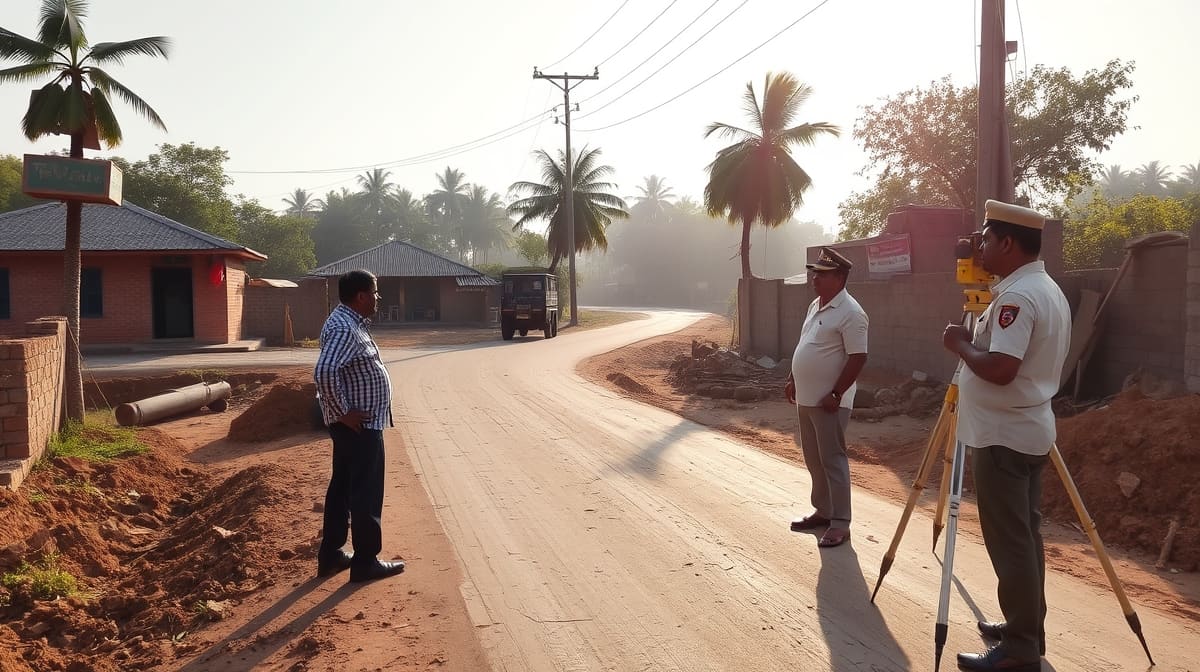
The Andhra Pradesh High Court ruled that demolition of private property without prior notice, survey, or hearing violates constitutional guarantees under Article 21 and 300A. The court directed authorities to follow due process, reinforcing that arbitrary actions by Panchayat or government bodies are unconstitutional and subject to judicial scrutiny.

Article 21 & Due Process in Encroachment Removal | Notices Must Be Served via Registered Post & Physical Pasting: Andhra Pradesh HC
Case Law Analysis
|Andhra Pradesh High Court

Article 21 & Due Process in Encroachment Removal | Notices Must Be Served via Registered Post & Physical Pasting: Andhra Pradesh HC

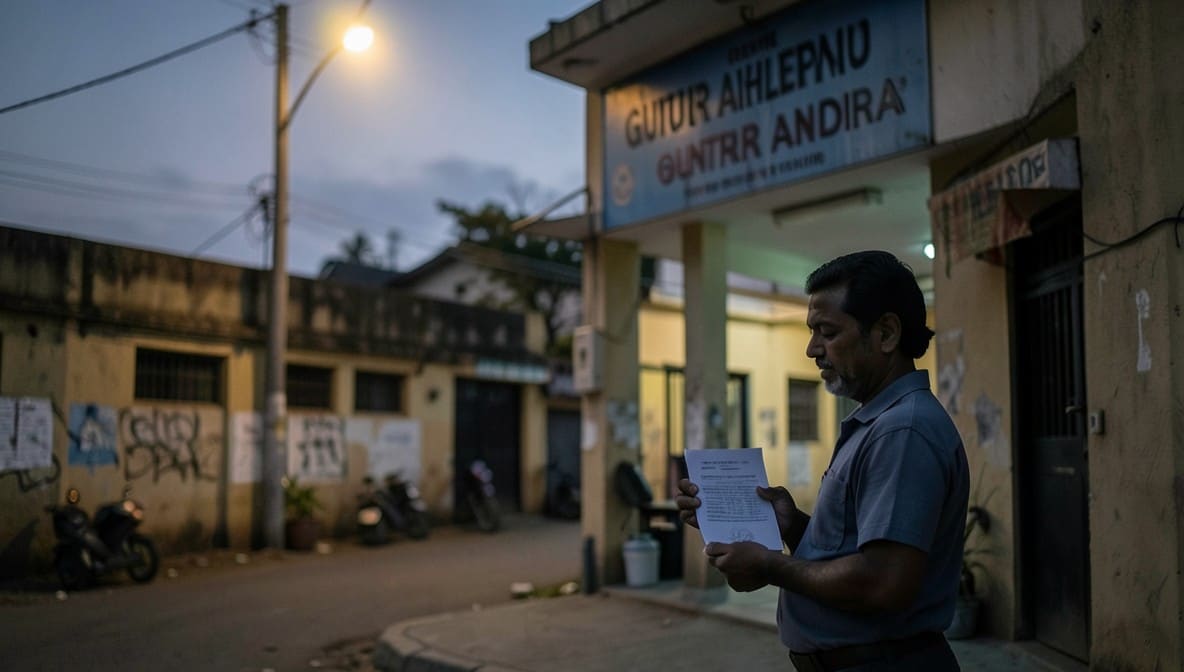
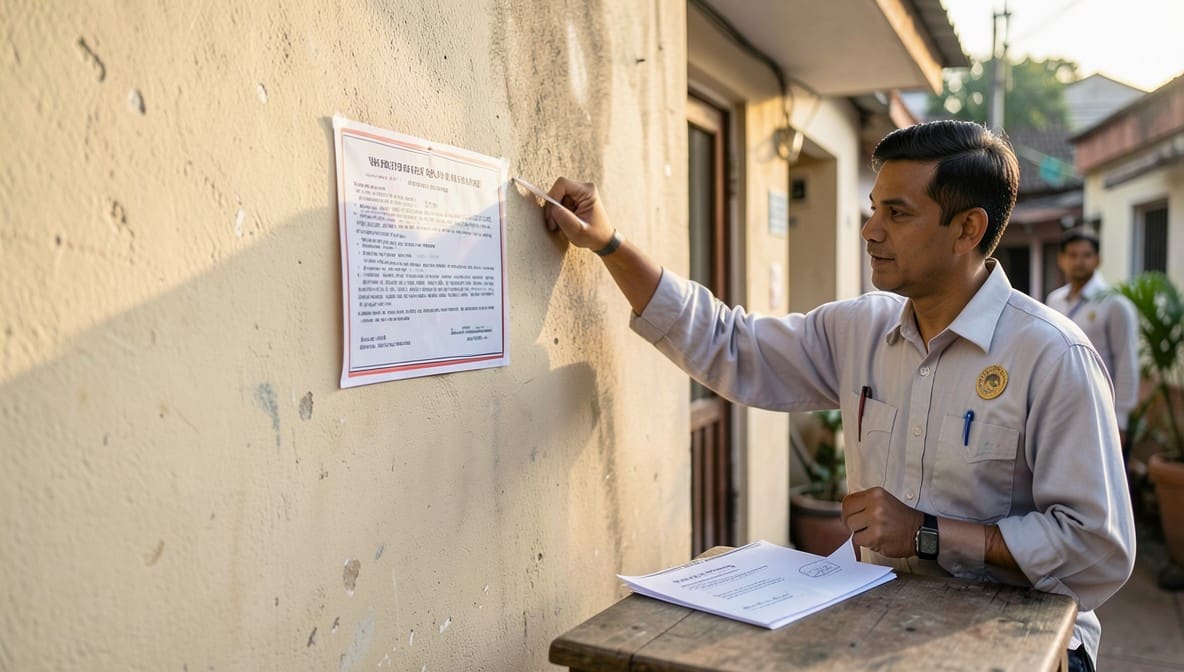
The Andhra Pradesh High Court ruled that municipal authorities must ensure notices for encroachment removal are not only issued but also received through legal channels-registered post and physical pasting on the residence. Failure to comply vitiates any action against peaceful possession, reinforcing due process under Article 21.

Section 6A Essential Commodities Act | Seizure Proceedings Must Conclude in One Month; Immovable Property Security Valid Over Mandatory Bank FDR: Andhra Pradesh HC
Case Law Analysis
|Andhra Pradesh High Court

Section 6A Essential Commodities Act | Seizure Proceedings Must Conclude in One Month; Immovable Property Security Valid Over Mandatory Bank FDR: Andhra Pradesh HC

The Andhra Pradesh High Court ruled that seizure proceedings under Section 6A of the Essential Commodities Act must conclude within one month, failing which seized goods must be released upon submission of immovable property security. The court held that mandating a bank FDR as the sole security violates procedural fairness and natural justice, setting a precedent for flexibility in security requirements during seizure disputes.

Order XI Rule 1 CPC | Public Documents Not Deemed in Party's Custody Unless Physically Possessed: Andhra Pradesh HC Clarifies Disclosure Obligations
Case Law Analysis
|Andhra Pradesh High Court

Order XI Rule 1 CPC | Public Documents Not Deemed in Party's Custody Unless Physically Possessed: Andhra Pradesh HC Clarifies Disclosure Obligations

The Andhra Pradesh High Court ruled that public documents obtainable from authorities are not automatically considered in a party's custody under Order XI Rule 1 CPC unless they are physically possessed. The court permitted belated filing of documents to rebut new defenses raised in the written statement, emphasizing procedural fairness over technicalities in commercial disputes.

Section 433(e) Companies Act 1956 | Bona Fide Dispute Must Be Proven, Not Merely Asserted, to Stay Winding-Up Petition : Andhra Pradesh HC
Case Law Analysis
|Andhra Pradesh High Court

Section 433(e) Companies Act 1956 | Bona Fide Dispute Must Be Proven, Not Merely Asserted, to Stay Winding-Up Petition : Andhra Pradesh HC

The Andhra Pradesh High Court ruled that a winding-up petition under Section 433(e) of the Companies Act, 1956 can proceed if the debtor admits the debt but fails to substantiate a bona fide dispute, even if the company is commercially solvent. Mere assertions of dispute without effective communication or evidence are insufficient to halt proceedings, reinforcing creditor rights in insolvency disputes.

Section 26 Hindu Marriage Act | Child’s Statement on Visitation Must Be Assessed for Parental Influence : Andhra Pradesh HC
Case Law Analysis
|Andhra Pradesh High Court

Section 26 Hindu Marriage Act | Child’s Statement on Visitation Must Be Assessed for Parental Influence : Andhra Pradesh HC

The Andhra Pradesh High Court ruled that denying visitation rights based solely on a child’s statement-without evaluating potential parental influence-is legally unsustainable. The court upheld interim video call visitation pending a fresh application, reinforcing that the child’s welfare remains paramount in custody disputes under the Hindu Marriage Act.

Article 14 & Natural Justice | Non-Disclosure of Acquitted Criminal Case Cannot Justify Disqualification in Police Recruitment : Andhra Pradesh HC
Case Law Analysis
|Andhra Pradesh High Court

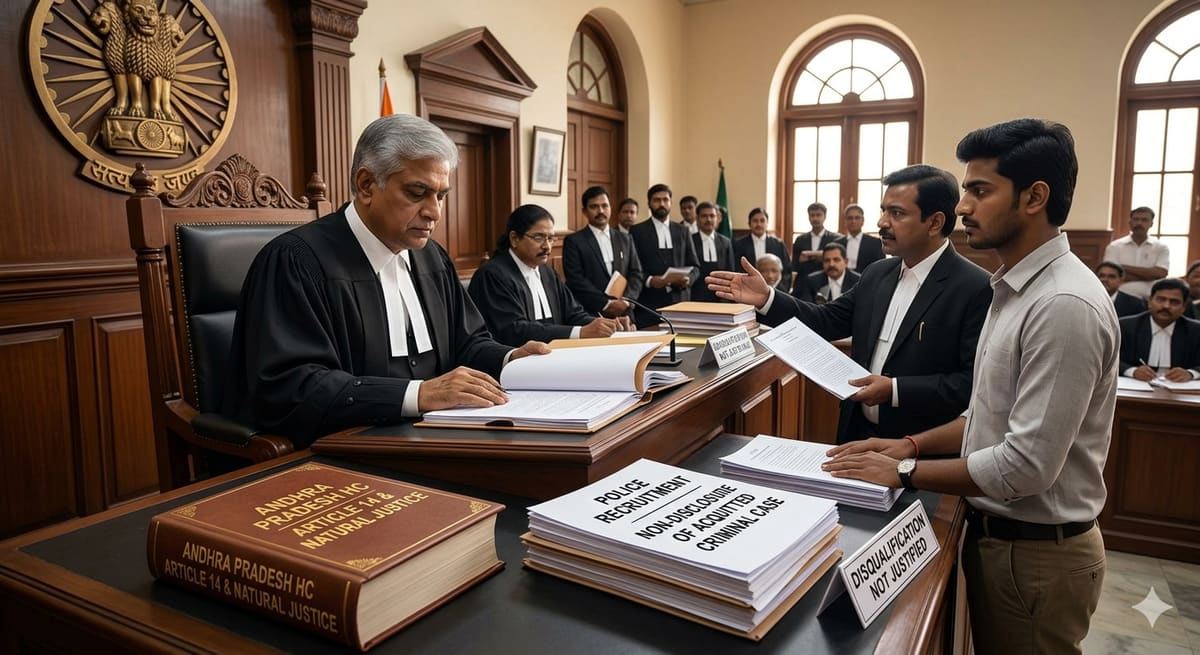
Article 14 & Natural Justice | Non-Disclosure of Acquitted Criminal Case Cannot Justify Disqualification in Police Recruitment : Andhra Pradesh HC

The Andhra Pradesh High Court has ruled that acquittal extinguishes any presumption of guilt, making mechanical disqualification from police recruitment for non-disclosure of such cases unconstitutional. This sets a critical precedent for fair character verification in public employment, protecting candidates from punitive assumptions based on legally closed proceedings.

Legitimate Expectation in Public Employment | 14-Year Regularized Service Cannot Be Revoked on Technical Grounds : Andhra Pradesh HC
Case Law Analysis
|Andhra Pradesh High Court

Legitimate Expectation in Public Employment | 14-Year Regularized Service Cannot Be Revoked on Technical Grounds : Andhra Pradesh HC

The Andhra Pradesh High Court has ruled that long-standing regularization of a Devasthanam Attender after 14 years of continuous service creates a legitimate expectation protected under administrative law, and cannot be undone by post-facto cancellation on procedural technicalities. This strengthens the rights of public servants with prolonged, authority-sanctioned service, even in non-standard posts, reinforcing that administrative finality must respect entrenched service history.