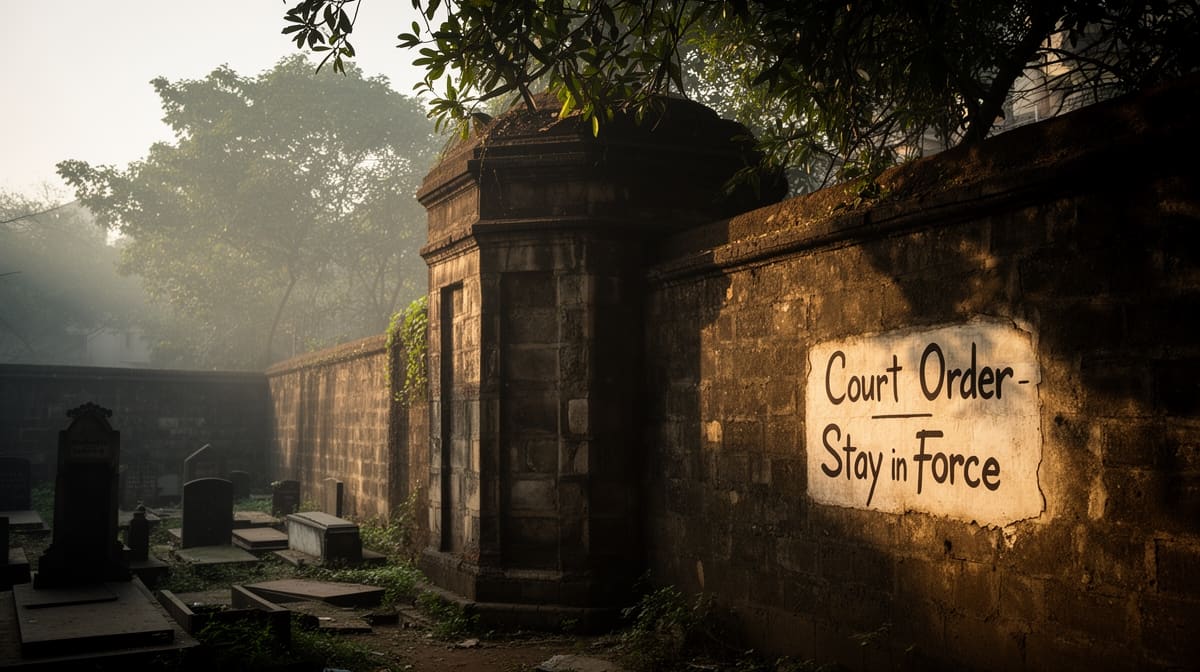
A prolonged interim stay of eight years, granted without final adjudication, cannot function as a de facto title. The Bombay High Court has now held that such delays undermine the very purpose of civil justice, mandating that trial courts must prioritize the final disposal of pending suits to prevent litigants from being trapped in procedural limbo.
Background & Facts
The Dispute
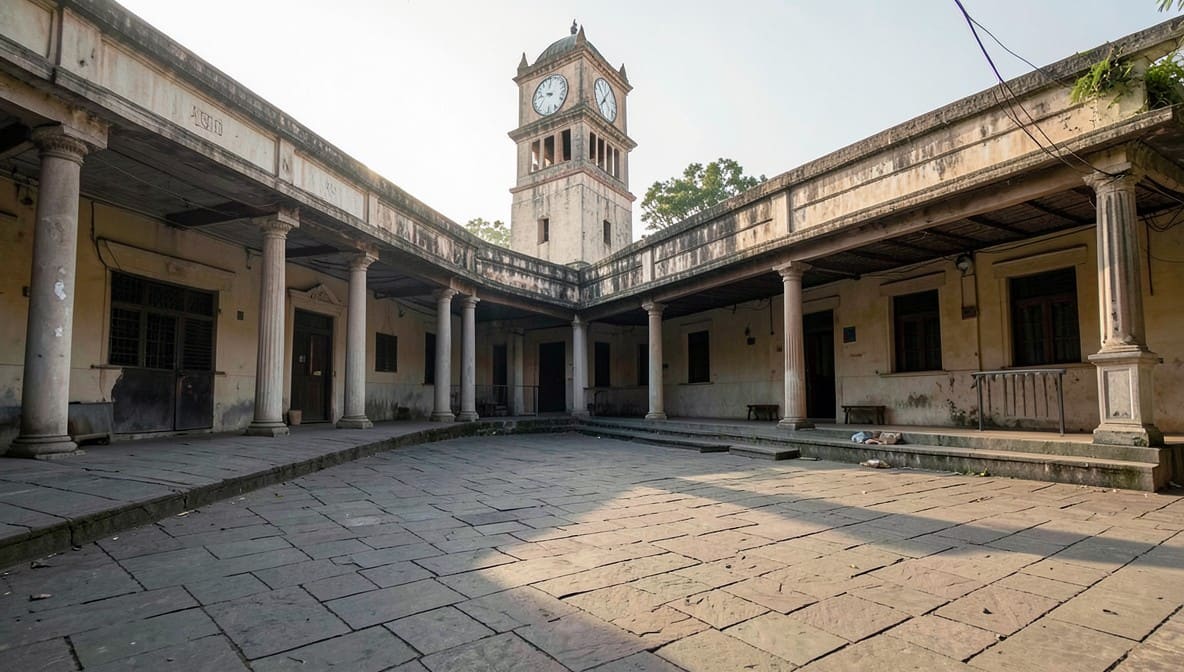
The appellant, Muzaffar Zareef Khan, claims ownership and lawful possession of a structure located within a graveyard in Mumbai. He asserts that his grandfather was appointed caretaker of the graveyard and resided in the structure for decades. The Municipal Corporation of Greater Mumbai and private respondents challenge the legality of the structure, alleging unauthorized construction and violation of land use norms.
Procedural History
The dispute has been pending before the Trial Court since 2017 in L.C. Suit No. 8 of 2017. Key procedural milestones include:
- 2017: Original suit filed seeking declaration of title and injunction against demolition
- 2018: Trial Court granted ad-interim protection to the structure
- 2025: The protection remained in force for over eight years without final hearing
- September 2025: Appellant filed an Appeal from Order challenging the Corporation’s proposed demolition
- February 2026: Bombay High Court heard the appeal and issued final directions
Relief Sought
The appellant sought continuation of the interim protection and dismissal of the Corporation’s demolition notice. The respondents sought removal of the protection and direction for demolition on grounds of illegal construction.
The Legal Issue
The central question was whether a court may indefinitely extend interim protection in a civil suit without directing the trial court to expedite final adjudication, and whether such delay violates the right to a speedy trial under Article 21 of the Constitution.
Arguments Presented
For the Appellant
The appellant’s counsel argued that the structure had existed for decades with the acquiescence of authorities, and that the prolonged interim protection was justified due to the complexity of title disputes and lack of evidence from respondents. He relied on S.P. Gupta v. Union of India to emphasize that courts must balance equitable relief with procedural fairness.
For the Respondent
The Municipal Corporation contended that the structure was erected without any statutory sanction and violated the Mumbai Municipal Corporation Act. The private respondents alleged fraud in title succession. They argued that interim protection cannot become a permanent status quo and that the appellant’s delay in prosecution of the suit amounted to laches.
The Court's Analysis
The Court acknowledged that interim protection is a provisional remedy, not a substitute for adjudication. It noted that the structure had enjoyed protection for eight years without any final determination of title or legality. The Court emphasized that procedural fairness requires timely resolution, not indefinite suspension of rights.
"The grant of ad-interim relief for over eight years, without any final adjudication, amounts to judicial stagnation. The right to a speedy trial is not confined to criminal proceedings; it extends to civil disputes where property rights are at stake."
The Court rejected the notion that the absence of an affidavit from the Corporation excused delay. It held that the Corporation, as a statutory planning authority, bore a heightened duty to act expeditiously. The Court further observed that the private respondents had not substantiated their allegations of gross illegality with concrete evidence, and that the burden to prove illegality rested squarely on them.
The Court applied the principle from S.P. Gupta and Hussainara Khatoon v. Home Secretary to affirm that delay in adjudication itself becomes a denial of justice. It concluded that the only remedy to restore balance was to compel the Trial Court to conclude the suit within a fixed timeframe.
The Verdict
The appellant prevailed. The Bombay High Court held that prolonged interim protection without final adjudication violates the right to a speedy trial and directed the Trial Court to dispose of L.C. Suit No. 8 of 2017 within six months. The interim protection was extended until final disposal.
What This Means For Similar Cases
Timely Adjudication Is Non-Negotiable
- Practitioners must now argue that any interim order exceeding two years without progress warrants judicial intervention
- Courts may sua sponte fix timelines for trial courts in long-pending civil suits
- Delay in filing affidavits by public authorities will not excuse procedural stagnation
Burden of Proof Remains With Challengers
- Allegations of illegal construction must be supported by documentary evidence from statutory authorities
- Mere assertion of illegality without record verification is insufficient to vacate long-standing protection
- Courts will not permit demolition based on unsubstantiated claims, even if the structure lacks formal sanction
Interim Relief Is Not a Title
- Parties cannot treat interim protection as de facto ownership
- Courts will not allow parties to benefit from procedural inertia
- Litigants must actively prosecute suits; passive reliance on stays is no longer tenable