The Punjab and Haryana High Court has invalidated eviction orders passed under the Maintenance and Welfare of Parents and Senior Citizens Act, 2007, on the ground of coram non judice, reinforcing that statutory tribunals must strictly adhere to constitutionally mandated compositions. This ruling underscores the procedural non-negotiability of tribunal structure in welfare-based adjudication.
Background & Facts
The Dispute
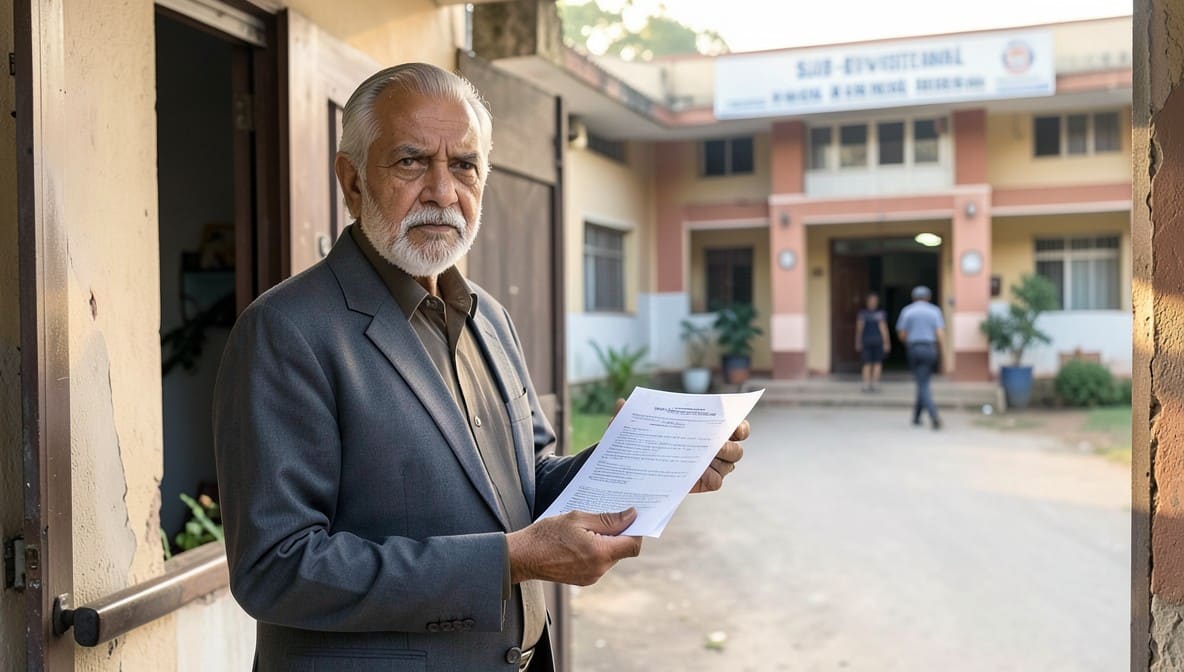
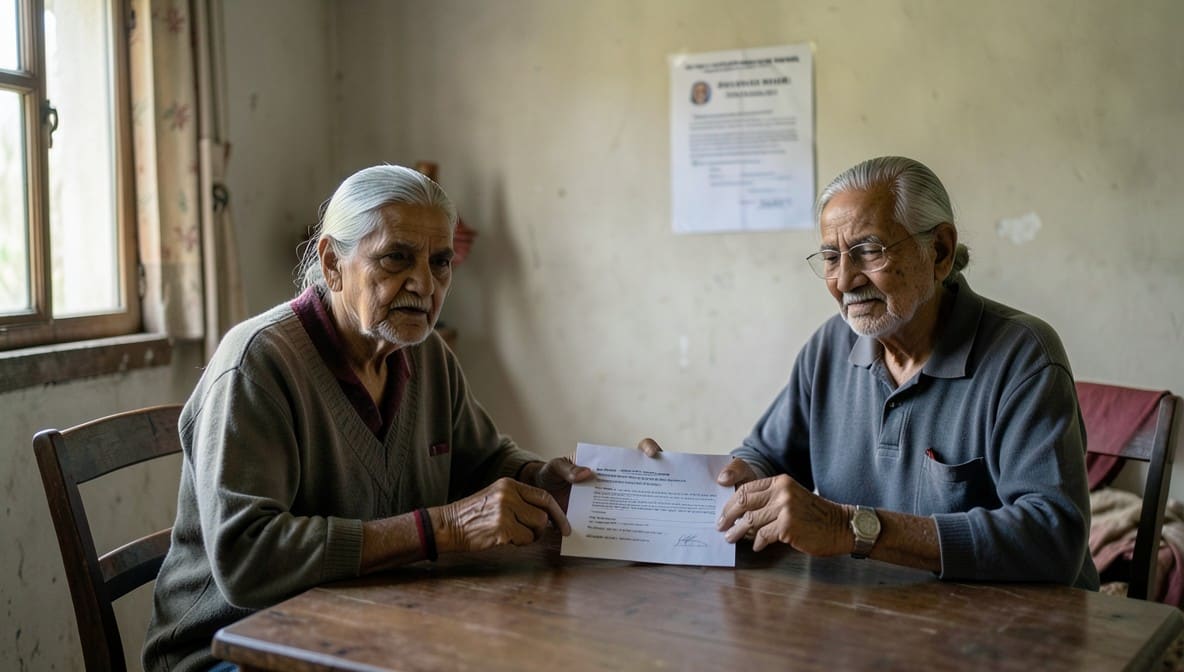
The petitioners, two senior citizens aged over sixty, filed a petition under Sections 5 and 23 of the Maintenance and Welfare of Parents and Senior Citizens Act, 2007, seeking eviction of respondent No.1 (daughter-in-law) and respondent No.2 (son) from a residential property. The petitioners alleged that the respondents were not providing adequate maintenance and were occupying the house without legal right, thereby violating the petitioners’ right to live with dignity under the Act.
Key Facts
- The petitioners are the parents of respondent No.2, the son
- Respondent No.1 is the wife of respondent No.2 and thus the petitioners’ daughter-in-law
- The property in question is the petitioners’ self-acquired residential house
- No prior partition or transfer of title was alleged to have occurred in favor of the respondents
- The petitioners claimed they were subjected to mental harassment and neglect by the respondents
Procedural History
- 09.01.2025: Maintenance Tribunal, Sirsa, passed an order directing eviction of respondents No.1 and No.2
- 08.08.2025: Appellate Tribunal, Sirsa, allowed the appeal filed by respondent No.1 and set aside the eviction order
- 17.04.2025: State Government issued a notification prescribing the composition of both the Maintenance Tribunal and Appellate Tribunal for District Sirsa
- 20.03.2026: Writ petition filed before the Punjab and Haryana High Court challenging the Appellate Tribunal’s order
The Parties’ Positions
The petitioners contended that the Appellate Tribunal’s order dated 08.08.2025 was illegal because it was passed by a single officer - Additional Deputy Commissioner - without the constitutionally mandated three-member bench. They further argued that the original eviction order dated 09.01.2025 was similarly defective, as it was passed solely by the Sub-Divisional Magistrate without the required coram.
The respondents, while not disputing the procedural irregularity, argued that the eviction proceedings themselves were not maintainable against a daughter-in-law under the Act, citing LPA-701-2018 (Babu Lal Sharma v. Sushila Devi).
Relief Sought
The petitioners sought:
- Setting aside of the Appellate Tribunal’s order dated 08.08.2025
- Restoration of the Maintenance Tribunal’s eviction order dated 09.01.2025
- Alternatively, remand of the matter for fresh adjudication before a properly constituted tribunal
The Legal Issue
The central question was whether an order passed by a tribunal under the Maintenance and Welfare of Parents and Senior Citizens Act, 2007, is valid when it is rendered by a single officer in contravention of a statutory notification mandating a three-member bench.
Arguments Presented
For the Petitioner
Learned counsel for the petitioners relied on the notification dated 17.04.2025, which explicitly required both the Maintenance Tribunal and Appellate Tribunal for District Sirsa to comprise three members, with the Sub-Divisional Magistrate and Deputy Commissioner acting as Chairmen respectively. They cited CWP No.18784 of 2015 (decided 26.10.2016), where this Court held that a tribunal decision by a single officer, even if holding the title of Chairman, is coram non judice and void ab initio. The argument emphasized that statutory notifications are binding and cannot be circumvented by administrative convenience.
For the Respondent
Learned counsel for respondent No.1 conceded that the Appellate Tribunal’s order was passed without the required coram but contended that the original eviction order dated 09.01.2025 was equally invalid, as it was passed solely by the Sub-Divisional Magistrate without the mandated three-member composition. Further, they relied on LPA-701-2018 (Babu Lal Sharma v. Sushila Devi), decided on 15.12.2025, to argue that proceedings under the Act cannot be initiated against a daughter-in-law, rendering the entire petition non-maintainable.
The Court's Analysis
The Court examined the statutory framework under the Act of 2007 and the binding nature of the State Government’s notification dated 17.04.2025. It held that the notification is not merely procedural but jurisdictional in nature, as it defines the very composition of the tribunal empowered to adjudicate disputes under the Act.
"In the present case, notification dated 10.12.2012 has been relied upon to which there is no contrary notification produced before this Court. In this notification, the Tribunal has been specifically constituted for Kurukshetra in which there are three Members. District Magistrate may be the Chairman of the Tribunal but once there is a Tribunal of three Members, the District Magistrate has no jurisdiction to take decision alone and the decision has to be taken unanimously or by way of majority."
The Court applied the principle that any order passed by a tribunal not constituted as per law is a nullity. It noted that both the Maintenance Tribunal’s order dated 09.01.2025 and the Appellate Tribunal’s order dated 08.08.2025 were passed by single officers, thereby violating the mandatory coram requirement. Consequently, both orders were declared void.
The Court declined to decide the substantive issue of maintainability of proceedings against a daughter-in-law, as it was not properly adjudicated by any tribunal with lawful jurisdiction. The Court emphasized that such a significant legal question must be addressed by a tribunal properly constituted under the notification, after full opportunity of hearing.
The Verdict
The petition succeeded. The High Court set aside both the Maintenance Tribunal’s order dated 09.01.2025 and the Appellate Tribunal’s order dated 08.08.2025 as nullities. The matter was remanded to the Maintenance Tribunal for fresh adjudication in accordance with the Act of 2007. The parties were directed to appear before the Maintenance Tribunal on 06.04.2026, where the tribunal was directed to decide the matter expeditiously after affording adequate opportunity of hearing to all parties.
What This Means For Similar Cases
Procedural Compliance Is Non-Negotiable
- Practitioners must verify the composition of tribunals under the Act of 2007 before filing appeals or challenging orders
- Any order passed by a single officer, even if holding the title of Chairman, is void if the notification mandates a multi-member bench
- Courts will not validate orders on substantive grounds if jurisdictional defects exist
Substantive Issues Must Be Decided by Lawful Tribunals
- Questions regarding the scope of the Act (e.g., applicability against daughter-in-law) cannot be decided by higher courts in writ petitions unless the tribunal has first ruled on them
- The High Court’s refusal to decide the maintainability issue reinforces the doctrine of exhaustion of statutory remedies
- Practitioners must ensure that all factual and legal issues are fully ventilated before the tribunal before seeking judicial review
Notification-Based Jurisdiction Is Binding
- State notifications under the Act are not advisory - they define the tribunal’s jurisdiction
- Failure to comply with notification requirements renders proceedings void, regardless of the correctness of the outcome
- Legal teams must obtain and verify the latest notifications applicable to the district where the tribunal is seated