The Punjab and Haryana High Court has invalidated orders passed by incomplete benches of the Maintenance Tribunal and Appellate Tribunal under the Maintenance and Welfare of Parents and Senior Citizens Act, 2007, holding that a three-member composition is mandatory. This ruling reinforces procedural compliance as a jurisdictional requirement, not a mere formality, and remands the matter for fresh adjudication.
Background & Facts
The Dispute
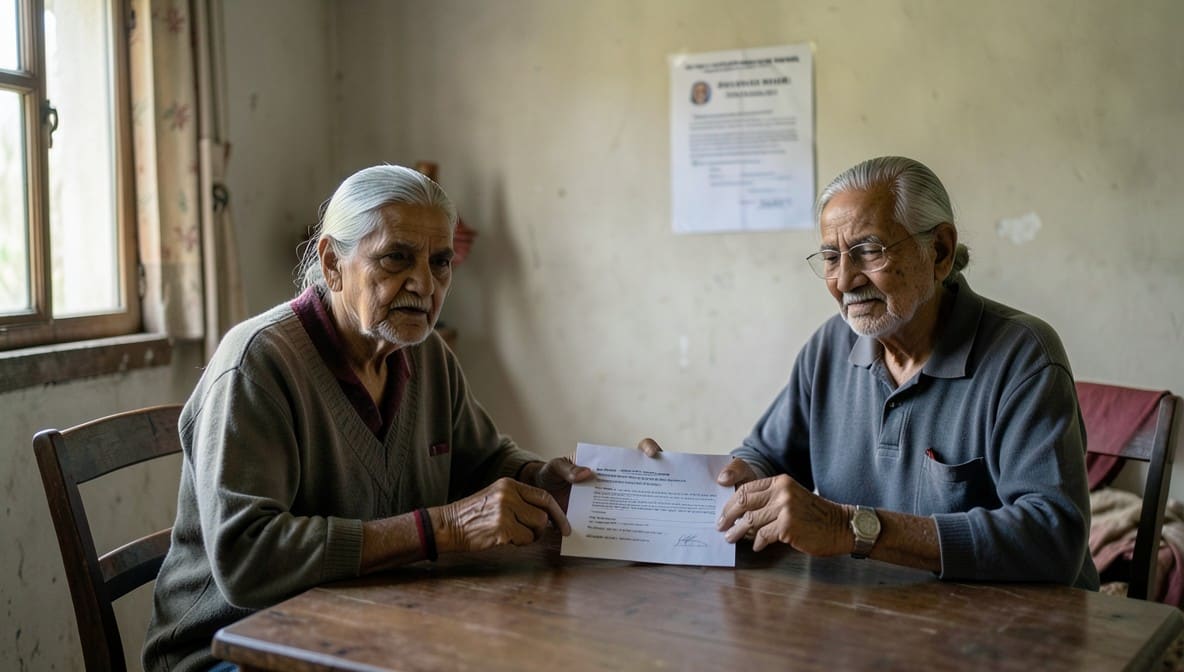
The petitioner, Smt. Sarita, filed an application under Section 23 of the Maintenance and Welfare of Parents and Senior Citizens Act, 2007, seeking maintenance from her children. The application was initially heard by the Maintenance Tribunal-cum-SDO, Civil Palwal. On 12.08.2024, the Sub-Divisional Magistrate, acting alone, passed an order allowing the petitioner’s claim. The respondents appealed this order before the Appellate Tribunal-cum-Deputy Commissioner, Palwal. On 02.12.2025, the Appellate Tribunal set aside the Tribunal’s order and allowed the appeal, thereby dismissing the petitioner’s claim. The petitioner challenged both orders before the High Court, contending that neither tribunal was properly constituted.
Key Facts
- The petitioner filed her maintenance application in the year 2022.
- The Maintenance Tribunal-cum-SDO, Palwal, consisted only of the Sub-Divisional Magistrate as the presiding officer, with no other members present during the hearing or decision.
- The Appellate Tribunal-cum-Deputy Commissioner, Palwal, consisted only of the Deputy Commissioner as the Chairman, with no Non-Official Members participating in the appellate hearing or decision.
- The impugned orders dated 12.08.2024 and 02.12.2025 were signed and issued by single officials without any participation from the mandated Non-Official Members.
- Notification No. 1041-SW(4)-2020, dated 08.12.2020, issued by the Government of Haryana, explicitly mandated that both the Maintenance Tribunal and Appellate Tribunal at the Sub-Divisional and District levels must comprise three members: (i) the Sub-Divisional Magistrate or District Magistrate as Chairman, and (ii) two Non-Official Members.
- The Non-Official Members named in the notification for Palwal were Sh. Hem Raj Chauhan and Smt. Namita Tayal for the Appellate Tribunal, and Sh. Surender Singh and Sh. Subhash Chand Bansal for the Maintenance Tribunal.
- Neither of the Non-Official Members participated in the proceedings or signed the impugned orders.
Procedural History
- 2022: Petitioner filed application under Section 23 of the Act of 2007 before the Maintenance Tribunal-cum-SDO, Palwal.
- 12.08.2024: Maintenance Tribunal, consisting only of the Sub-Divisional Magistrate, passed an order allowing the petitioner’s claim (Annexure P-3).
- 02.12.2025: Appellate Tribunal-cum-Deputy Commissioner, Palwal, consisting only of the Deputy Commissioner, set aside the Tribunal’s order and dismissed the claim (Annexure P-4).
- 2026: Writ Petitions CWP-1429-2026 and CWP-1439-2026 filed before the Punjab and Haryana High Court challenging both orders.
- 08.04.2026: Judgment delivered by Justice Kuldeep Tiwari.
The Parties' Positions
For the Petitioner
The petitioner contended that the orders passed by the Maintenance Tribunal and Appellate Tribunal were void ab initio because they were passed by incomplete benches, violating the mandatory composition prescribed under Notification No. 1041-SW(4)-2020. She argued that the presence of two Non-Official Members is not optional but a statutory requirement under Section 7 and Section 15 of the Act of 2007, read with the Haryana Rules, 2009. The absence of these members rendered the tribunals coram non judice.
For the Respondents
The learned counsel for the respondents, including the Appellate Tribunal and the Deputy Commissioner, conceded that the impugned orders were passed without the mandatory composition of three members. They admitted that the orders suffered from a legal defect and did not meet the requirements of legality under the notification.
Relief Sought
The petitioner sought quashing of the orders dated 12.08.2024 and 02.12.2025, and a direction to the Maintenance Tribunal to re-adjudicate the application before a properly constituted bench as per Notification No. 1041-SW(4)-2020.
The Legal Issue
The central question was whether an order passed by a Maintenance Tribunal or Appellate Tribunal under the Maintenance and Welfare of Parents and Senior Citizens Act, 2007, consisting only of the Chairman without the two mandated Non-Official Members, is valid, or whether such a bench constitutes a coram non judice and renders the order void.
Arguments Presented
For the Petitioner
The petitioner relied on Notification No. 1041-SW(4)-2020, dated 08.12.2020, which explicitly mandated a three-member composition for both Tribunals. She argued that the notification was issued under the authority of Sections 7 and 15 of the Act of 2007, which empower the State Government to prescribe the composition of Tribunals. The absence of the two Non-Official Members meant the Tribunal lacked the requisite jurisdiction to adjudicate. She cited State of Haryana v. Rattan Singh and K. S. Puttaswamy v. Union of India to emphasize that procedural mandates essential to jurisdiction cannot be ignored. The petitioner further submitted that the Appellate Tribunal’s failure to notice this defect did not cure the illegality.
For the Respondent
The respondents’ counsel did not contest the petitioner’s submission. They acknowledged that the orders were passed without the presence or participation of the two Non-Official Members as required by the notification. They conceded that the orders were legally defective and fell short of the statutory framework. Their admission was treated as a formal recognition of illegality.
The Court's Analysis
The Court examined the statutory framework under the Maintenance and Welfare of Parents and Senior Citizens Act, 2007, particularly Sections 7 and 15, which empower the State Government to constitute Tribunals and Appellate Tribunals and to determine their composition. The Court noted that Notification No. 1041-SW(4)-2020, dated 08.12.2020, was issued in exercise of these powers and clearly prescribed a three-member structure for both Tribunals at the Sub-Divisional and District levels.
"The presence of two Non-Official Members is not a procedural formality but a jurisdictional precondition. A tribunal constituted without them is not a tribunal at all under the law."
The Court held that the doctrine of coram non judice applies when a tribunal lacks the legal authority to hear a matter due to an invalid composition. The absence of the two Non-Official Members meant that the Maintenance Tribunal and the Appellate Tribunal were not properly constituted. The Court emphasized that even if the Chairman acted in good faith, the lack of the mandated members rendered the proceedings void. The Appellate Tribunal’s decision to uphold the order without addressing this fundamental defect did not cure the jurisdictional flaw.
The Court further observed that the notification was not merely advisory but binding, and its violation could not be overlooked even if the outcome of the order appeared substantively fair. The Court rejected the notion that substantial justice could override procedural mandates when those mandates are explicitly designed to ensure impartiality and collective decision-making.
The Verdict
The Court set aside both the order dated 12.08.2024 passed by the Maintenance Tribunal and the order dated 02.12.2025 passed by the Appellate Tribunal, holding both to be void ab initio for being passed coram non judice. The matter was remanded to the Maintenance Tribunal-cum-SDO, Palwal, for fresh adjudication before a properly constituted bench comprising the Sub-Divisional Magistrate as Chairman and two Non-Official Members as mandated by Notification No. 1041-SW(4)-2020. All parties were directed to appear before the Tribunal on 30.04.2026 at 11:00 AM. The Tribunal was directed to decide the matter within four months from the date of receipt of a certified copy of this order.
What This Means For Similar Cases
Procedural Compliance Is Non-Negotiable
- Practitioners must verify the composition of tribunals before filing appeals or challenging orders.
- Any order passed by a tribunal lacking the statutorily mandated members is void and can be challenged at any stage, even on collateral attack.
- Courts will not uphold decisions merely because the outcome appears just; jurisdictional defects are fatal.
Appellate Tribunals Cannot Cure Jurisdictional Defects
- An appellate tribunal cannot validate an order passed by an invalidly constituted lower tribunal.
- The appellate authority has a duty to examine the legality of the lower tribunal’s composition sua sponte.
- Failure to do so does not constitute a valid exercise of appellate jurisdiction.
Notification as Binding Law
- Notifications issued under statutory authority are not administrative guidelines - they carry the force of law.
- State notifications prescribing tribunal composition must be strictly followed.
- Non-compliance renders proceedings null and void, regardless of whether the parties raised the objection.