The Income Tax Appellate Tribunal, Kolkata, has reaffirmed that minor delays in filing appeals, when supported by plausible and non-frivolous justifications, must be condoned to uphold the principle of natural justice. This decision restores the right of taxpayers to have their substantive grievances heard on merit, even when procedural lapses occur due to genuine personal circumstances.
Background & Facts
The Dispute
The appellant, Neptune Traders Pvt. Ltd., failed to file its appeal before the Commissioner of Income Tax (Appeals)-NFAC, Delhi, within the statutory 30-day period under Section 250 of the Income Tax Act, 1961. The appeal was filed six days late. The CIT(A) dismissed the appeal solely on the ground of delay, without examining the substantive grounds raised by the assessee.
Key Facts
- Assessment Year: 2019-20
- Original return not filed; reassessment initiated under Section 147 on 15.03.2021 based on data from Insight Portal
- Reassessment notice issued under Section 148 on 20.04.2021
- Assessee filed return on 10.06.2021 showing income of ₹1,90,170/-
- Assessing Officer added ₹14,60,000 (unexplained money under Section 69A), ₹2,77,71,158 (gross profit addition), and ₹5,70,335 (interest income), assessing total income at ₹2,99,91,663/-
- Assessment order passed on 12.08.2023
- Appeal filed before CIT(A) on 25.10.2025; statutory deadline was 19.10.2025
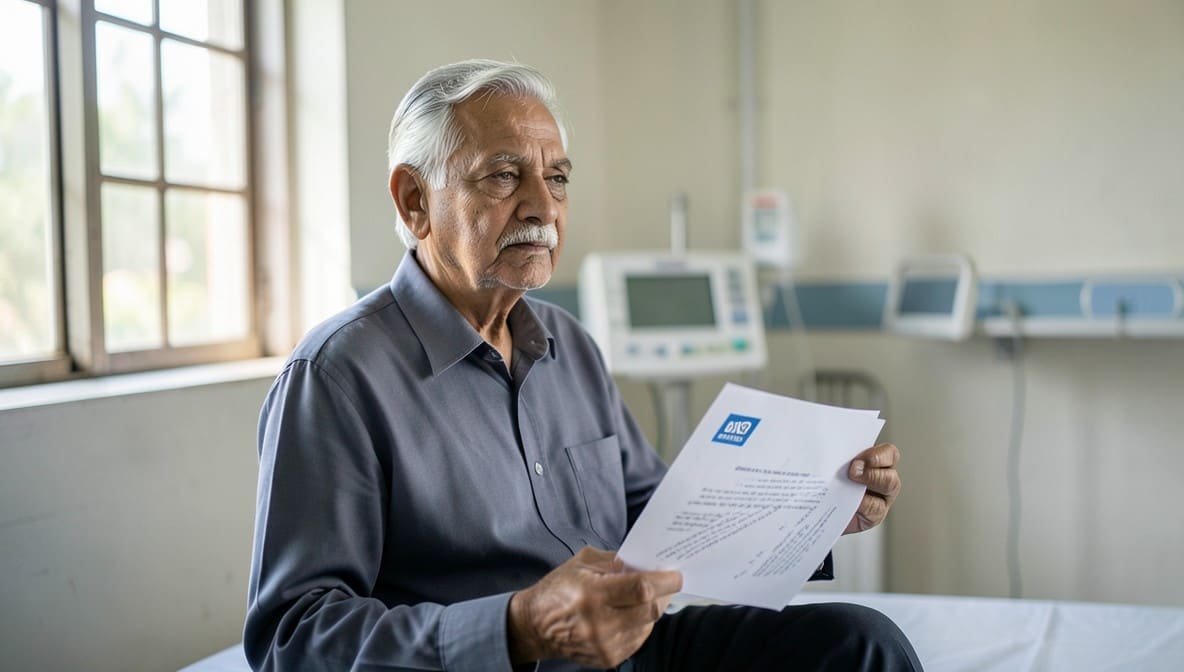
- Delay of six days attributed to sudden illness of the company’s stenographer - cough and cold - rendering him unable to attend office or assist in filing the appeal
- No medical certificate was produced; the assessee explained that in middle-class families, medical consultation is often avoided for minor ailments like cough and cold
- CIT(A) rejected condonation of delay on 31.10.2025, stating the reason was not supported by cogent evidence and that a vigilant taxpayer should have made alternative arrangements
Procedural History
- 12.08.2023: Assessment order passed by Assessing Officer under Section 147 read with Section 144B
- 19.10.2025: Deadline for filing appeal before CIT(A) under Section 250
- 25.10.2025: Appeal filed with Form No. 35, seeking condonation of six-day delay
- 31.10.2025: CIT(A) dismissed appeal solely on ground of delay, without addressing merits
- 22.11.2025: Appeal filed before ITAT Kolkata (ITA No. 3123/KOL/2025)
- 27.04.2026: Hearing concluded
- 11.05.2026: ITAT pronounces order
Relief Sought
The assessee sought condonation of the six-day delay in filing the appeal and, upon such condonation, a hearing on the merits of the grounds of appeal, including challenges to the additions under Sections 69A and 144B.
The Legal Issue
The central question was whether a delay of six days in filing an appeal before the CIT(A), attributable to the illness of a support staff member in a small business, constitutes a sufficient cause warranting condonation under Section 250 read with Rule 46A of the Income Tax Rules, 1962, even in the absence of a formal medical certificate.
Arguments Presented
For the Petitioner
The authorized representative argued that the delay was minimal and caused by an unforeseen personal circumstance - the sudden illness of the stenographer, who was solely responsible for preparing and filing documents. The absence of a medical certificate was explained as culturally and economically reasonable in middle-class households, where minor ailments are not routinely documented. Reliance was placed on CIT v. M/s. Sree Ramakrishna Enterprises and CIT v. M/s. R.K. Industries, where courts held that technicalities must not override substantive justice. The petitioner emphasized that the CIT(A) failed to apply the principle of audi alteram partem by refusing to hear the appeal on merits.
For the Respondent
The Department contended that the delay was unjustified as the assessee had ample opportunity to arrange for alternative personnel or file the appeal through a representative. It argued that the absence of documentary proof (medical certificate) rendered the explanation insufficient under established precedent. The Department relied on CIT v. M/s. S.K. Traders, where a similar delay was not condoned due to lack of corroborative evidence.
The Court's Analysis
The Tribunal observed that the delay of six days was trivial in the context of a multi-year tax litigation process. It noted that the CIT(A) had dismissed the appeal without engaging with the substantive grounds raised, thereby violating the foundational principle of natural justice.
"The mere absence of a medical certificate cannot be the sole basis to reject a plausible explanation for a minor delay, especially when the nature of the illness is common and non-disabling, and the affected individual is not a professional but a support staff member in a small enterprise."
The Tribunal distinguished the Department’s cited precedents, noting that those involved delays of weeks or months, or where no explanation was offered at all. Here, the explanation was specific, consistent, and not inherently improbable. The Tribunal emphasized that Rule 46A of the Income Tax Rules, 1962, mandates that the appellate authority must consider the reasons for delay and exercise discretion judiciously, not mechanically.
The Bench further held that the CIT(A)’s characterization of the delay as indicative of "negligence" or "lack of vigilance" was arbitrary and punitive. The Tribunal stressed that the purpose of condonation is to ensure justice, not to penalize procedural lapses arising from human frailty.
The Verdict
The appeal was partly allowed for statistical purposes. The Tribunal set aside the CIT(A)’s order dated 31.10.2025, restored the appeal before the CIT(A), and directed that the appeal be heard on its merits. The CIT(A) was directed to afford the assessee a reasonable opportunity to present further submissions and to comply with Rule 46A of the Income Tax Rules, 1962. The assessee was cautioned against seeking unnecessary adjournments. No monetary relief was granted as the matter was remanded for fresh adjudication.
What This Means For Similar Cases
Minor Delays with Plausible Explanations Must Be Condoned
- Practitioners may now confidently argue that delays of up to one week due to illness of support staff, without formal medical proof, are sufficient cause if the explanation is credible and contextually reasonable
- The burden is not to produce a medical certificate but to offer a plausible, non-frivolous reason
- Tribunals and appellate authorities must avoid mechanical dismissal and apply discretion with a view to substantive justice
Procedural Fairness Trumps Technical Compliance
- Failure to address merits of an appeal after rejecting condonation violates audi alteram partem
- Orders dismissing appeals solely on delay without speaking reasons are vulnerable to being set aside
- Taxpayers in small businesses, who rely on limited staff, are entitled to reasonable accommodation under procedural law
Rule 46A Requires Active Judicial Discretion
- Rule 46A is not a formality - it mandates that the appellate authority must record reasons for accepting or rejecting condonation
- A generic observation like "no cogent evidence" without evaluating the factual matrix is legally unsustainable
- Practitioners should cite this judgment when challenging dismissals based on technical grounds in other tribunals