The Income Tax Appellate Tribunal, Guwahati Bench, has clarified a critical procedural principle in tax appellate practice: once an appellate authority dismisses an appeal on grounds of delay in latches, it cannot simultaneously adjudicate the appeal on its merits. This judgment reinforces the doctrine of procedural fairness and the separation of jurisdictional functions under the Income Tax Act.
Background & Facts
The Dispute
The appellant, Techi Kaso, was assessed under an ex-parte order dated 23.12.2022 under Section 144 read with Section 144B of the Income Tax Act, 1961, for the assessment year 2021-22. The Assessing Officer made certain additions to the appellant’s income without granting a personal hearing. The appellant filed an appeal before the Commissioner of Income Tax (Appeals) [CIT(A)], but did so after the statutory limitation period.
Key Facts
- Assessment order passed on 23.12.2022 under Section 144 r.w.s. 144B
- Appeal filed before CIT(A) was delayed beyond the prescribed period under Section 249(1) of the Act
- CIT(A) passed order dated 29.01.2026 dismissing the appeal on two grounds: (i) delay in latches, and (ii) merits of the case
- No representative appeared for the appellant before ITAT
- The appellant had not filed any written submission or application for condonation of delay before the CIT(A)
Procedural History
- 23.12.2022: Ex-parte assessment order issued by Assessing Officer
- Between 23.12.2022 and 29.01.2026: Period during which appeal was filed before CIT(A) - delay not quantified but acknowledged as inordinate
- 29.01.2026: CIT(A) order dismissing appeal on delay in latches and on merits
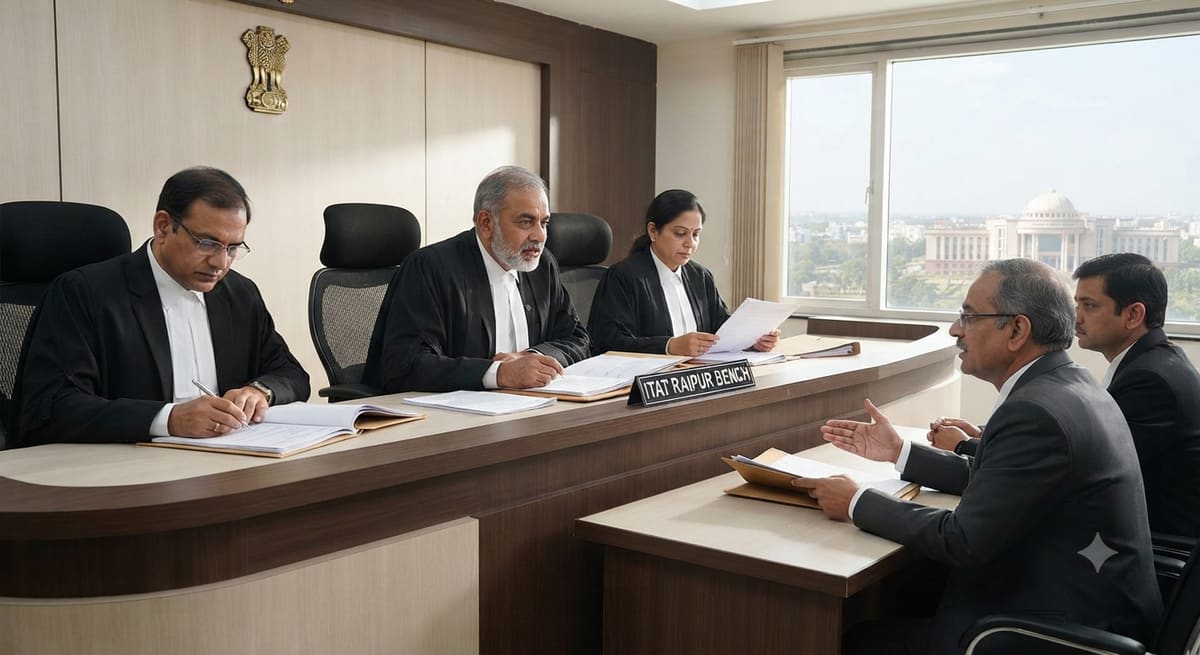
- 04.06.2026: Hearing before ITAT Guwahati Bench
- 09.06.2026: ITAT pronounces order
Relief Sought
The appellant sought restoration of the appeal before the CIT(A) for adjudication on merits, with opportunity to explain the delay and present evidence. No specific monetary relief was claimed, as the appeal was procedural in nature.
The Legal Issue
The central question was whether the CIT(A), having dismissed an appeal on grounds of delay in latches, is legally empowered to also decide the appeal on its merits without first granting a hearing on the application for condonation of delay.
Arguments Presented
For the Appellant
No representative appeared for the appellant. No written submissions or legal arguments were presented before the ITAT. The appellant’s position was therefore not formally articulated.
For the Respondent
The Departmental Representative contended that the appeal before the CIT(A) was filed beyond the statutory period and that the delay was inordinate and unexplained. He argued that the CIT(A) was justified in dismissing the appeal on grounds of laches and that the merits were correctly decided as an alternative ground.
The Court's Analysis
The Tribunal observed that both the Assessing Officer’s order and the CIT(A)’s order were ex-parte, indicating a failure to afford the assessee a reasonable opportunity of being heard at both levels. The CIT(A) dismissed the appeal on two grounds: delay in latches and merits. The Tribunal held that this dual approach is legally untenable.
"Once the appeal is dismissed by the Ld. CIT(A) on delay in latches, the Ld. CIT(A) cannot go into the merits of the case."
The Tribunal emphasized that the power to condone delay under Section 249(2) is a procedural safeguard designed to ensure substantive justice. If the CIT(A) finds the delay inordinate and unexplained, the appeal may be dismissed on that ground alone. However, if the CIT(A) chooses to examine the merits, it must first consider the application for condonation of delay and record reasons for accepting or rejecting it.
The Tribunal further noted that the CIT(A) had not recorded any findings on the cause of delay alleged by the assessee, nor had the assessee been given an opportunity to explain the delay. This violated the principles of natural justice.
The Tribunal held that the CIT(A)’s approach of dismissing the appeal on laches while simultaneously deciding the merits was contradictory and legally impermissible. Such a hybrid approach undermines the procedural integrity of appellate review.
The Verdict
The appeal was partly allowed for statistical purposes. The ITAT set aside the CIT(A)’s order dated 29.01.2026 and restored the appeal to the file of the CIT(A) for fresh adjudication. The CIT(A) is directed to decide the application for condonation of delay afresh, afford the assessee a personal hearing, and then determine the appeal on merits if the delay is condoned. No time limit was prescribed for compliance, but the direction is binding.
What This Means For Similar Cases
Procedural Compliance Is Non-Negotiable
- Practitioners must ensure that applications for condonation of delay are filed with sufficient explanation and supporting documents
- CIT(A)s must record specific findings on whether the cause of delay is satisfactory - mere mention of "delay in latches" without reasoning is insufficient
- An order dismissing an appeal on delay cannot be fortified by a parallel decision on merits
Opportunity of Hearing Is Mandatory
- Even in ex-parte assessment cases, the appellate authority must provide a meaningful opportunity to explain delay
- Failure to do so renders the appellate order voidable on grounds of violation of natural justice
- Taxpayers may challenge appellate orders on procedural grounds even if substantive claims appear weak
Merits Cannot Preempt Laches
- The CIT(A) cannot use merits as a backdoor to avoid addressing procedural defaults
- If delay is condoned, merits are then adjudicated; if not, the appeal ends there
- This judgment reinforces that procedural fairness is not a technicality - it is a jurisdictional requirement under the Act