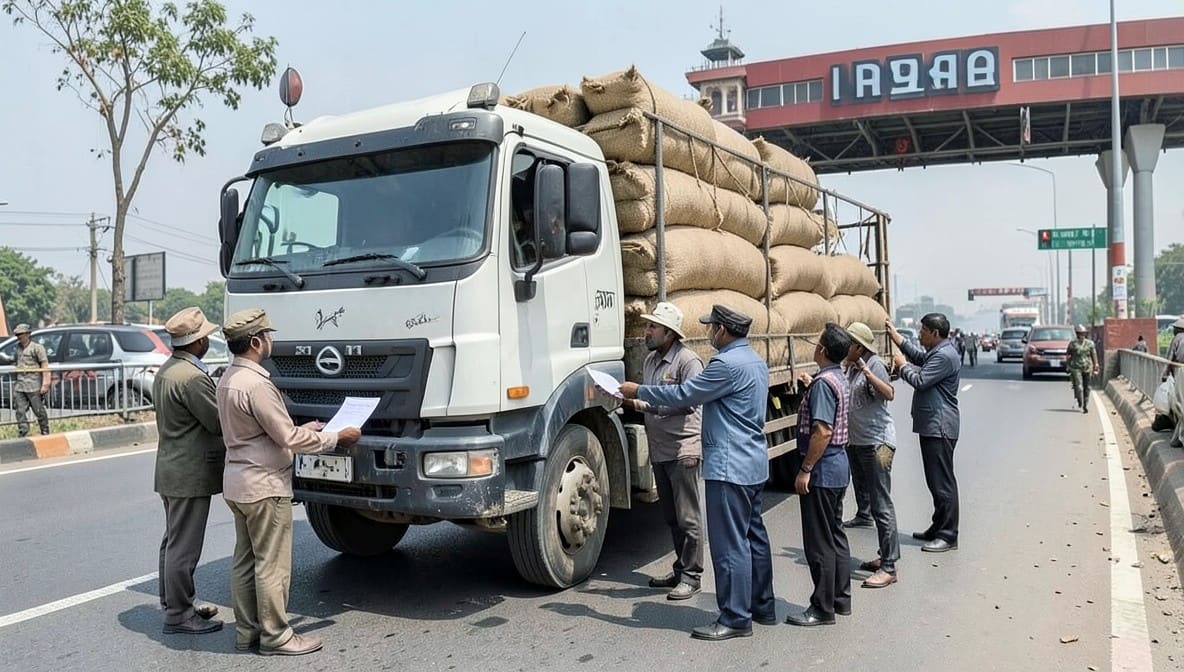
The Kerala High Court has clarified that an acquittal in a prosecution under Section 3 of the Essential Commodities Act does not automatically entitle the owner of seized goods to compensation under Section 6C(2). The ruling underscores the necessity of strict statutory compliance and limits compensation rights to cases where the acquittal directly relates to the confiscation order under Section 6A.
Background & Facts
The Dispute
The respondent, Niradeepam Roller Flour Mill, owned a flour processing unit in Kottayam. On 20 April 2007, authorities seized 2,34,610 kg of wheat from its godown, alleging the wheat was meant for Public Distribution System (PDS) distribution and had been illegally held for commercial sale. The seizure was made under Section 3 of the Essential Commodities Act, 1955, and the District Collector issued a confiscation order under Section 6A.
Procedural History
- 20 April 2007: Wheat seized and confiscation order issued under Section 6A.
- 2007: Crime No. 247/2007 registered against the managing partner for contravention of Section 3(1) and Clause 5A of the Kerala Rationing Order.
- 13 March 2015: Judicial First Class Magistrate acquitted the managing partner and the firm in C.C. No. 656/2007.
- 29 May 2019: Respondent submitted representation under Section 6C(2) seeking refund of ₹28.15 lakh with 12% interest.
- 2019: District Collector sanctioned only ₹14.49 lakh, rejecting interest and full purchase cost.
- 2019: Writ petition filed in High Court under Article 226.
- 8 April 2025: Single Judge allowed the writ, directing payment of procurement price under Section 6C(2) with interest.
- 2026: State filed writ appeal.
Relief Sought
The respondent sought: (i) quashing of Ext.P7 order; (ii) payment of wheat’s procurement price at ₹12/kg; (iii) interest from date of seizure; (iv) refund of excess amount retained by the State.
The Legal Issue
The central question was whether Section 6C(2) of the Essential Commodities Act, 1955 entitles a person to compensation with interest when acquitted in a prosecution under Section 3(1), even though the confiscation was ordered under Section 6A.
Arguments Presented
For the Appellant
The Special Government Pleader argued that Section 6C(2) applies only when the accused is acquitted in a prosecution instituted for contravention of the order under which confiscation was made under Section 6A. Here, the prosecution was under Section 3(1), not Section 6A. The acquittal, therefore, does not trigger the compensation mechanism under Section 6C(2). The State relied on Section 6A(3)(c), which permits payment of sale proceeds from perishable goods sold in public interest, without interest. The District Collector had acted lawfully by selling wheat through Fair Price Shops and depositing proceeds in the Revenue Deposit account.
For the Respondent
The respondent’s counsel contended that since the accused was acquitted after a full trial, the spirit of Section 6C(2) - which provides for restitution upon acquittal - should apply regardless of the specific provision under which prosecution was initiated. They argued that the purpose of Section 6C(2) is to compensate innocent owners, and the technical distinction between Sections 3 and 6A should not defeat this objective. The purchase cost of ₹12/kg, supported by invoices, was the fair value, and interest was due from the date of seizure.
The Court's Analysis
The Court undertook a rigorous textual analysis of Sections 6A and 6C. It emphasized that Section 6C(2) is not a general compensation provision but a specific remedy triggered only by two conditions: (1) modification or annulment of a Section 6A confiscation order by an appellate authority, or (2) acquittal in a prosecution instituted for contravention of the order under which confiscation was made under Section 6A.
"The statutory pre-conditions for invoking Section 6C(2) are not satisfied. The prosecution against the respondent was under Section 3(1) of the Act read with Clause 5A of the Kerala Rationing Control Order, and the respondent was acquitted of the said charge."
The Court held that Section 6A(3)(c) governs the present case, as it provides for payment of sale proceeds when goods are sold due to perishability and the accused is acquitted. The phrase "in respect of which an order of confiscation has been made under Section 6A" in Section 6C(2) is not a mere formality - it is a jurisdictional condition. The prosecution under Section 3(1), though related to the same seizure, does not constitute a prosecution "for the contravention of the order" under Section 6A.
The Court further noted that Section 6A(2) permits immediate sale of perishable goods at controlled prices, and Section 6A(3)(c) mandates payment of sale proceeds (after expenses) to the owner. The District Collector had complied with this procedure. Granting interest under Section 6C(2) would be inconsistent with the statutory scheme, which deliberately limits compensation in such cases to actual sale proceeds.
The Court rejected the respondent’s argument that the acquittal’s substance should override statutory language, stating: "An acquittal in a general criminal trial does not automatically trigger the higher compensation rates or interest provisions of the Essential Commodities Act unless the specific statutory pre-conditions for that section are met."
The Verdict
The State won. The Kerala High Court held that Section 6C(2) does not apply to acquittals under Section 3(1), even when confiscation was ordered under Section 6A. The respondent is entitled only to the net sale proceeds from the wheat, as deposited under Section 6A(3)(c), without interest. The Single Judge’s order was set aside, and the District Collector’s original order was revived.
What This Means For Similar Cases
Compensation Is Statutorily Tethered to the Confiscation Order
- Practitioners must identify whether the prosecution was initiated for contravention of the specific order under which confiscation occurred under Section 6A.
- Acquittals under Section 3 or other provisions, even if arising from the same seizure, do not qualify for Section 6C(2) benefits.
- Claims for interest or procurement price must be grounded in Section 6A(3)(c), which limits recovery to sale proceeds.
Procedural Compliance by Authorities Is Conclusive
- When authorities sell perishable goods under Section 6A(2) and deposit proceeds under Section 6A(3)(c), courts will not substitute their own valuation.
- The procurement cost claimed by the owner is irrelevant unless the case falls under Section 6C(2).
- Evidence of purchase invoices or market rates cannot override the statutory mechanism for perishable goods.
Litigation Strategy Must Align with Statutory Triggers
- Before filing a writ petition for compensation, counsel must verify whether the acquittal was under the same provision that authorized confiscation.
- If the prosecution was under Section 3, the remedy lies in challenging the sale price or procedure under Section 6A, not in invoking Section 6C(2).
- Claims for interest must be supported by explicit statutory authority - Section 6C(2) is not a default remedy for all acquittals.