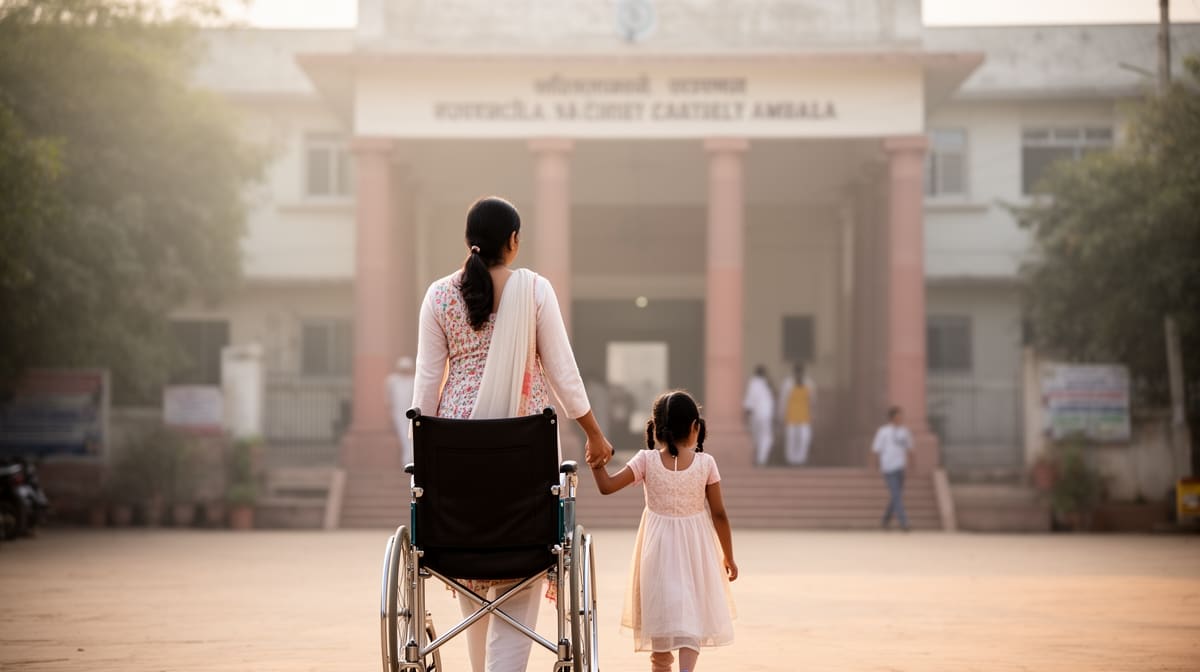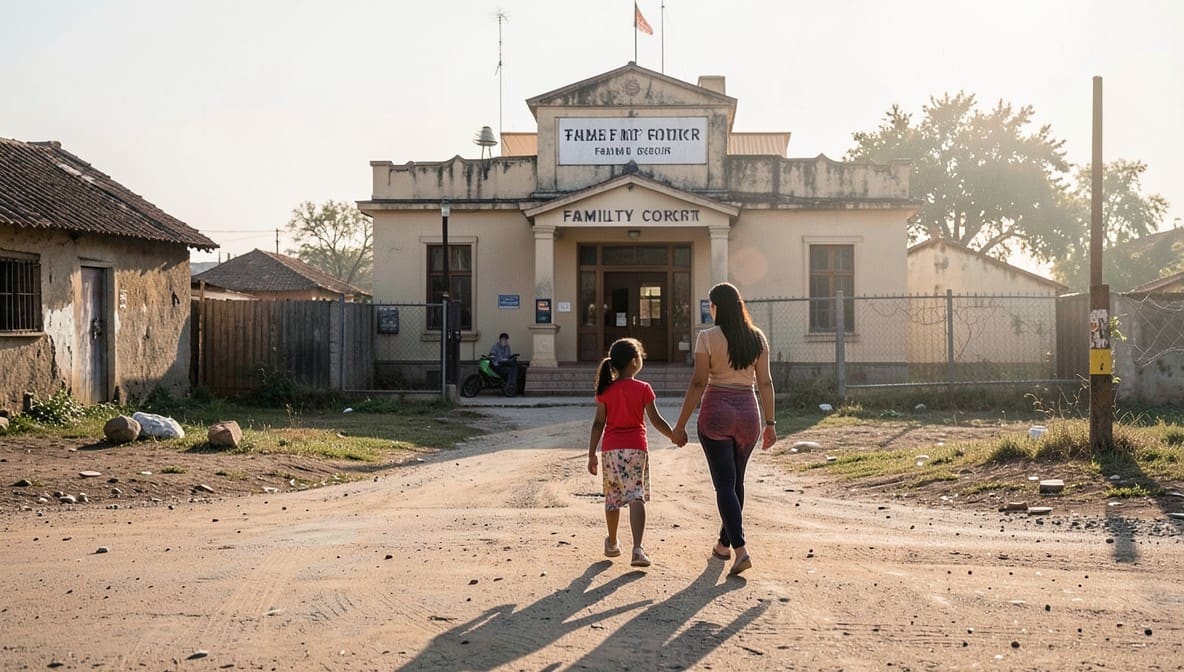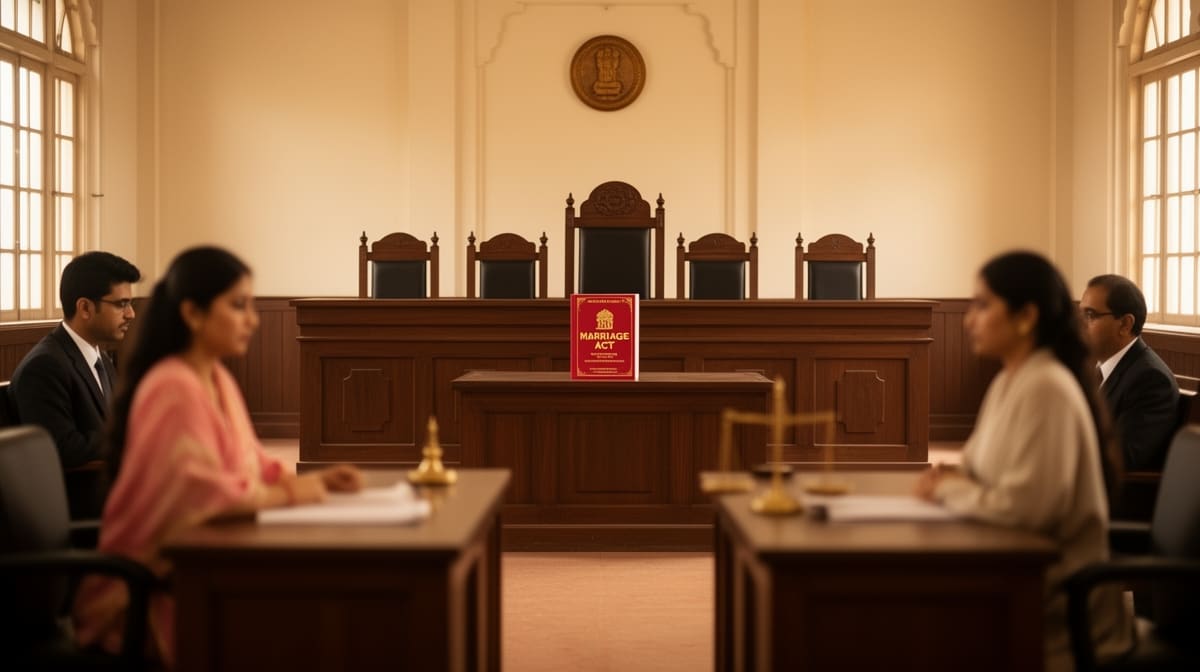
The Punjab & Haryana High Court has affirmed that in matrimonial disputes involving minor children, the welfare and practical convenience of the child must override the logistical hardships faced by either spouse. This judgment clarifies that while medical conditions of parties are relevant, they do not automatically outweigh the primary consideration of the child’s best interests in determining forum transfer.
Background & Facts
The Dispute
Two rival transfer applications were filed by the husband and wife, each seeking to shift the other’s pending matrimonial petition to a court closer to their own residence. The wife filed TA-630-2025 seeking transfer of the husband’s petition under Section 9 of the Hindu Marriage Act (HMA/35/2025) from the Family Court (Camp Court), Khanna, Ludhiana, to Sunam, Sangrur. The husband filed TA-1376-2025 seeking transfer of the wife’s petition under Section 13 of the Hindu Marriage Act (HMA/12/2025) from the Family Court (Camp Court), Sunam, Sangrur, to Khanna, Ludhiana. Both petitions arose from a marital breakdown following a marriage on 10.12.2019.
Key Facts
- The marriage between Sukhdeep Kaur and Satnam Singh was solemnized on 10.12.2019.
- A daughter was born from the marriage and is currently approximately 4 years old.
- The child is in the sole custody and care of the wife, Sukhdeep Kaur.
- The wife has no independent source of income and relies on her parental family for support.
- The wife’s petition under Section 13 (divorce) is already pending in the Family Court at Sunam, Sangrur.
- The husband, Satnam Singh, is a former Indian Army personnel who left service in 2011 due to epilepsy, a chronic neurological disorder.
- The husband has submitted 22 medical discharge summaries (Annexures R-1 to R-22) showing recurrent hospitalizations, with seizures occurring up to twice a month.
- The husband has a daughter from a prior marriage, but her age was not disclosed in court.
- Both parties are in their second marriages.
Procedural History
- 10.12.2019: Marriage solemnized.
- 2025: Petition under Section 9 (restoration of conjugal rights) filed by husband in Family Court, Khanna, Ludhiana (HMA/35/2025).
- 2025: Petition under Section 13 (divorce) filed by wife in Family Court, Sunam, Sangrur (HMA/12/2025).
- 17.03.2026: Rival transfer applications TA-630-2025 and TA-1376-2025 heard before the Punjab & Haryana High Court.
- During hearing, wife’s counsel in TA-1376-2025 declined to file a reply and adopted the contents of TA-630-2025 as her response.
The Parties' Positions
The wife contended that commuting 90 km from Sunam to Khanna to defend the Section 9 petition was impractical due to her lack of income and the need to care for her young daughter. She argued that since her own divorce petition was already pending in Sunam, transferring the husband’s petition there would ensure procedural efficiency and minimize disruption to the child.
The husband argued that his frequent hospitalizations due to epilepsy made travel to Sunam, located 90 km away, medically unfeasible. He submitted medical records showing recurrent seizures and hospital admissions, and emphasized his responsibility toward his daughter from his first marriage.
Relief Sought
The wife sought transfer of the Section 9 petition to Sunam, Sangrur, and dismissal of the husband’s transfer application.
The husband sought transfer of the Section 13 petition to Khanna, Ludhiana, and dismissal of the wife’s application.
The Legal Issue
The central question was whether the convenience of a spouse suffering from a chronic medical condition justifies transferring a matrimonial petition away from the forum where the minor child resides and where the other petition is already pending, or whether the welfare and practical needs of the child must prevail.
Arguments Presented
For the Petitioner (Wife)
The wife’s counsel emphasized that the child, aged four, is entirely dependent on her mother for daily care and has no other guardian. Commuting 90 km to Khanna would severely disrupt the child’s routine and the mother’s ability to attend court proceedings. The wife’s own divorce petition was already pending in Sunam, making consolidation of proceedings there both logical and efficient. No alternative care arrangement for the child was feasible given her financial dependence on her parents.
For the Respondent (Husband)
The husband’s counsel argued that his epilepsy, documented through 22 medical records, rendered travel to Sunam medically hazardous. Frequent hospitalizations and unpredictable seizure episodes made physical attendance at court in a distant location unreasonable. He contended that the court should accommodate his medical needs, as the law requires reasonable accommodation for persons with disabilities.
The Court's Analysis
The Court acknowledged the husband’s medical condition as unfortunate and recognized the legal obligation to accommodate persons with disabilities. However, it emphasized that the welfare of the minor child is the paramount consideration under Section 26 of the Hindu Marriage Act and the overarching principle of parens patriae.
"The most weighing and relevant factor to be considered is about the applicant taking care of the daughter, who is about 4 years old."
The Court noted that while the husband’s medical condition was serious, it did not render him incapable of participating in proceedings through virtual means, which the Court explicitly permitted. The wife, by contrast, had no financial or logistical capacity to relocate or arrange alternate childcare. The Court also observed that the child’s schooling was imminent, further anchoring her stability to her current residence in Sunam.
The Court distinguished the husband’s situation from that of the child: the husband’s hardship was personal and potentially manageable through technological means; the child’s hardship was existential and irreversible if uprooted. The Court held that the husband’s prior marital child was older and presumably more independent, whereas the daughter of the current marriage was entirely dependent.
The Court further noted that the wife’s petition under Section 13 was already pending in Sunam, and transferring the husband’s petition there would avoid multiplicity of proceedings and ensure coherent adjudication.
The Verdict
The wife’s application TA-630-2025 is allowed. The husband’s petition under Section 9 of the Hindu Marriage Act (HMA/35/2025) is transferred from the Family Court (Camp Court), Khanna, Ludhiana, to the Family Court at Sunam, Sangrur. The husband’s application TA-1376-2025 is dismissed. The record shall be sent to the District and Sessions Judge, Sangrur, who shall assign the transferred petition to the same court where the wife’s Section 13 petition is pending. Both cases shall be heard on the same date. The parties are directed to appear before the court in Sunam within one month. The husband may apply for virtual appearance due to his medical condition, and the court shall consider such applications on merit.
What This Means For Similar Cases
Child’s Residence Overrides Spousal Convenience
- Practitioners must prioritize the child’s place of residence and custody when filing or opposing transfer applications in matrimonial matters.
- Medical hardship of a spouse, however severe, does not automatically justify transfer away from the child’s forum unless no alternative accommodation (e.g., virtual appearance) is feasible.
- Courts will weigh the child’s developmental needs, schooling, and dependency over the logistical inconvenience of an adult party.
Consolidation of Proceedings Is Preferred
- Where two petitions (e.g., Section 9 and Section 13) are pending in different jurisdictions, courts will favor consolidation in the forum where the child resides and where one petition is already pending.
- This reduces litigation burden on the child and ensures consistent judicial oversight.
- Advocates should proactively seek consolidation rather than opposing transfer on grounds of personal inconvenience.
Virtual Appearance as a Reasonable Accommodation
- Courts now explicitly recognize virtual appearance as a viable option for parties with chronic medical conditions.
- Practitioners must file formal applications for virtual participation, supported by medical documentation.
- Failure to explore virtual alternatives may weaken arguments for transfer on medical grounds.