The Rajasthan High Court has reaffirmed that in matrimonial disputes, the wife’s convenience and the welfare of any minor child in her custody are decisive factors in transfer petitions. This judgment provides critical guidance for practitioners handling inter-district transfers under Section 24 of the Code of Civil Procedure, emphasizing that logistical hardship faced by women with dependent children cannot be overridden by speculative claims of inconvenience by the husband.
Background & Facts
The Dispute
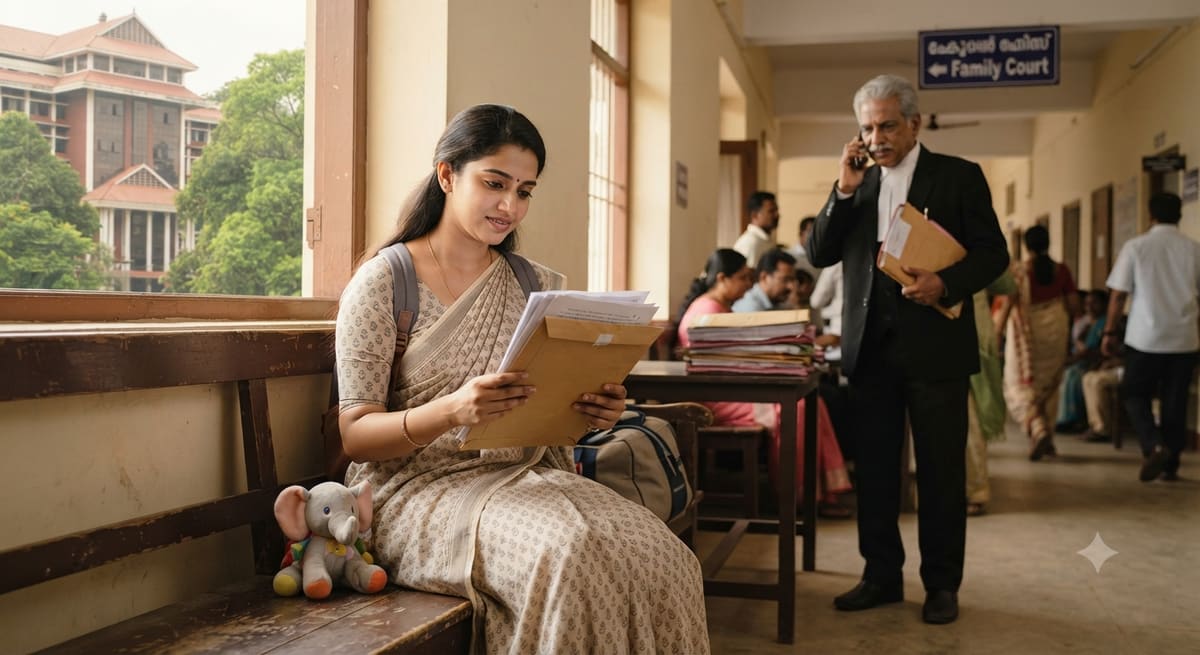
The petitioner, Hemlata Garg, filed a transfer application seeking to move Case No. 85/2025, a matrimonial suit under Section 13 of the Hindu Marriage Act, 1955, pending before the Additional District Judge, Sumerpur, to the Family Court in Pali. The respondent, Prakash Garg, is the husband who initiated the divorce proceedings. The petitioner resides at Dhobi Mohalla, Village Ranawas, Tehsil Marwar Junction, District Pali, while the respondent resides in Adarsh Colony, behind the S.D.M. Residence, Tehsil Sumerpur, District Pali. The distance between the two locations is substantial, with no direct public transportation available.
Key Facts
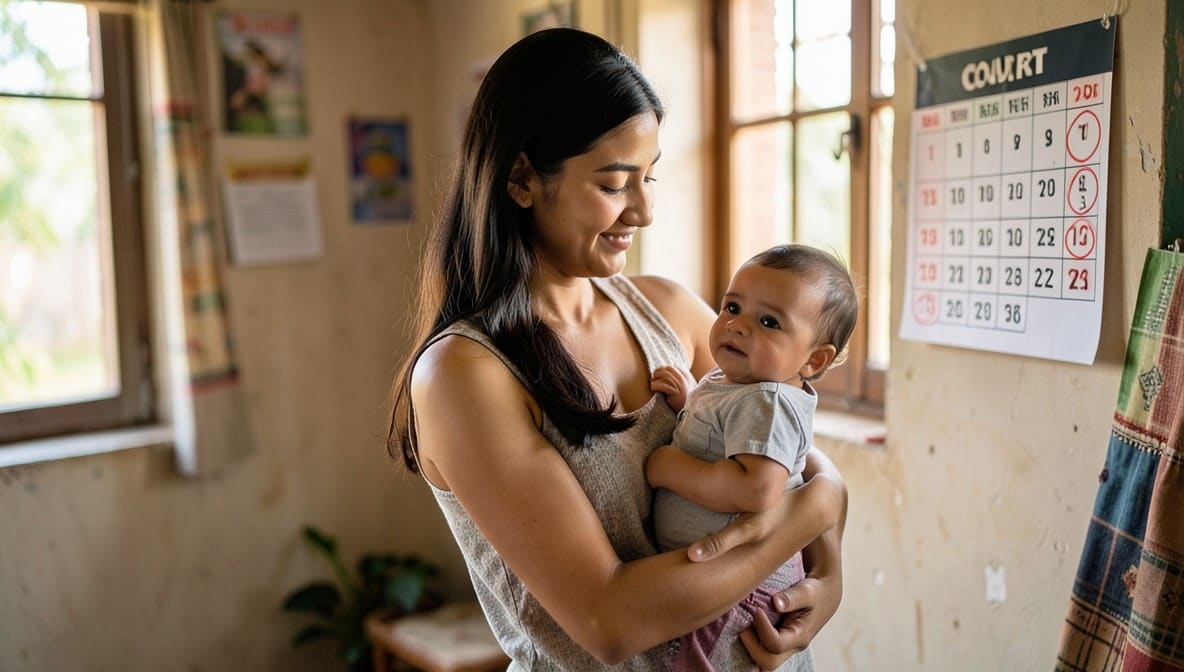
- The petitioner is the primary caregiver of a minor girl child
- The petitioner has no independent source of income and relies on familial support
- There is no direct bus or rail connectivity between Ranawas (Pali) and Sumerpur
- The petitioner would be required to travel approximately 50-60 kilometers for each hearing, often involving multiple trips per day
- The child is of tender age and dependent on the petitioner for daily care, schooling, and medical needs
- The respondent has not filed any written reply to the transfer petition
- No documentary evidence has been submitted by the respondent to substantiate his claim that his mother suffers from age-related ailments requiring his constant care
Procedural History
- 2025: Original divorce petition filed by respondent (Prakash Garg) against petitioner (Hemlata Garg) before the Additional District Judge, Sumerpur (Case No. 85/2025)
- 2026: Petitioner files Civil Transfer Application No. 59/2026 before the Rajasthan High Court, Jodhpur, seeking transfer to Family Court, Pali
- 29.04.2026: Hearing conducted before Justice Rekha Borana; both parties represented by counsel
- 29.04.2026: Judgment delivered allowing the transfer application
The Parties' Positions
For the Petitioner
The petitioner’s counsel argued that:
- The petitioner is the sole caregiver of a minor child
- Traveling to Sumerpur would force her to either leave the child unattended or bring the child to court, both of which are impractical and detrimental to the child’s welfare
- The lack of public transport makes daily travel unfeasible
- The respondent has not provided any proof of his claimed hardship
- The principle of wife’s convenience, as laid down by the Supreme Court, must prevail
For the Respondent
The respondent’s counsel contended that:
- The respondent’s mother suffers from age-related ailments and requires his constant care
- The respondent would face greater hardship traveling from Sumerpur to Pali
- No documentary evidence was submitted to support this claim
Relief Sought
The petitioner sought transfer of Case No. 85/2025 from the Court of Additional District Judge, Sumerpur, to the Family Court, Pali, to ensure her ability to attend proceedings without compromising the care of her minor child.
The Legal Issue
The central question was whether the convenience of the wife, particularly when she is the primary caregiver of a minor child and faces significant logistical barriers, outweighs the unsubstantiated claim of hardship by the husband in a transfer petition under Section 24 of the Code of Civil Procedure.
Arguments Presented
For the Petitioner
The petitioner’s counsel relied on N.C.V. Aishwarya v. A.S. Saravana Karthik Sha (2022 INSC 1310) and Reena Bahri v. Ajay Bahri (2002) 10 SCC 136 to argue that in matrimonial matters, the wife’s convenience is the cardinal consideration. The counsel emphasized that the absence of transport, the child’s dependency, and the lack of any alternative caregiver rendered the respondent’s claim of hardship speculative and legally insufficient. The petitioner’s counsel also cited Dr. Rajesh Kumar Jatav v. Sarita Yadav (2026) to reinforce that the welfare of the child, not the convenience of the husband, must govern transfer decisions.
For the Respondent
The respondent’s counsel asserted that the husband’s duty to care for his elderly mother created a comparable hardship. However, no affidavit, medical reports, or any documentary evidence were filed to substantiate this claim. The counsel did not dispute the petitioner’s residence, the child’s dependency, or the lack of transport, but relied solely on the assertion of familial obligation.
The Court's Analysis
The Court began by affirming the settled legal principle that in matrimonial transfer petitions, the wife’s convenience is paramount, particularly when she is the primary caregiver of a minor child. The Court cited N.C.V. Aishwarya v. A.S. Saravana Karthik Sha with approval, noting that courts must consider socio-economic realities, including the wife’s dependence on familial support and the absence of independent means.
"Given the prevailing socio-economic paradigm in the Indian society, generally, it is the wife's convenience which must be looked at while considering transfer."
The Court further relied on Reena Bahri v. Ajay Bahri, where the Supreme Court rejected the husband’s offer to pay for travel and escort, holding that the presence of a young child and the absence of a companion made the wife’s inability to attend proceedings a decisive factor.
The Court observed that the respondent had not filed any reply or evidence to substantiate his claim of hardship. The absence of documentation rendered the assertion legally irrelevant. The Court then referenced its own recent decision in Dr. Rajesh Kumar Jatav v. Sarita Yadav, where it held that the child’s welfare, not the convenience of the husband, must be the guiding principle.
"This Court is of the clear opinion that herein, it is the child who would be the actual sufferer and would face serious hardships if the proceedings continue at Bhilwara."
The Court concluded that compelling the petitioner to travel to Sumerpur would force her to either neglect her child or expose the child to the stress of court proceedings, both of which violate the child’s fundamental right to welfare under Article 21 of the Constitution. The Court held that the respondent’s unsubstantiated claim could not override these established principles.
The Verdict
The petitioner succeeded. The Rajasthan High Court allowed the transfer application and directed that Case No. 85/2025 pending before the Additional District Judge, Sumerpur, be transferred to the Family Court, Pali. The Additional District Judge, Sumerpur, was directed to forward the complete record to the Family Court, Pali, within two weeks of receipt of the certified copy of this order. Both parties were directed to appear before the transferee court on the next date fixed, without the need for fresh notices. The Court also clarified that any application by the respondent for video conferencing may be considered on its merits, depending on whether his physical presence is essential.
What This Means For Similar Cases
Wife's Convenience Is Presumptively Paramount
- Practitioners must lead with evidence of the wife’s logistical hardship, especially when she is the primary caregiver
- Courts will not entertain unsubstantiated claims of hardship by the husband without documentary proof
- The burden lies on the respondent to prove that their hardship is greater and quantifiable
Child Welfare Overrides All Other Considerations
- The presence of a minor child in the wife’s custody creates a strong presumption in favor of transfer
- Courts will not permit proceedings to continue where the child’s education, health, or emotional stability is at risk
- Even if the child is not a party to the suit, their welfare is a material consideration under Section 24 CPC
Documentary Evidence Is Non-Negotiable
- Oral assertions of hardship, such as caring for elderly parents, are insufficient without medical records, affidavits, or proof of dependency
- Failure to file a reply or supporting documents renders the respondent’s claim legally irrelevant
- Practitioners must ensure all factual claims are backed by admissible evidence at the earliest stage