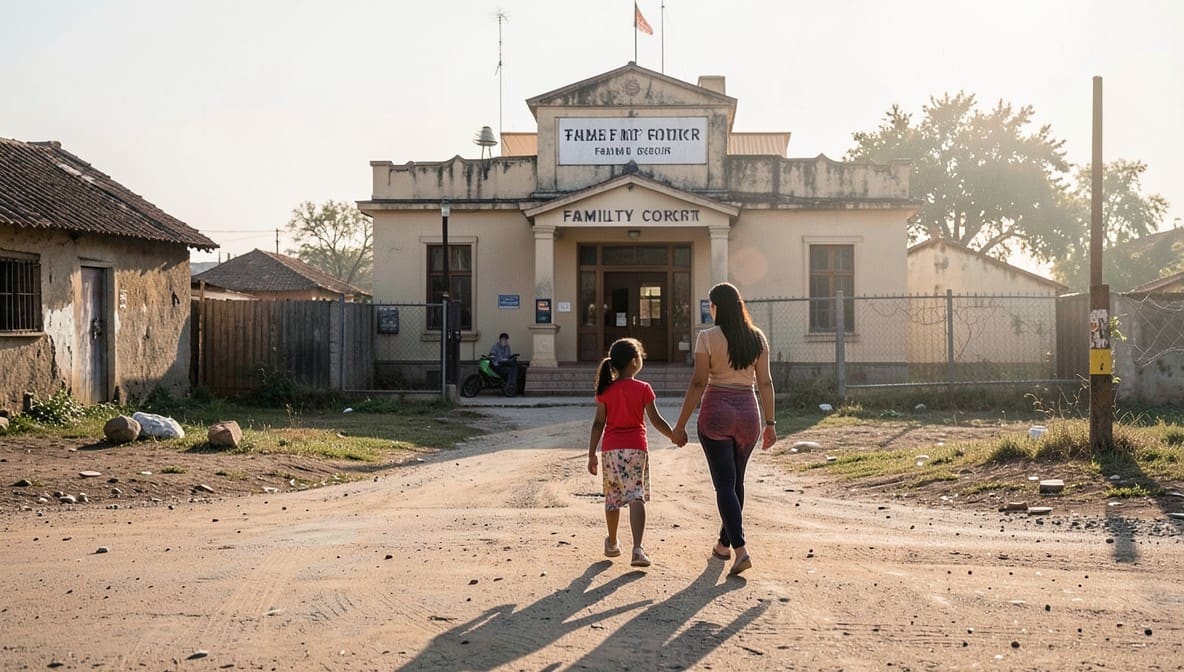
The Punjab & Haryana High Court has affirmed that the welfare of a minor child, combined with the financial vulnerability of the custodial parent and the existence of parallel litigation in the same jurisdiction, constitutes sufficient grounds for transferring a matrimonial petition under Section 13 of the Hindu Marriage Act. This ruling reinforces the principle that procedural convenience must yield to substantive justice in family disputes.
Background & Facts
The Dispute
The applicant-wife, Rachna, sought transfer of a divorce petition filed by her husband, Rahul, under Section 13 of the Hindu Marriage Act (HMA/364/2025), which was pending before the Family Court, Jind. She requested that the matter be transferred to the Family Court, Karnal, where she currently resides with their minor son and where another related proceeding is already pending.
Key Facts
- The marriage between the parties took place on 18.07.2021
- A son was born from the marriage and is currently in the sole care and custody of the applicant-wife
- The parties have been living separately due to matrimonial discord
- The applicant has no independent source of income and is financially dependent on her parental family
- A petition under Section 144 of the Bharatiya Nagarik Suraksha Sanhita, 2023 (BNSS) filed by the applicant is pending before courts in Karnal
- In the BNSS proceeding, the respondent was initially proceeded against ex parte, but has since filed an application to set aside those proceedings, which is still pending
- The distance between Jind and Karnal is approximately 100 kilometers
- The child is of school-going age, necessitating stable educational and residential continuity
Procedural History
- HMA/364/2025: Petition filed by respondent-husband in Family Court, Jind
- Notice issued: To respondent, who failed to appear despite service
- 25.03.2026: Respondent proceeded against ex parte in the transfer application before the High Court
- 08.04.2026: Application for transfer heard and decided orally by the High Court
Relief Sought
The applicant sought transfer of the divorce petition from the Family Court, Jind, to the Family Court, Karnal, on grounds of the child’s welfare, her financial dependency, and the pendency of related litigation in Karnal.
The Legal Issue
The central question was whether the welfare of a minor child, coupled with the custodial parent’s financial hardship and the existence of pending related litigation in another jurisdiction, justifies the transfer of a matrimonial petition under Section 13 of the Hindu Marriage Act, even in the absence of the respondent.
Arguments Presented
For the Applicant
Counsel for the applicant emphasized that the minor child, being in the sole custody of the mother, requires stability in education and residence. The applicant, being financially dependent on her family, faces significant hardship in litigating in Jind, which is 100 km away. The pendency of a related proceeding under the BNSS in Karnal further necessitates consolidation of all matters in one forum to avoid multiplicity of proceedings and inconsistent outcomes. The respondent’s failure to appear despite service indicated disregard for judicial process.
For the Respondent
The respondent did not appear before the Court and was proceeded against ex parte. No counter-arguments were presented.
The Court's Analysis
The Court examined the principles governing transfer of matrimonial proceedings, particularly the paramount consideration of the child’s best interests under Section 13 of the Hindu Marriage Act and the broader doctrine of judicial convenience in family law. The Court noted that while jurisdiction is generally determined by the place of residence of the respondent, exceptions are made where the welfare of the child or the practical realities of litigation demand a different forum.
"Considering the applicant to be taking care of the minor child, who is bound to be school-going, as per his age, while she herself is not having any source of earning and taking into consideration the fact of other litigation, arising from the broken marriage, to be already pending in the Courts at Karnal..."
The Court held that the cumulative factors - custody of the child, financial dependency of the mother, proximity of related litigation, and the respondent’s non-cooperative conduct - collectively outweighed the formal jurisdictional principle. The Court further observed that transferring the matter to Karnal would prevent unnecessary hardship and promote efficient adjudication.
The Verdict
The transfer application was allowed. The petition under Section 13 of the Hindu Marriage Act (HMA/364/2025) filed by the respondent-husband is transferred from the Family Court, Jind, to the Family Court, Karnal. The record is to be sent by the Family Court, Jind, to the District and Sessions Judge, Karnal, who shall assign the matter to the Family Court, Karnal. Both parties are directed to appear before the Family Court, Karnal, within one month from the date of judgment.
What This Means For Similar Cases
Child’s Custody and Stability Trump Jurisdictional Formalities
- Practitioners must now prioritize the child’s educational continuity and emotional stability when seeking transfer of matrimonial proceedings
- Courts are likely to favor transfer where the custodial parent lacks financial means and the child’s routine would be disrupted by travel
Parallel Litigation Justifies Consolidation
- The pendency of related proceedings under BNSS or other statutes in the same jurisdiction creates a strong presumption in favor of transfer
- Avoiding inconsistent findings across forums is now a recognized ground for judicial convenience
Non-Appearance by Respondent Strengthens Transfer Request
- A respondent’s failure to appear, despite service, may be viewed as abandonment of procedural rights and can tip the balance in favor of the applicant’s request
- Courts may treat such conduct as indicative of indifference to the child’s welfare