The Allahabad High Court has reaffirmed that the expressed wishes of a mature minor, when free from coercion or manipulation, are decisive in custody matters under habeas corpus proceedings. This judgment underscores the primacy of the child’s autonomy over parental claims, particularly where no evidence of harm or exploitation exists.
Background & Facts
The Dispute
The petition was filed by Dr. Ayushi, the elder sister of the minor corpus, Aditya, seeking his production before the Court and custody on grounds that he was being unlawfully detained by his mother, Satesh Teotia (Respondent No. 4), and other respondents. Dr. Ayushi alleged that Aditya was being drugged, kept under undue influence, and that the respondents intended to usurp property belonging to the minor, which had been inherited from his late father.
Key Facts
- Aditya is a 17-year-old minor, currently studying in Class XII at D.P.S. School, Bulandshahr, in the Commerce stream
- He appeared for the CBSE Board examinations in 2026
- He aspires to become an accountant in the future
- He has been residing with his mother, Satesh Teotia, since at least early 2026
- The petitioner, Dr. Ayushi, is his elder sister and claims to be acting in his best interests
- The minor possesses property inherited from his deceased father, which he is aware of and has assured the Court he will not sell or transfer
- No medical, forensic, or documentary evidence was produced to substantiate allegations of drug use, alcoholism, or coercion
Procedural History
- 01.04.2026: Habeas Corpus Writ Petition No. 408 of 2026 filed before the Allahabad High Court
- 16.04.2026: Court issued order directing the State to produce the corpus, Aditya, before it
- 18.04.2026: Sub-Inspector Avinash Kumar of Police Station Gulawathi, District Bulandshahr, produced the minor in Court as directed
- 20.04.2026: Court conducted an in-camera interview with Aditya, lasting over one hour
- 30.04.2026: Judgment delivered dismissing the petition
The Parties' Positions
Petitioner (Dr. Ayushi): Argued that the minor was being held against his will, subjected to drugs and psychological manipulation, and that his property was at risk of being misappropriated. She contended that the Court had a duty to intervene under its parens patriae jurisdiction.
Respondents (State of Uttar Pradesh and others): Maintained that the minor was living voluntarily with his mother, was in good health, pursuing education, and had expressed a clear, consistent desire to remain with her. No evidence of unlawful detention or harm was presented.
Relief Sought
The petitioner sought:
- Production of the minor before the Court
- Custody of Aditya to be transferred to her
- Directions to restrain the respondents from interfering with the minor’s property
- Visitation rights for herself
The Legal Issue
The central question was whether the habeas corpus petition can be maintained to transfer custody of a 17-year-old minor who has clearly and voluntarily expressed his desire to live with his mother, absent any evidence of coercion, abuse, or exploitation.
Arguments Presented
For the Petitioner
Dr. Ayushi relied on the Court’s parens patriae jurisdiction to protect minors from alleged exploitation. She argued that the minor’s statements might be influenced by his mother and that the Court must act preemptively to safeguard his property and person. She cited general principles of child welfare under the Juvenile Justice Act and Article 21 of the Constitution, but offered no corroborative evidence for her allegations of drug use or intent to usurp property.
For the Respondent
The State and respondents contended that the minor was not detained unlawfully and was living with his mother by his own free will. They emphasized that the Court’s interaction with the minor revealed no signs of coercion, intoxication, or fear. They further argued that the petitioner’s claims were speculative and unsupported by any material evidence, and that the minor’s autonomy, especially at the age of 17, must be respected.
The Court's Analysis
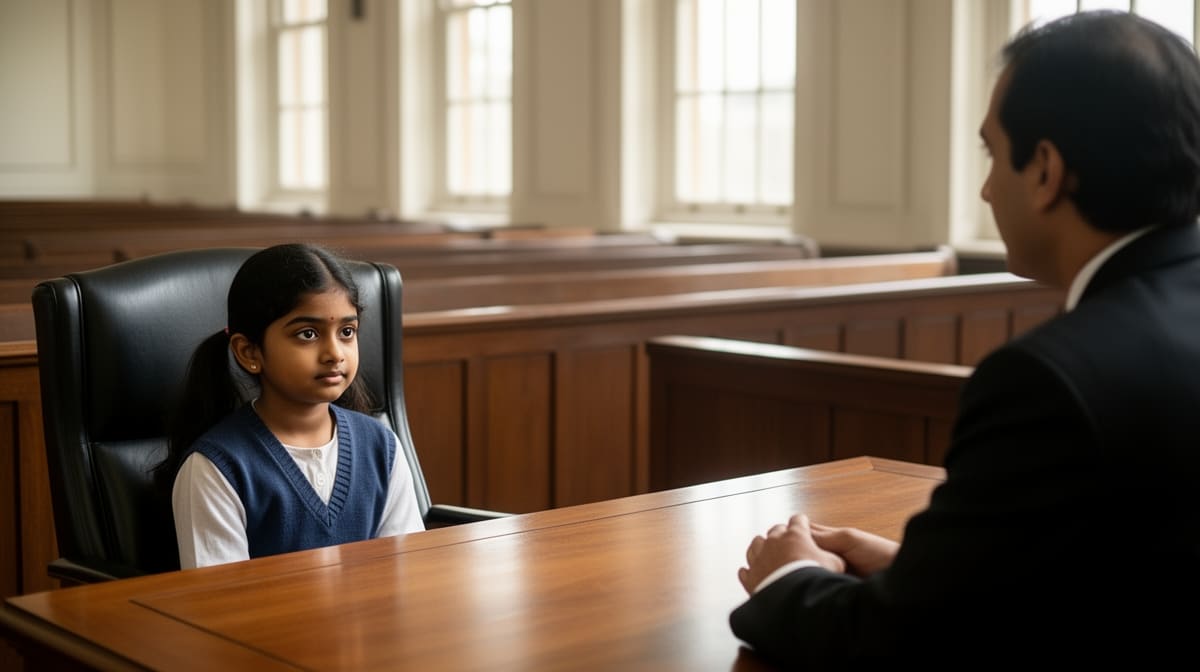
The Court conducted a detailed, in-camera interview with Aditya, who demonstrated clear cognitive ability, articulation, and emotional awareness. He stated unequivocally that he did not wish to live with his sister, Dr. Ayushi, and expressed no fear or reluctance regarding his mother. He confirmed his academic progress, his understanding of his inherited property, and his intention to manage it responsibly.
"The corpus unequivocally expressed his desire to live with his mother, Satesh Teotia... This Court was not convinced that he had been drugged or was alcoholic. Furthermore, there is no evidence on record to support these allegations."
The Court rejected the petitioner’s speculative allegations as unsubstantiated assertions. It held that mere suspicion, without corroboration, cannot override the expressed wishes of a mature minor. The Court noted that Aditya was not only aware of his rights but also capable of articulating his preferences with clarity and consistency.
The Court further observed that the minor’s happiness, educational stability, and emotional well-being were intact in his current environment. It declined to impose visitation rights, noting that the minor had expressly refused any contact with the petitioner, and that forcing such contact would be contrary to his autonomy.
The Court emphasized that habeas corpus is not a tool for resolving civil custody disputes, especially when the minor’s consent is clear and no illegal detention is established. The absence of any evidence of unlawful confinement or harm rendered the petition devoid of merit.
The Verdict
The petition was dismissed. The Court held that no case was made out for interference in the custody arrangement. The minor, Aditya, remains in the custody of his mother, Satesh Teotia. No visitation rights were granted to Dr. Ayushi. The Court directed that the minor’s property rights be protected under existing law, and that no party shall interfere with his education or personal welfare.
What This Means For Similar Cases
Minor's Autonomy Prevails Over Parental Claims
- Practitioners must now treat the expressed wishes of minors aged 16 - 18 as presumptively decisive in custody disputes under habeas corpus, provided they are coherent and consistent
- Courts will not intervene based on unsubstantiated allegations of manipulation or exploitation
- Evidence of coercion, abuse, or mental impairment must be concrete and documented - not speculative
Habeas Corpus Is Not a Substitute for Custody Proceedings
- Habeas corpus petitions cannot be used to circumvent civil family court procedures
- Where the minor is not unlawfully detained, the remedy lies in custody suits under the Guardians and Wards Act or the Hindu Minority and Guardianship Act
- Courts will dismiss such petitions summarily if the minor’s voluntary choice is established
Visitation Rights Cannot Be Imposed Against a Minor’s Will
- Even close relatives cannot claim visitation rights if the minor explicitly refuses
- The Court’s role is to protect the child’s autonomy, not to enforce familial obligations
- Any attempt to compel contact may be viewed as psychological coercion and could be grounds for contempt