The Rajasthan High Court has reinforced the obligation of state authorities to decide applications for khatedari rights within prescribed timelines, rejecting prolonged inaction as a violation of substantive rights to land. This judgment clarifies that administrative delay in land allotment processes under colonization schemes cannot be tolerated when statutory frameworks exist to ensure timely redress.
Background & Facts
The Dispute
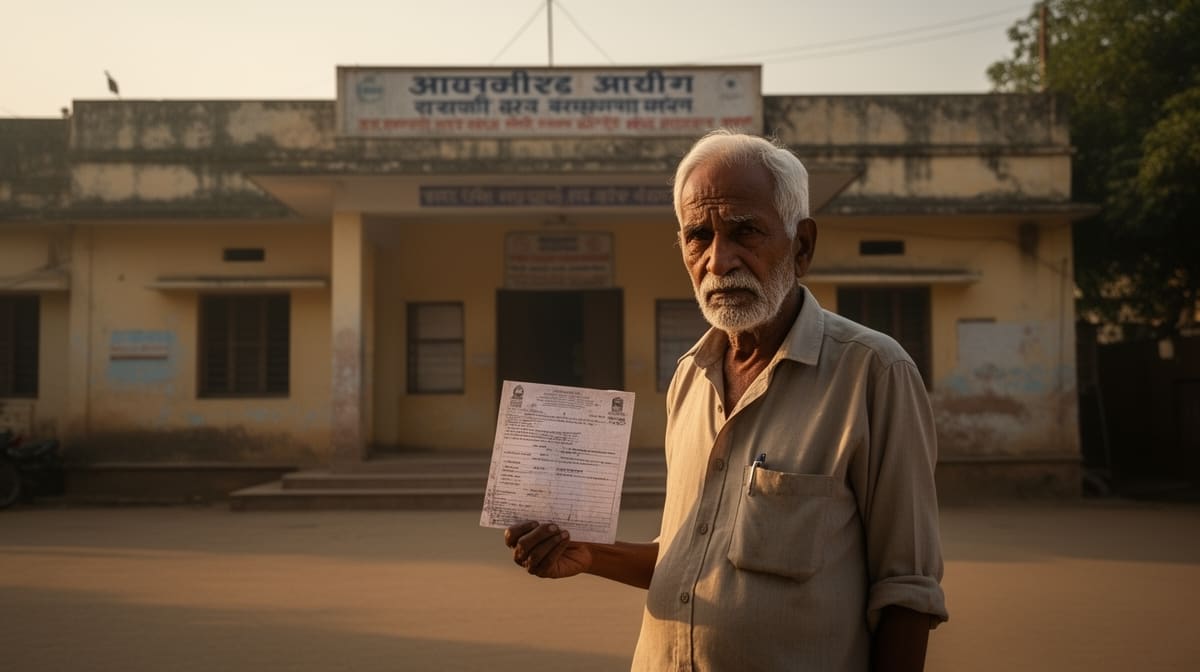
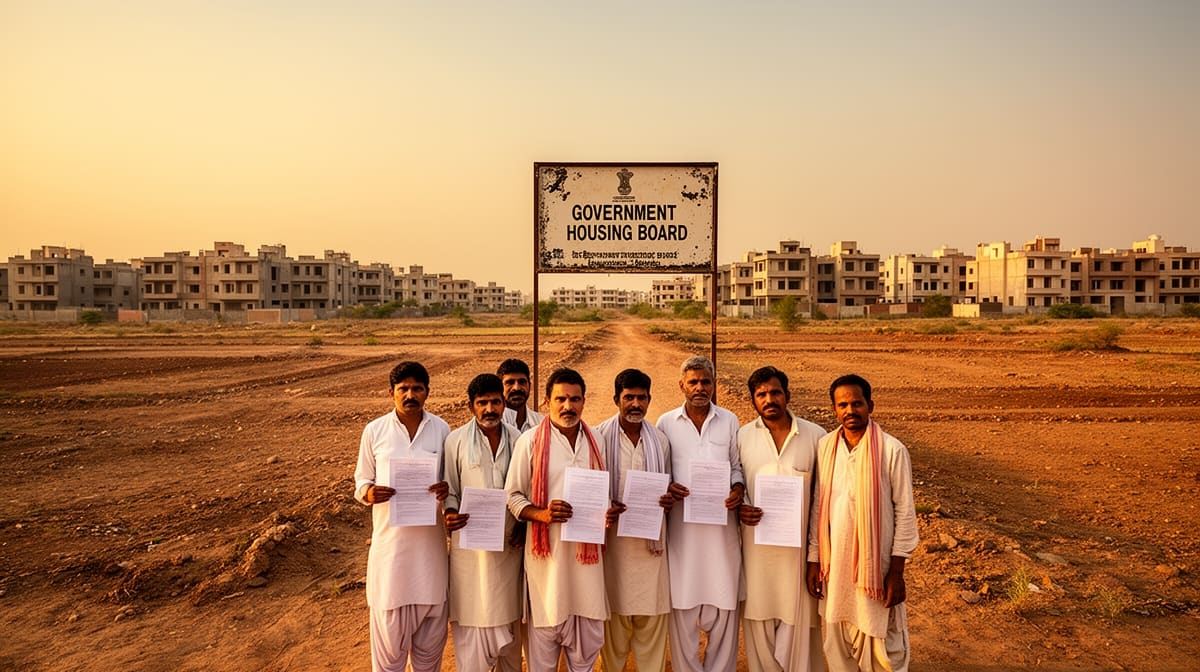
The petitioners, four siblings and a daughter of late Shri Fateh Singh, are legal heirs to agricultural land measuring 30 Bigha Barani in Khasra No. 54/12, Revenue Village Jaimalsar, Tehsil Gajner (Colonization), District Bikaner. They applied for khatedari rights - legal recognition as landholders under Rajasthan’s colonization scheme - through Annexure-8 dated 2021. Despite repeated follow-ups, no decision was rendered by the Colonization Department, leaving them in legal limbo despite decades of cultivation and possession.
Procedural History
- 2021: Petitioners submitted formal application for khatedari rights under Colonization Department rules
- 2022 - 2025: Multiple representations and reminders submitted; no response or meeting convened
- 2026: Writ petition filed under Article 226 of the Constitution seeking direction to constitute the Allotment Committee and grant rights
- 24 February 2026: Hearing before Justice Kuldeep Mathur; petitioners withdrew specific prayer for immediate grant, seeking only timely adjudication
Relief Sought
The petitioners sought: (A) direct award of khatedari rights; (B) direction to convene the Allotment Committee; and (C) time-bound disposal of their claim. Ultimately, they narrowed their prayer to a directive for expeditious consideration under applicable notifications.
The Legal Issue
The central question was whether administrative inaction in deciding applications for khatedari rights under colonization notifications constitutes a violation of the petitioners’ right to property and procedural fairness under Article 21, and whether courts can mandate a fixed timeline for decision-making where statutory provisions exist.
Arguments Presented
For the Petitioner
Mr. A.R. Godara and Mr. Yaman Rajpurohit argued that the Colonization Department’s failure to constitute the Allotment Committee or decide the application for over four years amounted to arbitrary and unreasonable delay. They relied on Notification dated 28.05.2007 and 02.01.2008, which prescribe a structured process for khatedari allotment, including mandatory committee meetings. They contended that such delay violates the principle of legitimate expectation and natural justice, and that courts must intervene to enforce statutory timelines.
For the Respondent
No advocate appeared for the respondents. The state did not file any counter-affidavit or opposition, leaving the court to proceed on the basis of petitioners’ submissions and the statutory framework.
The Court's Analysis
The Court examined the colonization notifications issued by the Deputy Secretary, Department of Revenue (Colonisation), Rajasthan, which establish a clear procedural roadmap for khatedari rights. These notifications require the constitution of an Allotment Committee, public notice, and decision within a reasonable period. The Court observed that the petitioners had fulfilled all prerequisites for eligibility, including continuous possession and payment of land revenue.
"The right to land under colonization schemes is not a mere privilege but a statutory entitlement, and prolonged inaction by the state machinery defeats the very purpose of such welfare legislation."
The Court rejected the notion that administrative discretion permits indefinite delay. It held that where a statutory mechanism exists, non-compliance amounts to a breach of public duty. The Court emphasized that Article 21 encompasses the right to livelihood and security of property, and that delay in adjudicating land claims directly impacts the petitioners’ economic survival.
The Court further noted that the petitioners had not sought immediate grant but only a binding timeline for decision-making - a modest and reasonable prayer. This, the Court held, was consistent with the doctrine of proportionality and the principle of judicial restraint.
The Verdict
The petitioners succeeded. The Court held that the state must decide khatedari applications within eight weeks of receipt of a fresh representation. The petition was disposed of with a direction to file a renewed application within two weeks, after which the competent authority must conclude the matter within eight weeks, strictly in accordance with the 2007 and 2008 notifications.
What This Means For Similar Cases
Timely Adjudication Is a Legal Obligation
- Practitioners must now treat statutory timelines in colonization schemes as enforceable rights, not guidelines
- Delay beyond prescribed periods can be challenged under Article 226 even without a final refusal
- Courts will not tolerate passive non-decision as a form of administrative evasion
Documentation Must Be Systematically Maintained
- Applicants must retain certified copies of all applications and acknowledgments
- Failure to file a fresh representation after court direction may result in dismissal of subsequent petitions on grounds of res judicata
- Legal representatives should draft representations explicitly invoking Notification 28.05.2007 and 02.01.2008 to anchor the claim in statutory law
Judicial Intervention Is Proportionate and Necessary
- Courts will not grant immediate relief unless the applicant has exhausted procedural avenues
- But where statutory machinery is dormant, courts may impose mandatory deadlines to prevent rights from being extinguished by inertia
- This precedent applies equally to other land allotment schemes under Revenue, Forest, and Colonization Departments across Rajasthan and similar states