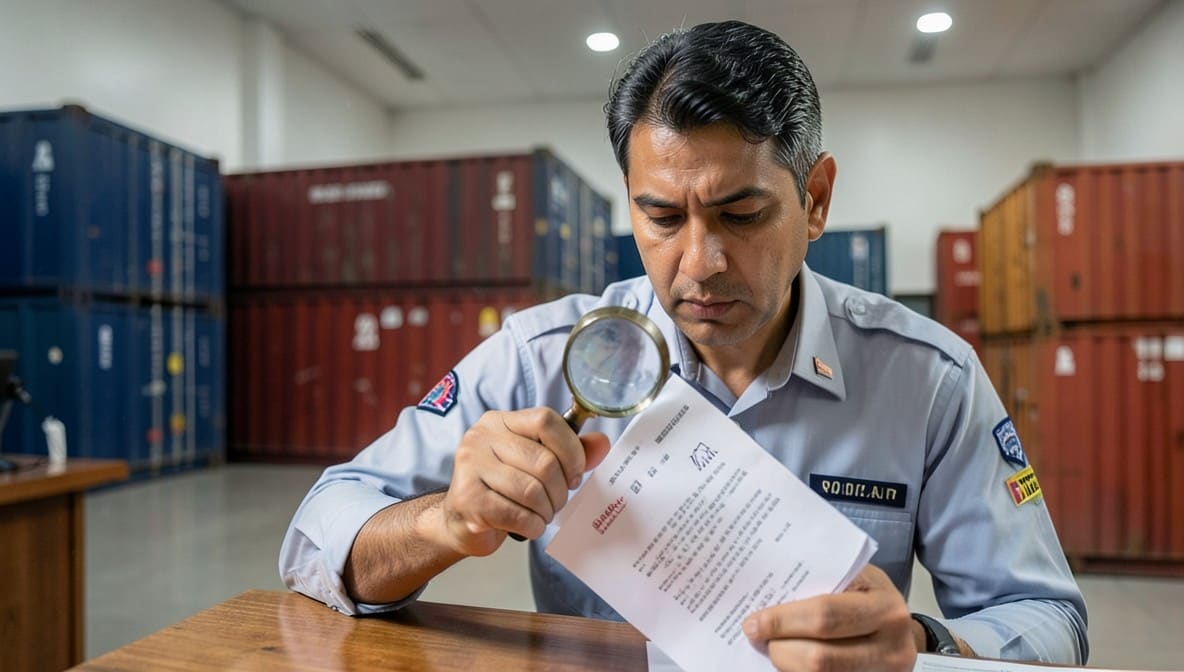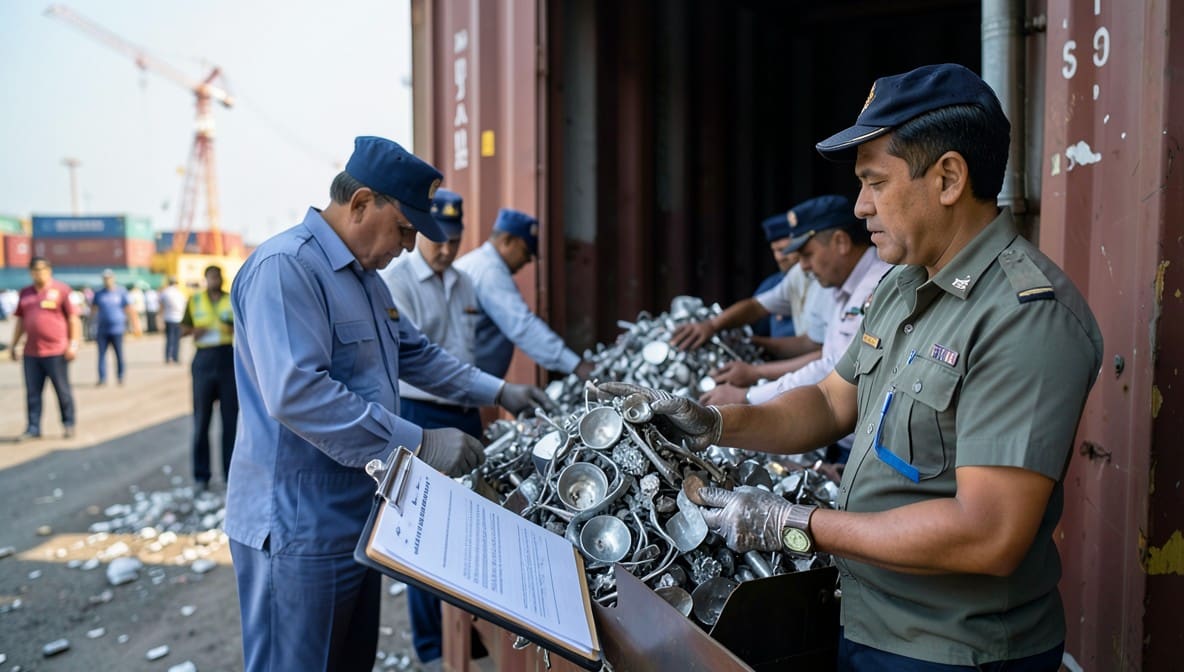
The Customs, Excise & Service Tax Appellate Tribunal, Chennai, has clarified that the absence of country-of-origin markings on imported aluminium scrap does not invalidate a valid Certificate of Origin under the ASEAN-India Free Trade Agreement, provided all supporting documents are verified and no evidence of fraud exists. This ruling reinforces the principle that procedural formalities must yield to substantive compliance in trade facilitation.
Background & Facts
The Dispute
The appellant, Jindal Aluminium Ltd., imported three consignments of 'Aluminium Scrap Tread' from M/s. Esun International Pvt. Ltd., Singapore, classified under CTH 7602 00 10. The appellant claimed exemption from Basic Customs Duty under Notification No. 046/2011-Cus dated 01.06.2011, invoking preferential treatment under the ASEAN-India Free Trade Agreement (AIFTA). The Department conducted a first check examination and denied the exemption on the ground that the goods bore no physical markings indicating country of origin.
Key Facts
- The imported goods were described as "ALUMINUM EXTRUSION SCRAP 6063 AS PER ISRI TREAD" in the Bill of Entry and "1X40' HQ Container, 25.782 MT, ALUMINUM EXTRUSION SCRAP 6063 TREAD" in the Certificate of Origin.
- The goods were shipped from Singapore and accompanied by a valid Certificate of Origin issued by Singaporean authorities.
- The PSI Certificate No. Olivine Scrap 2014-0091 dated 23.06.2014, issued by Olivine Commercial Pvt. Ltd., Singapore, was verified and found to be in order.
- The PCB Registration Sales Contract Form-09 was also verified without discrepancy.
- The weight of the consignment was cross-checked against weighment slips issued by CFS and found accurate.
- The Institute of Scrap Recycling Industries, Inc. (ISRI) defines "TREAD" as clean, uncoated aluminum castings, forgings, and extrusions of a single specified alloy, free from contaminants - a classification inherently incompatible with physical marking due to the nature of scrap.
- No tampering, misdeclaration, or fraudulent intent was alleged or proven by the Department.
Procedural History
- 09.07.2014: Three Bills of Entry filed for clearance of imported aluminium scrap.
- 23.06.2014: PSI Certificate issued by Olivine Commercial Pvt. Ltd., Singapore.
- 30.08.2015: Commissioner of Customs (Appeals-II), Chennai, passed Order-in-Appeal C. Cus. II No. 800/2015 denying duty exemption on grounds of missing COO markings.
- 12.11.2016: Appeal filed before the Customs, Excise & Service Tax Appellate Tribunal (CESTAT), Chennai.
- 07.11.2025: Hearing held before CESTAT.
- 24.03.2026: Final Order passed by CESTAT.
Relief Sought
The appellant sought setting aside of the impugned order dated 30.08.2015 and grant of exemption from Basic Customs Duty under Notification No. 046/2011-Cus, along with consequential relief including refund of duty paid under protest.
The Legal Issue
The central question was whether the absence of physical country-of-origin markings on imported aluminium scrap, a product inherently unsuitable for such marking, invalidates the claim for preferential duty exemption under the ASEAN-India FTA when all documentary evidence - including the Certificate of Origin, PSI certificate, and commercial documents - are verified and consistent.
Arguments Presented
For the Appellant
The appellant, represented by Shri B. Aditya Sundar, Chartered Accountant, argued that aluminium scrap, by its very nature as recycled material, cannot bear manufacturer names, trademarks, or country-of-origin markings. Reliance was placed on Serial No. 5 of the Overleaf Notes to the Combined Declaration-cum-Certificate of Origin under AIFTA Rules of Origin, which permits flexibility in description where physical marking is impracticable. Further, Rule 13 of Annexure III read with paragraph 7(c) of Customs Notification No. 189/2009-Customs mandates that if a Certificate of Origin is rejected, the Customs Authority must specify reasons in Box 4 and return the certificate to the issuing authority within two months - a procedural step not followed here. The appellant contended that the Department’s refusal was arbitrary and ignored the practical realities of scrap trade.
For the Respondent
The respondent, represented by Shri Vineeth Goel, Authorised Representative, argued that Sl. No. 5 of the Overleaf Notes requires the description of goods to include the name of the manufacturer and trademark, and that the absence of any physical marking on the goods rendered the Certificate of Origin unverifiable. The Department maintained that mere submission of a Certificate of Origin is insufficient without corroboration through physical identification of the goods, and that non-compliance with this requirement justified denial of preferential treatment.
The Court's Analysis
The Tribunal examined the nature of the imported goods and the applicable provisions of the ASEAN-India FTA Rules of Origin. It noted that the description in the Bill of Entry and Certificate of Origin - "ALUMINUM EXTRUSION SCRAP 6063 TREAD" - precisely matched the ISRI industry standard, which defines "TREAD" as clean, uncoated, single-alloy scrap. This level of detail was sufficient for Customs officers to identify the goods.
"The absence of country-of-origin markings on the goods could not have impeded their identification, particularly when all accompanying documents were verified by the Customs Officer and no discrepancies were found."
The Tribunal emphasized that the purpose of the Rules of Origin is to verify the origin of goods, not to impose impossible physical requirements on inherently unmarkable materials. It held that the Department’s reliance on the absence of markings was a technicality that ignored the substance of compliance. The Tribunal further observed that the Department failed to follow the mandatory procedure under Notification No. 189/2009-Customs, which requires specific communication of grounds for rejection and return of the certificate to the issuing authority.
The doctrine of substantial compliance was invoked to prevent undue hardship. The Tribunal held that where all documentary evidence is consistent, verified, and free from fraud, and where the nature of the goods renders physical marking impracticable, the benefit of preferential duty treatment cannot be denied on the basis of a non-essential procedural lapse.
The Verdict
The appellant succeeded. The Tribunal set aside the impugned order dated 30.08.2015 and granted the benefit of exemption from Basic Customs Duty under Notification No. 046/2011-Cus dated 01.06.2011. The appellant is entitled to consequential relief, including refund of duty paid under protest, with interest as per law. The appeal was disposed of accordingly.
What This Means For Similar Cases
Physical Marking Is Not Mandatory for Scrap Goods
- Practitioners can now confidently claim preferential duty benefits for imported scrap, recycled, or bulk commodities where physical marking is commercially or technically impossible.
- Customs authorities must evaluate the nature of the goods before insisting on markings - failure to do so renders denial arbitrary.
Documentary Verification Trumps Absent Physical Indicators
- When Certificate of Origin, PSI, commercial invoices, and weight slips are consistent and verified, absence of markings cannot be grounds for denial.
- The burden shifts to the Department to prove fraud or misdeclaration - mere absence of markings is insufficient.
Procedural Non-Compliance by Customs Invalidates Denial
- If Customs fails to follow the mandatory procedure under Notification No. 189/2009-Customs (i.e., returning the certificate with reasons in Box 4), any denial of preferential treatment is procedurally flawed.
- This creates a new ground for appeal: failure to comply with procedural safeguards under the FTA framework.
Substantial Compliance Doctrine Is Now Firmly Established in Customs Law
- The judgment elevates the doctrine of substantial compliance from a general principle to a binding standard in FTA-based duty exemptions.
- Practitioners should cite this case when challenging denials based on minor, non-fraudulent deviations from formal requirements.