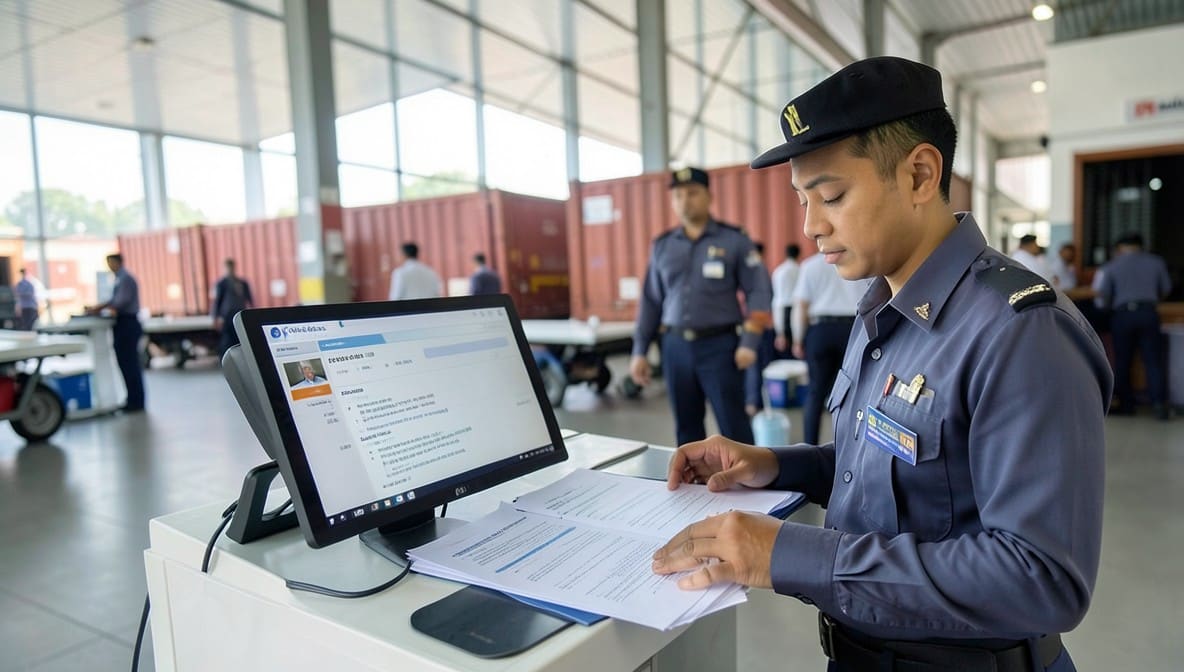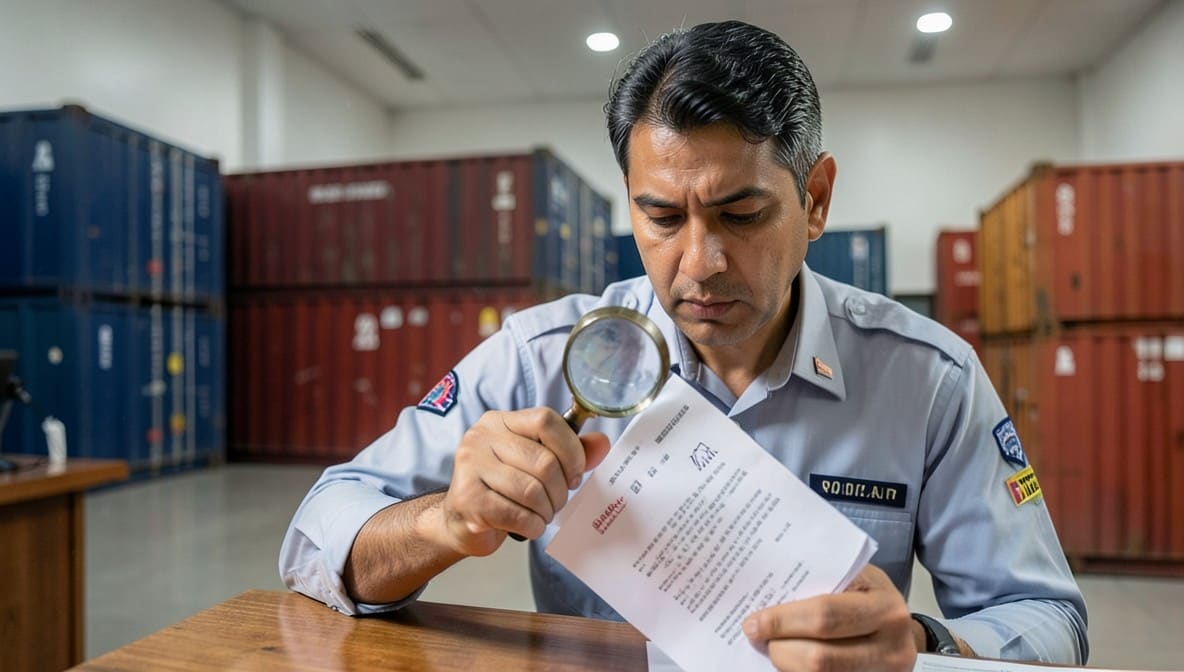
The Customs, Excise & Service Tax Appellate Tribunal (CESTAT), Bangalore, has clarified that procedural irregularities in the submission of ISO certification dates cannot justify denial of duty exemption benefits under export promotion schemes unless there is concrete evidence of fraud, diversion of inputs, or fabrication of test reports. The judgment reinforces the principle that substantial rights of exporters must not be forfeited on technical grounds when the underlying export obligations have been fully discharged.
Background & Facts
The Dispute
Midas Treads (India) Pvt. Ltd., a manufacturer and exporter of pre-cured tread rubber and rubber compound sheets, availed benefits under the Duty Free Import Authorization (DFIA) and Advance Authorization (AA) schemes between 2007 and 2015. The Commissioner of Customs, Cochin, issued a Show Cause Notice (SCN) dated 15.03.2018 alleging that the appellant had submitted a forged ISO 9000 certification to circumvent sample testing requirements under Circular No. 57/1997-Cus dated 31.10.1997. The SCN further alleged that the test reports submitted by the appellant were fabricated, and that the ISO certificate issued by M/s DAS Certification Pvt. Ltd. was invalid as the agency was not authorized under Appendix 6 of the Foreign Trade Policy.
Key Facts
- The appellant obtained three DFIA licenses between 2007 and 2009, availing duty benefits of Rs. 36,32,331/-
- The appellant obtained eleven AA licenses between 2012 and 2015, availing duty benefits of Rs. 6,16,28,577/-
- All export obligations under these licenses were fulfilled, and Export Obligation Discharge Certificates (EODCs) were issued by DGFT
- The appellant’s ISO 9000 certification was issued by M/s DAS Certification Pvt. Ltd. with an effective date of 21.09.2009, but the copy submitted to Customs showed an earlier date of 2006
- The appellant had applied for the ISO certification in 2006, but the actual issuance occurred in 2009; the corrected certificate was communicated to Customs via letter dated 30.07.2013
- M/s DAS Certification Pvt. Ltd. was not listed in Appendix 6 of the FTP as an authorized certifying body under Circular No. 57/1997-Cus
- The Department drew physical samples from multiple export consignments and obtained test reports from its own laboratory, which confirmed compliance with Standard Input Output Norms (SION)
- The Customs lab at Cochin, in a letter dated 02.09.2013, acknowledged it was not equipped to determine the percentage composition of ingredients in the exported rubber
- The Rubber Research Institute of India, under the Rubber Board, issued a certificate on 27.02.2018 confirming the appellant’s technical capability to conduct quality checks
- In-house test reports dated 11.09.2015 and statements from production staff (e.g., Mr. Soby Antony) confirmed adherence to SION norms
- The appellant had previously been penalized Rs. 1,00,000/- under Section 117 of the Customs Act for the same ISO certificate issue in Order-in-Original No. 80/2018 dated 14.06.2018, which was paid and closed
Procedural History
- 15.03.2018: Show Cause Notice issued by Commissioner of Customs, Cochin
- 17.12.2018: Appellant replied to SCN, clarifying timeline of ISO certification
- 14.06.2018: Order-in-Original No. 80/2018 imposed penalty of Rs. 1,00,000/- for ISO certificate discrepancy; penalty paid
- 24.07.2019: Impugned Order-in-Original No. COC-CUSTOMS-000-COM-24-19/20 confirmed duty demand of Rs. 6,16,28,577/- and imposed penalty and confiscation
- 20.01.2026: Appeals heard before CESTAT Bangalore
- 30.03.2026: Final Order passed allowing appeals
The Parties' Positions
For the Appellant: Argued that the ISO certificate discrepancy was a procedural lapse, not a substantive violation. Emphasized that all export obligations were fulfilled, EODCs were granted, and Customs’ own test reports confirmed compliance with SION norms. Relied on IOCEE Exports Ltd. v. CC, Chennai, Titan Medical Systems v. CC, New Delhi, and Kalinga Commercial Corporation v. CC, Bengaluru to assert that SION norms are indicative, not mandatory, and that procedural relaxations under Circular No. 57/1997-Cus cannot be used to deny benefits where actual compliance exists.
For the Respondent: Contended that the forged ISO certificate and fabricated test reports constituted fraud under Section 112 of the Customs Act. Argued that the use of an unauthorized certifying agency and false documentation invalidated the procedural exemption from sample testing. Relied on Indian Aluminium Co. v. Thane Municipal Corporation and Padamshree V.V. Patil SSK Ltd. v. CCE to assert that even procedural violations may be penalized if they facilitate fraud.
Relief Sought
The appellant sought quashing of the impugned order dated 24.07.2019, cancellation of the duty demand of Rs. 6,16,28,577/-, setting aside of penalties and confiscation orders, and declaration that the EODCs issued by DGFT remain valid and binding.
The Legal Issue
Can the denial of duty exemption benefits under DFIA and AA schemes be justified solely on the ground of a discrepancy in the effective date of an ISO 9000 certification, when the exporter has fulfilled all export obligations, the goods comply with SION norms, and Customs has independently verified the export samples?
Arguments Presented
For the Appellant
The appellant argued that Circular No. 57/1997-Cus permits in-house testing only as a procedural facilitation, not as a condition for eligibility under DFIA/AA schemes. The ISO certification was never a prerequisite for availing duty benefits; it merely exempted the exporter from mandatory sample testing. The appellant’s own test reports were not the basis for claiming benefits - Customs had drawn and tested samples independently, and those reports confirmed compliance with SION norms. The discrepancy in the ISO certificate date was a clerical error, not fraud, and had been previously penalized under Section 117. The appellant relied on IOCEE Exports Ltd. and Titan Medical Systems to establish that SION norms are guidelines, not rigid formulas, and that once EODCs are issued, they attain finality unless set aside by DGFT. The appellant further submitted that the co-noticees had no personal involvement in the alleged forgery and could not be penalized.
For the Respondent
The respondent contended that the submission of a forged ISO certificate and fabricated test reports amounted to wilful misrepresentation under Section 112 of the Customs Act. The use of an unauthorized certifying agency (M/s DAS Certification) rendered the certificate invalid under Appendix 6 of the FTP. The respondent argued that the appellant’s prior penalty under Order-in-Original No. 80/2018 did not bar further action, as the current proceedings involved larger duty evasion and multiple licenses. The respondent relied on Indian Aluminium Co. and Padamshree V.V. Patil SSK Ltd. to argue that procedural non-compliance that facilitates fraud or administrative abuse cannot be condoned. The respondent also asserted that the EODCs were obtained on the basis of fraudulent documents and were therefore void ab initio.
The Court's Analysis
The Tribunal conducted a meticulous review of the statutory framework, circulars, and judicial precedents. It emphasized that the DFIA and AA schemes are designed to promote exports, and their benefits are contingent upon actual export performance, not procedural formalities.
"The issuance of EODCs by DGFT after scrutiny of documents and export records constitutes a conclusive determination that export obligations have been fulfilled. The Customs Department cannot, after the fact and without DGFT intervention, reopen the matter on grounds of alleged procedural irregularities."
The Tribunal noted that the Department’s own laboratory had tested samples from multiple consignments and found no deviation from SION norms. The absence of any adverse findings in these reports negated any presumption of non-compliance. The Tribunal further held that Circular No. 57/1997-Cus explicitly permits reliance on in-house test reports only as an alternative to Customs testing - it does not make ISO certification a condition for eligibility under the schemes.
The Tribunal distinguished the present case from Indian Aluminium Co. and Padamshree V.V. Patil SSK Ltd., noting that those cases involved actual diversion of goods or deliberate falsification of test results. Here, there was no allegation of diversion, no evidence that the exported goods deviated from specifications, and no proof that the test reports were fabricated - only a misstatement in the ISO certificate’s effective date.
The Tribunal also observed that the appellant had already been penalized Rs. 1,00,000/- for the same ISO certificate issue in 2018, and that the Department had not challenged the EODCs issued by DGFT. The Tribunal held that the doctrine of res judicata and the finality of administrative actions precluded re-litigation of the same issue under a different provision.
"A procedural lapse, even if negligent, cannot be elevated to the level of fraud without evidence of intent to evade duty or misrepresent the nature of the exported goods. The burden of proving fraud lies squarely on the Department, and it has not discharged it."
The Tribunal further held that the co-noticees - individuals named in the order - had no role in the preparation or submission of the ISO certificate or test reports. Without any evidence of their personal involvement or unjust gain, penalizing them was unjustified.
The Verdict
The appeals were allowed. The impugned Order-in-Original dated 24.07.2019 was set aside. The duty demand of Rs. 6,16,28,577/- was cancelled. The penalties and confiscation orders were quashed. The Tribunal directed that the EODCs issued by DGFT remain valid and binding. No further action shall be taken against the appellant or the co-noticees on the basis of the allegations raised in the impugned order. The Department was directed to refund any amounts already recovered, with interest at 9% per annum from the date of payment until realization.
What This Means For Similar Cases
Procedural Non-Compliance Cannot Override Substantive Compliance
- Practitioners must argue that where export obligations are fulfilled and Customs’ own test reports confirm compliance with SION norms, procedural lapses (e.g., incorrect ISO dates) cannot justify duty demands or penalties
- The burden of proving fraud or diversion lies with the Department; mere suspicion or administrative inconvenience is insufficient
- EODCs issued by DGFT are conclusive evidence of compliance unless formally revoked by DGFT - Customs cannot unilaterally invalidate them
ISO Certification Is a Facilitation, Not a Condition
- The ISO 9000 certification under Circular No. 57/1997-Cus is only relevant for exemption from sample testing - it is not a prerequisite for availing DFIA/AA benefits
- Exporters who do not possess ISO certification are not ineligible for duty exemptions; they simply must submit samples for Customs testing
- Denial of benefits based on an invalid or misdated ISO certificate, without proof of false test reports or diversion, is legally unsustainable
Co-Noticees Must Be Protected from Collective Punishment
- In multi-party cases, individual liability must be established with specific evidence of involvement
- Absent proof of personal participation, knowledge, or benefit, co-noticees cannot be penalized for the acts of the principal entity
- Tribunals will not permit punitive actions against innocent parties based on association alone