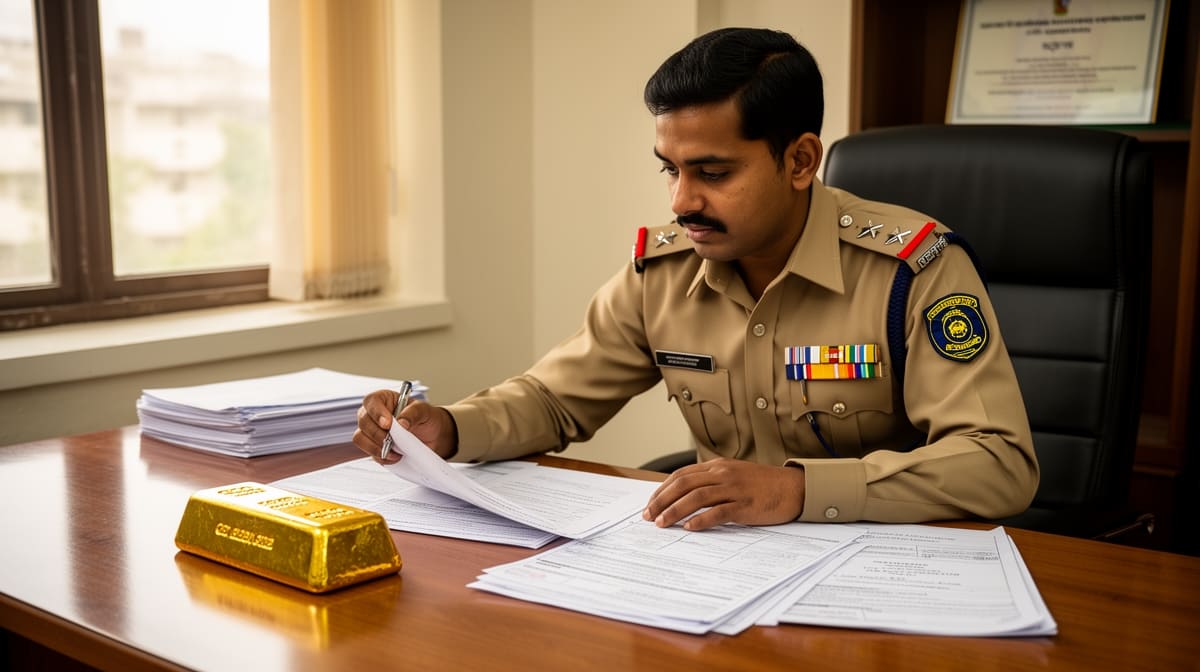
The Customs, Excise & Service Tax Appellate Tribunal (CESTAT) Chennai has delivered a significant ruling affirming that statements recorded under Section 108 of the Customs Act, 1962 cannot be used to reject declared values or impose penalties unless the mandatory procedural safeguards under Section 138B are strictly followed. The Tribunal set aside a substantial customs demand after finding that the Commissioner had relied on coerced and inadmissible statements, undermining the integrity of the adjudication process.
Background & Facts
The Dispute
The dispute arose from the Commissioner of Customs, Chennai-II’s order dated 11.06.2024, which rejected the declared transaction value of imported automobile parts under Rule 12 of the Customs Valuation (Determination of Value of Imported Goods) Rules, 2007, and re-determined the value under Rule 9. The Commissioner treated Hitin Sachdeva as the beneficial owner of goods imported through six dummy Importer Exporter Codes (IECs) - M/s Mega Auto Industries, M/s Majestic Motors, M/s Highline Enterprises, M/s Bird Automotive, M/s India Enterprises, and M/s Dhawan Impex - and imposed differential customs duty, interest, and penalty under Sections 114A and 114AA. The goods were also held liable for confiscation under Section 111(m), with redemption fines imposed under Section 125.
Key Facts
- The appellant, Hitin Sachdeva, arrived at Terminal T-3 of IGI Airport, New Delhi, on 03.09.2021 at 9:45 PM on Vistara Flight UK-992 from Pune.
- He was intercepted by Department of Revenue Intelligence (DRI) officers, taken to their office at CGO Complex, Lodhi Road, and locked in a separate enclosure with his partner, Bipin Jha.
- He was allegedly stripped, beaten with a stick and metal rod, deprived of food and water, and denied access to sanitation.
- His mobile phone and laptop were seized and held in DRI custody.
- He was forced to sign a pre-typed statement on 03-04.09.2021, which he later retracted on 14.09.2021 before the Chief Metropolitan Magistrate, Patiala House, New Delhi.
- On 04.09.2021 at 5:15 PM, he was formally arrested and produced before a magistrate at 10:35 PM, and lodged in Tihar Jail after midnight.
- On 05.09.2021, the Tihar Jail doctor recorded multiple bruises on his shoulder, thigh, abdomen, and hands.
- On 06.09.2021, Deen Dayal Upadhyay Hospital confirmed bruises on his right thigh, right knee, left buttock, right arm, left shoulder, and left flank.
- On 13.09.2021, DRI officers returned to Tihar Jail and pressured him to sign another pre-typed statement, threatening to arrest his parents and younger brother.
- On 23.11.2021 and 09.02.2022, he was again forced to sign documents on dotted lines while on bail.
- E-mails containing purported "actual invoices" were received in his inbox on 04.09.2021 at 11:25 AM and 1:16 PM - times when he was in DRI custody and his laptop was under their control.
- The invoices were allegedly sent via DRI’s Wi-Fi network and IP address from a desktop in the DRI office.
- The Commissioner relied on these e-mails, along with statements under Section 108, to re-determine value under Rule 9 using parallel invoices and Wholesale Price Index (WPI) data.
- The purported invoices were not on supplier letterhead, unsigned, unstamped, and in many cases, the goods descriptions did not match those in the Bills of Entry.
Procedural History
- 03.09.2021: Appellant intercepted by DRI at IGI Airport, New Delhi.
- 03-04.09.2021: First statement recorded under Section 108 of Customs Act under alleged duress.
- 04.09.2021: Arrest; e-mails received in appellant’s inbox at 11:25 AM and 1:16 PM.
- 05.09.2021: Medical report from Tihar Jail documenting physical injuries.
- 06.09.2021: Medical examination at Deen Dayal Upadhyay Hospital confirms physical assault.
- 13.09.2021: Second statement recorded under duress in Tihar Jail.
- 14.09.2021: Formal retraction of both statements submitted to Chief Metropolitan Magistrate, Patiala House.
- 13.01.2023: Show Cause Notice issued to Hitin Sachdeva and four co-appellants.
- 11.06.2024: Commissioner’s order rejecting declared value, re-determining value, and imposing duty, interest, penalty, and redemption fines.
- 24.02.2026: Hearing before CESTAT Chennai.
- 19.03.2026: Final Order passed setting aside the Commissioner’s order.
The Parties' Positions
For the Appellant (Hitin Sachdeva and co-appellants):
- The statements under Section 108 were obtained under physical torture and psychological coercion.
- The medical reports corroborate the allegations of assault.
- The e-mails relied upon were received while the appellant was in custody and his devices were under DRI control.
- The purported invoices and price lists are inadmissible as they lack authenticity, signatures, or supplier identification.
- Section 138B mandates that statements under Section 108 must be examined as witnesses and admitted in evidence by the adjudicating authority - a procedure entirely ignored.
- The re-determination under Rule 9 is based on inadmissible evidence and is therefore unlawful.
For the Respondent (Department of Customs):
- The statements under Section 108 are valid evidence and admissible under settled law.
- The Commissioner was justified in rejecting the declared value under Rule 12 and re-determining it under Rule 9.
- The e-mails and invoices were properly authenticated under Section 138C(2)(d).
- The appellant is the beneficial owner under Section 2(3A) and liable for the duties.
- The retraction of statements was an afterthought.
Relief Sought
The appellants sought:
- Setting aside of the Commissioner’s order dated 11.06.2024.
- Cancellation of the demand for differential duty, interest, and penalty.
- Cancellation of redemption fines imposed under Section 125.
- Quashing of penalties imposed on co-appellants under Sections 114AA and 112(b)(ii).
The Legal Issue
Can the Commissioner rely on statements recorded under Section 108 of the Customs Act, 1962 to reject declared value and impose penalties, if the mandatory procedural requirements of Section 138B have not been followed? And can electronic evidence obtained while the accused is in custody and under duress be admitted without verification of its origin?
Arguments Presented
For the Appellant
The appellant’s counsel, Shri Piyush Kumar, argued that Section 138B(1)(b) of the Customs Act mandates a two-step procedure before a statement under Section 108 can be admitted in evidence: (i) the person must be examined as a witness before the adjudicating authority, and (ii) the authority must form a reasoned opinion that the statement should be admitted in the interests of justice. The Commissioner failed to comply with either step. The Tribunal was bound by precedents from M/s Surya Wires Pvt. Ltd., Ambika International, Hi Tech Abrasives Ltd., and Additional Director General v. Its My Name Pvt. Ltd., all of which held that non-compliance with Section 138B renders such statements inadmissible. The medical evidence and retraction before a magistrate further undermined the voluntariness of the statements. The e-mails were received during custody, via DRI’s IP address, and could not be treated as having been furnished in the ordinary course of business under Section 138C(2)(d). The invoices and price lists were unsigned, unstamped, and mismatched with the Bills of Entry, making them unreliable.
For the Respondent
The Department’s representative, Shri Sanjay Kakkar, contended that statements under Section 108 are valid evidence and that the Commissioner was entitled to rely on them. He argued that the retraction was an afterthought and that the e-mails and invoices were properly authenticated. He maintained that the re-determination under Rule 9 was lawful and that the appellant’s role as beneficial owner was established by his own admissions. He further argued that cross-examination was not required as the statements were voluntary and corroborated by documentary evidence.
The Court's Analysis
The Tribunal, per Justice Dilip Gupta, undertook a rigorous analysis of the statutory framework governing the admissibility of statements under Section 108. It emphasized that Section 138B(1)(b) is not directory but mandatory, as confirmed by multiple judgments of the Punjab and Haryana High Court, Chhattisgarh High Court, Delhi High Court, and CESTAT itself. The Tribunal held that the Commissioner’s reliance on the statements without examining the appellant as a witness or recording a reasoned opinion on admissibility was a fatal procedural flaw.
"The provisions of section 138B(1)(b) of the Customs Act have been held to be mandatory and failure to comply with the procedure would mean that no reliance can be placed on the statements recorded under section 108 of the Customs Act."
The Tribunal further noted that the medical reports from Tihar Jail and Deen Dayal Upadhyay Hospital provided objective corroboration of the appellant’s allegations of physical abuse. The retraction submitted before the Chief Metropolitan Magistrate on 14.09.2021 - just one day after the second statement - could not be dismissed as an "afterthought." The timing and specificity of the retraction, coupled with the medical evidence, rendered the statements inherently unreliable.
Regarding the e-mails, the Tribunal observed that the timestamps (11:25 AM and 1:16 PM on 04.09.2021) coincided precisely with the appellant’s detention. The appellant had specifically requested verification of the IP address and device logs - a request the Commissioner ignored. The Tribunal held that electronic evidence obtained under such circumstances cannot be presumed authentic under Section 138C(2)(d). The invoices and price lists, lacking signatures, letterheads, or any verifiable source, were also held to be inadmissible.
The Tribunal concluded that without the Section 108 statements and the tainted e-mails, there was no credible evidence to support the rejection of the declared value under Rule 12 or the re-determination under Rule 9. Consequently, the finding that the appellant was the beneficial owner under Section 2(3A) collapsed, as it was entirely dependent on the inadmissible evidence.
The Verdict
The appellant succeeded. The CESTAT Chennai set aside the Commissioner’s order dated 11.06.2024 in its entirety. The demand for differential duty, interest, and penalty under Sections 114A and 114AA was cancelled. The redemption fines imposed under Section 125 were quashed. Penalties imposed on co-appellants Sandeep Kumar Das, S.K. Dhawan, Harvinder Sachdeva, and Madhav Sachdeva under Sections 114AA and 112(b)(ii) were also set aside. The Customs Appeals Nos. 40724 to 40914 of 2024 were allowed. No costs were awarded.
What This Means For Similar Cases
Statements Under Section 108 Cannot Be Used Without Section 138B Compliance
- Practitioners must now challenge any customs demand based on Section 108 statements if the adjudicating authority did not examine the person as a witness or record a reasoned opinion on admissibility.
- Failure to comply with Section 138B(1)(b) renders such statements inadmissible, regardless of their content or corroboration.
- The burden shifts to the Department to prove compliance with Section 138B - not the assessee to disprove voluntariness.
Electronic Evidence Must Be Authenticated Beyond Custody
- E-mails or digital documents received during custody must be independently verified for origin, timestamp, and device access.
- If evidence is received via departmental Wi-Fi or on a department-owned device during detention, the burden of proving authenticity lies squarely on the Department.
- Generic certificates under Section 138C(2)(d) are insufficient if the chain of custody or access is compromised.
Documentary Evidence Must Meet Basic Authenticity Standards
- Unsigned, unstamped, non-letterhead documents cannot be treated as "actual invoices" or "price lists" for valuation purposes.
- Mismatches in product descriptions, invoice numbers, or dates between declared and "actual" documents invalidate the Department’s re-determination.
- Reliance on Wholesale Price Index (WPI) for re-determination is impermissible unless the underlying transaction value is independently verified.
Beneficial Owner Status Requires Independent Corroboration
- Section 2(3A) cannot be invoked solely on the basis of inadmissible statements.
- Control over dummy IECs must be proven through independent documentary or financial trails - not just admissions extracted under duress.
- The Tribunal’s ruling reinforces that procedural integrity is non-negotiable in customs adjudication.