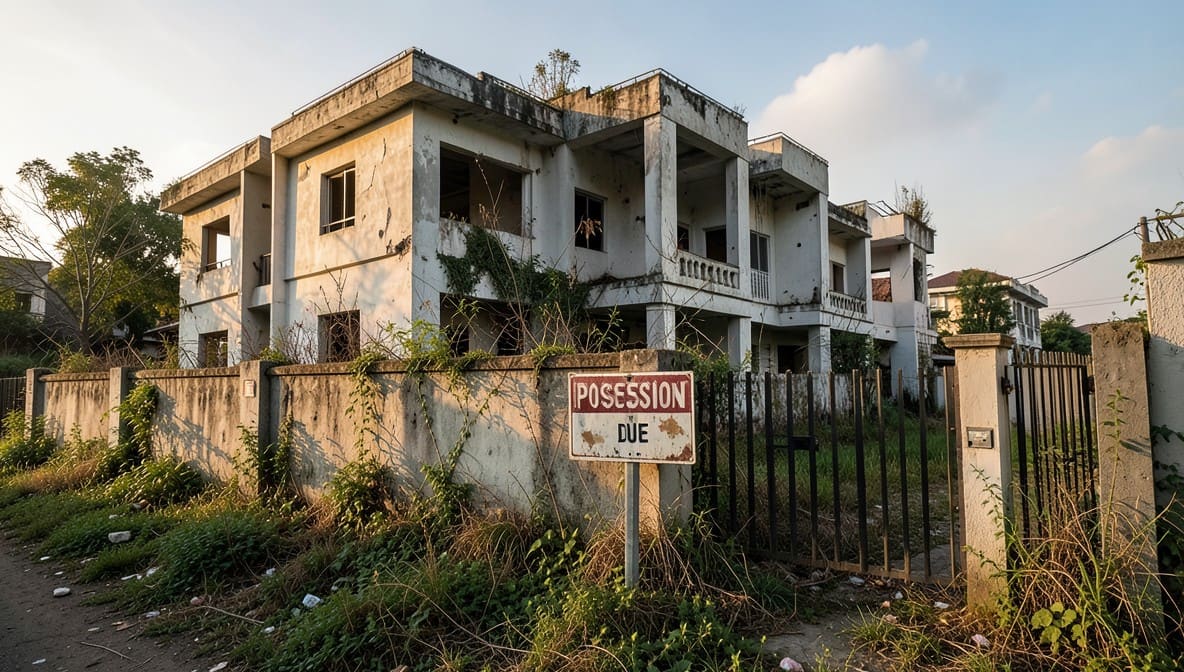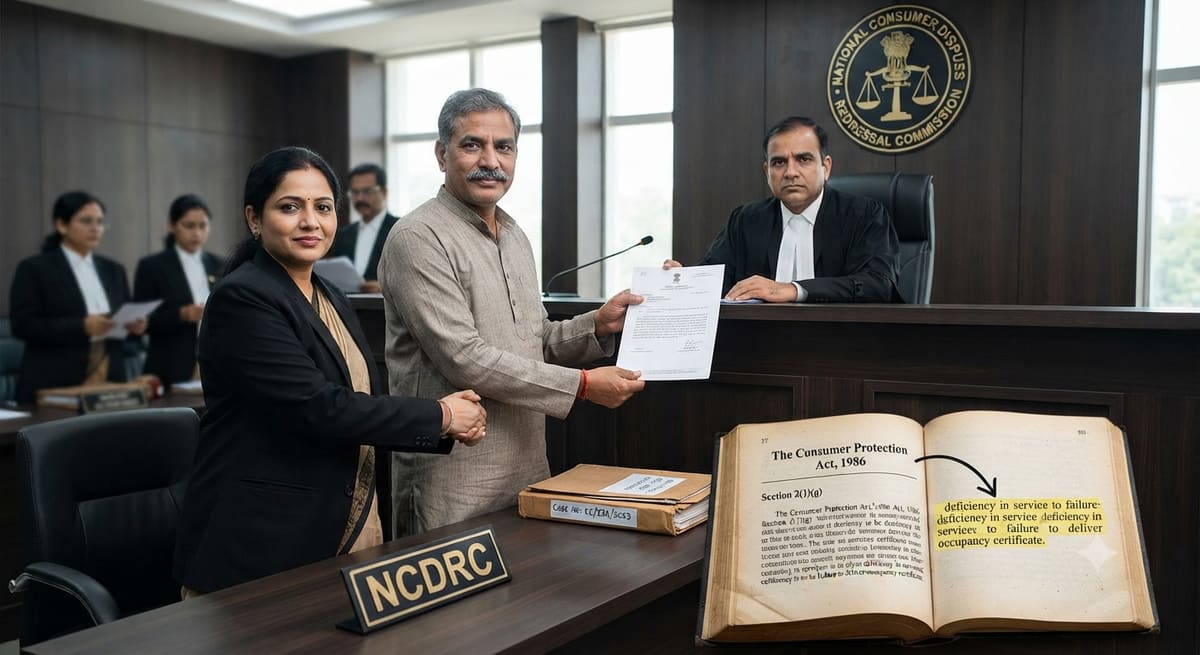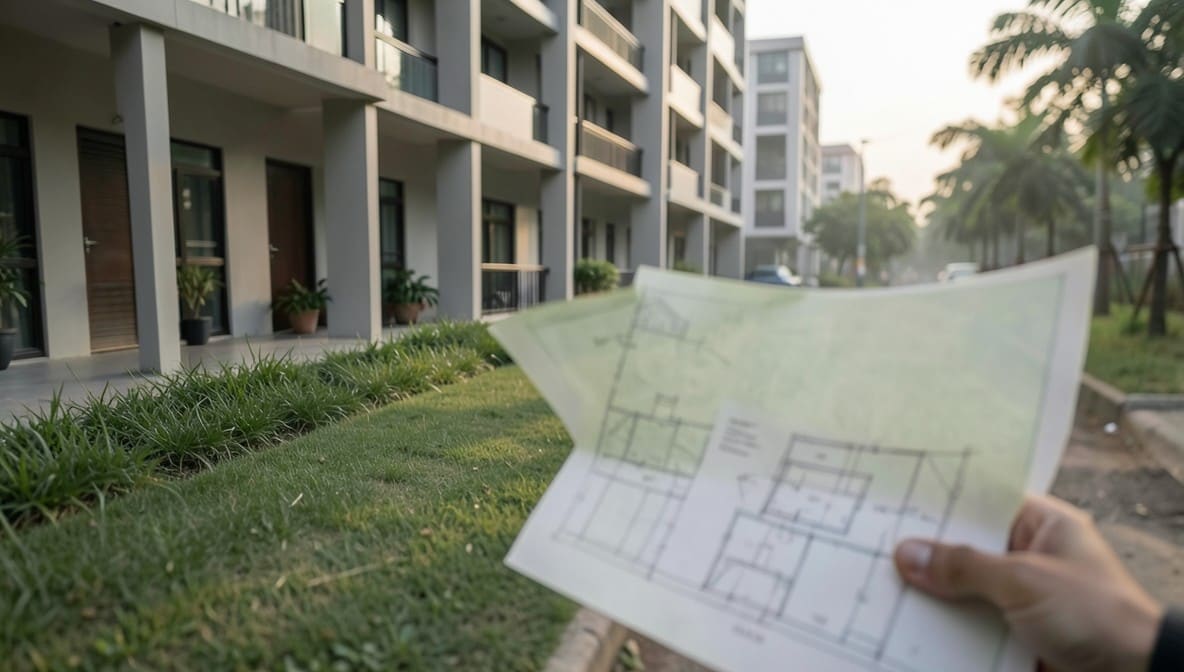
The National Consumer Disputes Redressal Commission has affirmed that a buyer’s right to seek refund is not forfeited merely because possession was offered, if the developer materially breaches a core amenity promised at the time of booking. This judgment clarifies that reduction of a specifically advertised feature - such as a lawn of defined dimensions - constitutes deficiency in service under the Consumer Protection Act, entitling the consumer to restitution.
Background & Facts
The Dispute
Dr. Saroj Khanna, a complainant and homebuyer, booked a ground-floor residential unit in the "Palm Gardens" project developed by Emaar MGF Land Limited at Sector 83, Gurgaon. The unit, measuring 850 sq. ft., was purchased for a total consideration of Rs. 1,31,19,193. The booking was made on the basis of a layout plan and brochure that explicitly promised a lawn area surrounding the unit. The complainant paid preferential location charges for the ground-floor unit specifically because of the assured lawn access and view.
Key Facts
- Booking amount of Rs. 7,50,000 paid on 22.05.2012
- Builder-Buyer Agreement executed on 05.07.2012
- Construction commencement: August 2012
- Possession due by: November 2015 (39 months including 3-month grace period)
- Total consideration paid in full by 28.06.2018
- Offer of possession issued on 17.03.2018
- Complainant filed original complaint on 05.04.2018 seeking compensation for delayed possession and deficient amenities
- On 02.03.2020, an independent Architect’s inspection was conducted under Commission’s order
- Architect’s report dated 05.03.2020 revealed:
- Promised lawn area: 559.6 sq. ft. (15 ft x 18 ft on one side, 25 ft x 11 ft on the other)
- Actual lawn area: 337.77 sq. ft.
- Usable lawn area: only 166 sq. ft.
- Structural feature wall erected, blocking view and reducing usable space
- No prior intimation or consent obtained from complainant regarding reduction of lawn area
- OP admitted receiving full payment but denied any promise of specific lawn dimensions
Procedural History
- 05.04.2018: Original complaint filed before NCDRC seeking compensation for delayed possession and deficient amenities
- 22.10.2018: NCDRC directed OP to deliver possession complete in all respects within 8 weeks, subject to complainant depositing disputed amounts
- 17.03.2018: Complainant permitted to pay stamp duty and take possession (interim order)
- 20.08.2019: Complainant’s counsel stated before NCDRC that they were only pressing for delay compensation and sought liberty to file separate complaint or approach RERA on amenity defects
- 19.12.2019: NCDRC allowed application for inspection by Architect
- 02.03.2020: Architect’s inspection conducted
- 05.03.2020: Architect’s report submitted
- 12.12.2019: NCDRC allowed amendment of complaint to seek refund
- 15.04.2026: Final judgment pronounced
Relief Sought
The complainant, after amendment, sought:
- Immediate refund of entire amount paid (Rs. 1,31,19,193) with penal interest at 18% per annum from date of each payment
- Compensation of Rs. 5,00,000 for mental agony, harassment, and discomfort
- Litigation costs of Rs. 1,00,000
- Any other relief deemed fit
The Legal Issue
The central question was whether a consumer, having initially sought possession for delayed delivery, retains the right to seek refund under the Consumer Protection Act when the developer materially alters a promised amenity - specifically, the size and usability of a lawn - without consent, thereby frustrating the fundamental purpose of the purchase.
Arguments Presented
For the Petitioner
The complainant argued that the lawn area was a material inducement for purchasing the ground-floor unit, evidenced by the preferential location charges paid. The layout plan and brochure constituted part of the agreement under Section 2(1)(r) of the Consumer Protection Act, 2019. The reduction from 559.6 sq. ft. to 337.77 sq. ft., with only 166 sq. ft. usable, amounted to deficiency in service. Reliance was placed on Nitin Juneja v. Ireo Pvt. Ltd., Ansal Lotus Melange, and Pioneer Urban Land v. Geetu Gidwani, which held that deviation from promised amenities entitles buyers to refund. The complainant emphasized that acceptance of possession does not waive rights to challenge substantive deficiencies.
For the Respondent
Emaar MGF contended that the complainant had initially sought possession and compensation for delay, and could not later change the nature of the complaint to seek refund. It argued that the delay in construction was due to force majeure (IL&FS insolvency), and that no specific lawn dimensions were promised. It further claimed that the complainant had held and maintained the flat for over seven years, and thus forfeited any right to terminate. Reliance was placed on Ireo Grace v. Abhishek Khanna and DLF v. Capital Greens, asserting that multiple reliefs cannot be claimed for a single deficiency.
The Court's Analysis
The Commission undertook a detailed examination of the Builder-Buyer Agreement, the promotional materials, and the Architect’s report. It held that the layout plan and brochure were not mere advertisements but formed part of the contractual understanding under Section 2(1)(r), which defines "deficiency in service" to include failure to deliver promised features.
"An allottee does not forfeit the right to claim the services which had been promised but are not provided, resulting in deficiency in services, and may also refuse the offer of possession by OP, if the circumstances so warrant."
The Court rejected the argument that seeking possession initially barred a subsequent claim for refund. It emphasized that the consumer’s right to remedy evolves with the discovery of material breaches. The reduction of the lawn area was not a minor deviation but a fundamental alteration that defeated the very purpose for which the complainant paid extra for the ground-floor unit.
The Court distinguished Ireo Grace and DLF on facts, noting those cases involved general delays or minor deviations, not the obliteration of a specific, advertised amenity. It further held that force majeure claims cannot absolve developers of liability for altering promised amenities, especially when no evidence was produced to show the clause applied to this specific breach.
Regarding interest, the Court relied on Experion Developers v. Sushma Ashok Shiroor and DLF Homes v. D.S. Dhanda, affirming that interest must run from the date of each deposit to ensure restitution. The Court rejected the OP’s claim that holding the flat after possession negated liability, noting the builder benefited from the property’s appreciation and continued to hold the funds.
The Verdict
The complainant succeeded. The NCDRC directed Emaar MGF Land Limited to refund the entire amount of Rs. 1,31,19,193 paid by the complainant, along with simple interest at 9% per annum from the date of each respective payment until realization. In the event of non-compliance within eight weeks, the interest rate shall escalate to 12% per annum on the unpaid balance. The OP is also directed to pay costs of Rs. 25,000. The complaint is disposed of in these terms.
What This Means For Similar Cases
Promised Amenities Are Contractual Obligations
- Developers cannot treat brochures and layout plans as non-binding marketing tools; they form part of the service agreement under the Consumer Protection Act
- Any material reduction in promised amenities - lawn, view, parking, clubhouse - constitutes deficiency in service
- Preferential charges paid for specific features (e.g., ground floor with lawn) strengthen the consumer’s claim for refund if those features are not delivered
Refund Is a Valid Remedy Even After Possession Offer
- Consumers are not bound to accept possession if the unit is materially different from what was promised
- Seeking compensation for delay does not waive the right to later seek refund upon discovery of substantive deficiencies
- The doctrine of election does not apply where the breach is discovered after initial relief is sought
Interest Must Run from Date of Payment, Not Last Deposit
-
Interest on refund must be calculated from the date of each individual payment, not from the date of last payment or filing of complaint
-
This ensures true restitution and aligns with Supreme Court precedent in Experion Developers
-
Enhanced interest (12%) for non-compliance within 8 weeks creates a strong deterrent against delay
-
Practitioners must now advise clients to preserve all promotional materials, layout plans, and payment receipts as evidence of contractual promises
-
In litigation, focus on the functional impact of the deficiency (e.g., unusable lawn, blocked view) rather than mere area reduction
-
Consider filing parallel complaints under RERA for additional remedies, as NCDRC explicitly permitted this avenue