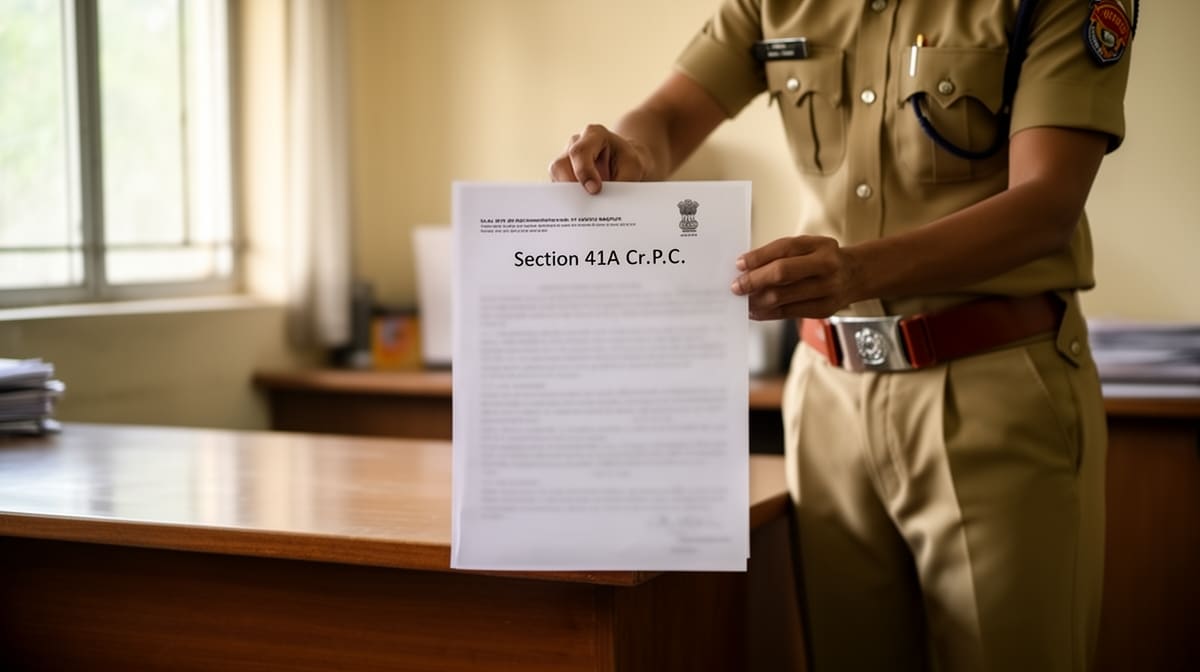
In a significant ruling on anticipatory bail, the Bombay High Court has underscored the mandatory compliance with notice guidelines under Section 35(3) of the Bharatiya Nagarik Suraksha Sanhita, 2023 (BNSS). The Court held that failure to adhere to procedural safeguards, as laid down by the Supreme Court and High Court, vitiates the notice and entitles the accused to interim protection from arrest.
Background & Facts
The Dispute
The applicant, Bhavika w/o Kewalram Yerne, sought anticipatory bail apprehending arrest in Crime No. 351/2024 registered with Lakadganj Police Station, Nagpur, for offences punishable under Sections 457, 380 read with 34 of the Indian Penal Code (IPC). The allegations stem from the sale of a stolen gold chain weighing approximately 40 grams to Pranay Jewellers, Butibori, where the applicant is the proprietor.
Key Facts
- The applicant was arraigned as an accused based on the disclosure statement of a co-accused
- The alleged offence involves the sale of stolen property (gold chain) to Pranay Jewellers
- The applicant is apprehending arrest under Sections 457 (house-breaking by night) and 380 (theft in a dwelling house) IPC
- A notice dated 7th April 2026 was issued by the Investigating Officer under Section 35(3) of the BNSS
Procedural History
- Crime No. 351/2024: Registered at Lakadganj Police Station for offences under Sections 457, 380 r/w 34 IPC
- 7th April 2026: Notice issued under Section 35(3) BNSS by the Investigating Officer
- Present Application: Criminal Application (ABA) No. 606 of 2026 filed before the Bombay High Court, Nagpur Bench, seeking anticipatory bail
The Parties' Positions
For the Applicant
- Relied on the judgment of the Supreme Court in Satender Kumar Antil v. Central Bureau of Investigation & Another ((2022) 10 SCC 51), which laid down guidelines for serving notice under Section 35(3) BNSS for offences punishable with imprisonment of less than seven years
- Cited the Bombay High Court’s decision in Ajay Agrawal v. State of Maharashtra (Writ Petition No. 1703 of 2026), which issued directions on the manner of serving such notices
- Argued that the notice dated 7th April 2026 was not in compliance with the guidelines laid down by the Supreme Court and High Court, rendering it invalid
For the Respondent/State
- The learned Assistant Public Prosecutor (APP) waived notice on behalf of the State, indicating no opposition to the interim relief sought
Relief Sought
The applicant sought interim protection from arrest in Crime No. 351/2024, pending compliance with the procedural guidelines for notice under Section 35(3) BNSS.
The Legal Issue
The central question was whether a notice issued under Section 35(3) of the BNSS must comply with the procedural guidelines laid down by the Supreme Court and High Court to be valid, and whether non-compliance entitles the accused to anticipatory bail.
Arguments Presented
For the Applicant
- Contended that the notice dated 7th April 2026 failed to comply with the guidelines laid down in Satender Kumar Antil and Ajay Agrawal, rendering it procedurally defective
- Argued that the applicant’s inclusion as an accused was based solely on the disclosure statement of a co-accused, without independent evidence
- Submitted that the nature of the offence (punishable with imprisonment of less than seven years) warranted strict adherence to procedural safeguards
For the Respondent/State
- The State did not oppose the application, as indicated by the waiver of notice by the learned APP
The Court's Analysis
The Court examined the procedural requirements under Section 35(3) BNSS, which mandates the issuance of a notice to the accused in cases where the offence is punishable with imprisonment of less than seven years. The Court relied on the following key principles:
-
Guidelines in Satender Kumar Antil: The Supreme Court laid down detailed guidelines for serving notice under Section 35(3) BNSS, emphasizing the need for strict compliance to ensure fairness and prevent arbitrary arrests.
-
High Court’s Directions in Ajay Agrawal: The Bombay High Court reinforced these guidelines, directing that notices must be served in a manner that affords the accused an opportunity to respond and cooperate with the investigation.
-
Procedural Compliance: The Court observed that the notice dated 7th April 2026 did not comply with the prescribed guidelines. Non-compliance with procedural safeguards vitiates the notice, thereby entitling the applicant to interim protection.
-
Nature of the Offence: The Court noted that the offences under Sections 457 and 380 IPC are punishable with imprisonment of less than seven years, bringing the case within the ambit of Section 35(3) BNSS. The Court emphasized that procedural lapses in such cases cannot be overlooked, as they undermine the rights of the accused.
"Considering the nature of the offence and the factual position, I am of the opinion that the applicant is entitled for interim protection."
The Verdict
The Bombay High Court granted interim protection to the applicant, directing as follows:
- In the event of arrest in Crime No. 351/2024, the applicant shall be released on bail upon executing a Personal Recognizance (P.R.) Bond in the sum of Rs. 25,000 with one solvent surety in the like amount
- The applicant shall attend the concerned police station every Saturday and Sunday between 11:00 AM and 1:00 PM and cooperate with the investigation
- The applicant shall furnish her address and telephone/mobile number(s) to the Investigating Officer and shall not change the same until the final disposal of the case
- The applicant shall not induce, threaten, or promise any witness to dissuade them from disclosing facts to the court or police
- The applicant shall not obstruct or hamper the investigation or tamper with evidence
- In case of breach of any conditions, the trial court is at liberty to cancel the bail after providing an opportunity of hearing to both sides
What This Means For Similar Cases
Strict Compliance with Notice Guidelines Is Mandatory
- Practitioners must ensure that notices under Section 35(3) BNSS strictly comply with the guidelines laid down in Satender Kumar Antil and Ajay Agrawal
- Non-compliance with procedural requirements will render the notice invalid, entitling the accused to interim protection from arrest
- Courts are likely to scrutinize notices closely, especially in cases involving offences punishable with imprisonment of less than seven years
Disclosure Statements Alone Are Insufficient for Arrest
- The inclusion of an accused based solely on the disclosure statement of a co-accused, without independent evidence, is unlikely to withstand judicial scrutiny
- Investigating agencies must corroborate disclosure statements with additional evidence before seeking arrest or prosecution
Bail Conditions Can Be Tailored to Ensure Cooperation
- Courts may impose specific conditions, such as regular attendance at the police station, to ensure the accused’s cooperation with the investigation
- Practitioners should be prepared to argue for reasonable bail conditions that balance the interests of the investigation with the rights of the accused