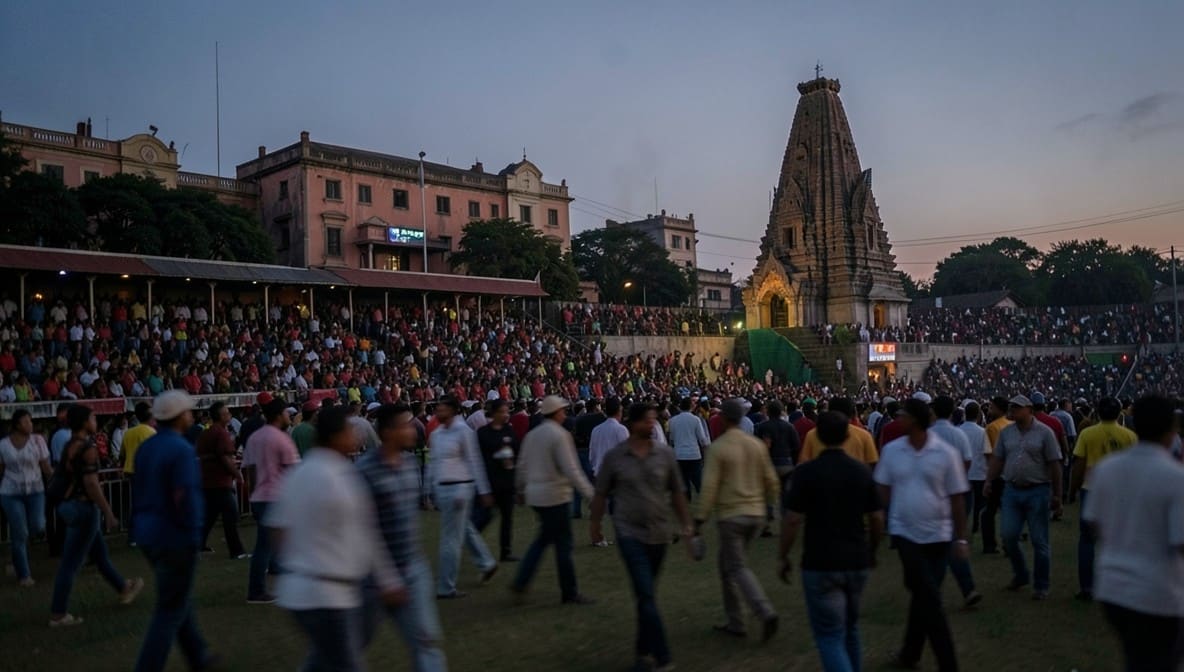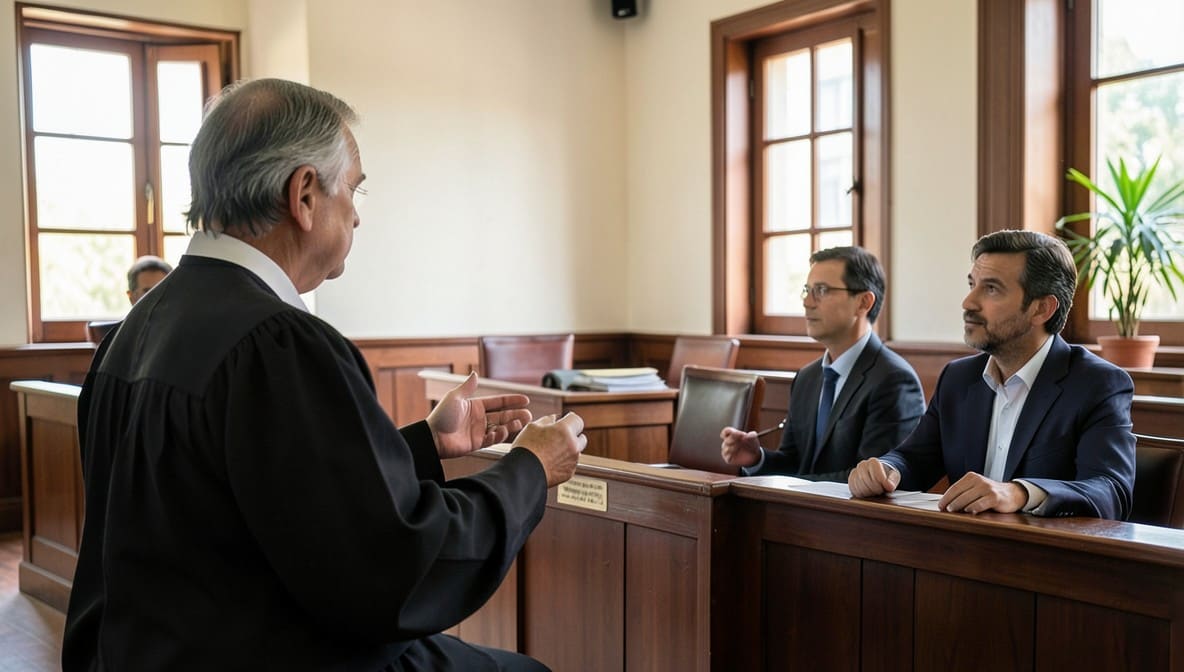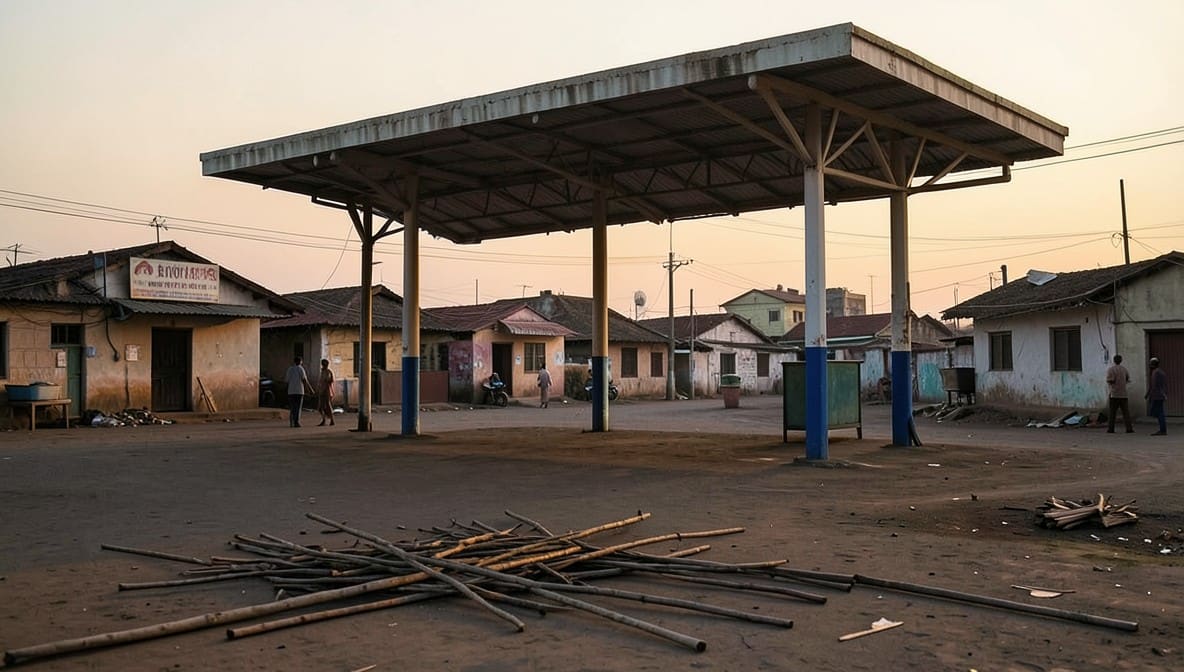
The Bombay High Court has clarified that mere presence at the scene of a mob assault, without attribution of any specific overt act or incriminating evidence, is insufficient to deny bail. This decision reinforces the principle that bail must be granted where the prosecution’s case against an individual is speculative and lacks concrete linkage to the offence.
Background & Facts
The Dispute
The applicant, Rishikesh Prabhakar Mahor (Teli), is accused in Crime No. 288 of 2025, registered at Jamner Police Station, District Jalgaon, for offences under Sections 109(1), 103(1), 103(2), 140, 189(2), 191(2), 191(3), 190, 118(1), 115(2), 352, and 351(2) of the Bharatiya Nyaya Sanhita. The case arises from the fatal assault of Suleman, a young man who was attacked by a mob after being seen in a cafe with a girl from the Hindu community. The deceased succumbed to his injuries at the scene near the Jamner Bus Stand.
Key Facts
- The incident occurred on or about 13.08.2025 at the Brand Cafe and nearby Bus Stand in Jamner.
- The First Information Report (FIR) was lodged by Suleman’s father, who was informed by Dongarsing Rajput that his son was being assaulted by a mob.
- The FIR names multiple persons but does not specifically mention the applicant’s name or role.
- The applicant was arrested on 14.08.2025.
- The charge-sheet was filed on 07.11.2025.
- Five eyewitnesses - Dongarsing, Muskan, Tabassum, and two others - were examined.
- The applicant’s name appears only cursorily in witness statements, without any description of him wielding a weapon, participating in the assault, or taking any active role.
- No weapon was seized from the applicant.
- The mobile phone recovered from him was not linked to any incriminating communication or location data.
- The Test Identification Parade (TIP) was conducted, but the court found the identification unreliable due to the shared village context and pressure of collective identification.
- Co-accused Nos. 1 to 4 were released on default bail on 19.04.2022 by a coordinate bench.
Procedural History
- 13.08.2025: Incident occurs at Brand Cafe and Jamner Bus Stand.
- 14.08.2025: Applicant arrested.
- 07.11.2025: Charge-sheet filed.
- 06.05.2026: Bail application heard and reserved.
- 08.05.2026: Judgment pronounced.
The Parties' Positions
For the Applicant: Counsel argued that the applicant’s involvement is not established by any specific act, weapon, or motive. His name is mentioned only in passing. The TIP is defective. The CCTV footage does not show him participating. Co-accused have been granted default bail, and parity must be applied.
For the Respondent: The State contended that five eyewitnesses consistently identified the applicant. The weapon query report and CCTV footage corroborate the prosecution’s case. The motive - religious prejudice against inter-community friendship - supports collective culpability.
Relief Sought
The applicant sought bail on the grounds of lack of specific allegations, absence of incriminating material, and parity with co-accused granted default bail.
The Legal Issue
The central question was whether an accused can be denied bail under the Bharatiya Nyaya Sanhita when the allegations against him are omnibus, lack specific overt acts, and are not corroborated by material evidence, especially where co-accused have been released on default bail.
Arguments Presented
For the Appellant/Petitioner
The applicant’s counsel relied on the principle that bail is the rule and jail is the exception. He argued that the prosecution failed to establish any direct or indirect participation by the applicant. The FIR does not name him. The eyewitnesses do not attribute any specific act to him. The TIP is suspect because all accused and witnesses are from the same village, creating a high risk of mistaken identification. The applicant’s mobile phone, seized without forensic analysis, cannot be treated as incriminating. He cited Arnesh Kumar v. State of Bihar to emphasize that arrest cannot be automatic and bail must be granted where the case is weak. He also invoked the order dated 19.04.2022 granting default bail to co-accused, urging parity.
For the Respondent/State
The State argued that the eyewitnesses’ statements are consistent and credible. The weapon query report confirms the use of sticks and rods, and CCTV footage places the applicant at the scene. The motive of communal outrage is clear, and the applicant’s presence with the mob establishes common intention under Section 109(1) and Section 103(1) of the Bharatiya Nyaya Sanhita. The State contended that the applicant’s release would risk witness tampering and obstruction of justice.
The Court's Analysis
The Court undertook a meticulous review of the FIR, witness statements, CCTV footage, and the TIP report. It noted that while the FIR names several persons, the applicant’s name is not mentioned therein. The eyewitnesses, though consistent in describing the assault by accused Nos. 1 to 4, refer to the applicant only in passing, without attributing any specific act such as wielding a weapon, striking the deceased, or inciting the mob.
"The allegations against him are omnibus in nature. He is not stated to be armed with any weapon."
The Court observed that the CCTV footage, though available, did not clearly depict the applicant engaging in any violent act. The recovery of a mobile phone, without any digital evidence linking it to the crime, was held to be insufficient. The TIP was found to be unreliable given the small, close-knit community context, where identification is likely influenced by social pressure rather than independent recognition.
The Court further emphasized that the co-accused Nos. 1 to 4 had already been released on default bail, and denying bail to the applicant on identical factual grounds would violate the principle of parity. The Court held that the prosecution’s case against the applicant is speculative and lacks the requisite threshold of prima facie involvement to justify continued custody.
The Court also rejected the argument that communal motive alone can establish individual culpability. Absent evidence of conspiracy or common object with the applicant, mere association cannot substitute for proof of participation.
The Verdict
The applicant succeeded. The Court allowed the bail application and directed the release of Rishikesh Prabhakar Mahor (Teli) on a personal bond of Rs. 50,000 with one solvent surety of like amount. He must not tamper with evidence or contact witnesses, stay away from Jamner Taluka except for court dates, inform his whereabouts to the Investigating Officer, surrender his Aadhar and PAN cards if held, refrain from similar offences, and cooperate fully with the trial. The order is effective immediately.
What This Means For Similar Cases
Mere Presence Is Not Enough for Denial of Bail
- Practitioners must challenge bail denials where the accused is named only in omnibus allegations without specific acts.
- Courts must distinguish between presence and participation - absence of weapon, motive, or direct involvement warrants bail.
Parity with Co-Accused Is a Valid Ground for Bail
- When co-accused are released on default bail or otherwise, denial of bail to another accused on identical factual grounds violates Article 14.
- This principle applies even in serious offences under the Bharatiya Nyaya Sanhita.
Test Identification Parade Must Be Scrutinized in Rural Settings
- In small communities, TIPs are prone to bias and collective identification.
- Courts must require independent corroboration beyond TIP when witnesses and accused share the same village or social circle.
Documentary Evidence Trumps Vague Testimony
-
CCTV footage and weapon reports must be analyzed for actual linkage to the accused.
-
Recovery of a mobile phone without forensic or communication evidence cannot be treated as incriminating.
-
Always argue for bail where the charge-sheet lacks specific allegations.
-
Cite Arnesh Kumar v. State of Bihar and coordinate bench orders granting default bail to support parity.
-
Demand forensic analysis of seized electronic devices before arguing for their evidentiary value.