The Karnataka High Court has reaffirmed that bail cannot be denied solely on the gravity of charges when co-accused have been released and no deadly weapon was used in a spontaneous mob incident. The judgment underscores the principle of parity and the necessity of distinguishing between premeditated lynching and impulsive crowd violence under the Bharatiya Nyaya Sanhita.
Background & Facts
The Dispute
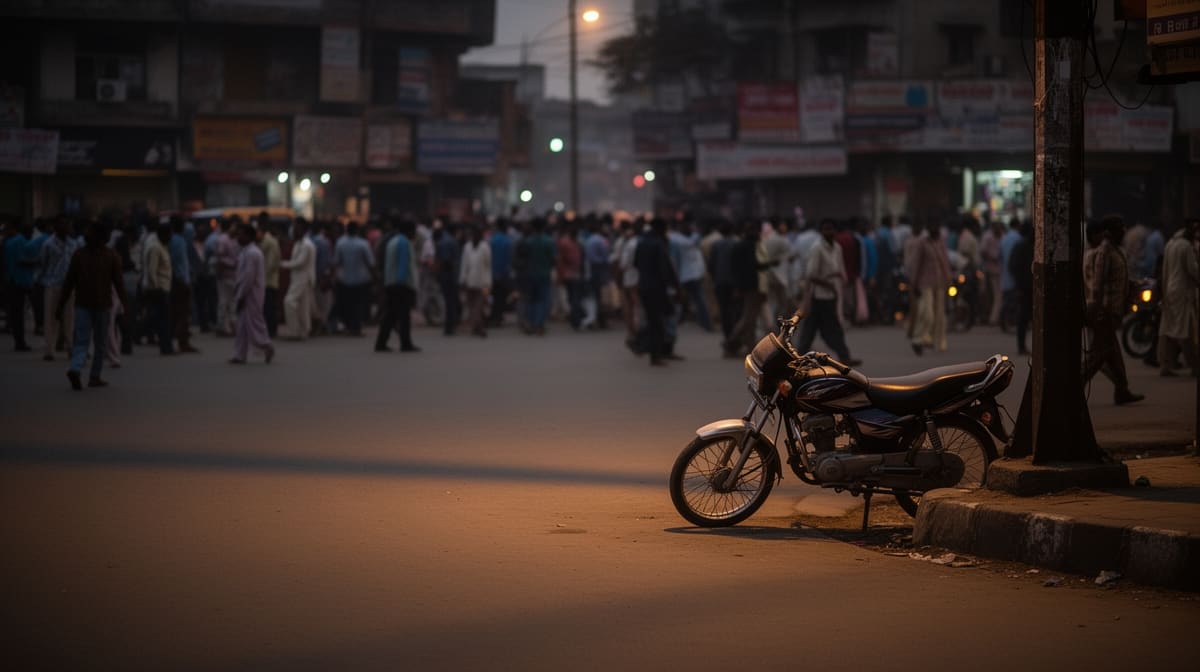
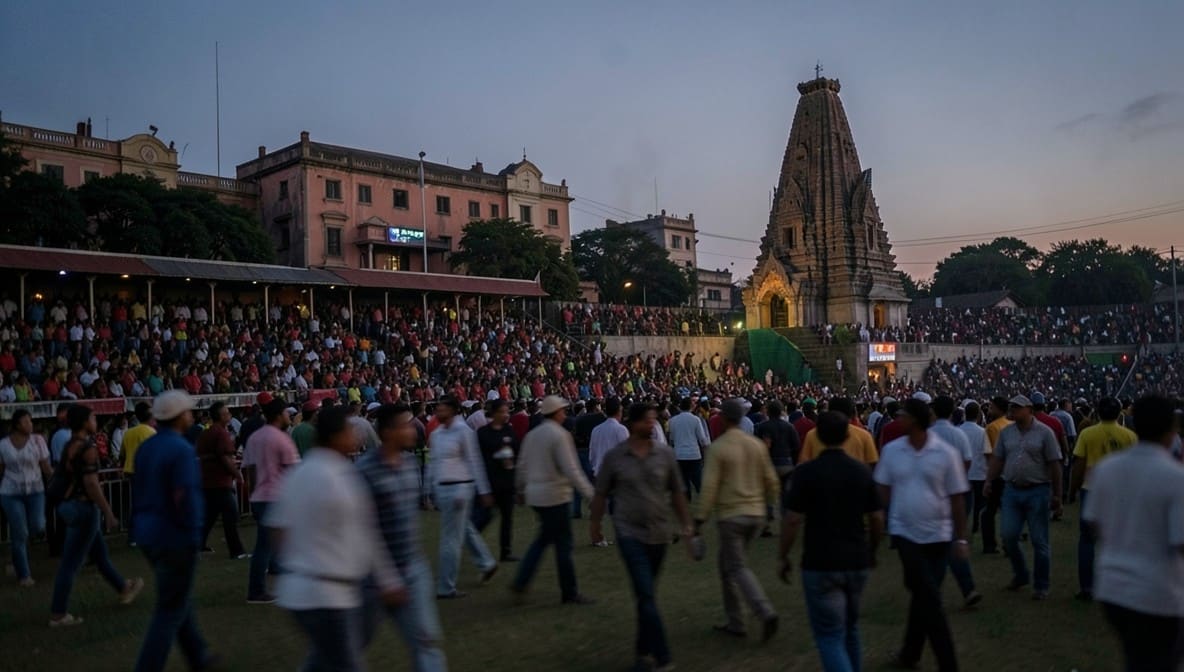
The dispute arose from a violent mob incident on 27.04.2025 at the Kudupu Batra Kallurti Temple cricket ground in Vamanjur, Dakshina Kannada. An unknown individual, later identified as Mohammad Ashraf, entered the ground from the railway track and began shouting slogans of "Pakistan Pakistan." This triggered an immediate and violent reaction from spectators and players, who chased him toward the temple. He fell, and the mob kicked and assaulted him with tree branches and fists. The deceased died later that night.
Key Facts
- The deceased, Mohammad Ashraf, was a stranger to all accused.
- No deadly weapons were used; injuries were caused by fists, feet, and wooden branches.
- The petitioner, Sri. Manjunatha, is accused No.3 in Crime No. 037/2025.
- The charge sheet alleges that the petitioner brought chilli powder in a paper packet, spilled it on the deceased’s wounds and private parts, and then discarded the packet in flowing water to destroy evidence.
- The post-mortem report did not mention the presence of chilli powder.
- No chilli powder was seized or recorded in the spot mahazar.
- The complainant, Deepak Kumar, did not report the incident on 27.04.2025 but filed a UDR (Unidentified Death Report) on the same day at 07.00 p.m.
- On 28.04.2025, Deepak Kumar filed a separate complaint, leading to the registration of Crime No. 037/2025.
- The police registered the incident under two separate reports: UDR No. 14/2025 and Crime No. 037/2025.
- The charge sheet names 21 accused persons, including the petitioner.
- The petitioner has been in custody since 29.04.2025.
- The trial court rejected the petitioner’s bail application on 06.12.2025.
- Accused No.4 was granted bail by this Court on 19.01.2026 in Crl.P.No.17346/2025.
Procedural History
- 27.04.2025: Incident occurs at Kudupu cricket ground.
- 27.04.2025, 07.00 p.m.: UDR No. 14/2025 filed by petitioner.
- 28.04.2025: Deepak Kumar files formal complaint; Crime No. 037/2025 registered.
- 29.04.2025: Petitioner arrested and taken into custody.
- 06.12.2025: Trial Court rejects bail application of accused Nos. 3 and 4.
- 19.01.2026: Co-ordinate Bench grants bail to accused No.4.
- 2026: Petitioner files Crl.P.No.6850/2026 before Karnataka High Court seeking bail.
The Parties' Positions
Petitioner (Sri. Manjunatha): Claims no premeditation, no use of deadly weapons, and that his alleged act of spilling chilli powder is unsubstantiated by medical or forensic evidence. Argues parity with accused No.4, who was granted bail.
Respondent State & Accused No.2: Contend that the petitioner’s act of spilling chilli powder constitutes a distinct and aggravated role. Argue that granting bail would undermine deterrence against mob violence and that the UDR-to-FIR conversion was legally valid.
Relief Sought
The petitioner seeks regular bail on the grounds of parity and absence of compelling reasons for continued custody. He requests release on bond of Rs.1,00,000 with two sureties, subject to standard bail conditions.
The Legal Issue
The central question was whether bail can be denied to an accused solely on the basis of a specific, uncorroborated allegation when co-accused have been released on bail, no deadly weapon was used, and the incident occurred at the spur of the moment without premeditation.
Arguments Presented
For the Appellant/Petitioner
Sri. Aruna Shyam M, Senior Advocate, argued that:
- The post-mortem report and spot mahazar contain no mention of chilli powder, undermining the prosecution’s key allegation.
- The incident was spontaneous, triggered by the deceased’s provocative act, and lacked any pre-concerted plan.
- Accused No.4, similarly situated, was granted bail by a co-ordinate Bench, making denial of bail to the petitioner violative of the principle of parity.
- The registration of two separate cases (UDR and Crime No. 037/2025) for the same incident is legally suspect and should not be used to justify continued custody.
- The charges under BNS, while serious, do not involve deadly weapons, reducing the gravity of the offence.
- The petitioner has been in custody since 29.04.2025, and with 216 witnesses to be examined, trial may take years.
For the Respondent/State
Smt. Rashmi Jadhav, Additional SPP, contended that:
- The petitioner’s alleged act of spilling chilli powder on the deceased’s private parts and wounds constitutes a distinct and heinous role, differentiating him from other accused.
- The absence of chilli powder in the post-mortem does not negate the charge sheet’s allegations, as witness statements recorded during investigation support the claim.
- Mob lynching cases require strict bail scrutiny to deter public violence, as held in Tehseen S. Poonawalla v. Union of India.
- The UDR-to-FIR conversion was lawful, as the initial report was incomplete and the subsequent complaint provided new details.
- Granting bail on parity grounds would set a dangerous precedent in cases involving communal overtones.
The Court's Analysis
The Court undertook a meticulous review of the charge sheet, the post-mortem report, and the procedural irregularities in case registration. It emphasized that bail decisions must be grounded in the facts of the case, not abstract deterrence.
"The post-mortem report does not note the presence of chilli powder. Neither was it seized nor recorded in the spot mahazar. The prosecution has not pointed to any material evidence corroborating this specific allegation."
The Court noted that the incident unfolded rapidly, triggered by the deceased’s unsolicited entry into the ground and his provocative slogans. The mob’s reaction, while violent, was impulsive and not pre-planned. The Court distinguished this from organized lynching cases cited by the prosecution, where there was evidence of prior conspiracy or targeted violence.
"The genesis of the crime lies in an immediate reaction to a provocative act, not in a premeditated attack. The absence of deadly weapons further reduces the gravity of the offence."
The Court held that the principle of parity is not a mere formality but a substantive safeguard against arbitrary detention. Since accused No.4, who was similarly charged under the same sections and faced the same allegations, was granted bail, denying it to the petitioner without a compelling distinction violated the doctrine of equal treatment under law.
The Court also questioned the legality of registering two separate cases for the same incident. While declining to rule definitively on the validity of the UDR-to-FIR conversion, it held that such procedural irregularities could not be used to justify continued custody at the bail stage.
"The charge sheet is now filed. The truth of the allegations will be tested at trial. At this stage, the Court must not prejudge the case or assume guilt based on uncorroborated allegations."
The Court further noted that the petitioner had been in custody for over seven months and that the trial, with 216 witnesses, would likely extend for years. Prolonged pre-trial detention without compelling reasons violates the right to liberty under Article 21 of the Constitution.
The Verdict
The petition was allowed. The petitioner is directed to be released on regular bail upon execution of a personal bond of Rs.1,00,000 with two sureties of the like amount, to be approved by the trial court. The petitioner shall: (i) appear before the trial court regularly; (ii) not tamper with prosecution witnesses; (iii) not leave the jurisdiction of Dakshina Kannada District without prior permission; and (iv) face cancellation of bail upon violation of any condition.
What This Means For Similar Cases
Parity in Bail Is Not Optional
- Practitioners must raise parity as a substantive ground in bail applications when co-accused are released.
- Courts cannot deny bail to one accused merely because another was granted bail if their roles are materially similar.
- The burden shifts to the prosecution to demonstrate a distinct, aggravating role that justifies differential treatment.
Spur-of-the-Moment Violence ≠ Premeditated Lynching
- Cases arising from spontaneous crowd reactions to provocative acts must be distinguished from organized mob lynching.
- Absence of deadly weapons and lack of pre-planning are critical factors in reducing the gravity of the offence for bail purposes.
- Tehseen S. Poonawalla applies to organized, targeted violence - not impulsive reactions to perceived insults.
Unsubstantiated Allegations Cannot Justify Detention
- Specific allegations unsupported by forensic or physical evidence cannot be used to deny bail.
- Courts must not rely on uncorroborated charge sheet entries at the bail stage.
- The post-mortem and mahazar reports are decisive in evaluating the credibility of allegations involving physical evidence.