The Bombay High Court has granted bail to an applicant accused in a serious offence under the Bharatiya Nyaya Sanhita, 2023, emphasizing the absence of overt acts attributed to the applicant and the principle of parity with co-accused granted bail earlier. The Court underscored that mere presence in CCTV footage without direct involvement in the alleged abduction and murder does not justify denial of bail, particularly when the applicant was not named in the FIR and the investigation is complete.
Background & Facts
The Genesis
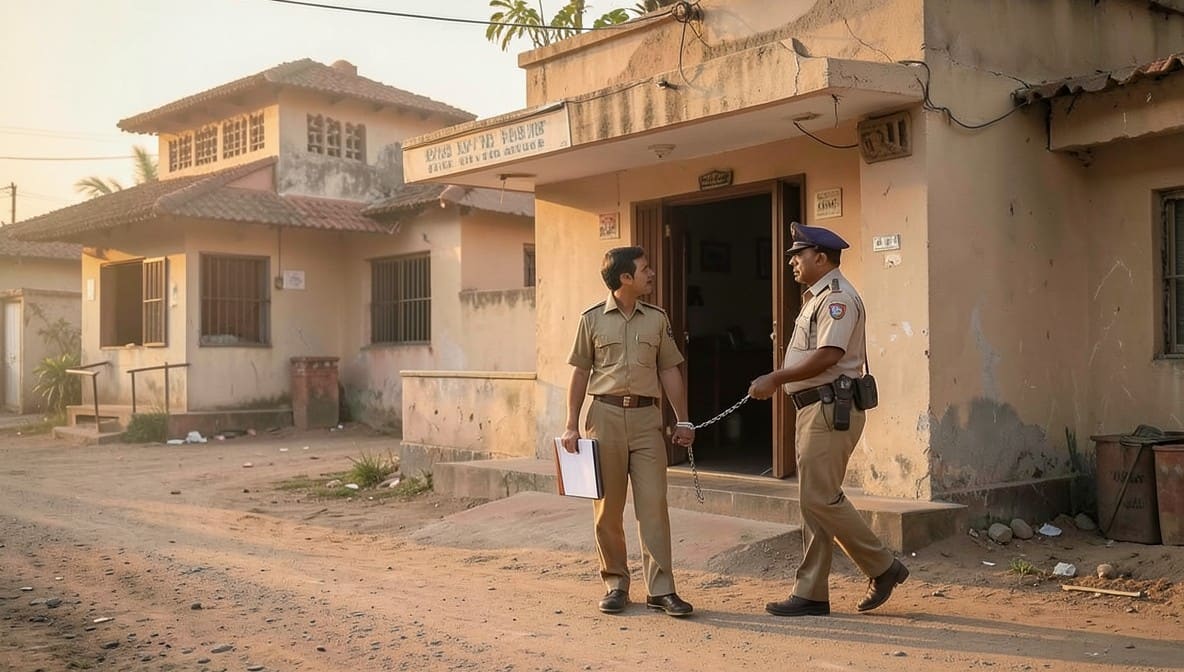
The applicant, Suraj s/o Gurudas Bhoge, was arrested on 28.08.2025 in connection with Crime No. 288 of 2025 registered at Jamner Police Station, District Jalgaon. The FIR dated 11.08.2025 was lodged by Rahim Kha Banne Kha Pathan, alleging abduction and assault of his son Suleman by a group of 17 persons, including six named accused and 10-12 unknown individuals. The FIR did not name the applicant at the time of registration.
Key Facts
- The applicant is accused no. 10 in the chargesheet filed in November 2025, but was not named in the FIR.
- The chargesheet attributes the offence under Sections 103(1), 103(2), 140, 189(2), 191(2), 191(3), 190, 118(1), 115(2), 352, 351(2) of the Bharatiya Nyaya Sanhita, 2023 (BNS).
- The applicant is alleged to have been seen in CCTV footage but no overt act is attributed to him.
- Four accused, including one not named in the FIR, have been granted default bail by this Court.
- The trial has not commenced despite the chargesheet being filed in November 2025.
Procedural History
- 11.08.2025: FIR registered at Jamner Police Station, District Jalgaon.
- 28.08.2025: Applicant arrested.
- November 2025: Chargesheet filed.
- 08.05.2026: This Court granted bail to accused no. 8, who faced identical allegations and was not named in the FIR.
- 15.07.2026: Bail application reserved for orders.
- 16.07.2026: Order pronounced granting bail to the applicant.
The Parties' Positions
For the Applicant
Learned counsel for the applicant argued that the applicant was not named in the FIR and no overt act was attributed to him. He relied on the principle of parity, noting that accused no. 8, facing similar allegations and not named in the FIR, was granted bail by this Court on 08.05.2026. The applicant also highlighted that the investigation is complete and the trial has not commenced, which justifies the grant of bail.
For the State
Learned APP for the State conceded that the applicant was merely present at the bus stop and no overt act was attributed to him. However, she opposed the bail application on the ground that the offence is serious, involving abduction, assault with deadly weapons, and terrorizing the public. The State argued that the applicant and other accused were involved in creating a clout over the public through such acts.
The Legal Issue
The central question was whether the applicant, not named in the FIR and with no overt act attributed to him, is entitled to bail on the grounds of parity with co-accused granted bail earlier and the lack of evidence linking him to the alleged offence.
Arguments Presented
For the Applicant
Learned counsel for the applicant emphasized that the applicant was not named in the FIR and no overt act was attributed to him. He relied on the principle of parity, noting that accused no. 8, who faced identical allegations and was not named in the FIR, was granted bail by this Court on 08.05.2026. The applicant also highlighted that the investigation is complete and the trial has not commenced, which justifies the grant of bail.
For the Respondent
Learned APP for the State conceded that the applicant was merely present at the bus stop and no overt act was attributed to him. However, she opposed the bail application on the ground that the offence is serious, involving abduction, assault with deadly weapons, and terrorizing the public. The State argued that the applicant and other accused were involved in creating a clout over the public through such acts.
The Court's Analysis
The Court examined the facts and submissions of both parties. It noted that the applicant was not named in the FIR and no overt act was attributed to him. The Court also observed that four accused, including one not named in the FIR, had been granted bail by this Court earlier. The Court emphasized that the principle of parity applies when co-accused facing similar allegations are granted bail.
The Court also considered the fact that the investigation is complete and the chargesheet has been filed, but the trial has not commenced. This, coupled with the lack of evidence linking the applicant to the alleged offence, weighed in favor of granting bail.
"In the light of above discussion, and when applicant is neither named in the FIR and admittedly when there is no overt act attributed to applicant, he deserves relief as prayed."
The Court distinguished the State's contention regarding the seriousness of the offence, noting that the applicant's role was limited to mere presence without any overt act.
The Verdict
The applicant was granted bail in connection with Crime No. 288 of 2025. The Court directed the applicant to be released on executing a personal bond of Rs. 50,000 with one surety in the like amount. The bail was subject to the following conditions:
- The applicant shall not tamper with prosecution evidence or contact prosecution witnesses.
- The applicant shall not enter the entire Jamner Taluka till the conclusion of the trial, except for attending court dates.
- The applicant shall inform his whereabouts and contact numbers to the Investigating Officer.
- The applicant shall surrender his Aadhar Card and PAN Card to the Investigating Officer, if any.
- The applicant shall not indulge in similar offences.
- The applicant shall cooperate for the expeditious disposal of the trial and shall regularly attend each and every effective date before the trial court.
What This Means For Similar Cases
Parity Principle in Bail Applications
Practitioners must now argue for bail on the ground of parity when co-accused facing similar allegations are granted bail, particularly when the applicant is not named in the FIR and no overt act is attributed to them. The principle of parity is a strong ground for bail, especially in cases where the investigation is complete and the trial has not commenced.
Overt Act Requirement for Bail Denial
The judgment clarifies that mere presence in CCTV footage or being seen at the scene of the crime without any overt act attributed to the accused does not justify denial of bail. The Court emphasized that the absence of overt acts is a critical factor in determining bail eligibility.
Completeness of Investigation and Trial Commencement
The Court highlighted that the completion of the investigation and the lack of trial commencement are significant factors in granting bail. Practitioners should emphasize these aspects when arguing for bail in cases where the chargesheet has been filed but the trial has not commenced.