The Customs Appellate Tribunal’s ruling clarifies a critical ambiguity in India’s import regime for two-wheeler components, affirming that authorized service centers - not merely manufacturers - are entitled to import wheel rims under statutory quotas. This decision resolves a long-standing dispute over the scope of permissible importers under a key regulatory notification, with immediate implications for automotive aftermarket supply chains.
Background & Facts
The Dispute
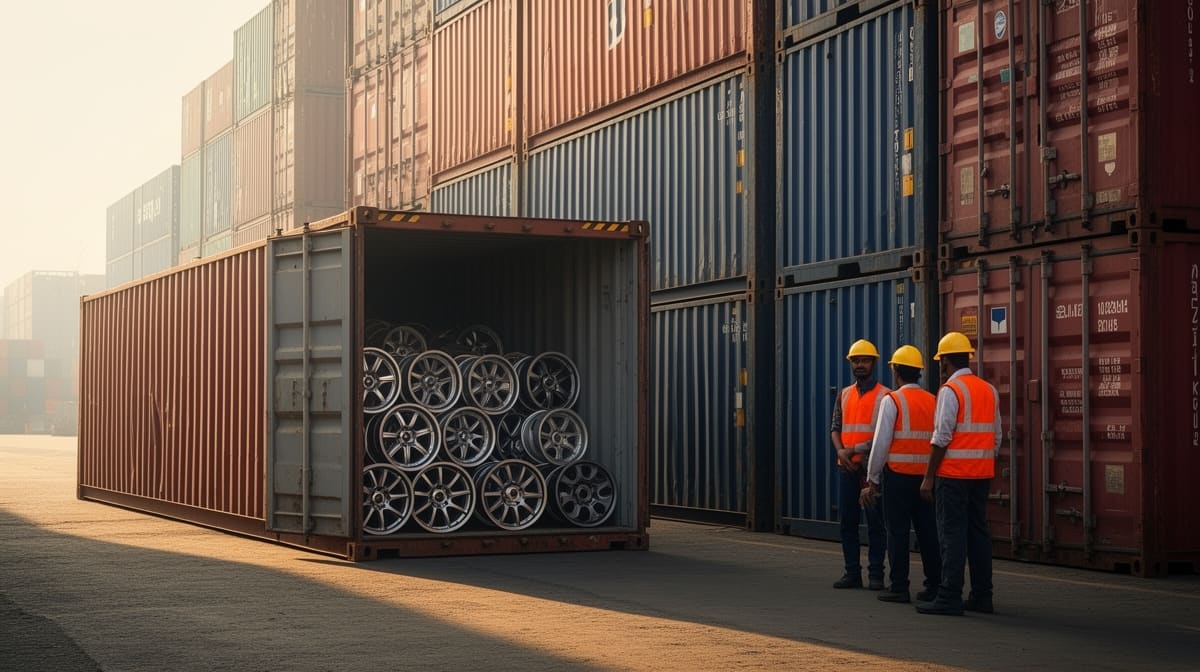
The appellants, M/s. International Trading Company and M/s. Baba Baidhnath Trading Company, imported motor hubs and wheel rims classified under Chapter 8714. The Commissioner of Customs (Port), Kolkata, seized the consignments, alleging violation of Service Order (S.O.) 5379(E) dated 19/12/2023, which prohibits import of two-wheeler wheel rims except under specific conditions. The Revenue contended that only vehicle manufacturers could import such parts, and since the appellants were traders, their imports were unlawful.
Procedural History
- November - December 2025: Appellants imported wheel rims and motor hubs into Kolkata Port.
- 12 February 2026: Commissioner issued Order-in-Original, treating the goods as prohibited and demanding bank guarantees.
- February 2026: Appellants filed Customs Appeals and Early Hearing Applications, citing mounting demurrage charges and prolonged detention.
- 26 February 2026: Tribunal heard both sides and disposed of the appeals.
Relief Sought
The appellants sought provisional release of the goods, waiver of excessive bank guarantees, and a declaration that their imports were lawful under S.O. 5379(E) as authorized service agents of PRAKRITI vehicle manufacturers.
The Legal Issue
The central question was whether Para 2(3)(vi) of S.O. 5379(E) permits import of up to 24,000 two-wheeler wheel rims per financial year only by vehicle manufacturers, or whether this entitlement extends to their duly authorized service centers acting on their behalf.
Arguments Presented
For the Petitioner
The appellants, represented by Sr. Advocate Sudhir Kumar Mehta, argued that Para 2(3)(vi) must be interpreted purposively to accommodate the commercial reality of the automotive industry, where manufacturers delegate after-sales service to authorized agents. They submitted affidavits from Big Bull Trader Private Company, the manufacturer of PRAKRITI vehicles, confirming both appellants as authorized service centers. They further cited the letter addressed to the Deputy Commissioner, SIIB, Customs House, establishing formal authorization. The counsel contended that a narrow reading would frustrate the intent of the notification, which aims to ensure availability of genuine spare parts for consumer safety and vehicle maintenance.
For the Respondent
The Revenue, represented by Mr. Faiz Ahmed, maintained that the notification explicitly restricts import entitlement to "vehicle manufacturers" and that the appellants had declared themselves as traders during interrogations. They argued that no statutory provision allows delegation of import rights to third parties, and that allowing service centers to import would open the door to misuse by traders masquerading as agents.
The Court's Analysis
The Tribunal undertook a contextual and purposive interpretation of S.O. 5379(E), distinguishing between the literal text and its operational intent. It noted that Para 2(3)(vi) permits import for "repairs or after sales service purposes," while Para 2(3)(viii) permits import for manufacturing. The Tribunal observed that in the Indian automotive market, manufacturers do not directly handle servicing; they rely on a network of authorized service centers. To restrict import rights solely to manufacturers would render the "after sales service" exception practically meaningless.
"In the normal course, we find that most of the manufacturers of the cars and 2-wheelers appoint dealers and distributors who act as their service agent for servicing of the vehicles sold by them. Generally, all the service requirements are taken up by such agents and not by manufacturer directly."
The Tribunal further emphasized that the total quantity imported by both appellants - 5,675 units to date and 3,025 under live Bills of Entry - remained well within the 24,000-unit annual cap. It held that the appellants’ status as authorized agents, substantiated by documentary evidence, placed them squarely within the scope of the exemption. The Court declined to adjudicate on classification or valuation issues, limiting its holding to the permissibility of import under the quota.
The Verdict
The appellants prevailed. The Tribunal held that authorized service centers are entitled to import up to 24,000 two-wheeler wheel rims per financial year under S.O. 5379(E), provided they are formally authorized by the manufacturer. It directed immediate provisional release of the consignments upon fulfillment of bond and bank guarantee conditions.
What This Means For Similar Cases
Authorized Agents Qualify for Import Quotas
- Practitioners must now treat formal authorization letters and manufacturer affidavits as conclusive proof of eligibility under import quotas tied to after-sales service.
- Customs authorities cannot reject imports solely on the basis that the importer is not the manufacturer, if documentary proof of agency exists.
Documentary Evidence Prevails Over Oral Declarations
- Oral statements made during customs interrogations cannot override written, notarized authorizations from manufacturers.
- Importers should maintain and submit notarized agency agreements, manufacturer certifications, and service center registrations as standard practice.
Quota Usage Must Be Monitored, Not Blocked
- The cumulative import limit applies per manufacturer, not per agent. Multiple authorized agents of the same manufacturer may collectively use the 24,000-unit quota.
- Customs must track total imports under a manufacturer’s umbrella, not isolate individual consignments by importer name.
Provisional Release Is Mandatory for Live Consignments
- Where goods are detained for over 90 days and demurrage is accruing, authorities must consider provisional release under HCCAR, 2009, as directed by the Calcutta High Court.
- Failure to consider such relief may render detention arbitrary and violative of Article 14.