The Customs Appellate Tribunal has delivered a definitive ruling affirming that the Directorate General of Foreign Trade (DGFT) alone possesses the statutory authority to determine eligibility for Duty Entitlement Pass Book (DEPB) benefits. Customs authorities cannot unilaterally cancel Let Export Orders, reassess exported goods, or impose penalties based on alleged mis-declaration of export items when DGFT has already issued valid DEPB scrips. This judgment reinforces the separation of licensing and enforcement functions under India’s foreign trade regime.
Background & Facts
The Dispute
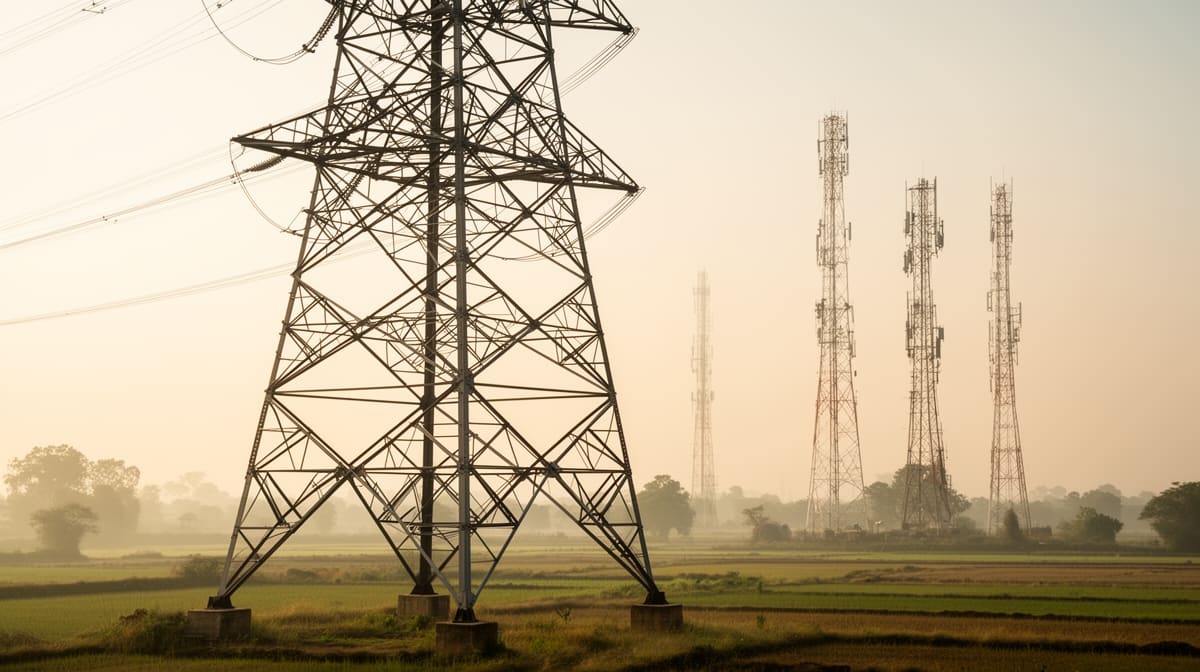
M/s. Ganges Internationale Private Limited exported galvanized steel towers used for telecommunications networks. In its shipping bills, the company declared these as "Galvanised Transmission Line Towers and parts thereof," qualifying for DEPB benefits under Sl. No. 24 of Product Group Code 61 (Engineering Products). The Directorate of Revenue Intelligence (DRI) alleged that these were actually Telecom Towers, which were not eligible for the same DEPB rate and should have been classified under Product Group 90, Sl. No. 22D. The Revenue contended that the appellant fraudulently obtained higher DEPB benefits by mis-declaring the nature of goods.
Procedural History
- 2008 - 2011: Appellant exported 564 shipping bills declaring goods as "Galvanised Transmission Line Towers."
- 2012: DRI registered a case based on intelligence, alleging mis-declaration.
- 2016: Show Cause Notice (SCN) issued under Sections 50, 17, 113, 114, and 114AA of the Customs Act, 1962.
- 2017: Commissioner of Customs (Preventive), Tiruchirappalli, issued Order-in-Original cancelling Let Export Orders, directing reassessment, and imposing confiscation and penalties.
- 2018: Appeal filed before the Customs Appellate Tribunal (CAT), Chennai.
Relief Sought
The appellant sought quashing of the impugned order on grounds of lack of jurisdiction, limitation, and procedural illegality. It argued that only DGFT could determine DEPB eligibility and that customs authorities had no power to reassess goods already exported or cancel Let Export Orders without following revisionary procedures under Section 129D.
The Legal Issue
The central question was whether Customs authorities have the power to cancel Let Export Orders, reassess exported goods, and impose penalties under Sections 113, 114, and 114AA of the Customs Act, 1962, when the DGFT has already issued valid DEPB scrips for the same goods, and whether Section 17 permits reassessment of goods after export.
Arguments Presented
For the Appellant
The appellant relied on multiple precedents including Titan Medical Systems Pvt. Ltd. v. Collector of Customs, Adani Exports Ltd., and Pradip Polyfills (P) Ltd. to argue that:
- The DGFT is the exclusive licensing authority for DEPB benefits.
- Once a DEPB scrip is issued, Customs authorities cannot dispute its validity.
- Section 17 permits reassessment only of goods not yet exported.
- Section 51 Let Export Orders are quasi-judicial orders that can only be revised under Section 129D, not through unilateral cancellation.
- Section 114AA requires intentional mis-declaration, which was absent as the description matched the Customs Tariff Act, 1975.
- The proceedings were barred by limitation under Section 28, as confiscation and penalty proceedings are subject to the same time-bar.
For the Respondent
The Revenue contended that:
- The Customs Act and Foreign Trade (Development and Regulation) Act, 1992 operate independently.
- The appellant had intentionally mis-declared goods to avail higher DEPB rates.
- The Electricity Act, 2003 and Indian Telegraph Act, 1885 clearly distinguish transmission towers for electricity from telecom towers.
- The Public Notice No. 55 of 2004 amended SION to separate Telecom Towers from Transmission Line Towers, indicating distinct eligibility.
- The DGFT’s non-action on the SCN did not preclude customs from proceeding based on available evidence.
The Court's Analysis
The Tribunal conducted a meticulous review of statutory provisions, judicial precedents, and administrative policy. It emphasized that the DGFT’s issuance of DEPB scrips constitutes a final determination of eligibility under the Foreign Trade Policy. The Court held that allowing Customs authorities to override this determination would create a parallel adjudicatory system, undermining the statutory scheme.
"The Customs Department denying benefit of DEPB to a particular item despite there being a valid and subsisting DEPB scrip issued by the DGFT for the item as in this case, in effect, amounts to questioning the validity of the very DEPB scrip issued by the latter and hence, as rightly argued by the Appellant, the proper legal course perhaps to be adopted by the Respondent would have been to address the DGFT for cancellation of DEPB benefit..."
The Tribunal distinguished between verification and determination. While Customs may verify the quantity, value, and description of exported goods, it cannot determine whether those goods qualify for a specific DEPB rate. That power rests solely with DGFT.
Regarding reassessment under Section 17, the Court held that the provision applies only to goods not yet exported. Once goods are cleared and shipped, they cease to be "export goods" under Section 2(19). The Tribunal cited ITC Ltd. v. CCE and Jairath International v. UOI to affirm that self-assessed or provisionally assessed shipping bills attain finality and can only be challenged through appeal under Section 128, not through unilateral reassessment.
The Court also rejected the Revenue’s reliance on Section 113 for confiscation, noting that Section 124 mandates notice before confiscation, and that Section 28’s five-year limitation applies to all proceedings arising from the same transaction, including confiscation and penalty.
The Tribunal further observed that the Revenue’s interpretation of "Transmission Line Towers" by invoking the Electricity Act, 2003 was legally flawed, as the Customs Tariff Act, 1975 does not distinguish between electricity and telecom towers under Tariff Item 7308 2011. The inclusion of Telecom Towers in SION via Public Notice No. 55 did not imply exclusion from DEPB eligibility under Sl. No. 24.
The Verdict
The appellant won. The Tribunal held that Customs authorities lack jurisdiction to cancel Let Export Orders, reassess exported goods, or impose penalties for alleged DEPB mis-declaration when DGFT has issued valid scrips. The impugned order was set aside in its entirety. The Tribunal emphasized that DEPB eligibility is exclusively within DGFT’s domain, and reassessment under Section 17 is impermissible post-export.
What This Means For Similar Cases
DGFT’s Decision Is Final on DEPB Eligibility
- Practitioners must now argue that any challenge to DEPB eligibility must originate from DGFT, not Customs.
- Customs authorities may only verify export documentation; they cannot override DGFT’s licensing decisions.
- In cases where DEPB scrips are issued, penalty proceedings under Section 114AA fail unless intentional fraud is proven by DGFT.
Reassessment After Export Is Legally Invalid
- Section 17 cannot be invoked to reassess goods after Let Export Orders are issued.
- Post-export reassessment attempts must be challenged on jurisdictional grounds.
- The only lawful recourse for Customs is to file an appeal under Section 128 against the original assessment.
Limitation Applies to Confiscation and Penalty Proceedings
-
Section 28’s five-year limitation period applies to confiscation and penalty proceedings arising from export transactions.
-
Proceedings initiated beyond five years from the date of export are time-barred, even if no formal demand is made under Section 28.
-
Practitioners should raise limitation as a preliminary defense in all DEPB-related penalty cases.
-
Customs authorities must refer suspected DEPB fraud to DGFT for cancellation of scrips before initiating any action.
-
Exporters should retain copies of DGFT correspondence and scrip issuance as conclusive proof of eligibility.
-
Legal notices under Section 113/114 must be scrutinized for compliance with Section 124 and Section 28 timelines.