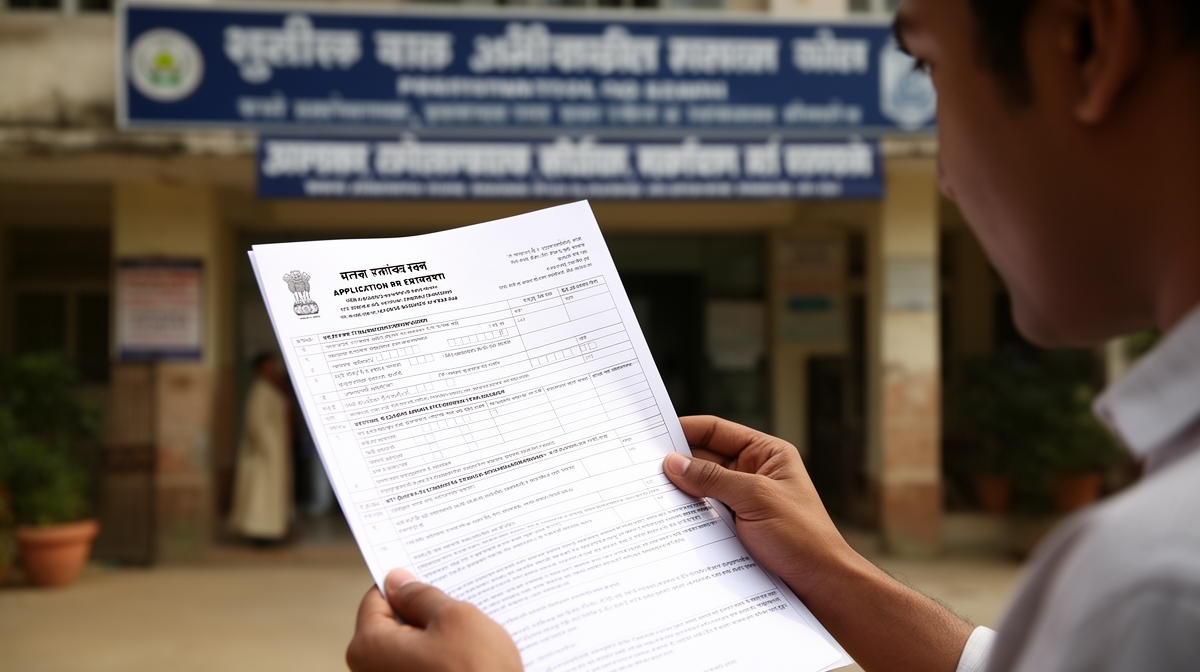

The High Court of Telangana has directed the District Collector to promptly dispose of representations alleging fraudulent issuance of Backward Class-B caste certificates. The court emphasized that administrative inaction on such complaints violates constitutional guarantees of equality and due process. The order reinforces the duty of public authorities to investigate credible allegations of caste certificate fraud under statutory frameworks.
The Verdict
The petitioners won. The High Court held that the District Collector and Tahsildar must act on representations alleging fraudulent caste certificates issued under the Telangana Backward Classes Act, 1993. The court directed the District Collector to dispose of the pending representations within three weeks, in accordance with government guidelines and Section 5 of the Act. No costs were awarded.
Background & Facts
The petitioners, residents of Kaleswaram Village in Mahadevpur Mandal, filed representations on 6 February 2025 and 26 November 2025 against two individuals, Vennapureddy Vasantha and Vennapureddy Mohan Reddy. They alleged that these individuals fraudulently obtained Backward Class-B certificates by falsely claiming membership in the Gandla caste, when they actually belong to the Reddy community, classified as a General Category caste. The petitioners submitted Right to Information requests to the Tahsildar, who responded on 3 July 2025 with a report recommending cancellation of caste certificates issued to the accused individuals. Despite this recommendation and the petitioners’ follow-up, no action was taken by the District Collector or Tahsildar.
The petitioners filed Writ Petition No. 36888 of 2025 under Article 226 of the Constitution, seeking a writ of mandamus to compel the authorities to investigate and act. They also filed Interlocutory Applications under Section 151 of the CPC seeking suspension or cancellation of the disputed certificates pending disposal. A fourth petitioner, Mengani Ashok, was later permitted to join as a party petitioner.
The respondents, including the State of Telangana and the two individuals accused of fraud, opposed the petition. They argued that the matter was sub judice due to pending Gram Panchayat elections, where both petitioners and respondents were contesting candidates. They also contended that the statutory mechanism under the Telangana Backward Classes Act, 1993, required the District Collector to act first, with appeals available to the Government, and that the petitioners had bypassed this process.
The Legal Issue
The central question was whether public authorities are obligated to act on representations alleging fraudulent caste certificates under the Telangana Backward Classes Act, 1993, even when the matter coincides with pending elections or when the accused claim historical or cultural legitimacy for their caste identity. Does administrative inaction in such cases violate Articles 14 and 21 of the Constitution?
Arguments Presented
For the Petitioner
The petitioners argued that the fraudulent issuance of caste certificates undermines the constitutional scheme of affirmative action and violates the right to equality under Article 14. They cited the Tahsildar’s own report dated 3 July 2025, which recommended cancellation of the certificates, as evidence of prima facie fraud. They contended that the prolonged inaction by the District Collector amounted to a dereliction of statutory duty and a denial of effective remedy under Article 21. They relied on the principle that constitutional rights cannot be suspended due to electoral considerations.
For the Respondent
The respondents argued that the Reddy Gandla community has historical roots as a distinct group, with traditional occupations such as chakka-ganuga (wooden milling), and that the suffixing of "Reddy" was a cultural evolution, not fraud. They cited a 1920 publication and a 2023 letter from the Telangana Commission for Backward Classes acknowledging the community’s historical identity. They further argued that Section 5 of the Act vests exclusive power to cancel certificates in the District Collector, and that the petitioners had prematurely approached the court without waiting for the Collector’s decision. They also raised the pendency of Gram Panchayat elections as a reason to defer action to avoid prejudicing electoral outcomes.
The Court's Analysis
The court acknowledged the complexity of caste identity claims but emphasized that the legal duty to investigate allegations of fraud is non-negotiable. It held that the determination of caste inclusion or exclusion falls within the domain of the Backward Classes Commission and the Government, but the obligation to act on complaints lies squarely with the District Collector under Section 5(1) of the Telangana Backward Classes Act, 1993. The court rejected the argument that electoral timing could justify inaction, stating that constitutional rights cannot be deferred for administrative convenience.
"This court does not see any impediment for the respondent No.2-District Collector in disposing the representations dated 06.02.2025 and 26.11.2025 filed by the petitioners, in accordance with the Standing Instructions issued by the Government in this matter, and also take consequential action as per Section 5 of the Act, if the unofficial respondents are found to be not belonging to Reddy Gandla caste, falling under Backward Class-B community."
The court distinguished the 2018 order cited by the respondents, noting that it pertained to the issuance of digital certificates and explicitly preserved the authority’s power to initiate cancellation proceedings under Section 5. The court also noted that the 2023 letter from the Commission did not validate the certificates but merely directed authorities to follow existing standing instructions pending further review.
The court further clarified that while the accused may have a statutory right to appeal under Section 7(2), that right cannot be used to justify initial inaction. The burden of initiating inquiry rests with the administrative authority upon receipt of credible representations.
What This Means For Similar Cases
This judgment establishes a clear precedent: public authorities cannot delay or ignore complaints of fraudulent caste certificate issuance on grounds of pending elections, political sensitivity, or pending policy reviews. The District Collector’s duty under Section 5 of the Telangana Backward Classes Act is mandatory and non-discretionary once a prima facie case is presented. Practitioners handling caste certificate disputes must now treat administrative inaction as a justiciable violation of Articles 14 and 21, actionable through writ petitions under Article 226.
The ruling also limits the scope of "cultural evolution" defenses in fraud cases. While historical identity may be relevant to the Commission’s policy review, it does not override the requirement for factual verification of caste claims at the time of certificate issuance. Future litigants must ensure that representations include documentary evidence such as income certificates, ancestral records, or prior official denials to strengthen their case. Authorities are now on notice that failure to act within a reasonable time will invite judicial intervention.