
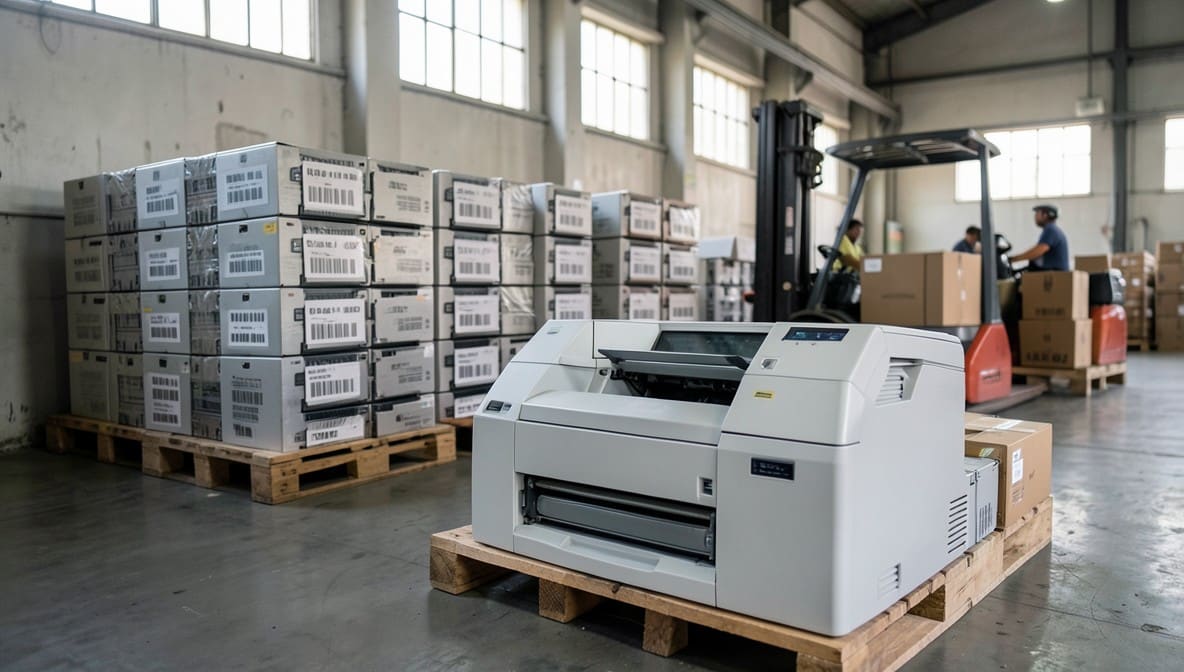
The Supreme Court clarified that merely grouping and fitting imported CKD or SKD modules at a warehouse does not amount to "manufacture" within the meaning of Section 2(f) of the Central Excise Act, 1944 read with Note 6 of the Central Excise Tariff Act, 1985. The decision dismisses the revenue’s demand for excise duty and penalty on Xerox India Ltd., setting a clear precedent for similar assembly-only operations.
Background & Facts
The Dispute
The Revenue (Commissioner of Central Excise, Hyderabad-IV) challenged Xerox India Ltd.’s activity of receiving imported photocopier components in CKD/SKD condition and assembling them to meet specific customer specifications. The core question was whether this activity constituted "manufacture" under Section 2(f) of the Central Excise Act.
Key Facts
- April 2002 - November 2006: Period during which the disputed transactions occurred.
- 04.05.2007: Revenue issued a Show-Cause Notice (SCN) alleging manufacture.
- 28.03.2008: Commissioner confirmed the demand in the Order-in-Original (O-I-O).
- Xerox imported modules classified under tariff heading 8471 (automatic data processing machines) and cleared as complete machines.
- The warehouse operations involved "kitting", pinning, plugging and packaging modules per customer orders; no physical assembly of non-functional parts was proven.
- Xerox contended that the activity was merely "kitting" for transport convenience and that the imported goods were already complete machines.
Procedural History
- 12.06.2009: Revenue filed Appeals E/591, 592, 596 before CESTAT, South Zonal Bench, Bangalore.
- 28.03.2008: Commissioner’s O-I-O confirmed duty demand of Rs. 17,86,47,382 and penalties under Rules 26 CE Rules 2002.
- 2009: CESTAT issued its impugned order, finding no manufacture.
- Civil Appeal Nos. 5939-5941 of 2010: Filed by Revenue challenging the CESTAT order.
- Civil Appeal Nos. 11870-11872 of 2018: Additional appeals on the same issue.
- 05.08.2026: Supreme Court delivered the judgment.
Parties' Positions
- Revenue (Appellant): Asserted that the conversion of imported modules into finished photocopiers at the warehouse amounted to manufacture, invoking Section 2(f) and Note 6 of the Tariff Act.
- Xerox India Ltd. (Respondent): Maintained that the goods were imported as complete machines, that the warehouse activity was merely "kitting" for packaging, and that no transformation creating a new commercial commodity occurred.
Relief Sought
The Revenue sought:
- Imposition of excise duty and ED Cess of Rs. 17,86,47,382.
- Penalties under Sections 11A, 11AB, 11AC of the CE Act and Rule 26 of the CE Rules 2002. Xerox sought dismissal of the demand and confirmation that no duty or penalty was payable.
The Legal Issue
The central question was whether the activity of grouping, pinning and plugging imported CKD/SKD modules at Xerox’s warehouse constitutes "manufacture" within the meaning of Section 2(f) of the Central Excise Act, 1944, read with Note 6 to Section XVI of the Central Excise Tariff Act, 1985.
Arguments Presented
For the Appellant
- Contended that the assembly of modules transformed incomplete articles into finished photocopiers, attracting Section 2(f) and Note 6.
- Relied on the Commissioner’s findings that the imported parts were not functional and required assembly to become marketable.
- Cited precedents that incidental or ancillary processes to completion of a product amount to manufacture.
For the Respondent
- Argued that the imported goods were already classified and cleared as complete machines under heading 8471; no conversion of an incomplete article occurred.
- Described the warehouse activity as "kitting" - mere packaging and pinning for customer specifications, not physical assembly.
- Emphasised lack of any evidence of physical fitting of components at the warehouse; key components like HCF and DADF were factory-fitted abroad.
- Relied on the Tribunal’s factual findings and on the two-fold test (essential character test and commercial user test) established in earlier Supreme Court decisions.
The Court's Analysis
The Court first reiterated the legal test for "manufacture" under Section 2(f): a process must bring into existence a new and distinct article having a different name, character or use, and the transformation must be more than mere assembly of already complete goods.
"Manufacture means bringing into existence new goods. The process must result in a distinct commercial commodity recognised by the market. Mere assembly or packaging of already complete machines does not satisfy this requirement."
The Court examined the factual record:
- The imported modules were cleared as complete machines under heading 8471 and were assessed for customs duty and CVD accordingly.
- Depositions of Xerox executives admitted that the modules were not functional and that key components were fitted abroad.
- No physical evidence or photographs demonstrated any conversion of an incomplete article into a finished one at the Hyderabad or Rampur warehouses.
- The Tribunal’s finding that the warehouse activity amounted only to grouping, pinning and plugging - without any irreversible alteration - was upheld.
The Court distinguished the present case from earlier authorities where genuine transformation occurred (e.g., M/s Narne Tulaman Manufacturers Pvt. Ltd.). It held that the Revenue failed to discharge the burden of proving that the imported goods were "incomplete" and that Xerox performed the conversion.
Consequently, the Court concluded that the activity fell outside the ambit of Section 2(f) and Note 6, and that the revenue’s demand for duty and penalty could not be sustained.
The Verdict
The Supreme Court dismissed Civil Appeal Nos. 5939-5941 of 2010 and Civil Appeal Nos. 11870-11872 of 2018. No excise duty, ED Cess, or penalty under Sections 11A, 11AB, 11AC or Rule 26 CE Rules 2002 was imposed. All pending applications were ordered disposed of.
What This Means For Similar Cases
Manufacture Requires a New Commercial Commodity
- Practitioners must demonstrate that the post-process product has a distinct name, character or use different from the imported components.
- Mere grouping, pinning or packaging of already complete machines will not satisfy the statutory definition.
Kitting Alone Does Not Trigger Excise Liability
- Activities described as "kitting" - arranging parts for transport or customer-specific packaging - are excluded from the scope of manufacture.
- Revenue must provide concrete evidence of physical transformation, not rely on internal nomenclature.
Burden of Proof Lies With the Revenue
- The onus is on the tax authority to prove that the imported article was incomplete and that the assessee effected its conversion.
- Absence of inspection reports, photographs, or expert testimony will likely lead to dismissal of duty demands.
Practical Takeaways
- When advising clients engaged in CKD/SKD imports, ensure that import documentation reflects classification as complete machines if no physical assembly occurs.
- If assembly is performed, retain detailed records (photos, process logs) to establish transformation.
- Anticipate that revenue will need to meet the two-fold test before levying excise duty.





