The Madras High Court has affirmed the constitutional right to practice religion through community-based charitable acts, directing authorities to facilitate food distribution during the 27th night of Ramzan without imposing unreasonable conditions. This judgment reinforces the principle that religious customs, when peaceful and longstanding, cannot be obstructed by local bodies under the guise of administrative control.
Background & Facts
The Dispute
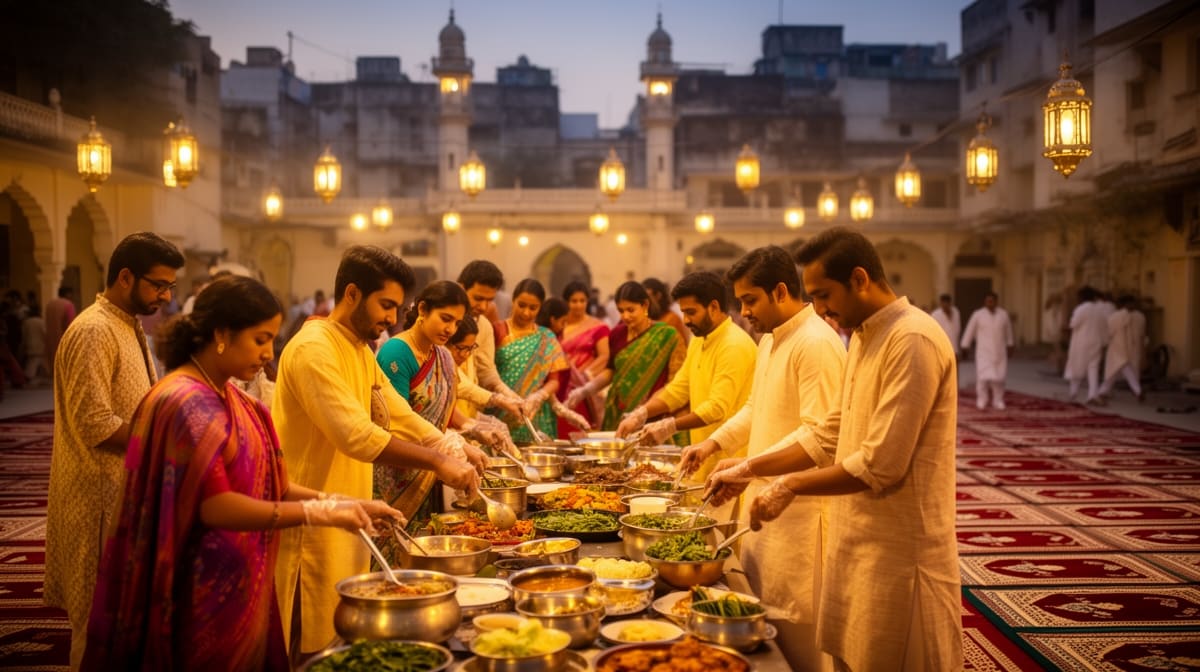
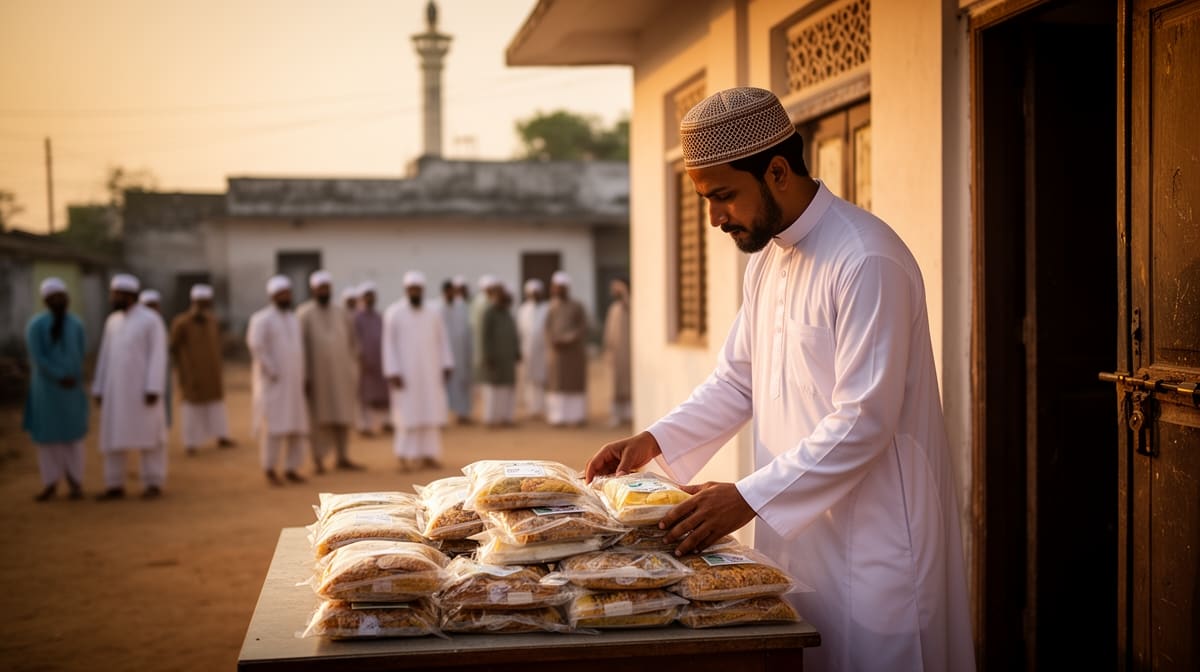
The petitioner, A.W. Ghazzali, a resident of Podakkudi Village in Kuthanallur Taluk, Thiruvarur District, has for several decades served food to Muslim worshippers during the 27th night of Ramzan at the local mosques (Pallivasal). This practice, integral to the community’s religious observance, has been carried out peacefully by the petitioner and his family without incident. In 2026, the respondents 6 and 7 - Mela Pallivasal and Periya Pallivasal - refused to allow the petitioner to serve food directly, claiming procedural irregularities.
Key Facts
- The petitioner has been serving food during the 27th night of Ramzan for over 30 years
- The practice is part of a longstanding local tradition among Muslim families in Podakkudi
- On 02.02.2026, the petitioner submitted a formal representation to the 2nd and 4th respondents seeking protection and recognition of his service
- Respondents 6 and 7 (mosque committees) objected to direct service by the petitioner and demanded food be pre-packaged and handed over to a third party
- No prior complaints or incidents of disorder were recorded in connection with the petitioner’s service
- The 27th night of Ramzan in 2026 fell on 16.03.2026 - the date of the court’s hearing and the critical deadline for the religious observance
Procedural History
- 02.02.2026: Petitioner submitted written representation to the District Collector and Superintendent of Waqf seeking protection for his religious service
- No formal response was received from respondents 2 and 4 within the stipulated time
- 16.03.2026: Writ Petition No. 10602 of 2026 filed under Article 226 of the Constitution seeking mandamus
- 16.03.2026: Hearing conducted at admission stage with consent of all parties
- 16.03.2026: Notice to respondents 5 to 7 dispensed with, as no adverse order was contemplated against them
The Parties' Positions
Petitioner: Argued that his decades-long practice constitutes a protected religious activity under Article 25 of the Constitution. He emphasized the non-disruptive, voluntary nature of his service and the absence of any legal prohibition. He contended that requiring food to be pre-packaged and redistributed by a third party undermines the personal, devotional character of the act.
Respondents 1 and 4 (Waqf Board): Contended that direct distribution by individuals could lead to hygiene and administrative issues. They proposed a mediated model: food must be pre-packaged, labeled with the donor’s name, and handed over to the fifth respondent (Administrator of the mosques) for distribution.
Relief Sought
The petitioner sought a writ of mandamus directing:
- Respondents 2 and 4 to consider his representation dated 02.02.2026
- Protection for his right to serve food directly on 16.03.2026
- A direction to respondents 5 to 7 not to interfere with the peaceful conduct of religious activities
The Legal Issue
The central question was whether Article 25 of the Constitution protects an individual’s right to perform a longstanding, non-coercive religious service - such as serving food during Ramzan - against obstruction by local religious bodies, and whether administrative conditions imposed by the Waqf Board can lawfully restrict such practice.
Arguments Presented
For the Petitioner
The petitioner’s counsel relied on Shayara Bano v. Union of India and Indian Young Lawyers Association v. State of Kerala to argue that religious practices, even if not mandatory by scripture, are protected if they are integral to the community’s faith and have been observed for generations. He emphasized that the petitioner’s act was voluntary, non-commercial, and deeply embedded in local tradition. He further cited K.S. Puttaswamy v. Union of India to underscore the right to religious expression as part of personal autonomy.
For the Respondent
The counsel for the Waqf Board argued that unregulated food distribution could lead to public health risks and administrative chaos. They contended that the fifth respondent, as the official administrator of the mosques, had the authority to regulate entry and distribution of items within the premises. They cited Waqf Act, 1995 and internal Waqf Board guidelines to justify the proposed packaging and redistribution model.
The Court's Analysis
The Court examined the nature of the petitioner’s activity and found it to be a peaceful, non-commercial, and longstanding religious practice. It noted that the petitioner had never been accused of any misconduct or violation of public order. The Court observed that the Waqf Board’s proposed condition - requiring food to be pre-packaged and redistributed by a third party - effectively transformed a devotional act into a bureaucratic transaction, thereby diluting its religious significance.
"The petitioner’s act of serving food during the 27th night of Ramzan is not merely a charitable gesture but a deeply rooted religious observance protected under Article 25. To impose conditions that sever the personal connection between the donor and the recipient is to undermine the very essence of the practice."
The Court further held that the Waqf Board’s administrative concerns could be addressed through reasonable safeguards - such as hygiene checks or designated collection points - without prohibiting direct service. It emphasized that the burden of proving disruption or danger lies with the objecting parties, which they failed to discharge.
The Court also clarified that respondents 5 to 7, as mosque committees, have no authority to unilaterally exclude a long-standing participant from a communal religious activity absent evidence of misconduct.
The Verdict
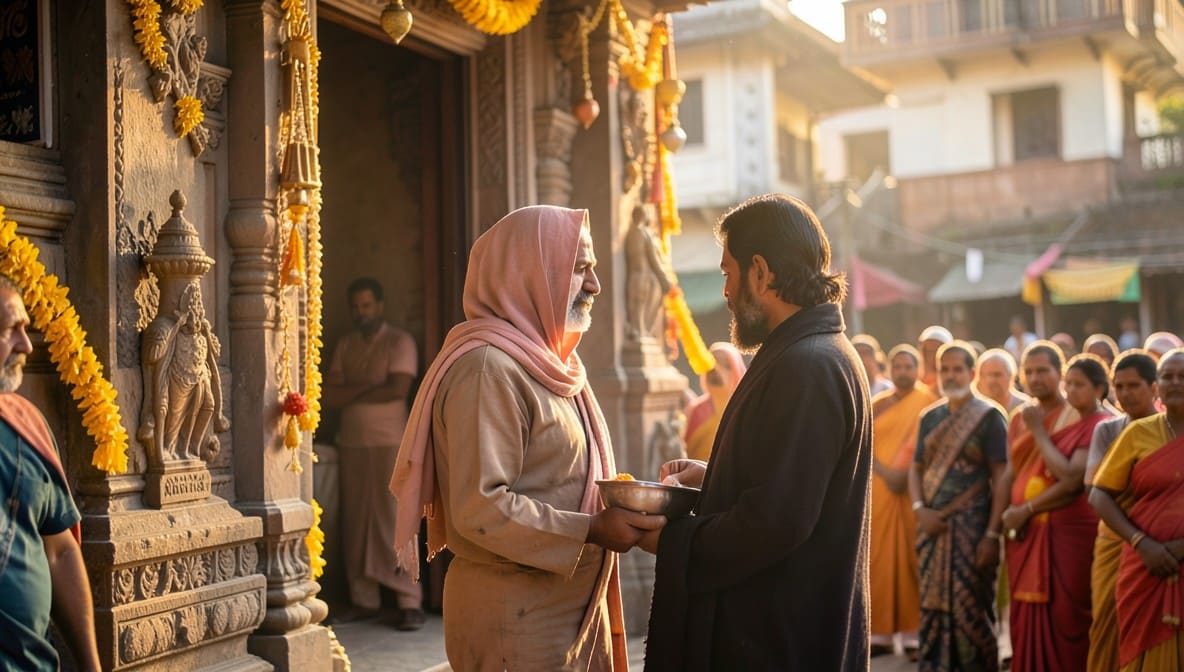
The petitioner succeeded. The Court directed the petitioner to provide food in sealed packets, labeled with his name, and hand them over to the fifth respondent, who shall distribute them to worshippers on the 27th night of Ramzan, 16.03.2026. The District Collector (respondent 2) was directed to ensure law and order and take action against any person causing disturbance. No costs were awarded. The writ petition was disposed of with immediate effect.
What This Means For Similar Cases
Religious Practices Cannot Be Bureaucratically Neutralized
- Practitioners must argue that longstanding, non-commercial religious acts are protected under Article 25 even if not codified in scripture
- Administrative bodies cannot impose conditions that fundamentally alter the devotional character of a practice
- The burden of proof for disruption rests on the objecting party - mere speculation is insufficient
Local Religious Committees Cannot Unilaterally Exclude Longstanding Participants
- Mosque committees or Waqf administrators cannot bar individuals from participating in community rituals without evidence of misconduct or legal violation
- Decades of consistent participation create a legitimate expectation of continuity
- Any restriction must be proportionate, minimal, and justified by concrete risk - not administrative convenience
State Must Protect, Not Regulate, Peaceful Religious Expression
- The State’s duty under Article 25 is to protect religious practice, not to mediate or restructure it
- Reasonable safeguards (e.g., hygiene, crowd control) are permissible, but not at the cost of eroding the act’s spiritual meaning
- Courts will intervene when administrative overreach suppresses religious expression without necessity