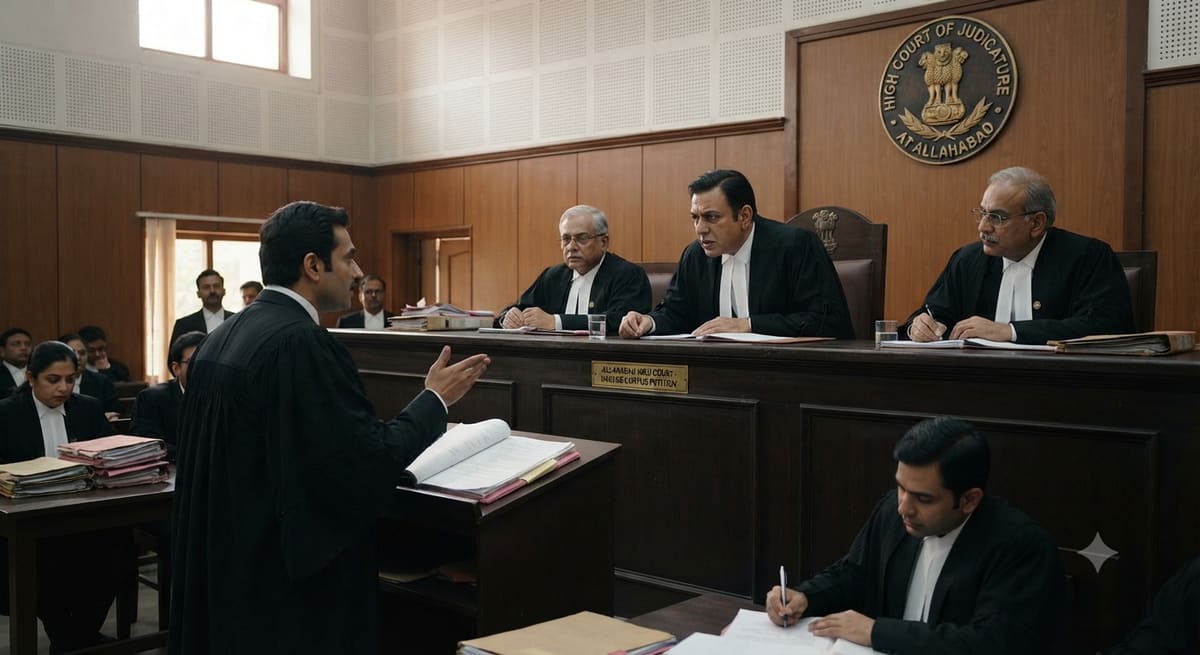
The Orissa High Court recently dismissed a batch of writ petitions on the ground of lack of territorial jurisdiction, reinforcing the principle that a High Court can exercise its writ jurisdiction under Article 226(2) of the Constitution of India only if the cause of action, wholly or in part, arises within its territorial limits. The judgment underscores that mere residence of the petitioner within the court's jurisdiction is insufficient to confer territorial competence unless the pleaded facts establish a nexus with the cause of action. This ruling serves as a critical reminder for practitioners to carefully plead jurisdictional facts in writ petitions to avoid dismissal on preliminary grounds.
Background & Facts
The Dispute
The petitioners, residents of Rayagada district in Odisha, were students of Dr. B.D. Jatti College of Education in Vijaypura, Karnataka, affiliated to Dakhina Bharat Hindi Prachar Sabha, Chennai (Opposite Party No. 2). They pursued a two-year B.Ed. course in Hindi for the academic session 2022-24. After completing the course and paying the requisite fees, the petitioners could not appear for the examination due to alleged health-related issues in their families. Subsequently, they sought permission to appear for the examination by changing their examination centre through representations dated 23.01.2025 and 02.02.2026, filed by Sri Jagannath Mishra, a retired Hindi teacher, on behalf of the petitioners and four other similarly placed students.
Key Facts
- The petitioners were admitted to Dr. B.D. Jatti College of Education, Vijaypura, Karnataka, in 2022 for a two-year B.Ed. course in Hindi.
- The college is run under Dakhina Bharat Hindi Prachar Sabha, Chennai, affiliated to the Government of India, Ministry of Education.
- The petitioners completed the course and paid tuition fees for both years but could not appear for the examination due to family health issues.
- Representations were filed on 23.01.2025 and 02.02.2026 by Sri Jagannath Mishra, a retired teacher, requesting a change of examination centre for five students, including the petitioners.
- The representations were addressed to the Registrar, Dakhina Bharat Hindi Prachar Sabha, Chennai, Tamil Nadu.
- The petitioners sought a direction from the Orissa High Court to the opposite parties to dispose of the representations within a stipulated period.
Procedural History
- W.P.(C) No. 11642/2026 (and connected petitions) were filed before the Orissa High Court seeking a writ of mandamus to direct the opposite parties to act on the representations.
- The opposite parties raised a preliminary objection regarding the maintainability of the writ petitions on the ground of lack of territorial jurisdiction.
- The matter was heard on 04.05.2026, and the court reserved its judgment.
Relief Sought
The petitioners prayed for:
- Issuance of a writ in the nature of mandamus directing the opposite parties to take immediate steps on the representations dated 23.01.2025 and 02.02.2026.
- Any other appropriate writ, order, or direction as deemed fit by the court.
The Legal Issue
The central question before the court was whether the Orissa High Court had territorial jurisdiction to entertain the writ petitions under Article 226(2) of the Constitution of India, given that:
- The petitioners were residents of Odisha.
- The representations were addressed to an authority located in Tamil Nadu.
- The alleged inaction of the authority occurred outside the territorial limits of the Orissa High Court.
Arguments Presented
For the Petitioner
- Mrs. S. Jena, learned Senior Counsel for the petitioners, relied on the judgment of the Gujarat High Court in Bhavendra Hasmukhlal Patadia v. Union of India (2022 SCC OnLine Guj 2569) to argue that the petitioners, being residents of Rayagada district, fell within the territorial jurisdiction of the Orissa High Court.
- Invoked the principle of forum conveniens and Article 226(2) of the Constitution, which permits a High Court to exercise jurisdiction if any part of the cause of action arises within its territorial limits, regardless of the residence of the authority or person concerned.
For the Opposite Parties
- Mr. M.K. Dash, learned Additional Standing Counsel, contended that the writ petitions were not maintainable due to lack of territorial jurisdiction.
- Argued that the representations were addressed to an authority in Tamil Nadu, and the alleged inaction occurred outside Odisha.
- Emphasized that the petitioners failed to plead any facts establishing a nexus between the cause of action and the territorial jurisdiction of the Orissa High Court.
The Court's Analysis
The court undertook a detailed examination of the scope of Article 226(2) of the Constitution and the concept of cause of action in the context of territorial jurisdiction. It relied heavily on the Supreme Court's judgment in Kusum Ingots & Alloys Ltd. v. Union of India and another ((2004) 6 SCC 254), which held that:
"The facts pleaded in the writ petition must have a nexus on the basis whereof a prayer can be granted. Those facts which have nothing to do with the prayer made therein cannot be said to give rise to a cause of action which would confer jurisdiction on the Court."
The court observed that:
- The representations were addressed to Dakhina Bharat Hindi Prachar Sabha, Chennai, Tamil Nadu, and the alleged inaction occurred in Tamil Nadu.
- There was no pleading to suggest that the representations were sent from Odisha or that any part of the cause of action arose within the territorial limits of the Orissa High Court.
- The representations were filed by a third party (Sri Jagannath Mishra), and the petitioners did not establish any direct nexus between their grievance and the jurisdiction of the Orissa High Court.
- The court distinguished the judgment in Bhavendra Hasmukhlal Patadia (supra), noting that in that case, a part of the cause of action (issuance of an Income Tax notice) had arisen within the territorial jurisdiction of the Gujarat High Court. In contrast, the present case lacked any such nexus.
The court held that:
"Law is well settled that pleaded facts must form an integral part of cause of action. After going through the pleadings made in the writ petition and hearing learned Senior Counsel for the Petitioner, this Court is unable to find any such pleadings giving rise to any part of cause of action, which has allegedly arisen within the territorial jurisdiction of this Court entailing this Court to deal with the grievance of the Petitioner and give a direction, as sought for."
The Verdict
The Orissa High Court dismissed all the writ petitions on the ground of lack of territorial jurisdiction. The court clarified that the dismissal would not bar the petitioners from redressing their grievances before the appropriate authority or forum in accordance with law. No order as to costs was passed.
What This Means For Similar Cases
Territorial Jurisdiction Must Be Pleaded with Specificity
Practitioners must ensure that writ petitions under Article 226 clearly plead facts establishing a nexus between the cause of action and the territorial jurisdiction of the High Court. Mere residence of the petitioner within the court's jurisdiction is insufficient. Key takeaways include:
- Identify the locus of the cause of action: Clearly plead where the impugned action or inaction occurred and how it relates to the court's territorial limits.
- Establish a nexus: Ensure that the facts pleaded demonstrate that the cause of action, wholly or in part, arose within the jurisdiction of the court.
- Avoid third-party representations: If representations are filed by a third party, ensure that the petitioner's direct involvement and the locus of the grievance are clearly established.
Forum Conveniens Is Not a Substitute for Jurisdictional Facts
While the doctrine of forum conveniens may be invoked to avoid undue hardship, it cannot override the statutory requirement under Article 226(2) that the cause of action must arise within the court's jurisdiction. Practitioners should:
- Distinguish precedents carefully: Not all judgments on forum conveniens will apply if the jurisdictional facts are materially different.
- Focus on the integral facts: Ensure that the facts pleaded are integral to the cause of action and not merely incidental.
Dismissal on Jurisdictional Grounds Does Not Bar Remedies Elsewhere
The court's dismissal on jurisdictional grounds does not preclude petitioners from seeking remedies before the appropriate forum. Practitioners should:
- Explore alternative forums: Identify the correct High Court or authority where the cause of action arose.
- Re-file with jurisdictional facts: If re-filing, ensure that the pleadings clearly establish the territorial nexus to avoid dismissal on the same grounds.