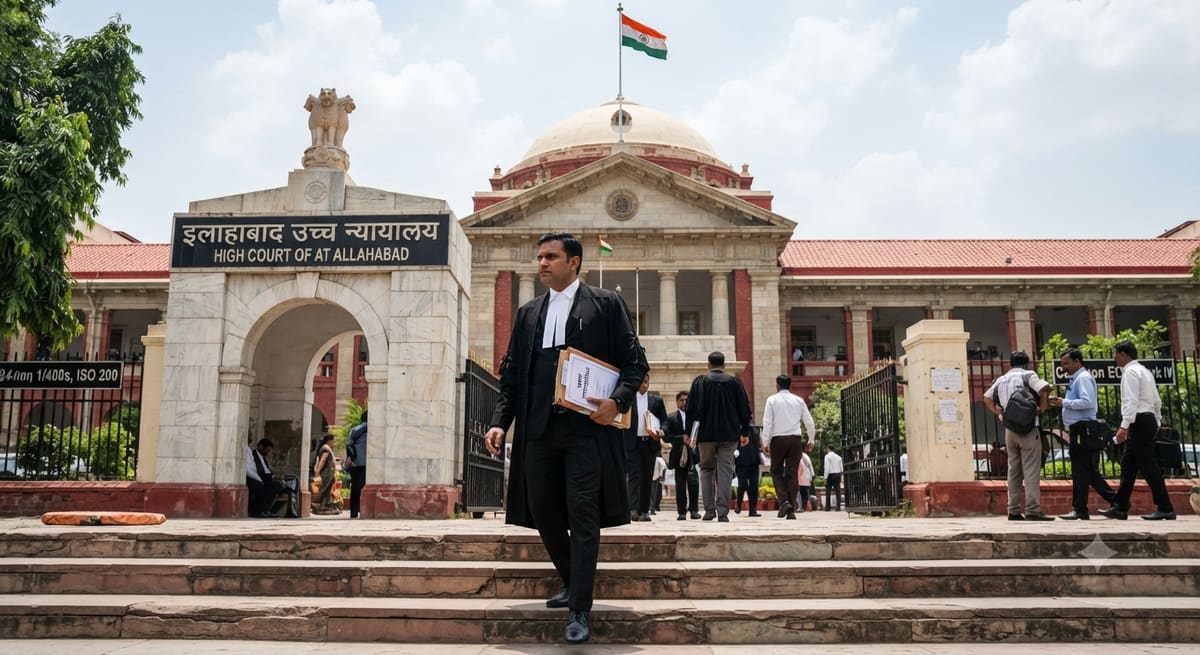
The Andhra Pradesh High Court has reaffirmed the binding nature of its earlier mandamus directions, ordering the state to release maintenance grants to aided schools for financial years 2023-2026. This judgment underscores the enforceability of judicial directions under Article 226 and the state's obligation to comply with court orders, even in matters of financial disbursement to educational institutions.
Background & Facts
The Dispute
The petitioners, comprising ten aided primary and high schools from Bapatla, Prakasam, and Kadapa districts, filed a writ petition under Article 226 seeking a mandamus to direct the respondents - the State of Andhra Pradesh, Department of School Education, Department of Finance, and various District and Mandal Educational Officers - to release maintenance grants for the financial years 2023-2024, 2024-2025, and 2025-2026. The schools alleged that the respondents had failed to comply with an earlier judgment of the High Court in W.P. No. 3449 of 2003, which had directed the release of maintenance grants to aided schools.
Key Facts
The petitioners are aided schools managed by private correspondents, providing education in various districts of Andhra Pradesh.
The respondents include the Principal Secretary of the Department of School Education, the Director of School Education, and District/Mandal Educational Officers.
The dispute arose from the non-release of maintenance grants for three consecutive financial years (2023-2026), despite a binding judgment in W.P. No. 3449 of 2003 dated 30.09.2016, which had directed the state to release grants at a rate of 6%.
The petitioners relied on the earlier judgment, which had held that the state's inaction in releasing grants was arbitrary and discriminatory.
Procedural History
30.09.2016: The High Court, in W.P. No. 3449 of 2003, directed the respondents to release maintenance grants to aided schools at a rate of 6% within three months of the order.
18.07.2025: The High Court reiterated similar directions in W.P. No. 10836 of 2025, reinforcing the obligation to release grants.
2023-2026: The respondents failed to release the maintenance grants for these financial years, prompting the present writ petition.
IA No. 1 of 2026: An interlocutory application was filed seeking interim release of arrears pending disposal of the main writ petition.
01.07.2026: The present judgment was pronounced, allowing the writ petition in terms of the earlier directions.
Relief Sought
The petitioners sought:
A declaration that the respondents' inaction in not releasing the maintenance grants for 2023-2026 was illegal, arbitrary, and unconstitutional.
A direction to the respondents to release the maintenance grants for the financial years 2023-2024, 2024-2025, and 2025-2026, in compliance with the judgment in W.P. No. 3449 of 2003.
Interim relief under Section 151 CPC for the release of arrears pending disposal of the writ petition.
The Legal Issue
The central question was whether the state is bound to comply with the directions issued in an earlier judgment under Article 226, particularly when the relief sought pertains to financial disbursements such as maintenance grants for aided schools. Additionally, the court had to determine whether the failure to comply with such directions constitutes contempt of court or arbitrary action.
Arguments Presented
For the Petitioners
The petitioners contended that the issue was squarely covered by the earlier judgments in W.P. No. 3449 of 2003 and W.P. No. 10836 of 2025. They argued that the state's failure to release the grants was arbitrary and discriminatory, as it had denied the petitioners the benefits granted to other similarly situated schools. The petitioners relied on Paragraphs 21 and 22 of the 2003 judgment, which had directed the release of grants at a rate of 6% within three months.
For the Respondents
The respondents, represented by the Assistant Government Pleader for School Education, did not contest the applicability of the earlier judgments. Instead, they appeared to concede that the matter was covered by the earlier directions, as no substantive arguments were advanced to distinguish or challenge the binding nature of the 2003 judgment.
The Court's Analysis
The Court observed that the issue raised in the writ petition was directly covered by its earlier judgments in W.P. No. 3449 of 2003 and W.P. No. 10836 of 2025. The Court emphasized the binding nature of its directions under Article 226, particularly in matters involving financial obligations of the state. The relevant portions of the 2003 judgment were quoted extensively:
"21. In any view of the matter, the contention of the learned Government Pleader is that the petitioner is not entitled to maintenance grant in view of G.O.Ms.No.320, which was struck down by this Court in the Judgment referred supra. Even otherwise, the discriminatory attitude of the Government giving concession to one educational institution and denying benefit to the petitioner’s educational institution cannot be encouraged by the Courts, since it is arbitrary and discriminatory in not releasing grant-in-aid to the petitioner’s association whose object is to provide free education. In those circumstances, this Court has no option except to hold that the inaction of the respondents is arbitrary in not releasing the maintenance grant-in-aid to the petitioner’s educational institution and consequently, I hold that the petitioner is entitled to all the benefits as decided in Recognised Schools Managements Associations case. Hence, the respondents are directed to work out maintenance grant @6% and arrange to pay the same within a period of three months from the date of receipt of copy of this order to the petitioner’s educational institution, on par with other Schools."
"22. With the above direction, the Writ Petition is allowed."
The Court held that the state's failure to comply with the earlier directions was arbitrary and contrary to the principles of natural justice. It reiterated that judicial directions under Article 226 are binding on the state and must be complied with, failing which the court is empowered to issue appropriate directions to ensure enforcement.
The Verdict
The writ petition was allowed in terms of the observations and directions contained in W.P. No. 3449 of 2003. The Court directed the respondents to release the maintenance grants to the petitioners for the financial years 2023-2024, 2024-2025, and 2025-2026 at the rate of 6%, as directed in the earlier judgment. The Court further directed the registry to append a copy of the 2003 judgment to the present order. No costs were awarded, and pending miscellaneous petitions, if any, were closed.
What This Means For Similar Cases
Judicial Directions Under Article 226 Are Binding
This judgment reaffirms that directions issued by the High Court under Article 226 are not merely advisory but carry the force of law. The state and its instrumentalities are bound to comply with such directions, particularly when they pertain to financial obligations like maintenance grants. Practitioners can rely on this judgment to argue that:
Non-compliance with judicial directions constitutes arbitrary action and can be challenged under Article 226.
The state cannot unilaterally disregard court orders, even in matters involving budgetary allocations.
Arbitrariness in Financial Disbursements
The Court emphasized that discriminatory treatment in the release of grants - where some schools receive benefits while others are denied - is arbitrary and violates the principles of equality under Article 14. This holding can be invoked in cases where:
Government schemes or grants are implemented selectively.
Financial benefits are denied without reasonable classification.
The state fails to justify differential treatment with objective criteria.
Enforcement of Earlier Judgments
The judgment underscores the importance of enforcing earlier judicial directions, even if they are not immediately complied with. Key takeaways include:
Res Judicata: While not explicitly invoked, the principle of finality in judicial orders implies that the state cannot re-litigate issues already decided.
Contempt Proceedings: Non-compliance with judicial directions may expose state officials to contempt proceedings under Contempt of Courts Act, 1971.
Interim Relief: Courts may grant interim relief under Section 151 CPC to ensure compliance with earlier directions pending final disposal.
Practitioners representing aided institutions, NGOs, or beneficiaries of government schemes can use this judgment to seek enforcement of earlier court orders where the state has failed to comply with financial or other obligations.