The Orissa High Court held that an accused's fundamental right under Article 22(2) is violated when detention exceeds twenty-four hours excluding only journey time, as medical examination time is not excludable; consequently the arrest and remand are vitiated and bail must be granted.
Background & Facts
The Dispute
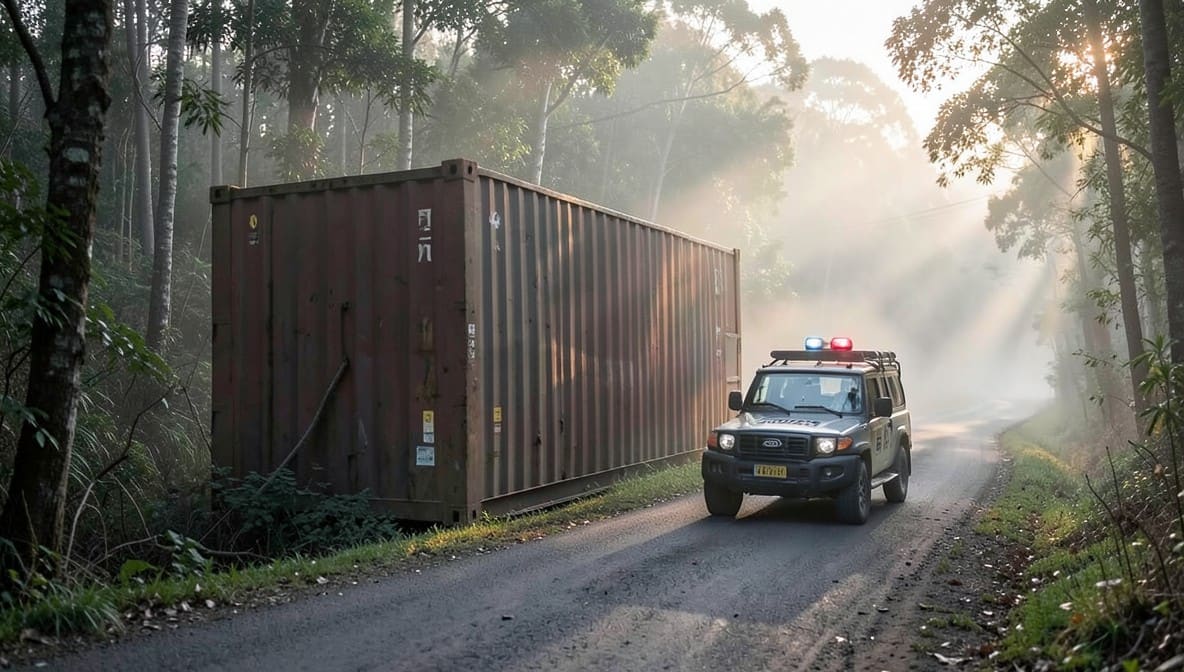
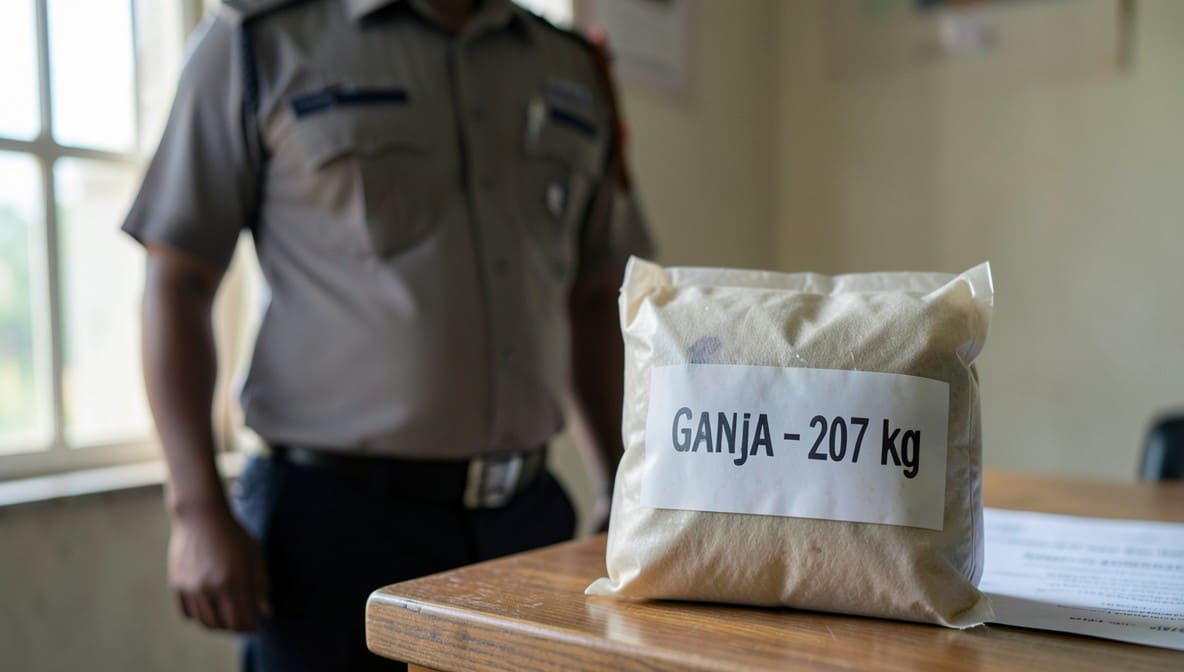
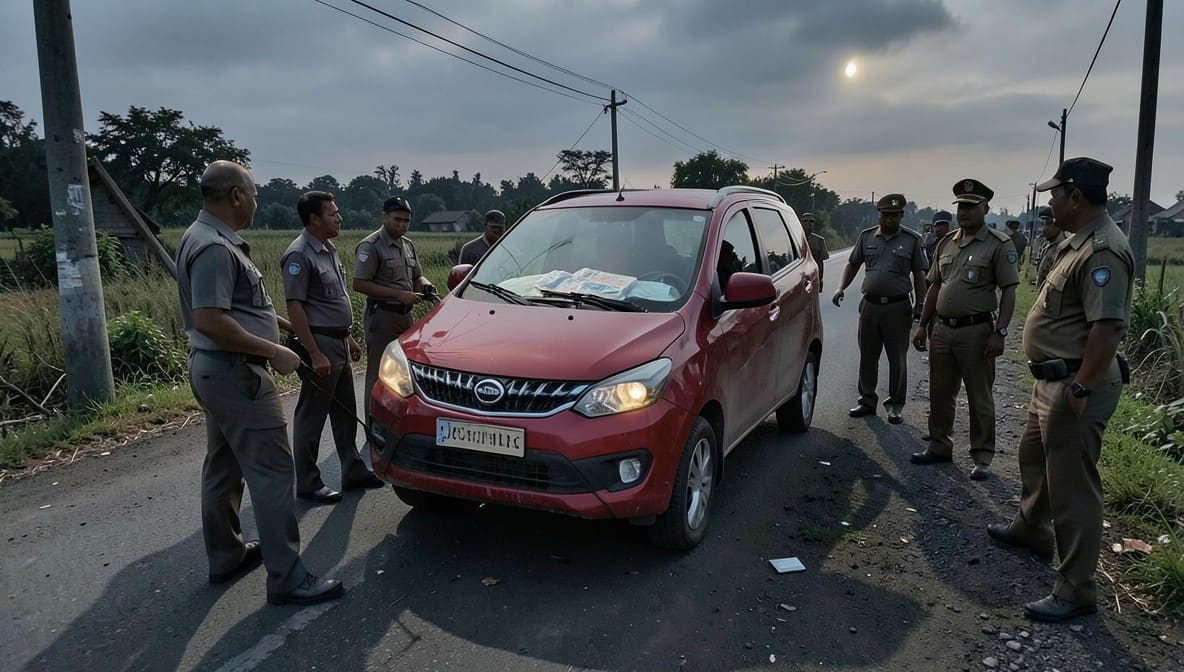
The petitioner, Srikanta Dhadaka, filed a bail application under Section 483 of the Bharatiya Nagarik Suraksha Sanhita (BNSS) in connection with Pottangi Police Station Case No. 138 of 2025, corresponding to TR Case No. 130 of 2025 pending before the Additional Sessions Judge-cum-Special Judge, Koraput. The charges alleged offences punishable under Section 20(b)(ii)(C) of the Narcotic Drugs and Psychotropic Substances Act read with Section 25(1-B)(a) of the Arms Act, based on the allegation of transporting 51 kilograms and 400 grams of contraband ganja in a Ford Fiesta car bearing registration number OR-02-BR-8908.
Key Facts
- The petitioner was arrested and detained by Pottangi Police Station.
- The trial court calculated the detention period by excluding 1 hour 10 minutes for medical examination and 4 hours 10 minutes for the journey from Pottangi PS to the Court at Jeypore, arriving at a total detention of 22 hours 15 minutes.
- The petitioner's counsel produced a certified copy of the command certificate issued to Constable 347 G. Khilo and OAPF/09 D. Badanaik, which showed the accused was allowed to leave the police station at 2:00 PM and reached the court at 4:00 PM, indicating a journey time of two hours.
- The medical examination of the petitioner concluded at 11:35 AM, but the record showed the accused was taken to court at 11:50 AM, leaving an unexplained gap of 15 minutes.
- On the basis of the command certificate, the actual journey time was two hours, not 4 hours 10 minutes as considered by the trial court.
- Adding the actual journey time (2 hours), the medical examination time (1 hour 10 minutes), and the unexplained 15-minute gap to the trial court's calculation of 22 hours 15 minutes resulted in a total detention of approximately 25 hours 40 minutes.
Procedural History
- Date of arrest and detention: Not explicitly stated in the judgment; the events pertain to Pottangi PS Case No. 138 of 2025.
- Trial court proceedings: The learned trial court (Additional Sessions Judge-cum-Special Judge, Koraput) considered the detention period and excluded certain hours for medical examination and journey.
- 03.09.2026: Bail application (BLAPL No. 6986 of 2026) heard and decided orally by the High Court of Orissa at Cuttack.
Relief Sought
The petitioner sought grant of bail on the ground that his fundamental right under Article 22(2) of the Constitution was violated by non-production before a magistrate within twenty-four hours of arrest, excluding only the time necessary for journey.
The Legal Issue
The central question was whether the exclusion of time for medical examination from the twenty-four-hour production requirement under Article 22(2) is permissible, and whether the actual journey time as evidenced by the command certificate, when combined with medical examination time and unexplained gaps, results in detention exceeding twenty-four hours, thereby vitiating the arrest and remand.
Arguments Presented
For the Petitioner
Mr. Sangram Keshari Rout, learned counsel for the petitioner, contended that Article 22(2) only permits exclusion of the time necessary for the journey from the place of arrest to the court of the magistrate. He argued that the time taken for medical examination cannot be excluded. He further relied on the certified copy of the command certificate to demonstrate that the accused left the police station at 2:00 PM and reached the court at 4:00 PM, establishing a journey time of two hours, contrary to the trial court's calculation of 4 hours 10 minutes. He submitted that the total detention, when correctly computed, amounted to approximately 25 hours 40 minutes, constituting a clear violation of the constitutional mandate.
For the Respondent
Mr. C. Mohanty, learned Additional Public Prosecutor for the State, did not dispute the legal position that an accused cannot be detained beyond twenty-four hours without the authority of a magistrate, and that the twenty-four hours exclude only the journey time. The State's position focused on the trial court's computation, which had excluded both medical examination and journey time to arrive at 22 hours 15 minutes.
The Court's Analysis
The Court examined the constitutional mandate of Article 22(2), which provides that every person arrested and detained in custody shall be produced before the nearest magistrate within twenty-four hours of such arrest, excluding the time necessary for the journey from the place of arrest to the court of the magistrate. The Court held that Article 22(2) does not provide any relaxation for the transit of the accused for medical examination. The exclusion is strictly limited to journey time.
The Court then scrutinized the trial court's computation. It noted that the trial court had excluded 1 hour 10 minutes for medical examination and 4 hours 10 minutes for the journey. However, the command certificate produced by the petitioner's counsel, issued to the escort personnel, clearly indicated that the accused was allowed to leave the police station at 2:00 PM and reached the court at 4:00 PM. This established the actual journey time as two hours, not 4 hours 10 minutes.
The Court further observed that the medical examination concluded at 11:35 AM, yet the accused was shown as taken to court at 11:50 AM, leaving an unexplained 15-minute gap. Adding the actual journey time of two hours, the medical examination time of 1 hour 10 minutes, and the 15-minute gap to the trial court's base calculation of 22 hours 15 minutes yielded a total detention of approximately 25 hours 40 minutes.
The Court concluded that the accused-petitioner was not produced before the magistrate within twenty-four hours as mandated by Article 22(2). Once this fundamental right is violated, the arrest becomes illegal and the subsequent remand is vitiated. The only remedy available to the court in such circumstances is to grant bail to the accused.
"Once fundamental right of an accused to be produced before the Court of Magistrate within 24hours is violated, the arrest would not only become illegal, but it would be vitiated and the subsequent remand thereafter would also be vitiated. Once the arrest and remand are vitiated, the only course left upon to the Court is to grant bail to the accused."
The Verdict
The bail application was allowed. The petitioner, Srikanta Dhadaka, was directed to be released on bail upon furnishing a bail bond of Rs. 1,00,000 (Rupees One Lakh) with two solvent sureties each for the like amount, to the satisfaction of the trial court, on such terms and conditions as deemed fit and proper. The High Court ordered that a soft copy of the order be immediately communicated to the concerned trial court, which shall thereafter communicate the same to the concerned jail through e-mail for reference. The BLAPL stands disposed of.
What This Means For Similar Cases
Medical Examination Time Is Not Excludable Under Article 22(2)
The judgment clarifies that the twenty-four-hour production rule under Article 22(2) permits exclusion only for the journey from the place of arrest to the magistrate's court. Time taken for medical examination, however necessary, cannot be deducted. Practitioners must ensure that the detention clock continues to run during medical procedures and any administrative delays.
Command Certificates and Escort Records Are Critical Evidence
The certified copy of the command certificate issued to escort personnel proved decisive in establishing the actual time of departure from the police station and arrival at court. Lawyers should routinely obtain and scrutinize such documents to verify the State's computation of journey time. Discrepancies between the trial court's assumed journey time and the actual escort records can demonstrate constitutional violation.
Unexplained Gaps in the Timeline Count Against the State
The 15-minute gap between the conclusion of medical examination (11:35 AM) and the recorded departure for court (11:50 AM) was included in the detention period. Any unexplained interval during which the accused remains in police custody without being produced before the magistrate adds to the twenty-four-hour calculation. The State bears the burden of accounting for every minute of detention.
- Obtain command certificates and escort movement orders immediately after arrest.
- Cross-check the recorded departure and arrival times against the trial court's computation.
- Argue that medical examination time, fingerprinting, and other procedural formalities are not excludable under Article 22(2).
- Where total detention exceeds twenty-four hours on a correct computation, seek bail as a matter of right, not discretion.