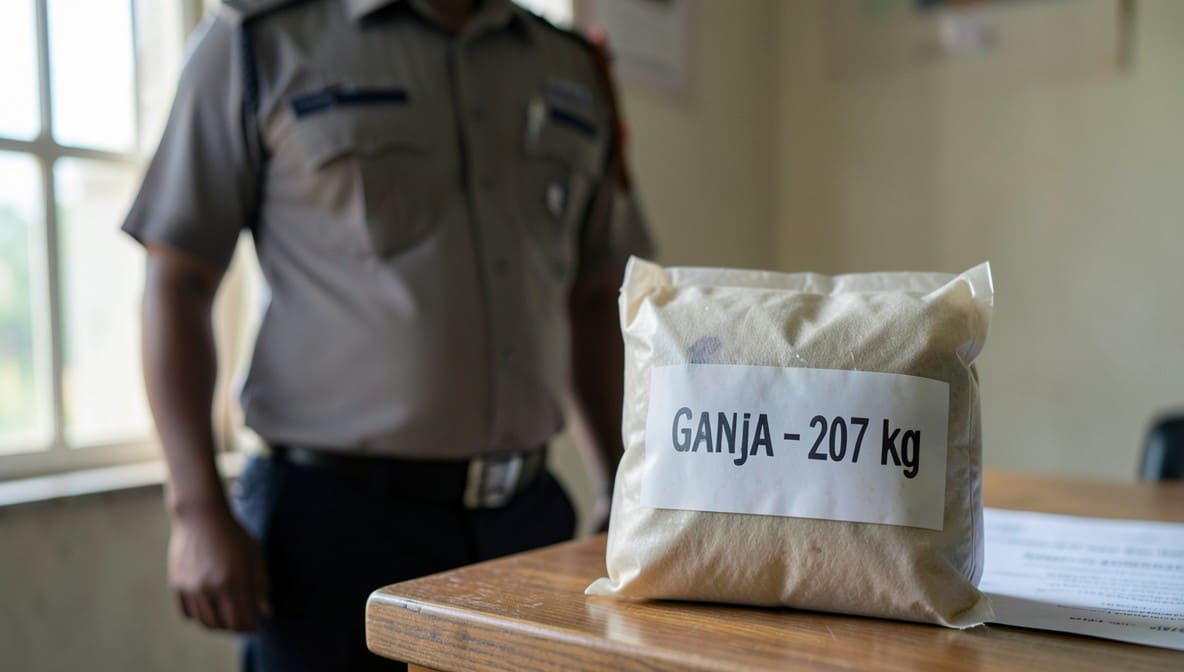
The Orissa High Court set aside the detention of two accused under the NDPS Act, holding that their arrest was vitiated because they were produced before the magistrate after the statutory 24-hour period, thereby obliging the court to grant bail under Section 483 of the BNSS.
Background & Facts
The Dispute
The petitioners, Shyam Sundar and Romeo Adakatia, were arrested in connection with the alleged illegal transportation of contraband articles from an Alto car to a TATA Signa container at the Excise Satellite Unit, Jeypore (Koraput). The offence is punishable under Section 20(b)(ii)(C) of the NDPS Act. The matter is recorded as P.R. No. 142 of 2025-26 and corresponds to T.R. Case No. 106 of 2025, pending before the learned Additional Sessions Judge-cum-Special Judge, Koraput.
Key Facts
- Information about the contraband was received by the Excise Officer on 23.08.2025 at 9.00 AM (the affidavit mistakenly recorded 9.00 PM).
- The officer’s Form No.C2 correctly noted “9.00 o’clock in the morning”.
- The petitioners were apprehended on the same morning and allegedly transferred the contraband to a container.
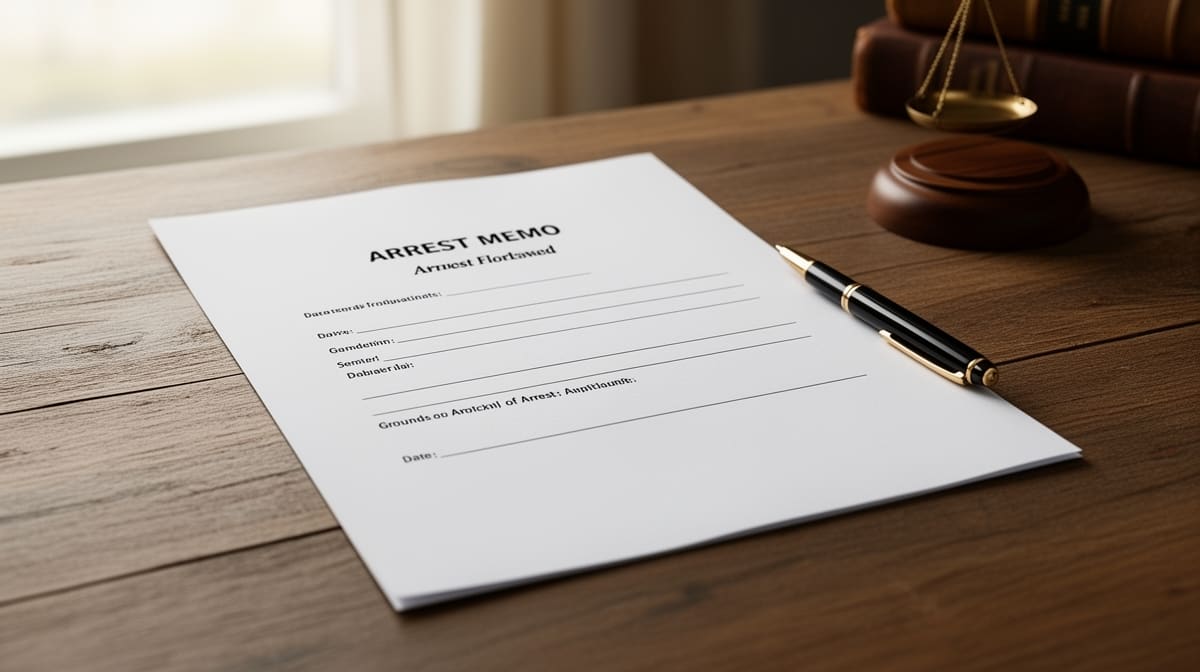
- The arrest memo originally showed the date 23.08.2025, later overwritten to 24.08.2025 in columns 5 and 6, while column 9 retained the signature dated 23.08.2025.
- The petitioners were produced before the Additional Sessions Judge at 7.30 PM on 24.08.2025, exceeding the 24-hour period prescribed by Article 22(2) of the Constitution.
- The contraband was deposited in Court Malkhana on 25.08.2025.
Procedural History
- 23.08.2025: Information received; arrest effected in the morning.
- 24.08.2025: Petitioners produced before the Special Judge at 7.30 PM.
- Date not specified: Bail applications filed under Section 483 of the BNSS (BLAPL No. 2010 of 2026 for Shyam Sundar; BLAPL No. 6704 of 2026 for Romeo Adakatia).
- 31.08.2026: Oral hearing before Justice G. Satapathy; judgment delivered.
Parties' Positions
- Petitioners: Contended that the arrest violated Section 58 of the BNSS read with Article 22(2) of the Constitution because they were not produced within 24 hours exclusive of travel time. They argued that the arrest was therefore illegal and any subsequent remand vitiated.
- State (Respondent): Relied on the officer’s explanation that the time discrepancy was a clerical error and that the petitioners were arrested in the early hours of 24.08.2025, seeking to justify the delay in production.
Relief Sought
Both petitioners sought bail under Section 483 of the BNSS, requesting release on furnishing bail bonds.
The Legal Issue
The central question was whether the arrest of the petitioners under Section 20(b)(ii)(C) of the NDPS Act could be deemed illegal and consequently vitiated because they were produced before a magistrate after the statutory 24-hour period prescribed by Article 22(2) of the Constitution, notwithstanding the officer’s claim of a clerical mistake.
Arguments Presented
For the Petitioners
- Relied on Section 58 of the BNSS and Article 22(2) of the Constitution, asserting that the 24-hour rule is mandatory and any breach renders the arrest illegal.
- Cited the Supreme Court’s pronouncements that the period of 24 hours is exclusive of travel time and that the moment of arrest commences when the person is physically taken into custody.
- Emphasised that the arrest memo’s date alteration and the officer’s contradictory statements demonstrated procedural irregularity.
For the Respondent
- Argued that the discrepancy in the time of arrest was a harmless clerical error and that the petitioners were actually arrested in the early hours of 24.08.2025, thereby satisfying the 24-hour requirement.
- Submitted that the officer’s immediate action upon receiving information justified the delay in production, given the distance of 80 km from the spot of occurrence to the court.
The Court's Analysis
The Court began by distinguishing arrest from custody under Section 43(1) of the BNSS, noting that arrest requires a physical touch or confinement, whereas custody may exist without arrest. It held that once a person is arrested, the 24-hour clock under Article 22(2) starts, exclusive of the time required for travel to the magistrate’s court.
The Court examined the affidavit and the Form No.C2, concluding that the officer’s admission of a mistake in recording “9.00 PM” instead of “9.00 AM” did not cure the substantive breach of the constitutional guarantee. The Court observed that the arrest memo’s overwritten date further indicated inconsistency, and the production of the petitioners at 7.30 PM on 24.08.2025 was well beyond the permissible period.
"In such situation, the only inevitable consequence is to grant bail to the petitioners because their arrest and remand are vitiated."
The Court reiterated that an arrest vitiated by non-compliance with the 24-hour rule renders any subsequent remand unlawful. Consequently, the bail applications under Section 483 of the BNSS could not be dismissed on procedural grounds.
The Verdict
The High Court allowed both bail applications. Each petitioner was released on bail upon furnishing a bail bond of Rs 1,00,000 together with two solvent sureties for the same amount, as directed by the Court.
What This Means For Similar Cases
24-Hour Production Rule Is Controlling
- Lawyers must ensure that any person arrested under criminal statutes is produced before the nearest magistrate within 24 hours exclusive of travel time.
- Failure to do so will automatically vitiate the arrest, rendering subsequent remand illegal.
Arrest vs Custody Distinction
- Practitioners should appreciate that custody does not automatically imply arrest; the statutory definition in Section 43(1) of the BNSS requires physical touch or confinement.
- Evidence of physical arrest is essential to trigger the constitutional protection of Article 22(2).
Accurate Record-Keeping Is Essential
- Any discrepancy in arrest memos, dates, or times must be rectified promptly; courts will not accept clerical errors as a justification for breaching constitutional safeguards.
- Counsel should scrutinise police reports for inconsistencies and raise them at the earliest stage of bail applications.