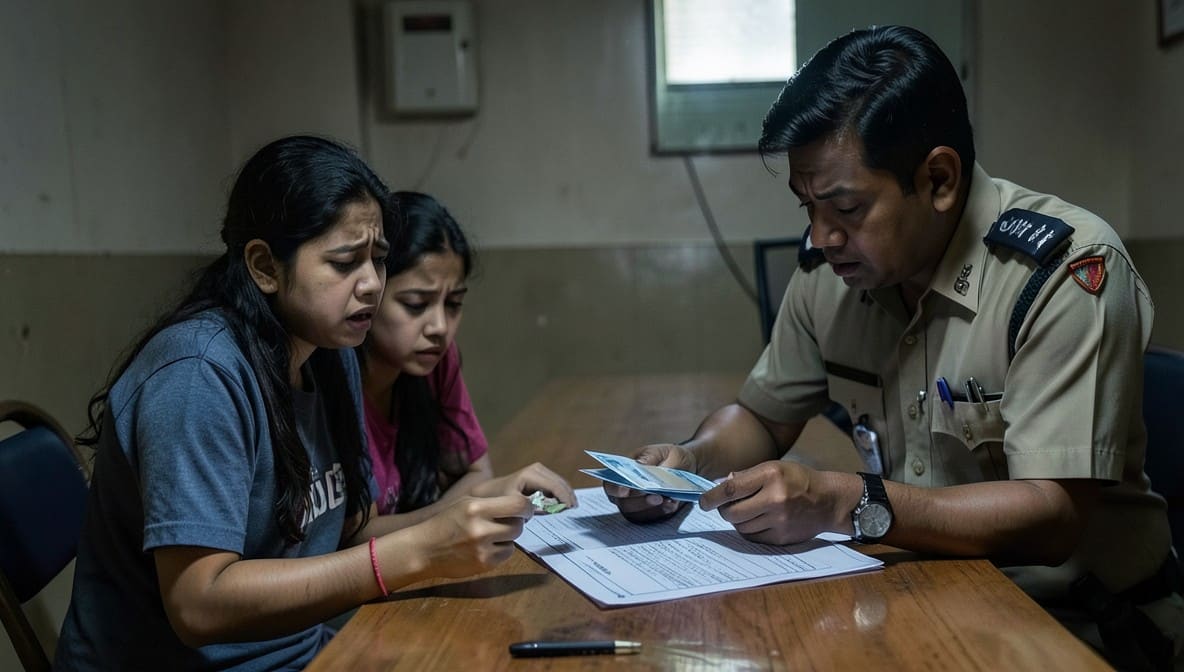
The Madhya Pradesh High Court has reaffirmed that the right to choose a life partner is a fundamental aspect of personal liberty under Article 21, and that state authorities must act proactively to protect couples facing threats from family members. This judgment reinforces the constitutional obligation of law enforcement to safeguard individuals exercising their autonomy in matters of marriage, irrespective of societal or familial opposition.
Background & Facts
The Dispute
The petitioners, Smt. Angoori Kushwah and another, are an adult couple who have entered into a consensual marriage against the wishes of the family of petitioner No.1. The family members have allegedly threatened, harassed, and victimized the petitioners in an attempt to annul the marriage. The petitioners assert that their life, liberty, and dignity are under imminent threat due to these threats, which include verbal abuse, intimidation, and possible physical harm.
Key Facts
- Petitioner No.1 and Petitioner No.2 are both adults, as evidenced by production of their Aadhaar cards and academic mark sheets
- The marriage has been consummated and is not disputed to be between two consenting adults
- The family of petitioner No.1 has refused to accept the marriage and has engaged in persistent harassment
- No criminal complaint or FIR has been filed by the petitioners prior to this petition
- The petitioners have not sought annulment or validation of the marriage, but only police protection
Procedural History
- Date of marriage: Not specified in judgment, but established as consummated prior to filing
- Date of filing: Writ Petition No. 14110 of 2026 filed before the High Court of Madhya Pradesh at Gwalior
- Date of hearing: 27 April 2026
- Date of order: 27 April 2026
The Parties' Positions
For the Petitioners
The petitioners, through their counsel Shri Anil Shakya, submitted that they are adult individuals entitled to exercise their fundamental right to marry under Article 21. They cited Lata Singh v. State of U.P. and Shakti Vahini v. Union of India to establish that threats to couples in consensual marriages constitute a violation of constitutional rights and impose a duty on the state to intervene. They requested immediate police protection to ensure their safety.
For the Respondent
The State, represented by Shri Dharmendra Nayak, Government Advocate, did not oppose the prayer. He conceded that if the petitioners approach the police authorities, appropriate action would be taken. He did not dispute the facts of the marriage or the existence of threats.
Relief Sought
The petitioners sought a direction to the Superintendent of Police, Morena, to provide immediate and adequate police protection to ensure their safety, life, liberty, and dignity.
The Legal Issue
The central question was whether the state, under Article 21 and in light of binding precedents, is obligated to provide proactive police protection to adult couples in consensual marriages who face threats from family members, even in the absence of a formal complaint or FIR.
Arguments Presented
For the Petitioner
The petitioners relied on two landmark Supreme Court judgments: Lata Singh v. State of U.P. (2006) 5 SCC 475, which held that adult couples have the right to marry without interference, and Shakti Vahini v. Union of India (2018) 7 SCC 192, which declared honor-based violence a violation of fundamental rights and mandated police and administrative action to prevent it. Counsel argued that the state’s duty to protect is not contingent upon a formal complaint; it arises from the known threat to constitutional rights.
For the Respondent
The State did not contest the petitioners’ claims. The Government Advocate acknowledged the binding nature of the Supreme Court’s rulings and agreed that if approached, police would take appropriate action. He did not raise any legal objection to the prayer for protection.
The Court's Analysis
The Court examined the precedents cited by the petitioners and found them directly applicable. In Lata Singh, the Supreme Court had unequivocally held that "the right to choose a life partner is a fundamental right under Article 21" and that "any interference by parents or society amounts to a violation of this right." In Shakti Vahini, the Court went further, directing state machinery to identify and prevent honor-based violence, including issuing protection orders to couples under threat.
"The State cannot remain a silent spectator when the life and liberty of its citizens are threatened on account of their choice of marriage partner. The duty to protect is not reactive but proactive."
The Court emphasized that the petitioners had established their adulthood and the consensual nature of their marriage through documentary evidence. The absence of an FIR or formal complaint did not negate the existence of a threat, particularly where the threat emanates from within the family and victims may fear retaliation.
The Court also clarified that it was not expressing any opinion on the validity of the marriage under personal laws, as that was not the subject of the petition. The sole concern was the protection of constitutional rights.
The Verdict
The petition succeeded. The Court directed the Superintendent of Police, Morena, to verify the factum of the marriage, the age of the petitioners, and the existence of any threat perception. Upon such verification, the Superintendent must extend necessary police protection expeditiously. The Superintendent is also empowered to take any other lawful action warranted by the circumstances. No specific timeline was imposed, but the direction was to act "expeditiously." The Court explicitly stated it had expressed no opinion on the validity of the marriage.
What This Means For Similar Cases
Police Protection Is a Proactive Duty
- Practitioners must now argue that police protection under Article 21 is not contingent upon a formal complaint or FIR
- Threats from family members, even without physical violence, trigger the state’s duty to act
- Courts will treat such petitions as urgent matters requiring immediate administrative response
Documentation Is Key, But Not Conclusive
- Aadhaar cards and academic records suffice to establish adulthood and consent
- No marriage certificate is required to invoke protection under Lata Singh or Shakti Vahini
- The burden shifts to the state to disprove the existence of threat, not to the petitioners to prove it
Avoiding Delay Is Critical
- Delay in seeking protection may be viewed as acquiescence by the court
- Petitioners should file writs immediately upon threat, not after escalation
- Police inaction post-direction may be subject to contempt proceedings