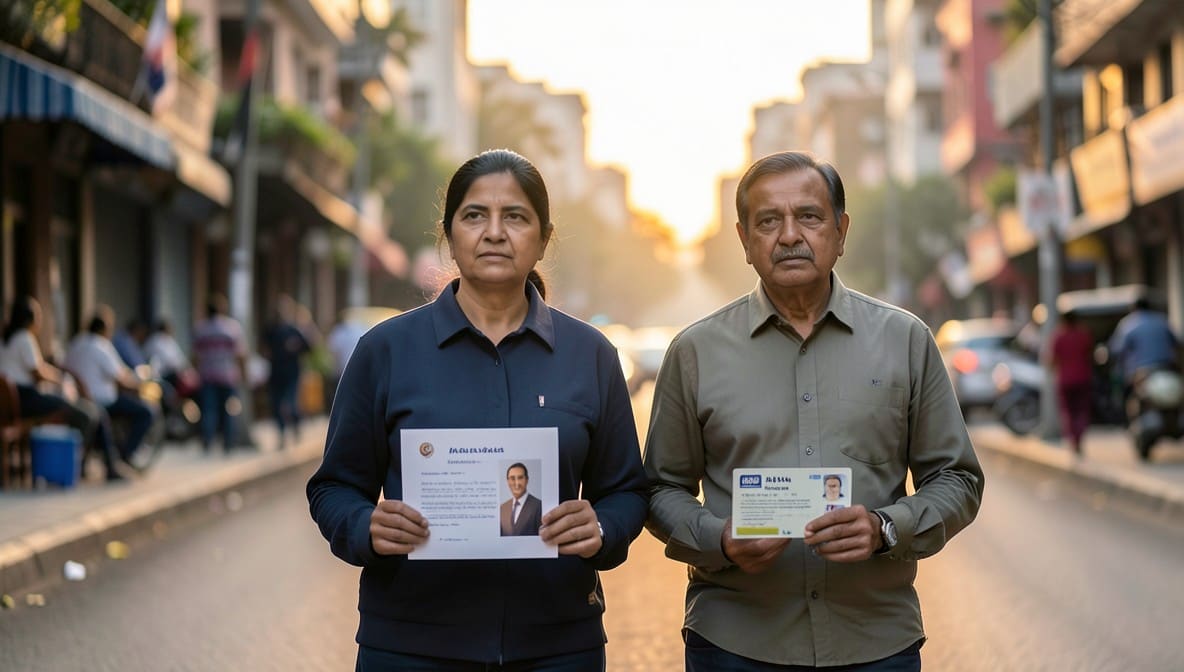
The Punjab & Haryana High Court has affirmed that adult individuals in consensual relationships are entitled to immediate police protection against threats to their lives and liberty, irrespective of parental opposition. The Court declined to examine the validity of the marriage but issued a clear directive to law enforcement to safeguard the petitioners under Article 226, reinforcing the primacy of personal autonomy in matters of marriage.
Background & Facts
The Dispute
The petitioners, Deepak and Pooja, both aged 21 years, approached the Court seeking protection under Article 226 of the Constitution of India. They allege that their marriage, solemnized against the wishes of their families, has exposed them to threats of violence and false criminal prosecution. The petitioners assert that their personal liberty and right to life are under imminent danger due to familial opposition.
Key Facts
- Both petitioners are major adults, as evidenced by their Aadhaar cards appended to the petition
- Their marriage was solemnized on 28.04.2026 at Prachin Pashupati Nath Shiv Mandir, SDC Sector-6, Panchkula, in accordance with Hindu rites and rituals
- A Marriage Certificate (Annexure P-3) issued by the Purohit/Pujari of the temple was submitted as proof
- On the same day as the marriage, 28.04.2026, the petitioners submitted a representation (Annexure P-5) to the Senior Superintendent of Police, SAS Nagar (Mohali), detailing their fears of threats and false implication
- The petitioners fear being falsely implicated in criminal cases, including abduction or dowry-related offences, by family members
Procedural History
- 28.04.2026: Marriage solemnized and representation submitted to police
- 29.04.2026: Writ petition filed under Article 226 before the Punjab & Haryana High Court
- 29.04.2026: Court heard arguments and disposed of the petition on the same day
The Parties' Positions
The petitioners contended that their right to choose a life partner and live with dignity is protected under Article 21 and that the State has a duty to protect them from threats, even if emanating from private parties. They sought immediate police protection and a directive to the Station House Officer to monitor their safety.
The State, through the Additional Advocate General, did not oppose the prayer. She accepted notice on behalf of respondents 1 to 3 and expressed no objection to the Court issuing appropriate directions for protection.
Relief Sought
The petitioners sought:
- Immediate protection of their lives and personal liberty
- A directive to the Station House Officer, Police Station Phase-6, SAS Nagar (Mohali), to take necessary steps to ensure their safety
- Examination of their representation dated 28.04.2026
- Assurance that no false criminal case would be registered against them without due process
The Legal Issue
Can the High Court, under Article 226, direct police authorities to provide protection to adult individuals in a consensual marriage who face threats to their life and liberty from private parties, without adjudicating the validity of the marriage?
Arguments Presented
For the Petitioner
Counsel for the petitioners relied on the fundamental right to life and personal liberty under Article 21, and the right to choose a life partner as an essential facet of personal autonomy recognized in Shakti Vahini v. Union of India and Shafin Jahan v. Ashokan K.M.. He submitted that the petitioners, being major adults, have the constitutional right to marry without parental consent, and that the State’s duty to protect life includes shielding them from threats, even if those threats are not yet materialized into a formal complaint or FIR. The submission of the representation dated 28.04.2026 demonstrated a credible apprehension of harm.
For the Respondent
The Additional Advocate General for the State accepted notice and did not oppose the prayer. She acknowledged the petitioners’ right to protection and stated that the State has a constitutional obligation to safeguard citizens from threats to life and liberty, particularly in cases involving inter-familial conflict over marriage. She supported the issuance of a protective direction to the local police.
The Court's Analysis
The Court explicitly declined to examine or express any opinion on the legality or validity of the marriage, recognizing that such an inquiry was neither necessary nor appropriate in the context of a petition seeking protection under Article 226. The Court emphasized that the petitioners’ status as major adults, their solemnization of marriage in accordance with religious rites, and their submission of a formal representation to the police collectively established a prima facie case of threat to their personal liberty.
"The present petition is being disposed of without examining the question of legality and validity of the marriage and expressing any opinion thereon, with a direction to respondent No.3- Station House Officer, Police Station Phase-6, SAS Nagar (Mohali), to look into the grievances of the petitioners as set out in the petition and also expressed in the representation dated 28.04.2026 (Annexure P-5) and take appropriate action for protection of their lives and liberty as may be warranted by the circumstances."
The Court noted that the State’s duty to protect life under Article 21 is not contingent upon the registration of an FIR or the filing of a formal complaint. Where credible apprehension is demonstrated, especially in cases involving potential honour-based violence, the police are obligated to act proactively. The Court further clarified that its order does not bar lawful investigation or prosecution if a genuine criminal case is registered, ensuring that the direction does not impede due process.
The Verdict
The petition succeeded. The Court directed the Station House Officer, Police Station Phase-6, SAS Nagar (Mohali), to examine the petitioners’ grievances and their representation dated 28.04.2026, and to take appropriate action for the protection of their lives and liberty as warranted by the circumstances. The Registry was directed to send a copy of the order, the petition, and Annexure P-5 to the Station House Officer for compliance. The Court clarified that nothing in the order shall prevent lawful police action if a genuine criminal case is registered against the petitioners.
What This Means For Similar Cases
Police Must Act on Credible Threats, Not Just FIRs
- Practitioners can now cite this judgment to seek immediate protective orders under Article 226 when adult couples face threats of violence or false criminal cases due to inter-familial disputes over marriage
- A representation to police, even without an FIR, suffices to trigger the State’s duty to protect under Article 21
- Courts will not delay protection pending adjudication of marriage validity - the focus is on safety, not legality
No Need to Prove Marriage Validity for Protection
- This judgment decouples the right to protection from the legal status of the marriage
- Even if a marriage is later challenged in civil court, the police must act on credible threats immediately
- This shields couples from being held hostage to prolonged litigation while facing imminent danger
Clarification on Police Powers Is Critical
- The Court’s clarification that its order does not bar lawful investigation prevents misuse by respondents claiming immunity from prosecution
- Lawyers should advise clients to file representations with police and retain proof of submission, as this becomes a key evidentiary document in future protection petitions