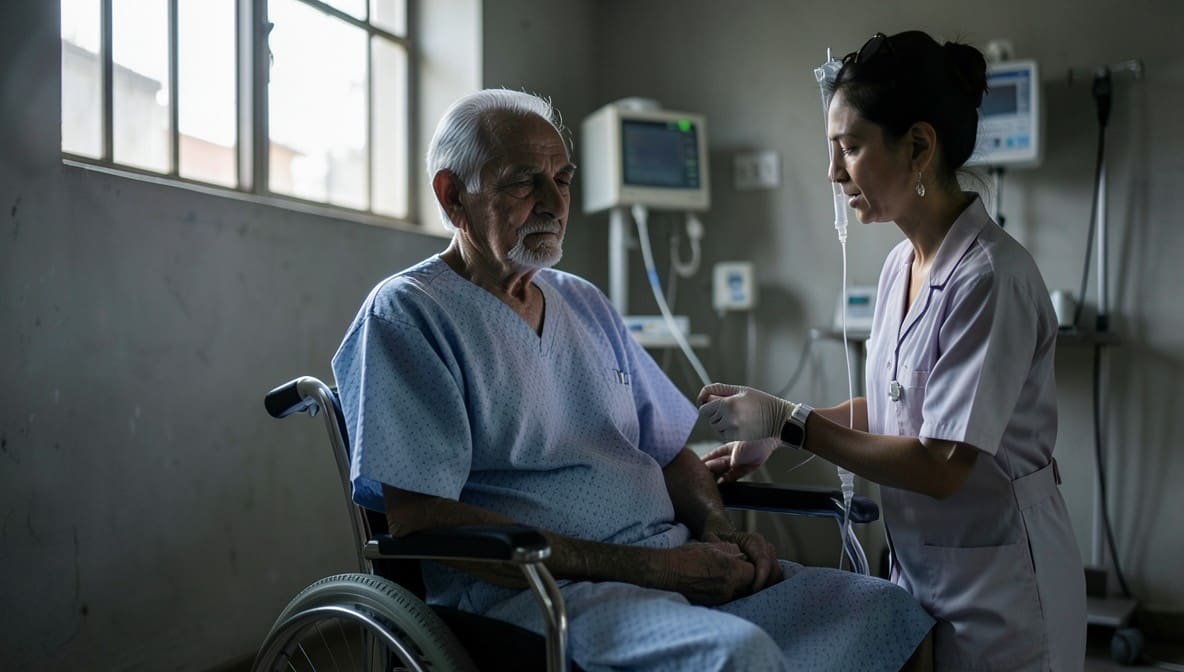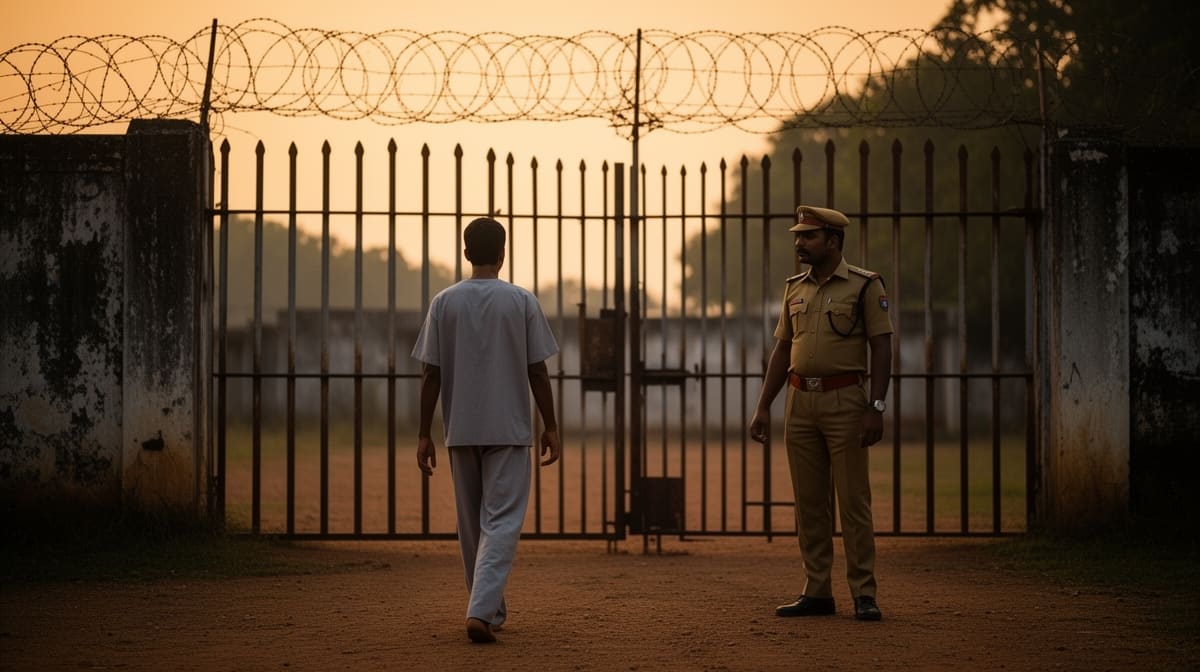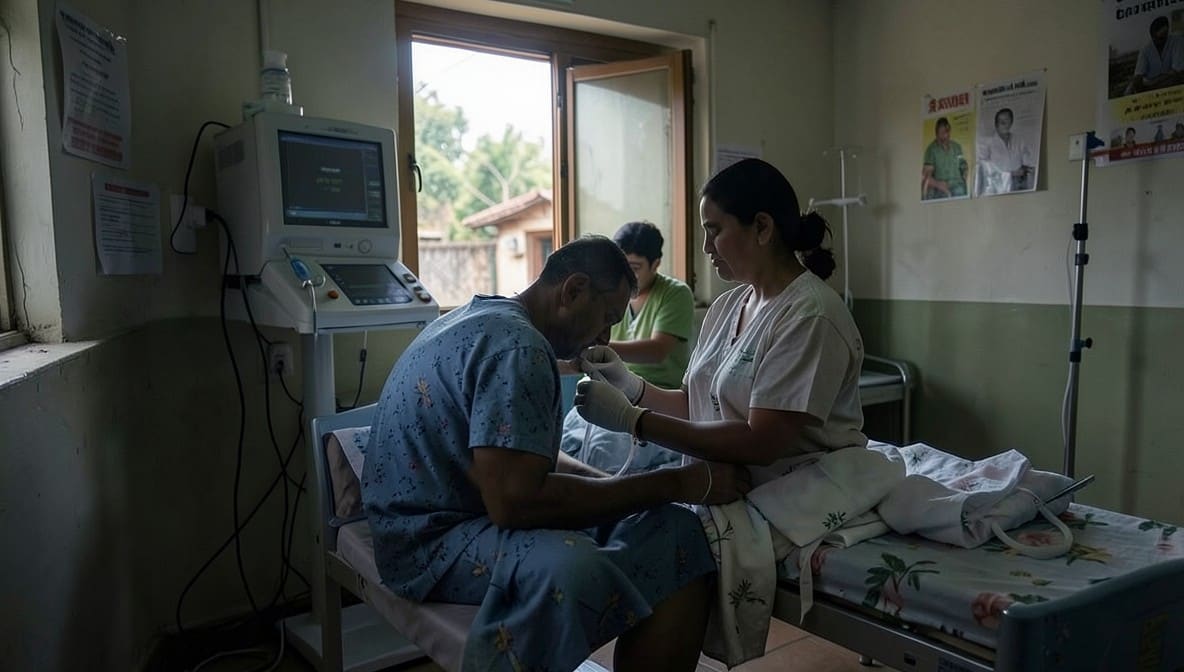
The Madras High Court has clarified that solitary confinement cannot be imposed without legal authority, and that custodial medical care must be responsive to actual clinical need - not speculative claims. In a significant ruling, the Court dismissed petitions filed by the mother of a detained journalist, finding no evidence of unlawful isolation and no urgent medical requirement warranting specialised hospital treatment.
Background & Facts
The Dispute
The petitioner, mother of A. Shankar @ Savukku Shankar, filed two petitions under Article 226 of the Constitution: a Writ Petition (W.P.(Crl.)No.1791 of 2025) seeking specialised medical treatment for her son, and a Habeas Corpus Petition (H.C.P.No.2754 of 2025) challenging his alleged solitary confinement in Puzhal Central Prison-II, Chennai. Shankar, aged 49, is a digital journalist facing multiple criminal cases under the Bharatiya Nyaya Sanhita, 2023, including charges under Sections 296(b), 353(1)(c), 308(5), 61(2), and 351(3). He was arrested on 15.01.2025 and remanded to judicial custody.
Key Facts
- Shankar suffers from chronic medical conditions: Type 2 Diabetes Mellitus, Systemic Hypertension, and Coronary Artery Disease with prior drug-eluting stent implantation.
- The petitioner alleged that prison medical facilities were inadequate and that Shankar required regular monitoring by a Cardiologist and Diabetologist.
- The petitioner claimed Shankar was kept in isolation from other inmates, amounting to punitive solitary confinement without legal sanction.
- No documentary evidence, such as prison records, medical logs, or witness statements, was submitted to substantiate the claim of isolation.
- During interim bail, Shankar engaged in public media commentary, prompting the State to allege interference with investigation.
Procedural History
- 15.01.2025: Arrest of A. Shankar @ Savukku Shankar in Crime No.519 of 2025 (J1-Saidapet PS) and Crime No.377 of 2025 (S8-Adambakkam PS).
- 26.12.2025: Madras High Court granted interim bail to Shankar for medical evaluation and treatment.
- 05.01.2026: State filed W.P.M.P.(Crl.)No.14 of 2026 seeking cancellation of interim bail, alleging violation of conditions and interference with investigation.
- 10.01.2026: Madras High Court directed Shankar to appear before a Government Hospital Medical Board for independent medical assessment.
- 15.01.2026: Shankar challenged the Medical Board direction before the Supreme Court.
- 20.01.2026: Supreme Court dismissed the challenge, upholding the High Court’s direction.
- 05.02.2026: Shankar appeared before the Medical Board at Rajiv Gandhi Government General Hospital, Chennai.
- 10.02.2026: Medical Board submitted its report to the High Court.
- 18.02.2026: Judgment reserved.
- 24.03.2026: Judgment pronounced.
The Parties' Positions
For the Petitioner:
- Argued that Shankar’s cardiac and diabetic conditions require continuous specialist monitoring unavailable in prison.
- Contended that isolation from other inmates constituted unlawful solitary confinement under Article 21.
- Asserted that prison authorities acted arbitrarily without any order or rule authorising segregation.
For the Respondents:
- Denied allegations of solitary confinement, stating inmate placement follows standard prison administration protocols.
- Asserted that adequate medical care was being provided through prison medical officers.
- Highlighted that the Medical Board report confirmed stable condition with no immediate need for hospitalisation.
- Alleged that the petitions were filed to obstruct ongoing criminal investigations.
Relief Sought
- Immediate cessation of solitary confinement.
- Provision of specialised medical treatment by Cardiologist and Diabetologist.
- Continuation of interim bail.
- Direction to transfer Shankar to a hospital with advanced facilities if needed.
The Legal Issue
The central questions were: (1) Whether keeping a detainee isolated from other inmates without legal sanction constitutes unlawful solitary confinement under Article 21 of the Constitution? and (2) Whether a detainee’s medical condition, as assessed by an independent Medical Board, necessitates specialised hospital treatment beyond what prison medical services can provide?
Arguments Presented
For the Petitioner
The petitioner relied on Sunil Batra v. Delhi Administration and Kartar Singh v. State of Punjab to argue that solitary confinement is a severe deprivation of liberty and must be authorised by law. She contended that the absence of any written order or rule permitting isolation rendered the practice arbitrary and violative of Article 21. Regarding medical care, she cited Parmanand Katara v. Union of India, asserting that the State has a constitutional duty to provide adequate medical treatment to all detainees. She argued that prison infirmaries lack diagnostic capabilities for complex cardiac and diabetic conditions, and that periodic visits by specialists were essential.
For the Respondent
The State countered that inmate placement is governed by Prison Manual, Tamil Nadu, which permits segregation for security, administrative, or disciplinary reasons without requiring a separate judicial order. It submitted that the prison medical staff had been providing routine care, including medication and monitoring. The State further argued that the Medical Board’s report conclusively established that Shankar’s condition was stable and manageable with outpatient follow-up. It contended that the petitions were an abuse of process, designed to delay investigation and evade custody.
The Court's Analysis
The Court undertook a two-pronged analysis: first, on the claim of solitary confinement; second, on the medical necessity for specialised treatment.
Regarding solitary confinement, the Court observed that the petitioner had made only bald allegations without producing any evidence - no photographs, no prison records, no affidavits from fellow inmates, no entries in the jail diary, and no correspondence with prison authorities. The Court noted that mere separation for administrative reasons, such as security classification or medical quarantine, does not equate to punitive solitary confinement. The Court held: > "The absence of any material to substantiate the claim of punitive isolation renders the allegation speculative and legally unsustainable. The prison authorities are entitled to manage inmate placement in accordance with operational requirements."
On the medical issue, the Court placed decisive weight on the report of the independent Medical Board constituted under its own direction. The Board concluded: > "Mr. A. Shankar suffers from chronic medical ailments... He requires no active cardiac intervention at present. His general condition is stable with cardiac and diabetes medications. He needs to continue optimal medical management along with lifestyle modification."
The Court found that this report, prepared by a panel of qualified specialists after clinical examination and review of investigations, negated the petitioner’s claim of urgent need for hospitalisation or specialist intervention. The Court emphasised: > "The constitutional obligation to provide medical care does not extend to fulfilling every speculative demand for specialist consultation when the independent medical assessment indicates stability and manageability within existing custodial facilities."
The Court also noted that during interim bail, Shankar had engaged in public commentary that the State alleged interfered with investigation. This conduct, the Court held, undermined the credibility of the medical urgency claim and suggested strategic litigation.
The Verdict
The Habeas Corpus Petition (H.C.P.No.2754 of 2025) and the Writ Petition (W.P.(Crl.)No.1791 of 2025) were dismissed. The Court held that no unlawful solitary confinement was established and no immediate specialised medical treatment was required. The interim bail granted on 26.12.2025 was terminated. The respondents are directed to ensure that if any medical necessity arises during Shankar’s custody, he shall be promptly transported to a Government hospital with specialised facilities - specifically the Rajiv Gandhi Government General Hospital, Chennai, or the Government Multi Super Speciality Hospital, Omandurar Estate, Chennai - for evaluation and treatment.
What This Means For Similar Cases
Medical Claims Must Be Substantiated by Independent Assessment
- Practitioners must not rely on self-declared medical conditions; courts will require reports from court-appointed Medical Boards.
- Generic requests for "specialist care" without clinical urgency will be dismissed if an independent assessment finds stability.
- Prison medical records alone are insufficient; courts expect objective, third-party evaluations.
Solitary Confinement Requires Proof of Punitive Intent
- Isolation for administrative reasons (e.g., security, discipline, quarantine) is lawful if consistent with prison rules.
- Allegations of solitary confinement must be supported by documentary evidence - logs, photographs, witness statements.
- Bald assertions without corroboration will be treated as litigation tactics, not constitutional grievances.
Interim Relief Is Not a Right but a Conditional Remedy
- Interim bail granted on medical grounds is provisional and subject to revocation if conditions are violated or medical urgency is disproven.
- Courts will scrutinise conduct during interim relief; misuse for media exposure or investigation interference may lead to cancellation.
- The burden shifts to the petitioner to prove continuing necessity for interim relief.