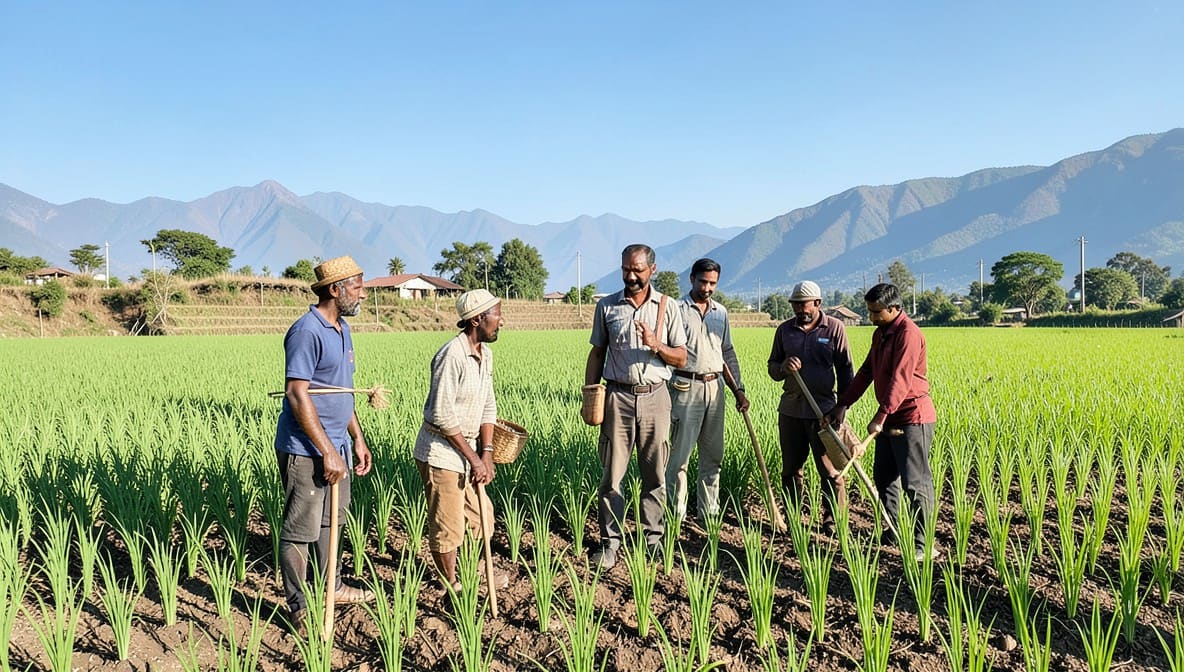
The Uttarakhand High Court has affirmed that the state cannot restrict farmers from cultivating crops of their choice absent explicit legal authorization. In quashing an order that prohibited summer paddy cultivation on non-waterlogged land, the Court underscored a foundational principle: executive action in agriculture must be grounded in statute, not scientific opinion alone.
Background & Facts
The Dispute
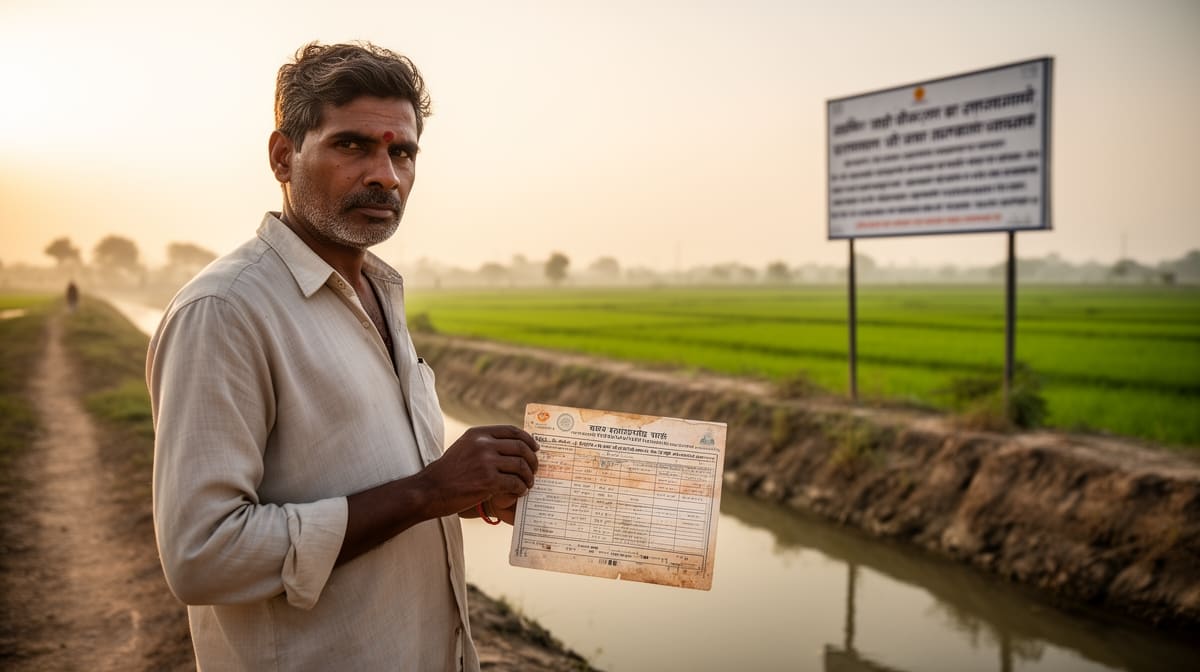
The petitioners, a group of farmers from Udham Singh Nagar district, challenged an order dated 04.02.2026 issued by the District Magistrate, which prohibited them from sowing summer paddy in fields that were not water logged. The order permitted summer paddy cultivation only in waterlogged fields, while allowing other crops on non-waterlogged land. The petitioners contended that this directive infringed upon their right to choose the crop to be cultivated on their own land.
Key Facts
- The petitioners have traditionally cultivated summer paddy, a crop with a short growing cycle of approximately two months
- Summer paddy cultivation requires minimal pesticide use, according to the petitioners
- The impugned order was based on recommendations from scientists of Pantnagar Agriculture University (I.C.A.R.) and I.I.T. Roorkee
- The scientists reportedly concluded that summer paddy cultivation on non-waterlogged land was reducing groundwater levels and increasing soil pH from 7 to 8
- No statutory provision, notification, or rule was cited by the State to justify the restriction
- The order did not provide for any appeal mechanism or procedural safeguards for affected farmers
Procedural History
- 04.02.2026: District Magistrate, Udham Singh Nagar, issued order restricting summer paddy cultivation to waterlogged fields only
- 24.02.2026: Writ Petition Misc. Single No. 700 of 2026 filed by Lekhraj & others
- 24.02.2026: Writ Petition Misc. Single No. 705 of 2026 filed by Suresh Nath Tripathi & others
- 24.02.2026: Writ Petition Misc. Single No. 707 of 2026 filed by Shivam Tripathi & others
- 24.02.2026: Writ Petition Misc. Single No. 708 of 2026 filed by Sanjeev Kumar & others
- 24.03.2026: Hearing before the Single Judge of the Uttarakhand High Court
The Parties' Positions
Petitioners (Farmers): Argued that the order was arbitrary, ultra vires, and violated their fundamental right to carry on any occupation under Article 19(1)(g) of the Constitution. They emphasized that no law prohibits summer paddy cultivation and that the restriction was imposed without due process.
Respondents (State): Submitted that the order was issued based on scientific consensus from I.C.A.R. and I.I.T. Roorkee, aimed at conserving groundwater and preventing soil degradation. They contended that the restriction was a reasonable administrative measure for environmental protection.
Relief Sought
The petitioners sought quashing of the order dated 04.02.2026 and a direction permitting them to cultivate summer paddy in all their fields, irrespective of waterlogging status.
The Legal Issue
The central question was whether the State, through the District Magistrate, can prohibit farmers from cultivating a specific crop in the absence of any statutory provision authorizing such a restriction.
Arguments Presented
For the Petitioner
Learned counsel for the petitioners argued that the right to choose the crop to be cultivated is an integral part of the right to carry on any occupation under Article 19(1)(g). They emphasized that the order lacked any legislative backing and was based solely on scientific recommendations, which cannot substitute for law. They cited State of Uttar Pradesh v. Rambhau and K. S. Puttaswamy v. Union of India to affirm that executive action without statutory authority is void. They further noted that the restriction was not proportionate, as summer paddy uses minimal pesticides and has a short duration, minimizing environmental impact.
For the Respondent
The Standing Counsel for the State submitted that the order was a precautionary measure based on expert scientific advice to address declining groundwater levels and rising soil pH. He argued that the State has a duty to protect natural resources under Article 48A and Article 21, and that administrative discretion permits such measures in the public interest. He contended that the restriction was limited and reasonable, allowing cultivation in waterlogged areas.
The Court's Analysis
The Court examined the nature of the impugned order and found it to be an executive directive lacking any legislative foundation. The Court held that while environmental protection is a legitimate state objective, it cannot be pursued through administrative orders that infringe upon fundamental rights without statutory backing.
"Every action taken by the State must have the sanction of law. Since there is no law prohibiting the petitioners from sowing a crop of their choice, this Court holds that such an order could not have been passed by the District Magistrate, Udham Singh Nagar."
The Court rejected the argument that scientific recommendations could substitute for legal authority. It clarified that expert opinions may inform policy, but they cannot replace legislation. The Court emphasized that the absence of a statutory prohibition on summer paddy cultivation meant the restriction was ultra vires. The Court further noted that the order imposed a blanket prohibition without individualized assessment, violating principles of natural justice.
The Court also observed that the State had not demonstrated that the restriction was the least restrictive means to achieve its environmental goal, failing the proportionality test under Article 19(6).
The Verdict
The petitioners succeeded. The Court quashed the order dated 04.02.2026 issued by the District Magistrate, Udham Singh Nagar. The petitioners are permitted to sow summer paddy in all their fields, irrespective of whether the land is waterlogged or not. All pending applications are disposed of. The judgment is effective immediately.
What This Means For Similar Cases
Executive Action Without Statutory Basis Is Void
- Practitioners must challenge any administrative order restricting agricultural practices if no statute, notification, or rule authorizes it
- Scientific reports alone cannot justify infringement of fundamental rights under Article 19(1)(g)
- Courts will apply strict scrutiny to executive interference in farming choices
Environmental Concerns Require Legislative Framework
- States must enact laws or rules to regulate crop cultivation for environmental reasons
- Administrative circulars or district-level orders based on expert opinions are legally unsustainable
- Future regulations on water use or soil conservation must follow due process, including public consultation and legislative enactment
Farmers’ Autonomy Is Constitutionally Protected
- The right to choose crops is part of the right to occupation under Article 19(1)(g)
- Restrictions must be narrowly tailored, non-discriminatory, and backed by law
- Any future restrictions on summer paddy or other crops must be enacted through proper legislative channels, not district magistrates’ orders