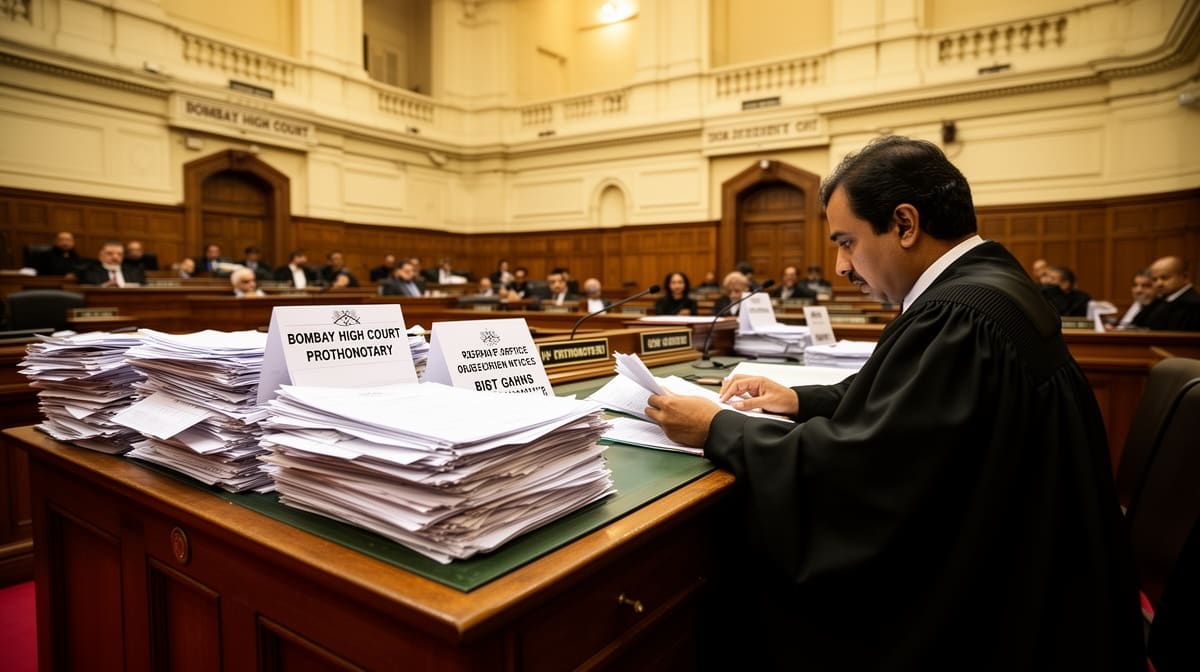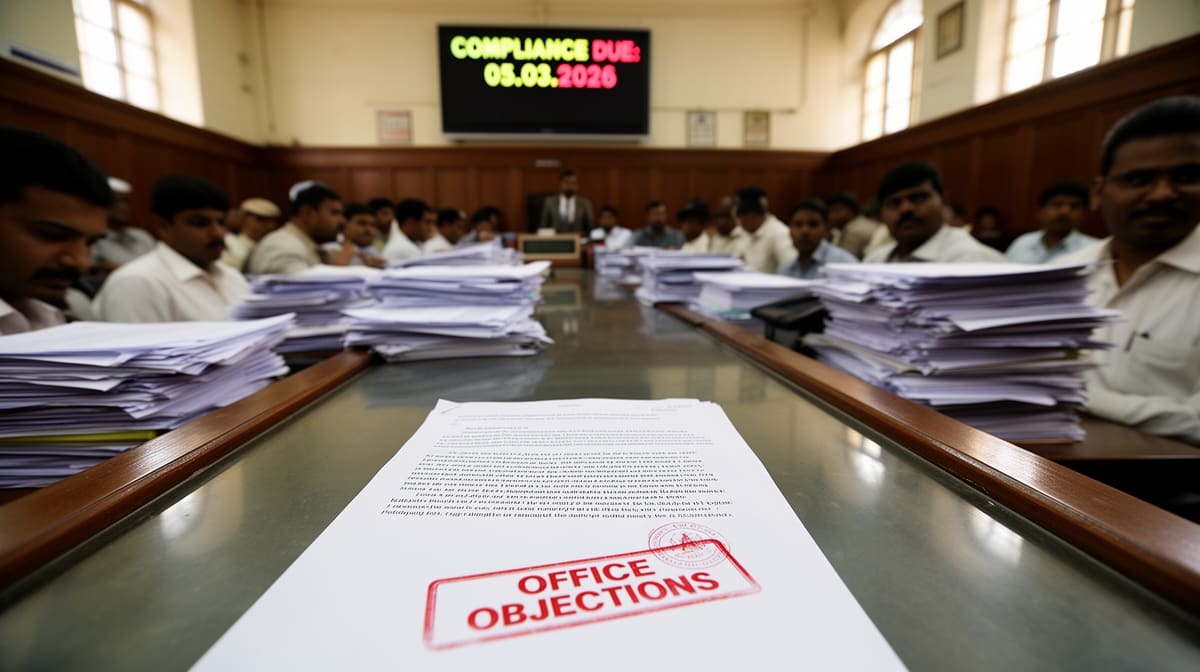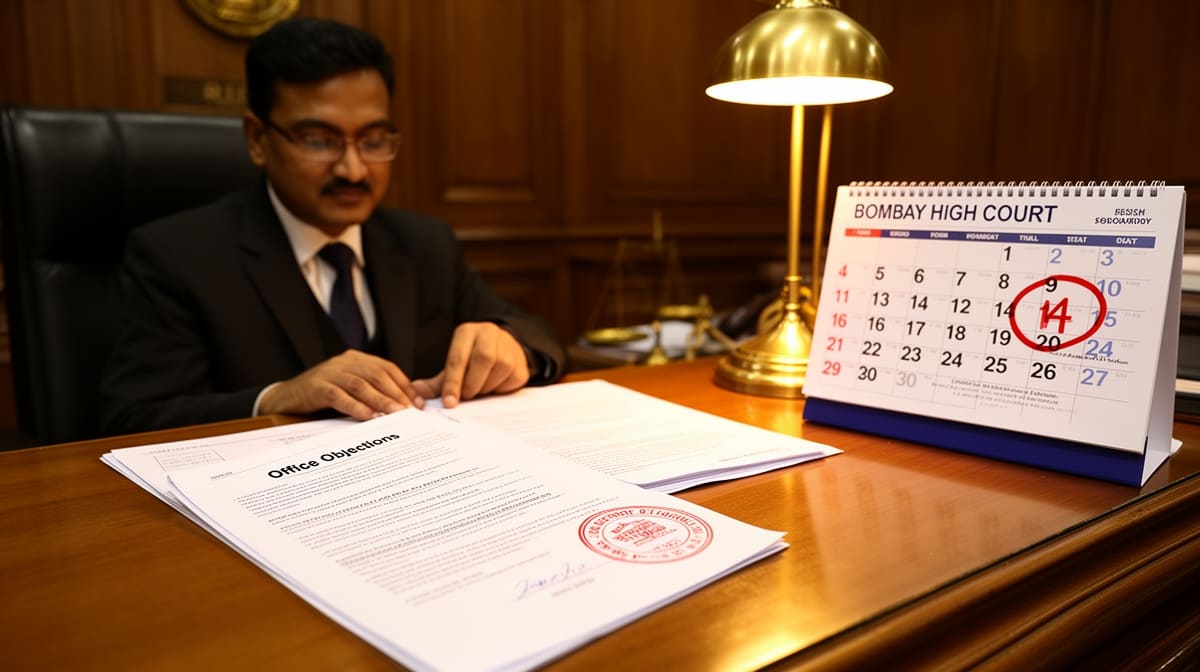
The Bombay High Court has reaffirmed the strict procedural requirement under Rule 3 of Chapter XVII of the Bombay High Court Appellate Side Rules, 1960, mandating that office objections in writ petitions must be removed within 14 days. This judgment underscores the importance of procedural compliance in appellate litigation, where non-adherence may result in automatic refusal of registration without further judicial intervention.
Background & Facts
The Procedural Lapse
The petitioner filed Writ Petition (Stamp) No. 26465 of 2025 before the Bombay High Court. Upon initial scrutiny, the Registry raised office objections under Rule 3(ii) of Chapter XVII of the Bombay High Court Appellate Side Rules, 1960, notifying the petitioner on 6 January 2026 to rectify the defects.
Chronology of Events
- 6 January 2026: Petition notified for removal of office objections.
- 27 January 2026: Registrar (Judicial-I) granted a two-week extension to remove objections.
- 11 February 2026: Despite the extension, objections remained unaddressed, prompting the Registrar to issue a final directive.
Relief Sought
The petitioner sought registration of the writ petition, which was at risk of refusal due to non-compliance with procedural requirements.
The Legal Issue
The central question was whether the Bombay High Court could refuse registration of a writ petition under Rule 3(iii) of Chapter XVII of the Bombay High Court Appellate Side Rules, 1960 for failure to remove office objections within the prescribed 14-day period, and whether such refusal could be automatic without further judicial intervention.
The Court's Analysis
The Registrar (Judicial-I) examined Rule 3 of Chapter XVII, which governs the procedure for removal of office objections in writ petitions. The provision prescribes a 14-day period for rectifying defects, failing which the petition may be refused registration. The Court observed:
"Having considered the provisions under Rule 3 of Chapter XVII of the Bombay High Court Appellate Side Rules, 1960, period of 14 days is prescribed for removal of office objections. In the circumstances, registration of above Writ Petition deserves to be refused."
However, the Court exercised judicial restraint by granting a final opportunity to the petitioner, subject to strict compliance. The order emphasized that non-removal of objections within the stipulated time would result in automatic refusal of registration without further reference to the Court.
The Verdict
The Registrar (Judicial-I) directed the petitioner to remove all office objections within two weeks, failing which the writ petition, including any interim applications, would stand refused automatically. The Court held that procedural compliance under Rule 3 of Chapter XVII is mandatory, and non-adherence may lead to dismissal without further judicial scrutiny.
What This Means For Similar Cases
Procedural Compliance Is Non-Negotiable
Practitioners must ensure strict adherence to procedural timelines under the Bombay High Court Appellate Side Rules, 1960. The judgment reinforces that:
- Office objections must be removed within 14 days of notification.
- Extensions, if granted, are discretionary and not guaranteed.
- Failure to comply may result in automatic refusal of registration without further judicial intervention.
The Limits of Judicial Discretion
While the Court may grant a final opportunity for compliance, this is not a right but an exercise of judicial restraint. Practitioners should:
- Treat office objections as urgent and prioritize their removal.
- Avoid relying on extensions, as the Court may refuse to grant them in future cases.
Implications for Writ Petition Filings
This judgment serves as a cautionary precedent for litigants and advocates:
- Pre-filing scrutiny: Ensure all procedural requirements are met before filing to avoid office objections.
- Timely action: Monitor notifications from the Registry and act promptly to remove objections.
- Consequences of delay: Non-compliance may lead to dismissal, necessitating re-filing with additional costs and delays.