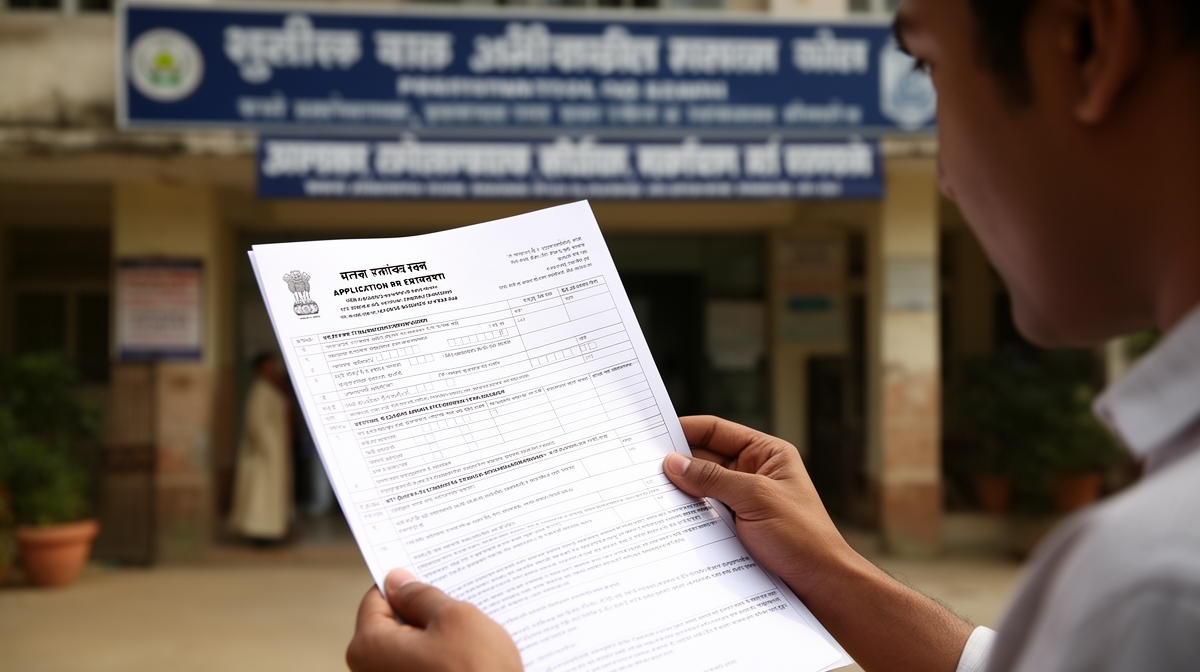

The Rajasthan High Court has established a critical threshold for anticipatory bail in cheque bounce cases, holding that dishonest intent must be demonstrated at the time of cheque issuance rather than inferred solely from subsequent dishonour. This judgment clarifies the evidentiary burden under Section 138 of the Negotiable Instruments Act, requiring courts to examine the totality of circumstances before granting pre-arrest relief.
Background & Facts
The Dispute
The petitioner, Jan Mohammed, faced criminal proceedings under Section 138 of the Negotiable Instruments Act, 1881 after a cheque issued by him was dishonoured. The complaint alleged that the petitioner had issued the cheque for ₹50,000 to one Ramchandra Goyal in settlement of a financial dispute, but stopped payment upon presentation. The complainant further alleged that the petitioner had admitted the debt in a previous police complaint.
Procedural History
The case progressed through the following stages:
- 22 December 2025: First Information Report (FIR) registered under Sections 318(4), 336(3), 338, and 340(2) of the Bharatiya Nyaya Sanhita, 2023, along with Section 138 of the NI Act
- 24 December 2025: Petitioner approached the High Court seeking anticipatory bail under Section 483 of the Bharatiya Nagarik Suraksha Sanhita, 2023
- 4 February 2026: High Court delivered the present judgment
The Parties' Positions
The prosecution argued that:
- The petitioner had admitted the debt in a previous complaint
- The cheque was issued as security for a financial transaction
- Stopping payment constituted dishonest intent under Section 138 NI Act
The petitioner contended that:
- He had been falsely implicated in the dispute
- The cheque was issued under coercion
- No dishonest intent existed at the time of issuance
The Legal Issue
The central question before the Court was whether anticipatory bail could be granted in cheque bounce cases under Section 138 NI Act without prima facie evidence of dishonest intent at the time of cheque issuance, or whether subsequent dishonour alone could justify denial of bail.
Arguments Presented
For the Petitioner
The petitioner's counsel argued that:
- Section 138 NI Act requires proof of dishonest intent at the time of issuance, not merely subsequent dishonour
- The petitioner had been in judicial custody since 22 December 2025, satisfying the triple test for bail under Arnesh Kumar v. State of Bihar
- The prosecution's case relied on circumstantial evidence without direct proof of fraudulent intent
For the Respondent
The State contended that:
- The petitioner's act of stopping payment demonstrated dishonest intent
- The previous admission of debt in a police complaint established prima facie liability
- The gravity of the offence (Section 138 NI Act carries imprisonment up to 2 years) justified denial of anticipatory bail
The Court's Analysis
The Court conducted a meticulous examination of Section 138 NI Act and its judicial interpretation, emphasizing three key principles:
-
Dishonest Intent as a Precondition: The Court reiterated that Section 138 NI Act criminalizes only those cheque issuances where dishonest intent exists at the time of issuance. Subsequent dishonour, while relevant, cannot alone establish criminality.
"The mere fact that a cheque has been dishonoured does not, by itself, lead to the conclusion that the drawer had dishonest intent at the time of issuance. The prosecution must establish a prima facie case that the cheque was issued with knowledge of insufficient funds or with intent to defraud."
-
Evidentiary Burden: The Court distinguished between civil liability (where dishonour suffices) and criminal liability (where mens rea must be proven). It held that:
- The complainant's allegation of debt admission was insufficient without corroborative evidence
- The petitioner's prolonged judicial custody (45 days) weighed in favour of bail
- The totality of circumstances must be examined, including the nature of the transaction and relationship between parties
-
Bail Jurisprudence: Applying the triple test for bail from Arnesh Kumar, the Court found that:
- The petitioner was not a flight risk
- No tampering with evidence was alleged
- Judicial custody had already served as a deterrent
The Court further observed that anticipatory bail should not be denied merely on the gravity of the offence, as this would violate the right to personal liberty under Article 21 of the Constitution. It cautioned against automatic arrests in cheque bounce cases, noting that such offences often arise from commercial disputes rather than criminal intent.
The Verdict
The Court allowed the petitioner's anticipatory bail application with the following directions:
- The petitioner shall be released on bail upon furnishing a personal bond of ₹50,000 with two sureties of ₹25,000 each
- The petitioner shall cooperate with the investigation and appear before the trial court as required
- The petitioner shall not influence witnesses or tamper with evidence
- The trial court shall not be influenced by this order while adjudicating the merits of the case
What This Means For Similar Cases
Prima Facie Evidence Of Dishonest Intent Is Mandatory
The judgment establishes that:
- Section 138 NI Act prosecutions require prima facie evidence of dishonest intent at issuance
- Subsequent dishonour alone cannot justify denial of anticipatory bail
- Practitioners must argue the absence of mens rea in bail applications
Commercial Disputes Cannot Be Criminalised Automatically
- Courts must distinguish between civil defaults and criminal fraud
- Security cheques or post-dated cheques issued under coercion may not attract Section 138 liability
- The nature of the transaction (e.g., loan, security, gift) is critical in bail considerations
Bail Should Not Be Denied Solely On Gravity Of Offence
- The triple test for bail must be applied even in Section 138 cases
- Judicial custody should be considered as a mitigating factor
- Anticipatory bail cannot be denied merely because the offence carries imprisonment