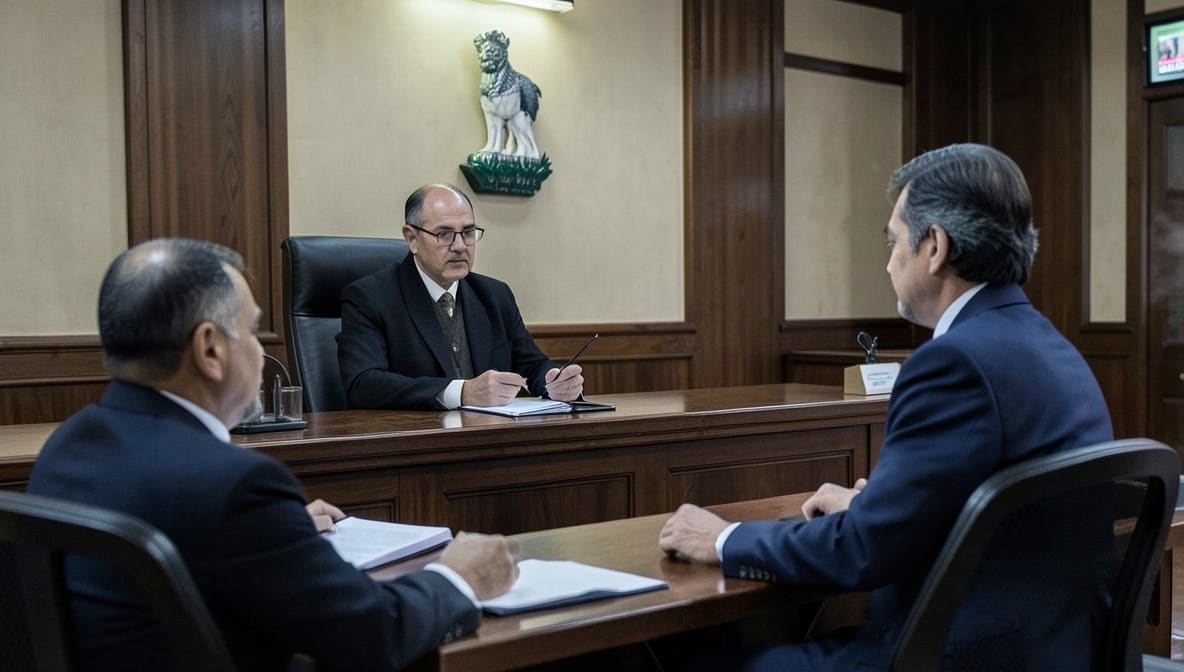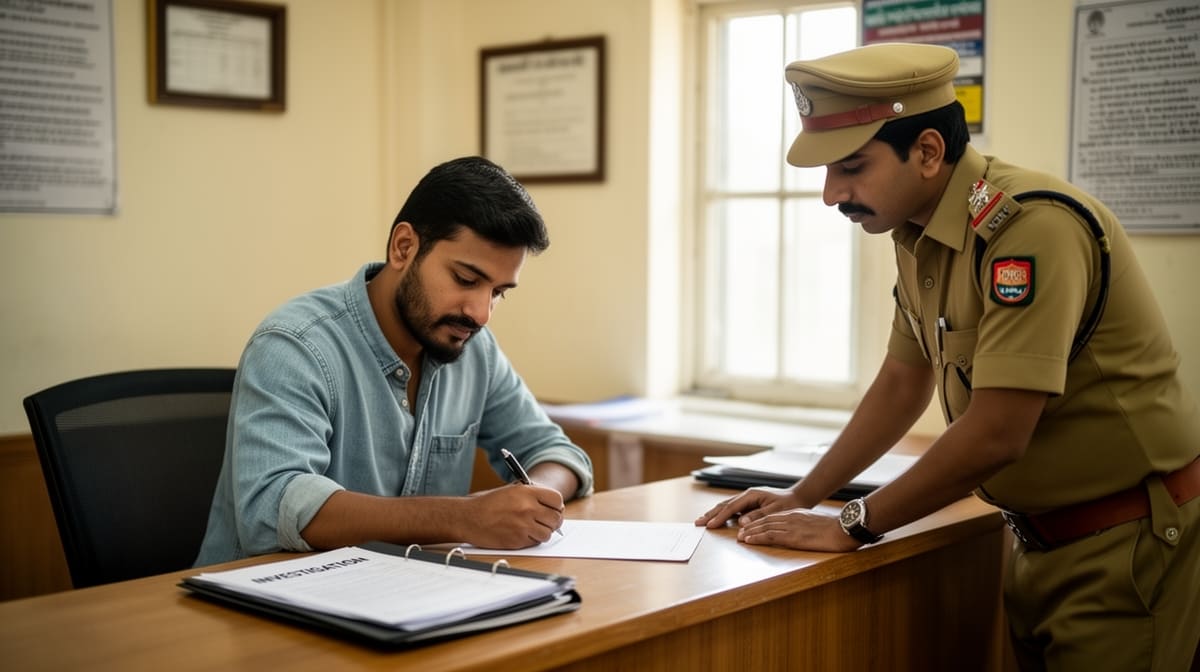
The Bombay High Court has reaffirmed that personal liberty must be protected at the pre-arrest stage unless there is clear evidence of flight risk or witness tampering. In granting anticipatory bail under BNSS Section 482, the Court held that speculative concerns over evidence recovery and alleged non-cooperation cannot justify denial of bail where the accused is willing to cooperate with investigation.
Background & Facts
The Dispute
The applicant, Chetan Chunnilal Jain, is apprehending arrest in Crime No. 484 of 2026, registered on 02.05.2026 at Vile Parle Police Station, Mumbai, under Sections 115(2), 118(2), 352 and 3(5) of the Bhartiya Nyaya Sanhita, 2023 (BNS). The case arises from a physical altercation between two businessmen, during which a cricket bat was allegedly used as a weapon. The applicant claims he was also a victim and filed a separate FIR against the complainant, albeit later.
Key Facts
- The incident occurred on 02.05.2026 at Vile Parle, Mumbai
- The applicant was named as an accused based on eyewitness accounts and recovery of a cricket bat
- The applicant has not been arrested as of the date of the order (15.06.2026)
- The Sessions Court previously rejected his bail application solely on the ground that the cricket bat had not yet been recovered
- The applicant has expressed willingness to assist the investigation and produce the bat if in his possession
- A separate FIR filed by the applicant against the complainant was noted by the Court
Procedural History
- 02.05.2026: Crime No. 484 of 2026 registered at Vile Parle Police Station
- Before 15.06.2026: Applicant approached Sessions Court for anticipatory bail; application rejected
- 15.06.2026: Anticipatory Bail Application No. 1532 of 2026 filed before Bombay High Court under Section 482 of BNSS
- 15.06.2026: Advocate Virendra Tripathi appeared suo moto on behalf of the complainant; permitted to file intervention application
The Parties' Positions
Applicant: Argued that the allegations stem from a mutual scuffle, not a premeditated assault. Emphasized his readiness to cooperate fully with the investigation, including facilitating recovery of the cricket bat. Contended that denial of bail on speculative grounds violates Article 21 of the Constitution.
Respondent (State): Opposed bail on the ground that the applicant had not cooperated in recovering the alleged weapon and that the offence under BNS carries serious consequences. Highlighted the need for further investigation.
Relief Sought
The applicant sought anticipatory bail in the event of arrest in Crime No. 484 of 2026, with conditions to ensure investigation integrity.
The Legal Issue
The central question was whether non-cooperation in recovering an alleged weapon, without evidence of flight risk or witness tampering, justifies denial of anticipatory bail under Section 482 of BNSS at the pre-arrest stage.
Arguments Presented
For the Appellant/Petitioner
Learned Counsel for the applicant relied on Arnesh Kumar v. State of Bihar and Sushil Ansal v. State (NCT of Delhi) to argue that personal liberty is the norm and incarceration the exception. He submitted that the applicant’s willingness to assist in recovery of the cricket bat negates any claim of non-cooperation. He further contended that the Sessions Court’s refusal based solely on unfulfilled evidentiary steps is legally unsustainable and violates the proportionality principle under K.S. Puttaswamy v. Union of India.
For the Respondent/State
The Additional Public Prosecutor acknowledged the applicant’s clean record but maintained that the recovery of the cricket bat was critical to establishing the nature of the assault. He argued that the applicant’s failure to produce the weapon so far indicated reluctance to cooperate and that the seriousness of the charges under BNS warranted caution.
The Court's Analysis
The Court observed that the sole ground for denial of bail by the Sessions Court was the non-recovery of the cricket bat and the allegation of non-cooperation. It held that these are investigative concerns, not grounds to deny personal liberty at the pre-arrest stage. The Court emphasized that anticipatory bail is not a reward for cooperation but a constitutional safeguard against arbitrary arrest.
"In the absence of any material indicating that the Applicant is likely to flee, tamper with evidence or intimidate witnesses, the apprehension of arrest cannot be denied merely because the investigating agency has not yet recovered an alleged weapon."
The Court distinguished between investigative diligence and the threshold for pre-arrest liberty. It noted that the applicant had not been arrested despite the FIR being registered over a month prior, and that he had voluntarily approached the Court seeking bail - further indicating his willingness to face proceedings. The Court also acknowledged the applicant’s separate FIR against the complainant, suggesting a mutual dispute rather than one-sided aggression.
The Court rejected the notion that recovery of an object is a precondition for bail. It held that such matters are within the domain of investigation and cannot be weaponized to deprive an individual of liberty before arrest.
The Verdict
The applicant succeeded. The Court granted anticipatory bail subject to conditions: (i) if arrested, he shall be released on furnishing a personal bond of Rs. 50,000 with a solvent surety of like amount; (ii) he shall report to Vile Parle Police Station every Monday and Friday between 10:00 a.m. and 5:00 p.m.; (iii) he shall not tamper with prosecution witnesses or evidence. The notice issued to the State was waived, and the complainant was permitted to file an intervention application.
What This Means For Similar Cases
Non-Recovery of Evidence Cannot Justify Denial of Bail
- Practitioners must argue that failure to recover an object does not equate to non-cooperation unless there is proof of concealment or obstruction
- Courts must distinguish between investigative delays and grounds for pre-arrest detention
- Anticipatory bail applications should focus on the accused’s conduct, not the state’s investigative progress
Cooperation Must Be Assessed Holistically
- Voluntary appearance before court, willingness to produce evidence, and absence of prior criminal record are strong indicators of cooperation
- A separate FIR filed by the applicant against the complainant may support claims of mutual altercation and reduce perceived culpability
- Courts should not impose conditions that effectively compel self-incrimination or premature disclosure of evidence
Procedural Fairness in BNS Cases
- The transition from IPC to BNS does not alter the constitutional standard for bail
- Courts must apply the same proportionality and liberty-preserving principles under BNSS Section 482 as under CrPC Section 438
- Denial of bail on speculative grounds undermines the spirit of Arnesh Kumar and invites arbitrary detention