The Punjab and Haryana High Court has affirmed that a daughter’s right to an equal share in inherited property cannot be denied in the absence of a will or family settlement, even when the only documentary evidence supporting ownership is municipal tax records. The judgment reinforces the principle that admissions by defendants in civil suits constitute strong evidence of title, and that concurrent findings of fact by lower courts are binding in second appeals unless a legal error is demonstrated.
Background & Facts
The Dispute
The dispute arose over a property measuring 65 x 28 yards (200 sq. yards) located at Pachranga Bazar, Nohra Wali Gali, Vardhman Handloom, Panipat. The property originally belonged to Sh. Rup Chand, son of Sheo Chand, who died on 06.01.2003. He was survived by four legal heirs: the plaintiff (his daughter) and three sons (defendants No. 1, 2, and 3). The plaintiff filed a suit on 26.02.2021 seeking separate possession by way of partition and a permanent injunction, alleging that after her father’s death, the property was verbally partitioned and she was in peaceful possession of her 1/4th share until the defendants attempted to dispossess her.
Key Facts
- The deceased, Sh. Rup Chand, died intestate on 06.01.2003
- The plaintiff and three defendants are the only Class-I legal heirs under the Indian Succession Act, 1925
- No will, family settlement, or relinquishment deed was produced by the defendants
- The plaintiff claimed equal 1/4th share in the property
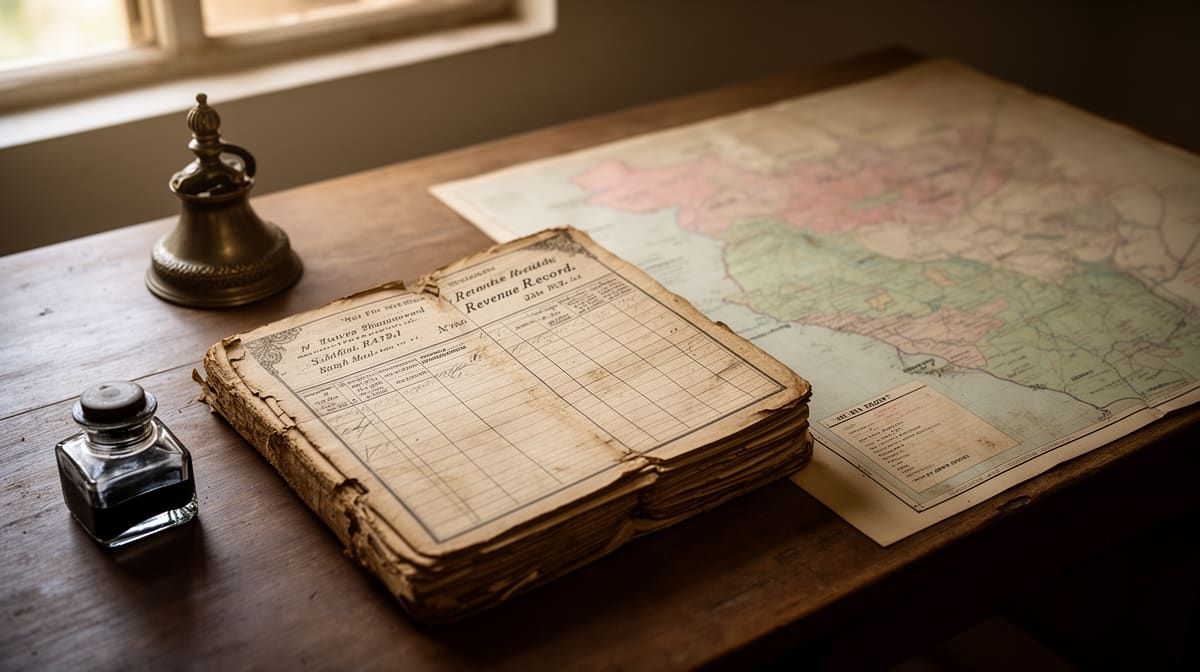
- The suit property was registered under Property Tax ID P03702110359 and Old ID PAN/W08/8176/0114, both in the name of Rup Chand
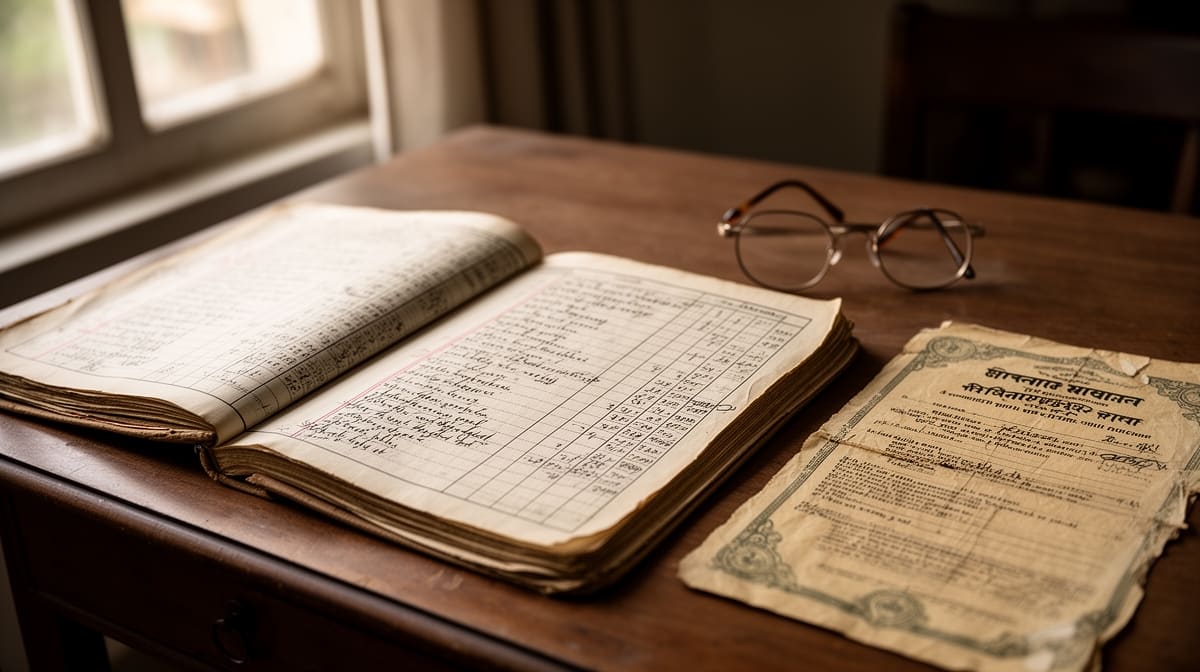
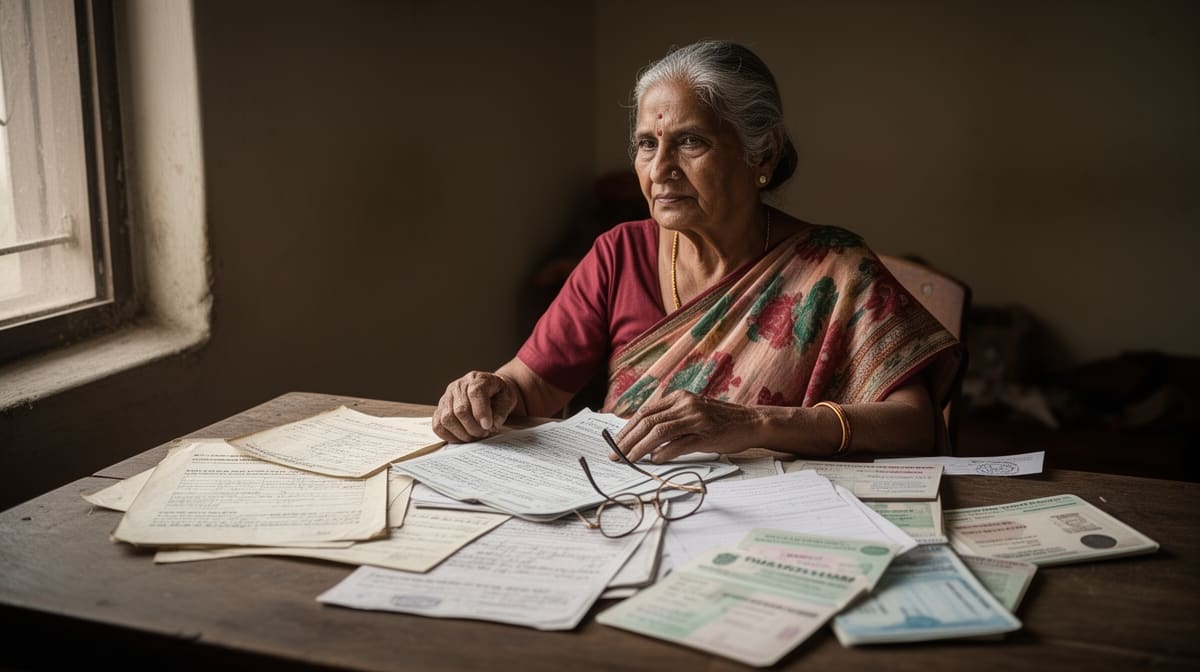
- The plaintiff produced three key documents: Ex.P2 (Property Tax Notice-cum-Bill), Ex.P4 (Fire Tax Detail), and Ex.P5 (Assessment-cum-Demand Notice for 2015-2016)
- PW5, Jaiveer, a clerk from the Municipal Corporation, Panipat, testified to the authenticity of Ex.P4 and Ex.P5
- Defendant No. 2 (DW1) admitted in cross-examination that there were four legal heirs after Rup Chand’s death
- Defendant No. 3 (DW2) similarly admitted that the four heirs were the plaintiff and three defendants
- The defendants failed to produce any document proving exclusive ownership, purchase, or prior partition excluding the plaintiff
Procedural History
- 06.01.2003: Death of Rup Chand, intestate
- 26.02.2021: Plaintiff files suit for partition and permanent injunction in Civil Court, Panipat
- 10.04.2023: Civil Judge (Junior Division), Panipat decrees the suit, holding plaintiff and defendants each hold 1/4th share; grants permanent injunction
- 20.09.2024: District Judge, Panipat dismisses the first appeal, affirming the trial court’s findings
- 20.04.2026: Punjab and Haryana High Court dismisses the second appeal
Relief Sought
The plaintiff sought: (1) declaration of her 1/4th share in the suit property; (2) separate possession of her share; (3) permanent injunction restraining defendants from alienating or interfering with her share.
The Legal Issue
Can municipal tax records, which are not documents of title, be relied upon to establish ownership in a partition suit when the defendants have admitted the deceased’s title and no will or settlement excludes a daughter’s share under the Indian Succession Act?
Arguments Presented
For the Appellant
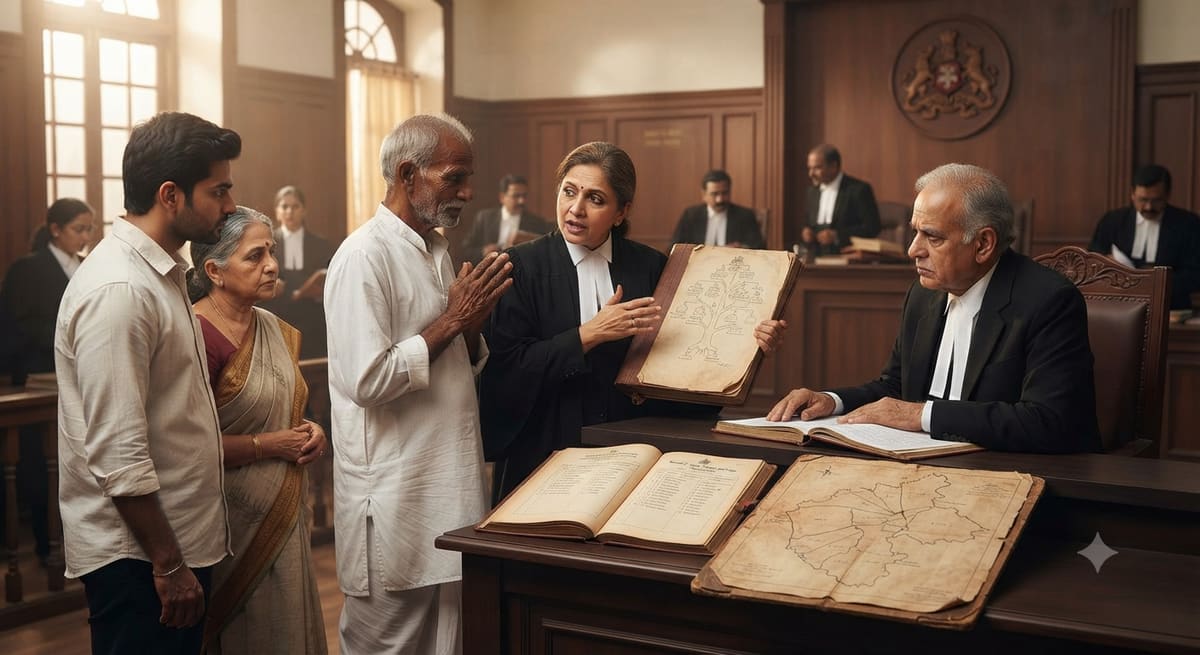
Learned counsel for the appellants argued that municipal tax records are purely fiscal documents maintained for tax collection and cannot determine title. They contended that the plaintiff failed to plead joint ownership or specify the exact portion of the property allocated to her in the alleged verbal partition. They further asserted that the trial and appellate courts erred in relying on Ex.P2, Ex.P4, and Ex.P5, which they claimed were legally insufficient to prove ownership. They cited Raj Kumar v. Hardit Singh and Lokesh Sanyal v. State of M.P. to argue that municipal entries cannot confer title.
For the Respondent
Learned counsel for the respondent countered that the defendants had admitted in their cross-examination that Rup Chand was the owner and that there were four legal heirs. They emphasized that admissions are the best evidence under Section 58 of the Indian Evidence Act and that the absence of any will or family settlement meant the property devolved equally under the Indian Succession Act. They relied on Shivali Enterprises v. Godawari to argue that concurrent findings of fact cannot be disturbed in a second appeal absent a legal error.
The Court's Analysis
The Court undertook a meticulous review of the pleadings, evidence, and findings of the courts below. It acknowledged the appellants’ contention that municipal tax records are not title documents, but held that this alone does not invalidate their evidentiary value when corroborated by admissions.
"It is settled proposition of law that admission is the best evidence unless the party who has admitted it proves it to have been admitted under a wrong presumption or it could not have been otherwise factually correct."
The Court noted that both defendants, in their capacity as DW1 and DW2, unequivocally admitted that Rup Chand was the owner and that there were four legal heirs. This admission, the Court held, was decisive under Narayan Bhagwantrao Gosavi v. Gopal Vinayak Gosavi. The absence of any contrary document - such as a will, gift deed, or family settlement - rendered the defendants’ claim of exclusive ownership legally untenable.
The Court further emphasized that under the Indian Succession Act, 1925, Class-I heirs, including daughters, inherit equally in the absence of a will. The plaintiff, as a daughter, was entitled to a 1/4th share. The trial court’s finding that the property was inherited equally by all four heirs was not perverse, nor was it based on misreading of evidence.
The Court also rejected the argument that the suit was defective for failing to specify the exact portion of the property claimed. It held that in a suit for partition among co-heirs, the plaintiff need not delineate metes and bounds at the pleading stage, especially where the property is undivided and the shares are equal.
Finally, the Court reiterated the well-established principle that in a second appeal under Section 100 of the CPC, interference is permissible only on substantial questions of law. No such legal error was demonstrated by the appellants.
The Verdict
The second appeal was dismissed. The judgments and decrees of the Civil Judge (Junior Division) dated 10.04.2023 and the District Judge dated 20.09.2024 were affirmed. The plaintiff is declared the owner of a 1/4th share in the suit property. The permanent injunction restraining the defendants from alienating or interfering with her share remains in force. The defendants are directed to vacate any encroachment on the plaintiff’s share within 8 weeks. Costs of Rs. 25,000 are awarded to the plaintiff.
What This Means For Similar Cases
Admission of Title by Defendants Is Conclusive
- Practitioners must treat admissions made by defendants in written statements or cross-examination as decisive evidence of title, even without formal title deeds
- Opposing counsel must be prepared to rebut admissions with clear proof of fraud, mistake, or coercion
- Failure to challenge an admission may result in automatic acceptance of the opposing party’s claim to ownership
Daughters Are Equal Heirs Under Succession Law
- In intestate succession, daughters have equal rights as sons under the Indian Succession Act, 1925
- Any attempt to exclude a daughter from inheritance without a valid will or family settlement is legally void
- Courts will not permit informal partitions that disadvantage female heirs unless documented and consented to
Municipal Records Are Admissible as Corroborative Evidence
- While municipal tax records cannot independently establish title, they are admissible to corroborate ownership when supported by admissions or other evidence
- Practitioners should routinely collect and produce such records in partition and inheritance suits as part of a cumulative evidentiary strategy
- The judgment removes the myth that municipal records are irrelevant in title disputes