A landmark ruling by the Central Administrative Tribunal, Cuttack Bench, has affirmed that decades of continuous casual service in government departments cannot be ignored merely due to the label of 'temporary' employment. The Tribunal held that systemic discrimination against long-serving workers, while others in identical roles are regularized, violates the constitutional guarantee of equal protection under Articles 14 and 16. This decision reinforces the evolving jurisprudence that fairness, not formalities, must govern public employment.
Background & Facts
The Dispute
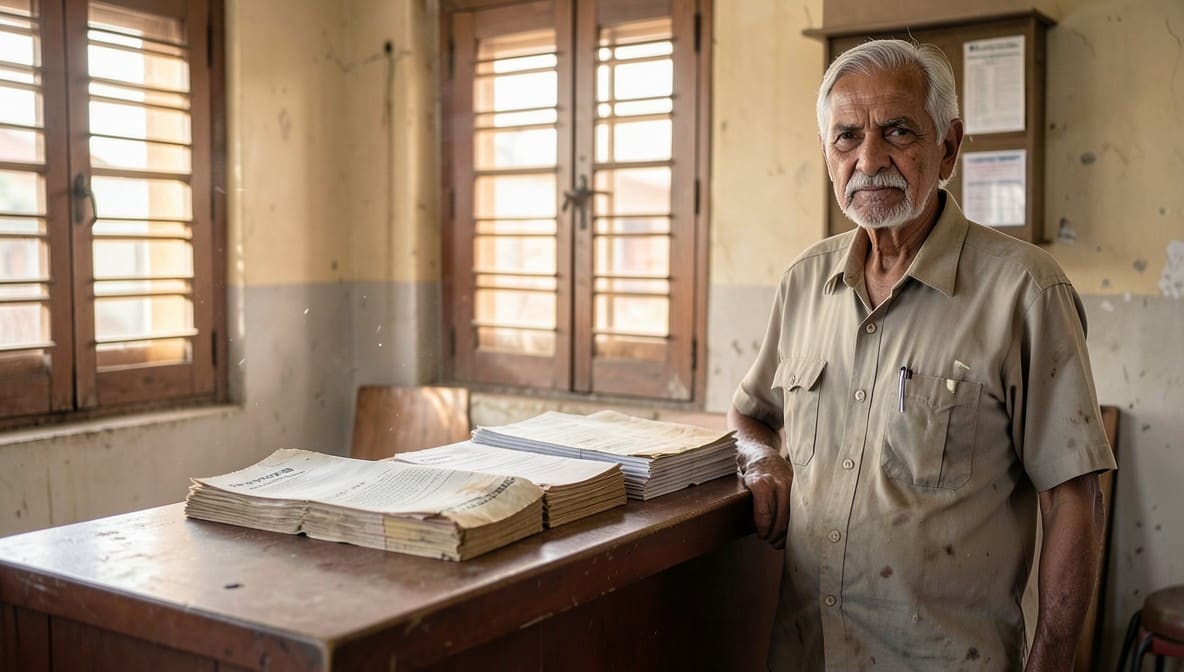
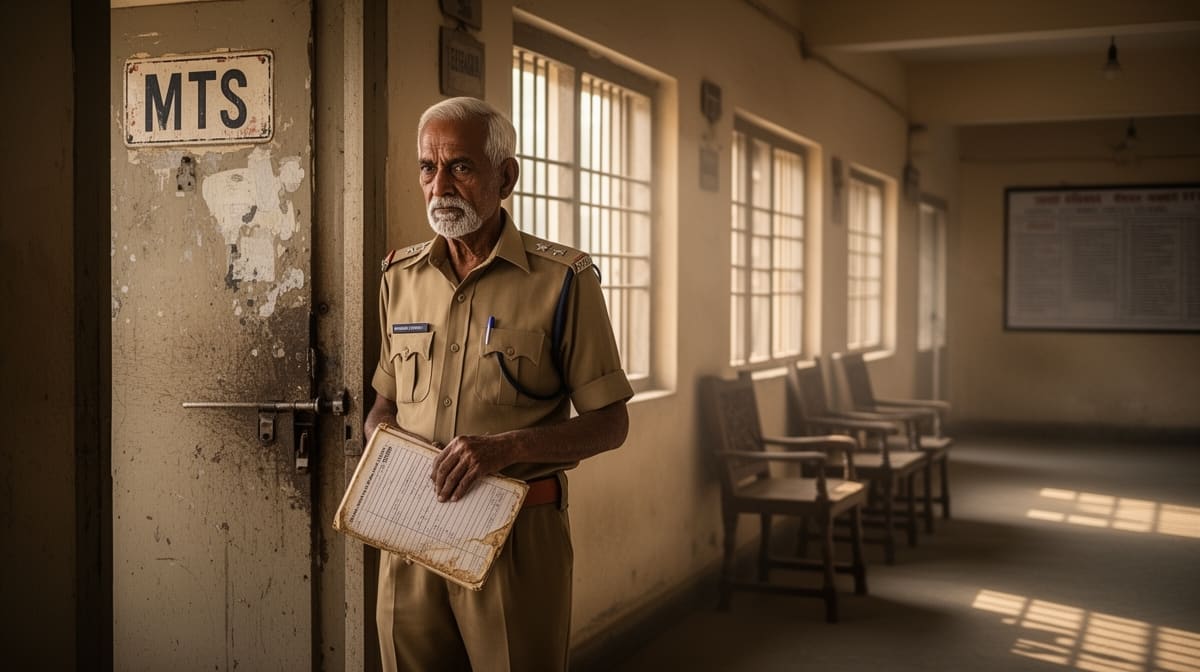
Janak Pradhan, aged 52, has served the Income Tax Department as a casual MTS (Multi-Tasking Staff) since 9 October 2001 - over 25 years without interruption. He was never appointed against a sanctioned post, nor was he selected through any formal recruitment process. Despite performing duties identical to regular staff, he was denied regularization, while 18 other casual workers in the Bhubaneswar Commissionerate were regularized in 2011 and 64 others in Lucknow in 2025, retrospectively from 2010.
Procedural History
- 2022: Applicant filed Original Application (OA No. 260/00225 of 2025) before the Central Administrative Tribunal, Cuttack, seeking regularization and consequential benefits.
- Respondents' Objection: Argued that CAT lacks jurisdiction over casual employees and that regularization cannot be claimed without initial selection or sanctioned posts.
- Tribunal’s Review: Examined multiple Supreme Court judgments on regularization, including Jaggo v. Union of India, Dharam Singh v. State of U.P., and Pawan Kumar v. Union of India.
Relief Sought
The applicant sought: (1) regularization with effect from the date others in his category were regularized; (2) payment of arrears for the period of casual service; (3) seniority and promotion benefits from the date of initial engagement; and (4) equal treatment under Article 14, given the regularization of similarly placed employees.
The Legal Issue
The central question was whether Article 14 and Article 16 of the Constitution mandate regularization of a casual employee who has rendered over 25 years of continuous, unbroken service, when other similarly situated employees in the same department have already been regularized, and the nature of duties performed is perennial and indispensable.
Arguments Presented
For the Petitioner
The applicant’s counsel relied on multiple Supreme Court judgments, including Jaggo v. Union of India (2024), Dharam Singh v. State of U.P. (2025), and Pawan Kumar v. Union of India (2026), to argue that: (1) long-term casual service transforms temporary roles into de facto permanent positions; (2) the State cannot discriminate between similarly placed employees; (3) the Umadevi doctrine does not bar regularization where appointments are irregular but not illegal; and (4) outsourcing or non-sanctioned posts cannot justify perpetual precariousness.
For the Respondent
The State contended that: (1) CAT lacks jurisdiction under Section 19 of the Administrative Tribunals Act, 1985, to entertain regularization claims by casual workers; (2) the applicant was never appointed against a sanctioned post and was engaged purely on a wage basis; (3) Umadevi (2006) prohibits regularization unless statutory rules permit it; and (4) the applicant failed to complete 10 years of service by 10 April 2006, the cutoff date for regularization in other cases.
The Court's Analysis
The Tribunal rejected the jurisdictional objection by citing Department of Telecommunications v. Keshab Deb (2008), where the Supreme Court held that Section 14 of the Administrative Tribunals Act, 1985 empowers CAT to adjudicate service matters of casual employees classified as workmen under the Industrial Disputes Act, 1947. The reliance on Bhaskar Dora was dismissed for lack of evidentiary support.
The Tribunal then turned to the substantive issue, emphasizing that Article 14 prohibits arbitrariness and unequal treatment. It quoted extensively from Dharam Singh v. State of U.P. and Jaggo v. Union of India, noting that the Supreme Court has repeatedly held that Umadevi cannot be weaponized to shield systemic exploitation. The Court observed:
"The long-term extraction of regular labour under temporary labels corrodes confidence in public administration and offends the promise of equal protection."
It further held that the State’s failure to maintain establishment registers, muster rolls, or explain why it chose casual engagement over sanctioned posts amounted to a violation of Article 21 (right to livelihood). The Tribunal emphasized that when the State acknowledges the perennial nature of duties - evidenced by the regularization of others in identical roles - it cannot deny the same to one worker on technical grounds.
The Court distinguished Pawan Kumar (2026), which had previously denied relief, by noting that subsequent Supreme Court rulings had clarified and expanded the scope of regularization rights, rendering the earlier decision obsolete in light of evolving constitutional principles.
The Verdict
The applicant won. The Tribunal held that long-serving casual employees performing perennial duties are entitled to regularization if similarly placed workers have been regularized, and that denial of such relief violates Articles 14 and 16. The respondents were directed to regularize the applicant with effect from 22 January 2010 - the date of regularization for the Lucknow group - and to pay all consequential arrears, seniority, and benefits within 90 days.
What This Means For Similar Cases
Regularization Is Not a Matter of Discretion
- Practitioners must now argue that regularization is a constitutional entitlement where service exceeds 10 - 15 years and duties are permanent.
- The State cannot rely on Umadevi to deny regularization unless it proves the appointment was illegal, not merely irregular.
- Evidence of other regularizations in the same department creates a strong presumption of discrimination under Article 14.
Outsourcing Does Not Erase Obligations
- If the State outsources functions previously performed by casual workers, it confirms the perennial nature of the work.
- Courts will infer bad faith if outsourcing follows denial of regularization.
- Practitioners should demand production of establishment registers and outsourcing contracts to expose systemic evasion.
Jurisdictional Objections Are No Longer Viable
- CAT has jurisdiction over regularization claims of casual employees under Section 14 of the Administrative Tribunals Act, 1985.
- High Court rulings like Bhaskar Dora that deny jurisdiction are overruled by Keshab Deb and subsequent Supreme Court precedents.
- OA filings before CAT are now a viable and preferred remedy for long-serving casual workers.