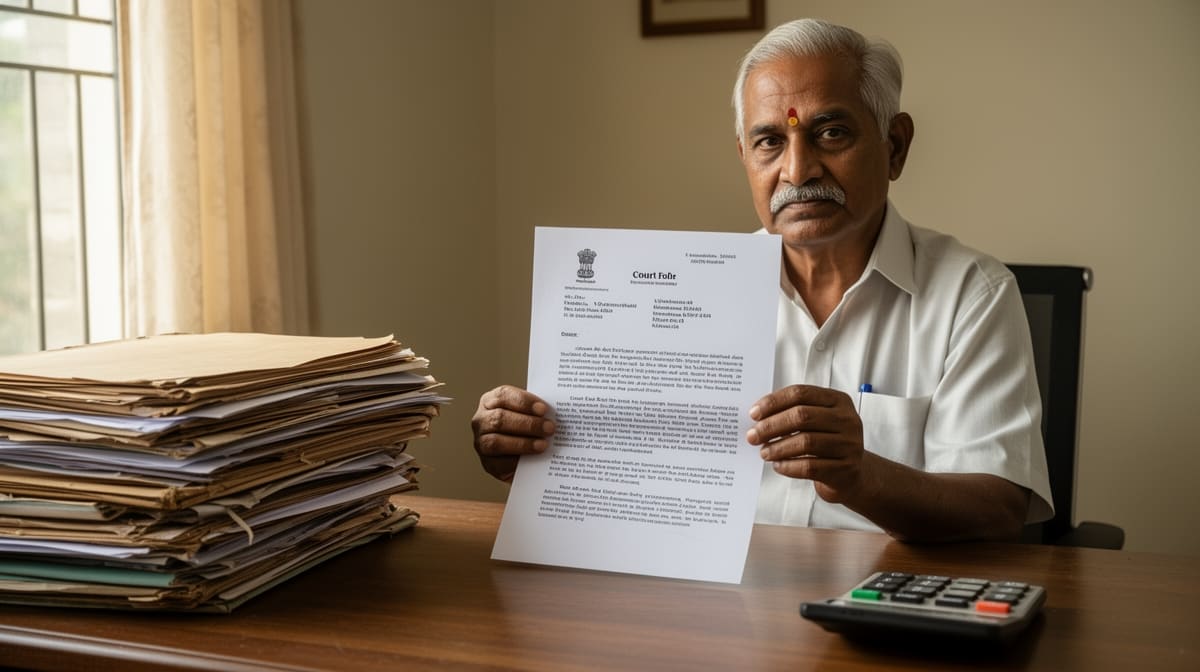
The Karnataka High Court has clarified that depositing a workmen’s compensation award amount in an appellate court does not suspend the accrual of interest under the Workmen’s Compensation Act, 1923. Interest continues to accumulate until the full amount, including interest, is received by the executing court, regardless of prior deposits made during appeal.
Background & Facts
The Dispute
The dispute arose from an award passed under the Workmen’s Compensation Act, 1923, for compensation due to the legal heirs of a deceased worker. The respondents, being the widow, son, and mother of the deceased worker, filed Claim Petition No. 131/2005 before the Commissioner for Workmen’s Compensation, Bagalkote. The Commissioner awarded them a total compensation of Rs. 3,20,355/- with interest at 12% per annum from the date of the award, 04.10.2007.
The petitioner, National Insurance Company, the insurer of the employer, challenged this award before the High Court in MFA No. 14048/2007. During the pendency of the appeal, the petitioner deposited the awarded amount along with accrued interest with the court. The appeal was dismissed on 13.01.2017, and the deposited amount, including interest, was transmitted to the executing court on 15.05.2017.
On 29.08.2018, the petitioner made an additional deposit of Rs. 36,757/-, claiming it was the difference in interest calculated up to that date. However, the respondents filed a memo of calculation in Execution Case No. 17/2017 on 06.09.2018, asserting that a further balance of Rs. 1,43,297/- remained outstanding. The executing court, after verifying the petitioner’s own registry records, passed an order on 16.02.2022 directing the petitioner to pay a balance of Rs. 2,18,055/-.
Key Facts
- The deceased worker was employed by a contractor insured by the petitioner.
- Claim Petition No. 131/2005 filed on 12.05.2005; award dated 04.10.2007 for Rs. 3,20,355/- + 12% p.a. interest from date of award.
- Petitioner filed MFA No. 14048/2007 challenging the award; deposited Rs. 3,20,355/- + interest accrued till date of deposit.
- Appeal dismissed on 13.01.2017; deposited amount transmitted to executing court on 15.05.2017.
- Petitioner made additional deposit of Rs. 36,757/- on 29.08.2018.
- Respondents filed memo of calculation on 06.09.2018 claiming Rs. 1,43,297/- additional liability.
- Executing Court, on 16.02.2022, directed payment of Rs. 2,18,055/- as balance.
- Respondent No. 3 (mother) was dismissed as abated; service was effected only on Respondents 1 and 2.
Procedural History
- 12.05.2005: Claim petition filed before Commissioner for Workmen’s Compensation.
- 04.10.2007: Award passed for Rs. 3,20,355/- + 12% p.a. interest from date of award.
- 2007: Petitioner filed MFA No. 14048/2007 before High Court.
- 13.01.2017: MFA dismissed; deposit transmitted to executing court on 15.05.2017.
- 29.08.2018: Petitioner made additional deposit of Rs. 36,757/-.
- 06.09.2018: Respondents filed memo of calculation in Execution Case No. 17/2017.
- 16.02.2022: Executing Court ordered payment of Rs. 2,18,055/- as balance.
- 17.03.2026: Civil Revision Petition No. 100066/2022 dismissed by Karnataka High Court.
Relief Sought
The petitioner sought to set aside the order dated 16.02.2022, arguing that the award was fully satisfied by deposits made in appeal and subsequent payments, and that no further interest was payable.
The Legal Issue
The central question was whether interest under the Workmen’s Compensation Act, 1923, continues to accrue after the judgment debtor deposits the award amount in appeal, or whether such deposit operates as a discharge of liability, including future interest, until the amount is received by the executing court.
Arguments Presented
For the Petitioner
The petitioner contended that since the entire award amount, including interest up to the date of deposit, was deposited in the appellate court before dismissal of the appeal, the liability for interest ceased to exist. It relied on the principle that once funds are deposited with the court in good faith, the obligation to pay further interest is extinguished. It argued that the executing court erred in treating the deposit in appeal as merely procedural and not as a substantive discharge.
For the Respondent
The respondents, though unrepresented, maintained through the memo of calculation that interest must continue to accrue until the actual receipt of funds by the executing court. They relied on the statutory mandate under the Workmen’s Compensation Act and the procedural requirements under Order XXI CPC, which require formal compliance for deposit to operate as a discharge.
The Court's Analysis
The Court examined the interplay between the Workmen’s Compensation Act, 1923, and the Code of Civil Procedure, particularly Order XXI Rules 1 and 2, which govern the manner of depositing decretal amounts. The Court held that a unilateral deposit made in an appellate court, without compliance with Order XXI Rule 1 CPC - such as notice to the decree holder or formal tender to the executing court - does not arrest the accrual of interest.
"Unilateral deposit, without complying with provisions of Order XXI Rule 1 of CPC, would not arrest interest from continuing to accrue."
The Court emphasized that the purpose of interest under the WC Act is compensatory and punitive, ensuring timely payment to dependents of deceased workers. The deposit made in appeal was not made in execution proceedings, nor was it accompanied by any intimation to the decree holders. Therefore, the liability for interest remained alive.
The Court further noted that the executing court correctly applied the principle of appropriation: payments are first applied to interest accrued, then to principal. The petitioner’s deposit of Rs. 36,757/- on 29.08.2018 was appropriately adjusted against interest accrued between 15.05.2017 and 29.08.2018, and the balance of Rs. 2,18,055/- reflected the remaining liability, including interest up to the date of the order.
The Court concluded that the executing court did not commit any jurisdictional error, nor did it act illegally or with material irregularity. The revision petition under Section 115 CPC was therefore not maintainable.
The Verdict
The revision petition was dismissed. The High Court upheld the order dated 16.02.2022, directing the petitioner to pay a balance of Rs. 2,18,055/-. The Court confirmed that interest at 12% per annum continued to accrue from 04.10.2007 until the amount was received by the executing court on 15.05.2017, and thereafter until the balance was paid. No further interest was directed beyond the date of the order, as the liability was fully determined.
What This Means For Similar Cases
Deposit in Appeal Does Not Discharge Execution Liability
- Practitioners must understand that depositing a compensation award in appeal does not stop interest under the WC Act.
- Interest continues to accrue until the amount is actually received by the executing court, regardless of appellate deposits.
- Any attempt to argue that appellate deposit extinguishes liability will fail unless formal compliance with Order XXI CPC is established.
Procedural Compliance Is Mandatory for Discharge
- To arrest interest, a judgment debtor must make a formal deposit under Order XXI Rule 1 CPC, with notice to the decree holder.
- Unilateral deposits without intimation or court direction are treated as mere advances, not discharges.
- Insurers and employers must coordinate with executing courts to ensure compliance, not rely on appellate deposits as final settlement.
Interest Calculation Must Follow Appropriation Rules
- Payments must first be applied to accrued interest, then to principal.
- Legal teams must independently verify interest calculations using the correct start date (date of award) and end date (date of receipt by executing court).
- Failure to apply appropriation rules correctly may result in overpayment claims being rejected.