The National Green Tribunal has reaffirmed that even minor encroachments on legally protected wetlands constitute serious violations of environmental law, regardless of the scale of land altered. In a landmark suo motu proceeding triggered by media reports, the Tribunal held that the construction of highway pillars on a listed pond in Delhi breached statutory protections under the Wetland (Conservation and Management) Rules, 2017, and the EIA Notification, 2006. The order underscores that environmental compliance is non-negotiable, even for infrastructure projects of public importance.
Background & Facts
The Dispute
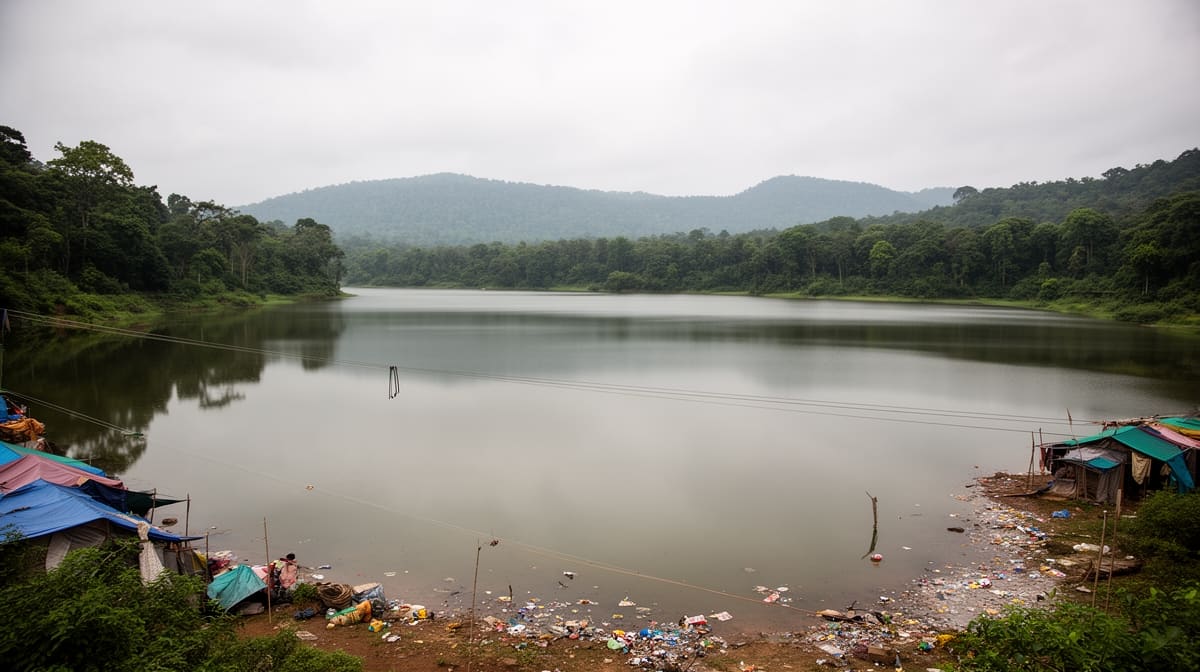
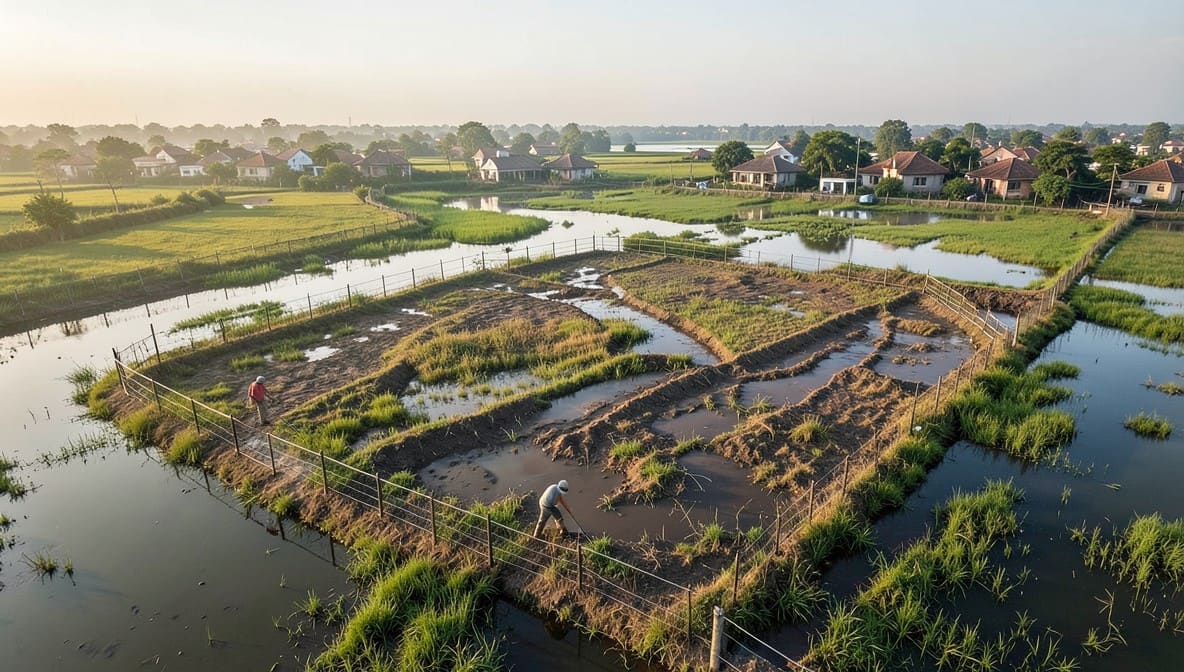
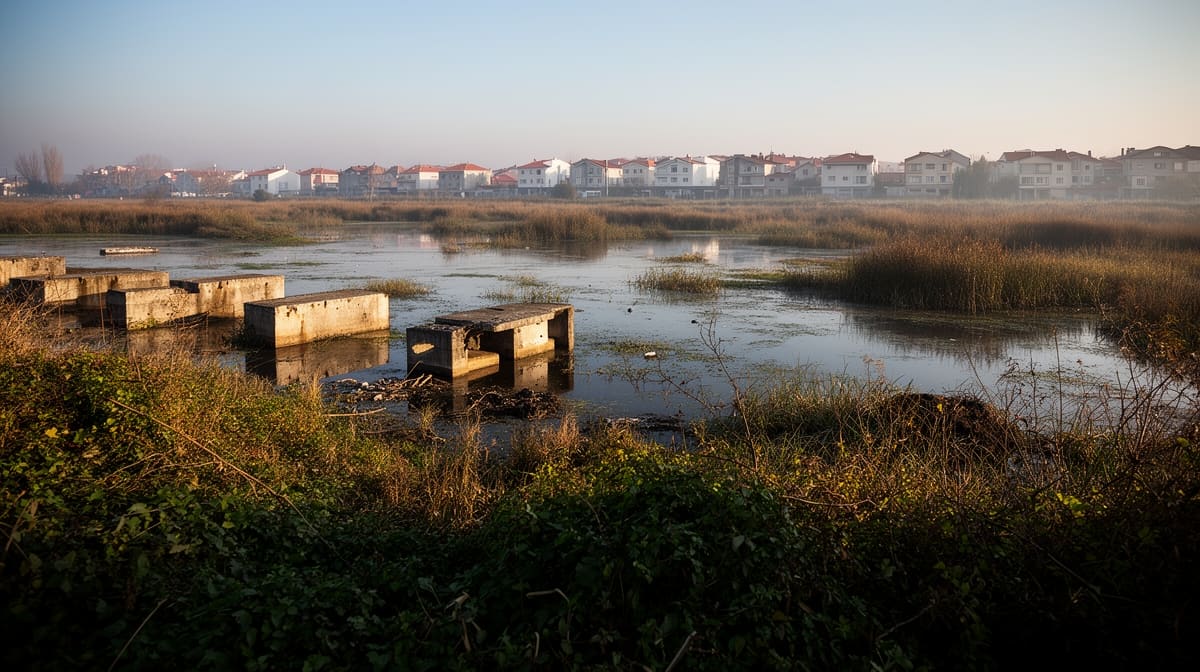
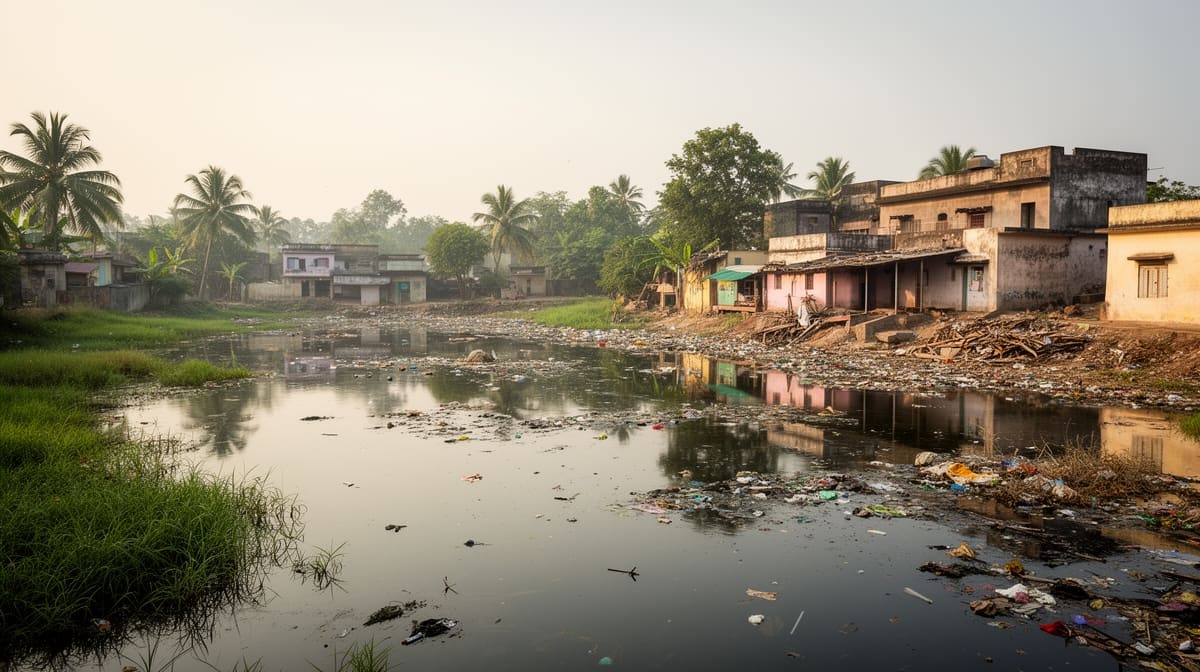
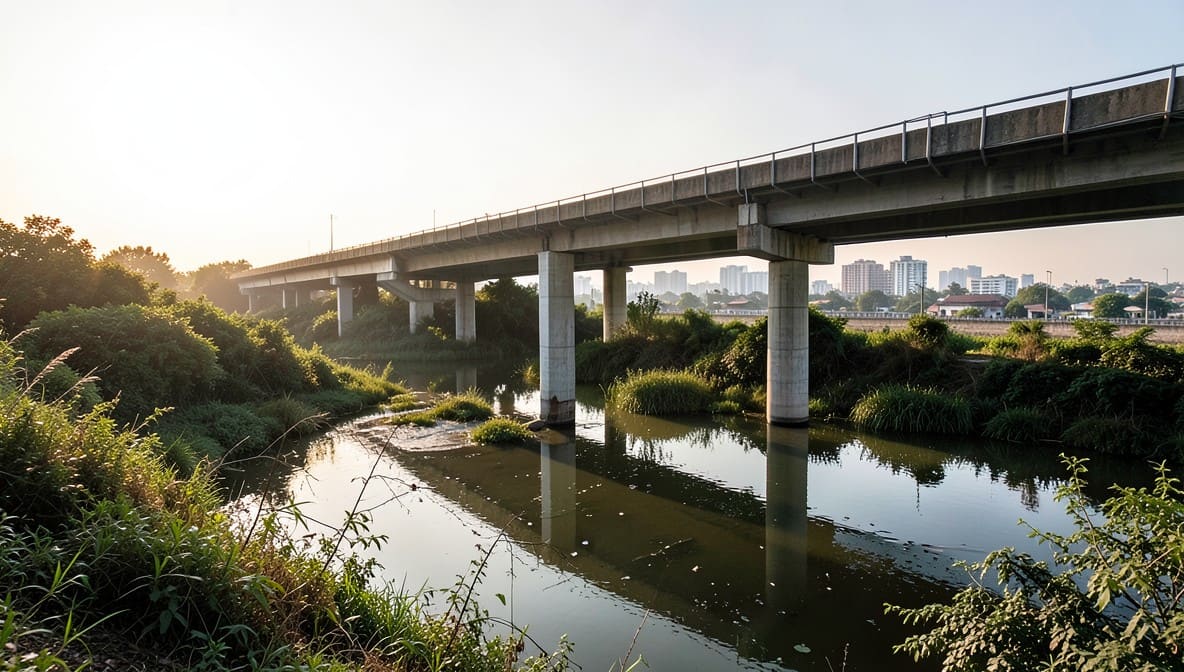
The National Green Tribunal initiated proceedings suo motu based on a news report in the Times of India dated 30.09.2024, alleging that the National Highways Authority of India (NHAI) had constructed a flyover on a protected natural wetland in Goyla Khurd Village, South West Delhi. The pond, located on Khasra No. 9/29 (10 bigha and 9 biswa), was identified as one of over 1,000 water bodies listed for protection under the Delhi Wetland Authority’s registry. The report claimed that 80% of the pond’s original area had vanished due to construction activities, and that the Delhi Wetland Authority had failed to intervene.
Key Facts
- The land bearing Khasra No. 9/29 was acquired by the Delhi Development Authority (DDA) under Section 4 of the Land Acquisition Act on 07.04.2006 and under Section 6 on 04.04.2007.
- DDA took physical possession of the land on 27.07.2010, and the Possession Report explicitly noted the presence of a pond ("Johar") on the site.
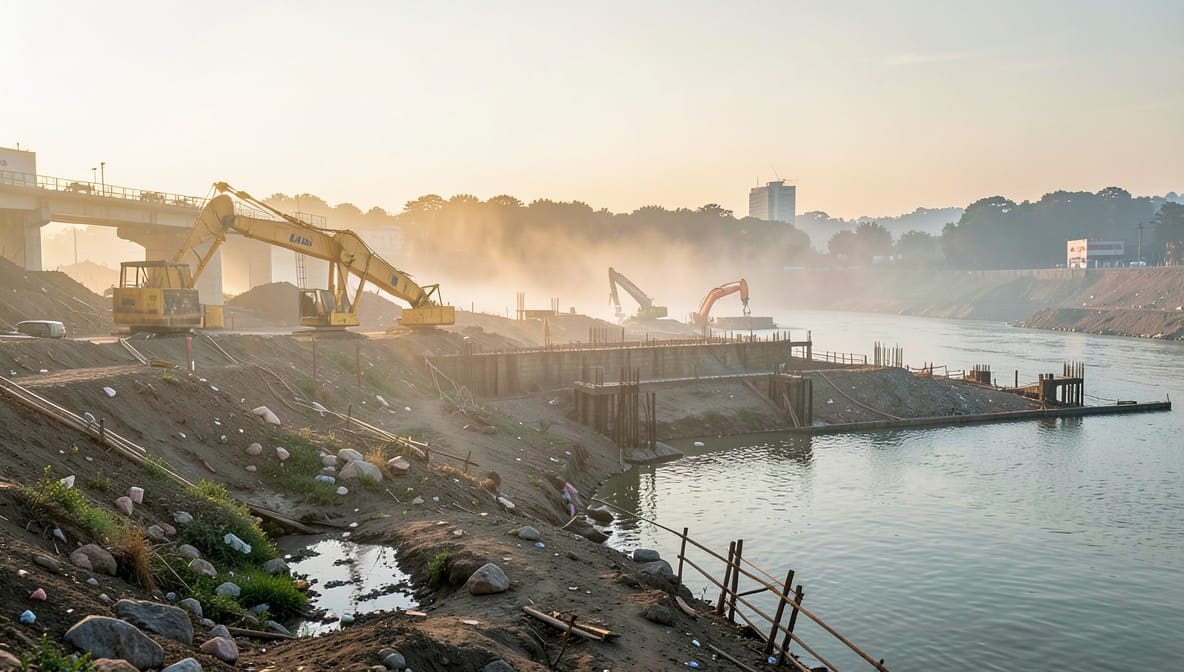
- On 21.08.2012, DDA transferred possession of the land to NHAI for the construction of Urban Extension Road-II (UER-II).
- The pond covered an area of approximately 1.45 hectares (8,803.08 sqm) as per revenue records.
- NHAI constructed a flyover over the pond, with eight pillars embedded directly within the water body, occupying a total area of 20.36 sqm (0.23% of the pond’s total area).
- The Delhi Wetland Authority confirmed on 11.02.2026 that Khasra No. 9/29 is a listed water body requiring protection under statutory rules.
- A joint inspection by DDA and NHAI on 03.07.2025 confirmed the presence of the eight pillars within the water body and verified the pond’s continued existence via geotagged photographs.
- The Environmental Clearance (EC) granted to NHAI by the Ministry of Environment, Forest and Climate Change (MoEF&CC) on 30.12.2021 mentioned the proposed alignment would cross a pond but did not disclose the construction of pillars within it.
Procedural History
- 30.09.2024: News report published in Times of India triggering public concern.
- 16.10.2024: NGT registered Original Application No. 1235/2024 suo motu, citing Municipal Corporation of Greater Mumbai v. Ankita Sinha & Ors. (2021 SCC Online SC 897).
- 11.02.2026: Delhi Wetland Authority filed affidavit confirming the pond’s protected status.
- 13.01.2025: Joint inspection conducted by Revenue Department, DPCC, and Delhi Wetland Authority.
- 03.07.2025: Joint inspection by DDA and NHAI confirmed presence of eight pillars within the pond.
- 12.02.2026: Final hearing concluded.
- 06.04.2026: Order pronounced by the NGT.
The Parties' Positions
NHAI (Respondent No. 3): Argued that the construction was necessary for public infrastructure, that the encroachment was minimal (0.23%), and that it had obtained environmental clearance. It claimed no malice and offered to undertake restoration.
DDA (Respondent No. 7): Acknowledged that it had transferred the land with full knowledge of the pond’s existence and confirmed that NHAI was aware of the water body at the time of handover.
Delhi Wetland Authority (Respondent No. 4): Affirmed that the pond is a legally listed wetland and must be protected from encroachment, pollution, or degradation.
MoEF&CC (Respondent No. 6): Did not dispute the violation but deferred responsibility to the NGT for direction.
Relief Sought
The Tribunal, acting suo motu, sought to determine whether the construction violated environmental laws and to direct remedial action, including restoration, compensation, and systemic compliance reforms.
The Legal Issue
The central question was whether constructing permanent infrastructure, even on a minimal scale, within a legally listed wetland without prior environmental clearance and disclosure to the regulatory authority constitutes a violation of the Wetland (Conservation and Management) Rules, 2017, and the EIA Notification, 2006.
Arguments Presented
For the Petitioner (Suo Motu Initiation)
The Tribunal, acting on media reports and official affidavits, argued that the Wetland Rules, 2017, explicitly prohibit any conversion of wetlands to non-wetland uses, including encroachment of any kind under Rule 4(1)(i). The construction of eight pillars within the water body, even if occupying only 20.36 sqm, amounted to permanent alteration of the wetland’s ecological character. The failure to disclose this in the Environmental Impact Assessment (EIA) or seek specific permission violated the mandatory conditions of the EIA Notification, 2006, particularly Standard Condition (iii) requiring permission from the owning agency. The Tribunal relied on Hinch Lal Tiwari v. Kamla Devi and Jagpal Singh v. State of Punjab to emphasize the constitutional and cultural importance of water bodies under Article 21.
For the Respondent
NHAI contended that the scale of encroachment was negligible (0.23%) and did not materially affect the wetland’s hydrological function. It argued that the flyover was essential for urban mobility and that the project had received environmental clearance, which did not explicitly bar pillar construction. NHAI also cited Auroville Foundation v. Navroz Kersasp Mody to assert the principle of sustainable development, claiming that environmental protection must be balanced with public interest. It offered to undertake restoration measures.
The Court's Analysis
The Tribunal rejected the argument that minimal encroachment can be excused. It held that the Wetland Rules, 2017, are absolute in their prohibition: "conversion for non-wetland uses including encroachment of any kind" is strictly prohibited under Rule 4(1)(i). The Tribunal emphasized that the law does not permit quantitative thresholds to override categorical prohibitions. The fact that the pond was listed by the Delhi Wetland Authority and confirmed by the Supreme Court in M.K. Balakrishnan v. Union of India (2017) meant it was protected on the same principles as the 2010 Rules.
"The law should have been followed and the requisite permission from the Environment Impact Assessment Authority in terms of the EIA Notification, 2006 ought to have been taken."
The Tribunal further noted that the Environmental Clearance granted on 30.12.2021 failed to disclose the construction of pillars within the pond, thereby rendering the clearance incomplete and potentially invalid under the principle of uberrima fides (utmost good faith). The Standard Condition (iii) requiring permission from the owning agency was not complied with, and the MoEF&CC had not assessed the impact of pillar construction on the wetland’s ecology.
The Tribunal distinguished Auroville Foundation by clarifying that sustainable development does not permit bypassing statutory procedures. The principle requires adherence to law, not its circumvention. The Tribunal also relied on its own prior order in OA No. 219/2024, affirmed by the Supreme Court, which held that natural wetlands cannot be replaced by artificial ones.
The Tribunal acknowledged NHAI’s willingness to remediate but stressed that compliance cannot be left to discretion. The violation was procedural and substantive, and required institutional accountability.
The Verdict
The National Green Tribunal disposed of the application with the following directions:
- The MoEF&CC is directed to examine the violation of environmental clearance conditions and take appropriate action under law, after following principles of natural justice, within six months.
- NHAI is directed to make full disclosure of all natural water resources likely to be affected in all future environmental clearance applications.
- A joint inspection team from DPCC and NHAI must assess all additional damage caused to the pond during construction and ensure remedial action is completed within six months.
- DPCC must determine environmental damage compensation, provide NHAI an opportunity of hearing, and recover the amount within six months.
- All pending interim applications are disposed of.
What This Means For Similar Cases
Encroachment Is Illegal Regardless of Scale
- Practitioners must treat any permanent structure within a listed wetland as a per se violation under Rule 4(1)(i) of the Wetland Rules, 2017.
- Even 0.23% reduction in wetland area triggers statutory liability; quantitative justification is legally irrelevant.
- Environmental clearances obtained without disclosing wetland encroachment are vulnerable to challenge and may be deemed invalid.
Disclosure Is Non-Negotiable in EIA Processes
- Project proponents must explicitly list all water bodies intersected by infrastructure and disclose any proposed construction within them.
- Failure to disclose constitutes fraud on the regulatory authority and may lead to retrospective penalties.
- Standard Condition (iii) of the EIA Notification, 2006, requires written permission from the water body’s owning agency - this must be documented and submitted.
Restoration Is Mandatory, Not Discretionary
- Courts and tribunals will not accept artificial replacement of natural wetlands as adequate remedy.
- Remedial action must restore the original hydrological and ecological function of the water body.
- Environmental compensation must be quantified and recovered by the Pollution Control Board within stipulated timelines.