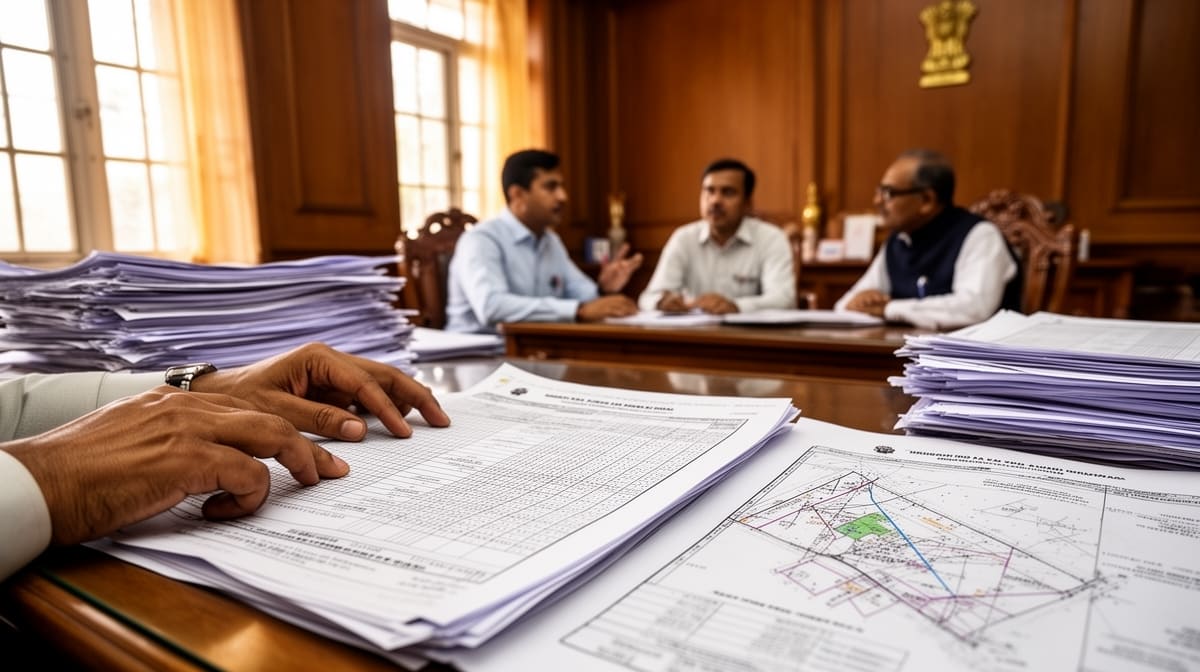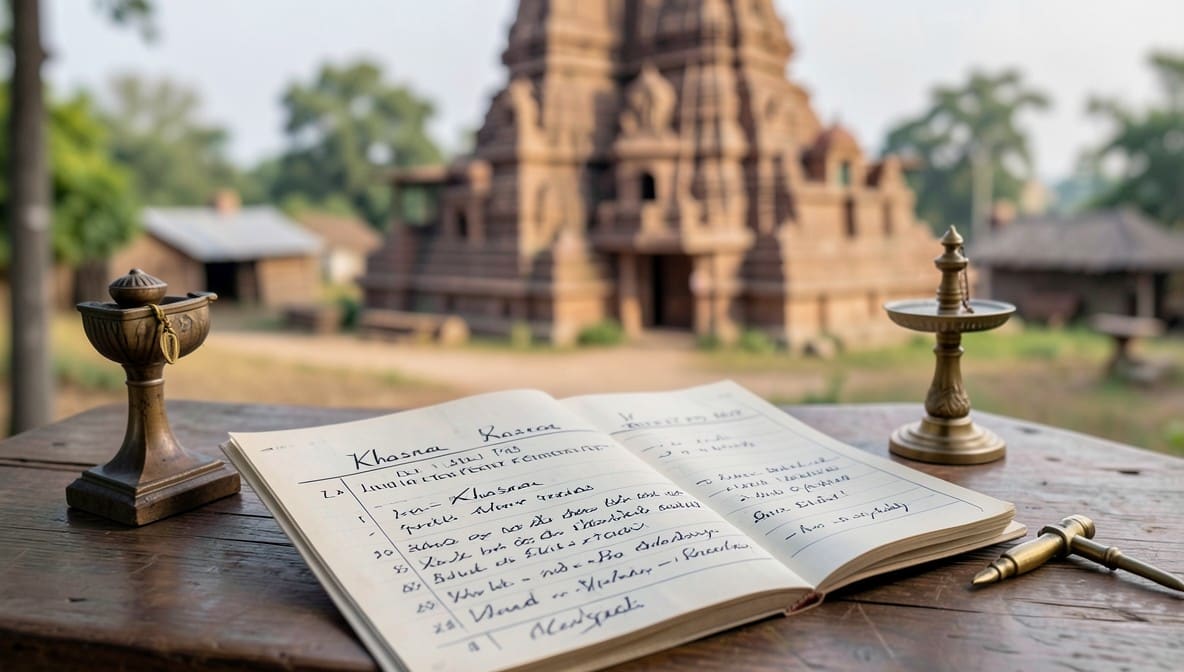
The Madhya Pradesh High Court has clarified that the inclusion of the Collector's name in revenue records pertaining to temple lands is impermissible without first determining whether the temple is private or public. This judgment underscores the necessity of adjudicating the temple's status before altering revenue entries, aligning with the Supreme Court's precedent in State of Madhya Pradesh vs. Pujari Utthan Avam Kalyan Samiti.
Background & Facts
The Dispute
The petitioner, Shri Ram Janki Ji Maharaj Shri Shivji (deleted) Shri Netram Sharma @ Narayan Acharya Cheela Shri Dav, challenged the inclusion of the Collector's name in the Khasra entries (revenue records) of lands associated with a temple in District Datia. The petitioner contended that the lands were private temple properties and not governed by the provisions relating to Maufi (Aukaf) lands, which would otherwise vest management rights in the Collector.
Key Facts
- The lands in question were recorded in revenue records with the Collector's name, treating them as Maufi lands under the Vindhya Pradesh Land Revenue and Tenancy Act, 1953.
- The petitioner argued that the temple was private, and thus, the Collector had no authority to be named in the revenue records.
- The State relied on a Circular dated 31.03.1994, which was upheld by the Supreme Court in State of Madhya Pradesh vs. Pujari Utthan Avam Kalyan Samiti & Another (2021 (7) SCR 6385).
- The Circular provided that the Collector's name would be recorded in revenue records unless the temple proved its private status before a competent authority.
- The impugned order dated 12.04.1974 and the Circular dated 31.03.1994 were challenged as illegal and without jurisdiction.
Procedural History
- 12.04.1974: Order passed including the Collector's name in the Khasra entries.
- 31.03.1994: Government Circular issued, directing the inclusion of the Collector's name in revenue records for temple lands.
- 2007: Writ Petition No. 2369 of 2007 filed before the Madhya Pradesh High Court.
- 24.06.2026: Present judgment delivered by the High Court.
Relief Sought
The petitioner sought the following reliefs:
- Quashing of the order dated 12.04.1974.
- Quashing of the Circular dated 31.03.1994.
- Quashing of the Collector's order (Annexure P-1) as illegal and without jurisdiction.
- Any other direction deemed necessary by the Court.
The Legal Issue
The central question was whether the Collector's name could be included in the revenue records of temple lands without first determining whether the temple was private or public, and whether such inclusion was valid under the Vindhya Pradesh Land Revenue and Tenancy Act, 1953.
Arguments Presented
For the Petitioner
- The petitioner argued that the Vindhya Pradesh Land Revenue and Tenancy Act, 1953 did not require the Collector's name to be mentioned in the Khasra entries for private temples.
- The lands were not Maufi lands, and thus, the inclusion of the Collector's name was bad in law.
- Reliance was placed on the Circular dated 21.03.1994, which supported the petitioner's contention that only the deity's name should be recorded as the owner.
- The petitioner contended that the Supreme Court's judgment in Pujari Utthan Avam Kalyan Samiti mandated that the deity's name alone should be recorded in the ownership column, with the Pujari's name mentioned only in the remarks column.
For the Respondent/State
- The State contended that the Circular dated 31.03.1994 had been upheld by the Supreme Court in Pujari Utthan Avam Kalyan Samiti, and thus, it applied to all temples unless a temple proved its private status.
- Since the temple's status had not been adjudicated, the inclusion of the Collector's name in the revenue records could not be held bad in law.
- The State argued that the Collector's name was recorded as a manager, and this did not affect the rights of the temple or its Pujari so long as they performed their functions properly.
The Court's Analysis
The Court examined the rival contentions and the Supreme Court's judgment in Pujari Utthan Avam Kalyan Samiti. It observed that the Circular dated 31.03.1994 had been upheld by the Supreme Court, which provided that the Circular would apply to all temples unless a temple proved its private status before a competent authority.
The Court noted that the Collector's impugned order had not adjudicated whether the temple in question was private or public. Instead, the Collector had merely concluded that the lands belonged to the Government based on their treatment as Maufi lands. The Court held:
"The issue as to whether the temple in question is a private temple or a public temple has not been adjudicated by any competent authority. The only issue before the Collector while passing the impugned order was whether the entry of the name of the Collector in the revenue records was valid or otherwise. While considering the entry of Maufi in the revenue records, the Collector arrived at a conclusion that the temple and the lands attached thereto belonged to the Government."
The Court further relied on the Supreme Court's observation that the Circular would apply to all temples unless a particular temple satisfied the competent forum that it was a private temple. Since the temple's status had not been determined, the Court could not hold the inclusion of the Collector's name in the revenue records as bad in law.
The Verdict
The Court disposed of the writ petition with the following directions:
- The petitioner was granted liberty to establish before the competent authority that the temple in question was a private temple.
- If the petitioner succeeded in proving the temple's private status, the competent authority was directed to adjudicate the issue in accordance with the Supreme Court's judgment in Pujari Utthan Avam Kalyan Samiti.
- The petition was disposed of with the above observations, without quashing the impugned orders or the Circular.
What This Means For Similar Cases
Determination of Temple Status Is Prerequisite for Revenue Entries
- The judgment establishes that revenue authorities cannot include the Collector's name in temple land records without first determining whether the temple is private or public.
- Practitioners must ensure that the temple's status is adjudicated before challenging or defending revenue entries.
Supreme Court Precedent Governs Circulars
- The Circular dated 31.03.1994 remains applicable unless a temple proves its private status. This places the burden on the temple to establish its private nature before a competent authority.
- Courts will likely uphold the Circular in the absence of such proof, as seen in this judgment.
Procedural Safeguards for Temple Lands
- Column 12 (remarks column) in revenue records can be used to mention the Pujari's name without affecting their rights, provided they perform their functions properly.
- The deity, as a juristic person, remains the owner of the land, and the Collector's name cannot be recorded as owner unless the temple is public and vests in the State.